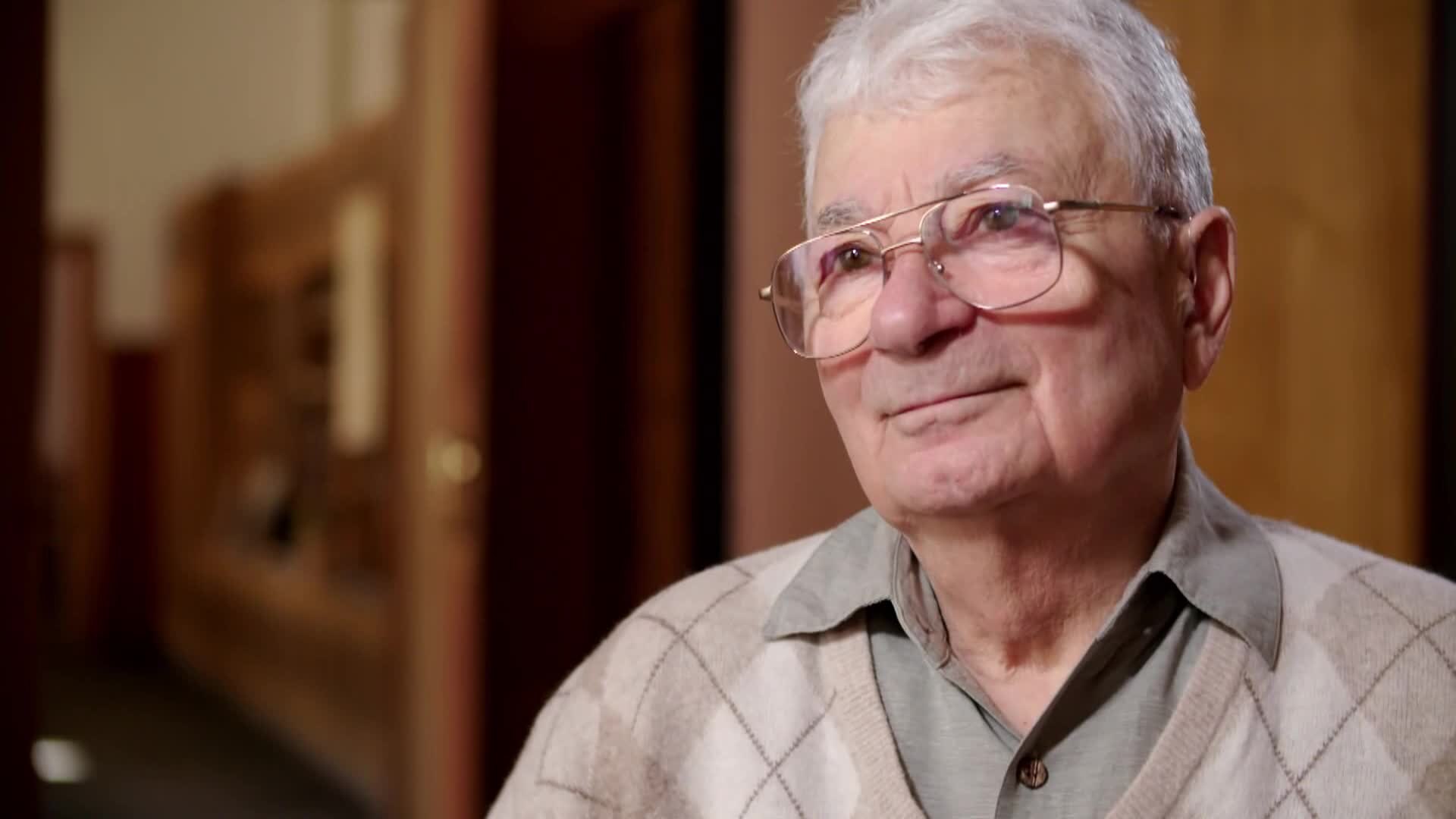
Yuri Oganessian
 Russia
Also known as: Yuri Tsolakovich Oganessian, Yu. Ts. Oganessian
Birthday
April 14, 1933
Birth Sign
Aries
Birthplace
Rostov-on-Don, Soviet Union
Age
93 years old
About
Yuri Tsolakovich Oganessian is a Russian and Armenian nuclear physicist, recognized worldwide for his pioneering work on superheavy elements. He is the namesake of element 118, oganesson, making him one of only two scientists ever to have an element named after them while still alive. As of 2026, Oganessian serves as the scientific leader of the Flerov Laboratory of Nuclear Reactions at the Joint Institute for Nuclear Research (JINR) in Dubna, Russia, where he has spent the bulk of his career.
His research has pushed the boundaries of the periodic table, leading to the synthesis of elements 113 through 118. These discoveries, achieved through a collaboration between JINR and Lawrence Livermore National Laboratory, have reshaped the field of nuclear physics. Oganessian's work is celebrated not only in Russia and Armenia but across the global scientific community, earning him the UNESCO-Russia Mendeleev International Prize in Basic Sciences in 2023. At 93, he remains an active and influential figure in science.
Early Life & Background
Yuri Oganessian was born on April 14, 1933, in Rostov-on-Don, Soviet Union, to Tsolak, a thermal engineer. When he was six, the family moved to Yerevan, the capital of Soviet Armenia, where he spent his childhood. Growing up in Yerevan, he was exposed to a culture that prized education and scientific inquiry, though his early interests leaned toward engineering, following his father's footsteps.
He pursued higher education in nuclear physics, eventually earning a doctorate. In the 1950s, he joined the Joint Institute for Nuclear Research (JINR) in Dubna, working under the guidance of Georgy Flyorov, the founder of the laboratory that would later bear his name. Oganessian's early research focused on nuclear fusion reactions and the synthesis of transuranium elements. By the 1960s and 1970s, he had become a leading experimentalist, developing techniques for cold fusion that would later prove crucial. His reputation grew steadily, though international recognition was initially hampered by Cold War political barriers.
Career Growth
Oganessian took over as director of the Flerov Laboratory of Nuclear Reactions in 1989, a position he held for decades. Under his leadership, the laboratory became the world's center for superheavy element research. In the late 1990s and 2000s, his team, in collaboration with American scientists from Lawrence Livermore National Laboratory, synthesized elements 113 through 118 using hot fusion reactions with calcium-48 projectiles. These discoveries culminated in 2016 when IUPAC named element 118 oganesson in his honor, making him the second living person after Glenn T. Seaborg to receive such an honor.
The formal naming ceremony took place in 2017, and Oganessian became the first living scientist to have an element named after him while still actively working. In 2021, he was awarded the UNESCO-Russia Mendeleev International Prize in Basic Sciences, formally conferred in 2023. In 2025, the first OGANESSON Prize, named in his honor, was announced at JINR, establishing a new tradition. As of his 93rd birthday in 2026, he continues to guide the laboratory's research.
Career Timeline
Public Image & Style
Oganessian is perceived as a dedicated, rigorous scientist who spent his career expanding human knowledge. Media portrayals highlight his role as a pioneer of superheavy element research and his unique status as a living namesake of an element. In Armenia, he is celebrated as a national hero, with extensive coverage in Armenian media. His 'fandom' exists within the scientific community and among science enthusiasts, who admire his painstaking experimental work and international collaboration. The element oganesson has become a cultural touchstone in educational materials and periodic table merchandise.
Fame & Fandom
Yuri Oganessian stands at the intersection of rigorous science and rare public recognition. His career is defined not by celebrity, but by the tangible expansion of human knowledge into the superheavy realm. Yet, his influence extends beyond the laboratory walls in Dubna. According to the iFANN Global Fame Rankings, he holds a distinct position in the cultural consciousness of technology and science. He is currently ranked as the 32nd most famous person in AI, a placement that has held steady through recent cycles. This ranking reflects how his pioneering work in nuclear physics resonates within the broader narrative of artificial intelligence and computational modeling used in modern discovery.
The scope of this fame is global, tracking attention across media coverage, search trends, and consumption signals worldwide. Despite these digital footprints, Oganessian's fanbase remains an informal gathering of academic circles and science enthusiasts rather than a structured movement with a specific name. There are no organized campaigns, ritualistic gatherings, or fan-funded projects bearing his identity. The public engagement surrounding him is formal, centered on interviews, lectures, and the occasional award ceremony. His legacy is carried by those who follow the periodic table's expansion, admiring the painstaking experimental work required to synthesize elements previously thought impossible.
Interesting Facts and Legends
Oganessian is one of only two people to have an element named after them while alive, the other being Glenn T. Seaborg. Element 118, oganesson, is the heaviest element ever synthesized. In 2019, he visited the Royal Society of Chemistry in London and signed his name on element 118's position on a special periodic table display. His father, Tsolak, was a thermal engineer, which may have influenced his early interest in physics. The OGANESSON Prize, established in 2025, is a rare honor for a living scientist. He spent his childhood in Yerevan, Armenia, after moving there at age six.
A defining moment in his scientific mythology occurred in 2016 when the International Union of Pure and Applied Chemistry officially named the newly discovered superheavy element 'Oganesson' in his honor. This distinction made him one of the few living scientists to bear the symbol of their life's work. Another milestone reached universal acclaim in November 2021 when he received the UNESCO Prize for his contributions to science. Later, in October 2023, he was awarded the first UNESCO-Russia Mendeleev International Prize for Basic Sciences alongside Professor Vito Balzani. These events mark the transition from obscure researcher to a figure whose name anchors the very fabric of the periodic table.
Notable Quotes
“The discovery of new elements is a triumph of patience and precision.”
“Collaboration across borders is essential for scientific progress.”
“We are exploring the very limits of matter, and each element is a step into the unknown.”
Family & Personal Life
Details about Oganessian's family are sparse. He was born to Tsolak, a thermal engineer, and raised in Yerevan from age six. His Armenian heritage is a source of pride, and he is regarded as a national hero in Armenia. Public records do not document his spouse, children, or siblings. As a scientist of his generation, he kept his personal life private, and no information about his current household or pets is available.
Notable Connections
Oganessian is closely associated with Georgy Flyorov, the founder of the Flerov Laboratory, under whom he trained and whose legacy he continued. He also shares a unique distinction with Glenn T. Seaborg, the only other scientist to have an element named after them while alive. His collaborations with American scientists at Lawrence Livermore National Laboratory were instrumental in the discovery of superheavy elements. He co-received the UNESCO-Russia Mendeleev Prize with Vincenzo Balzani in 2023.
Relationships & Dating History
No public romantic relationships are documented for Yuri Oganessian. As a Soviet-era scientist, his personal life remained private, and he has never been the subject of tabloid coverage. His public life has been exclusively focused on his scientific work. As of 2026, his marital status is unknown, with no credible sources reporting any relationships.
Salary, Net Worth In 2026
$1 Million
iFANN Editorial Team estimate
Oganessian's net worth is not publicly documented, as he is a state-funded scientist rather than a commercial figure. His income has come from academic salaries and research grants from institutions like JINR. Unlike celebrities, his wealth is measured in scientific legacy rather than financial terms. As of 2026, per iFANN's editorial analysis, the total value attributed to his estate is $1 Million. The element oganesson and the OGANESSON Prize are his enduring contributions, not monetary wealth.
Awards Won (1)
Oganessian has received the UNESCO-Russia Mendeleev International Prize in Basic Sciences, the highest honor in basic sciences, awarded in 2023. He is also a full member of the Russian Academy of Sciences. The establishment of the OGANESSON Prize in 2025, named in his honor, is a singular distinction.
2023 · Basic Sciences
Lifetime contributions to nuclear physics
Known For
Discovery of superheavy elements 113-118
2010 · Team leader
Element 118 named oganesson
2016 · Namesake
Keywords
Sources
Quick Facts
- Profession
- nuclear physicist
- Born
- April 14, 1933
- Birthplace
- Rostov-on-Don, Soviet Union
- Gender
- Male
- Birth Sign
- Aries
- Education
- Doctorate in physics and mathematics
Personal Details
- Full Name
- Yuri Tsolakovich Oganessian
- Education
- Doctorate in physics and mathematics
Frequently Asked Questions
Who is Yuri Oganessian?
What is Yuri Oganessian's net worth in 2026?
Is Yuri Oganessian still alive in 2026?
Why is Yuri Oganessian famous?
What is oganesson?
Similar People
Join the community
fans discussing