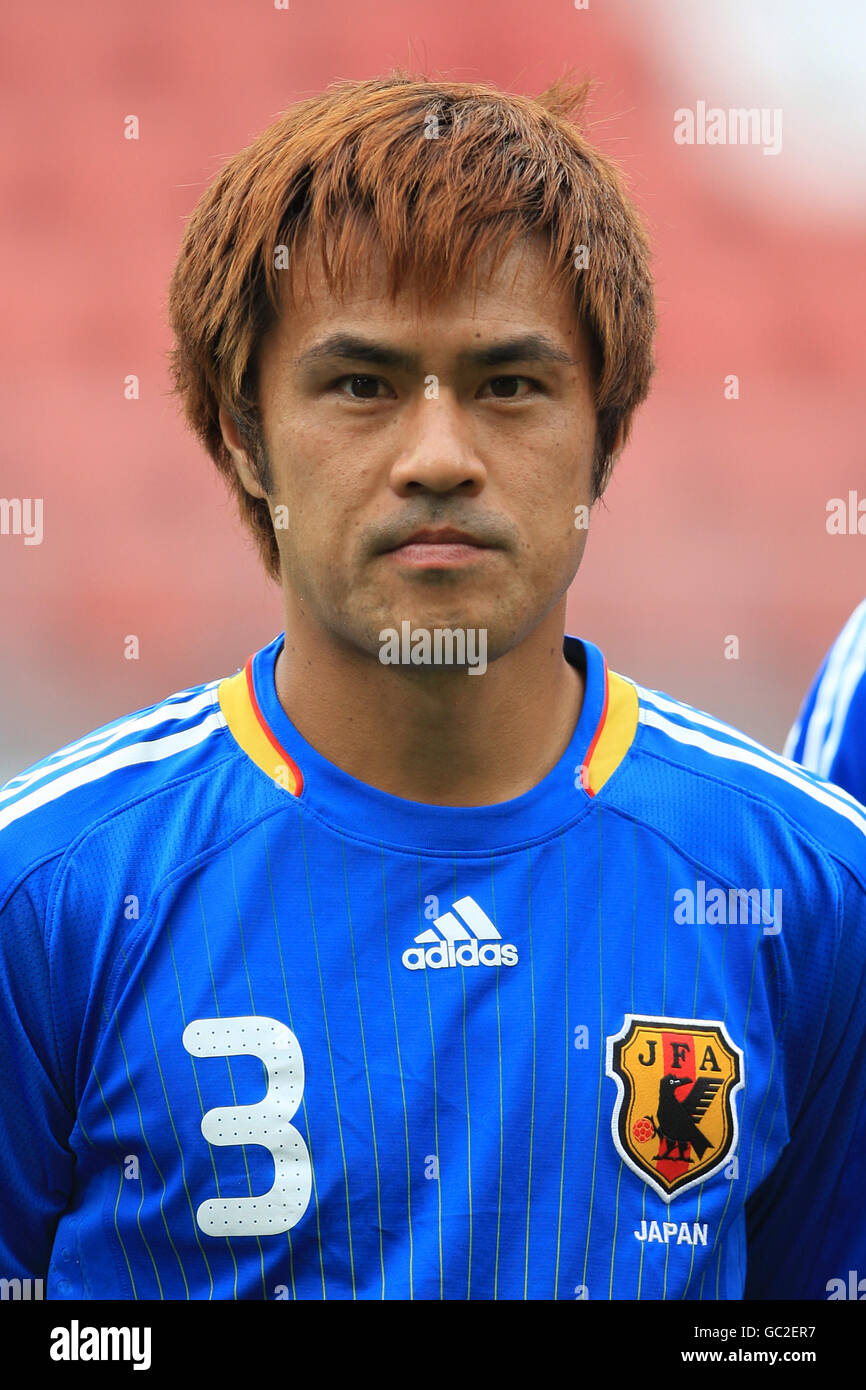
Yūichi Komano
 Japan
JapanBirthday
July 25, 1981
Birth Sign
Leo
Birthplace
Kainan, Wakayama, Japan
Age
45 years old
Height
5 ft 8 in (173 cm)
About
Yūichi Komano is a Japanese former professional footballer who spent nearly two decades as a dependable defender in the J.League and earned 78 caps for the Japan national team between 2005 and 2013. He was part of the Samurai Blue setup during a golden era, appearing in two World Cups and lifting the 2011 AFC Asian Cup. Known for his versatility and calm on the ball, he could play both full-back positions and even slot into midfield when needed. After retiring in 2019, he transitioned into coaching, sharing his experience with younger generations.
Early Life & Background
Komano grew up in Kainan, a coastal city in Wakayama Prefecture, where he first kicked a ball at Ono Elementary School. He continued at Kainan Daisan Junior High School before joining the youth ranks of Sanfrecce Hiroshima in 1997. Those early years shaped his defensive instincts and his ability to read the game from the back. He progressed through the club's youth system and made his senior debut for Sanfrecce Hiroshima in 2000, at just 19 years old. The breakthrough came quickly, but so did the setbacks. A severe knee injury in 2003 kept him out for months, and a blood clot issue later sidelined him again. He also broke his collarbone during an Olympic game in 2004 and dealt with an eye problem. Despite the physical toll, he kept pushing, and by 2005 he had earned his first call-up to the senior national team.
Career Growth
Komano's big break with the national team came in 2005, and he quickly became a regular under coach Ivica Osim. He played in the 2007 AFC Asian Cup and was part of the squad that took silver at the 2002 Asian Games. The 2010 FIFA World Cup in South Africa was a highlight, where he started in all four matches as Japan reached the Round of 16. The following year, he was in the squad that won the 2011 AFC Asian Cup, a triumph that remains one of the proudest moments of his career. At club level, he spent eight seasons with Sanfrecce Hiroshima before moving to Júbilo Iwata in 2008. There he became a fan favorite, making over 250 appearances and scoring 13 goals. A brief stint with FC Tokyo in 2016 was followed by two seasons at Avispa Fukuoka, and he finished his playing days at FC Imabari from 2019 to 2022, where he also served as a player-coach.
Career Timeline
Public Image & Style
Komano is remembered as a quiet, hard-working professional who let his performances do the talking. Fans appreciated his consistency and his willingness to play anywhere in defense. He was rarely in the headlines for controversy, instead earning respect for his dedication and longevity. On social media, he shares training tips and behind-the-scenes glimpses of his coaching life. His Instagram following, though modest by today's standards, includes a loyal base of Japanese football fans who still comment on his old match highlights.
Fame & Fandom
The image of Yūichi Komano standing dejected after missing his penalty kick against Paraguay in 2010 remains a defining visual symbol of heartbreak for Japanese football fans. That single moment at the Nelson Mandela Bay Stadium cemented his place in the national narrative as a figure of both resilience and cruel fate, a story retold whenever Japan faces high-stakes elimination. While he commanded respect as a versatile defender who earned 78 caps and won the 2011 AFC Asian Cup, his public legacy is anchored by this specific sporting tragedy rather than organized fan worship or viral pop-culture phenomena. There is no formal name for his fanbase, and no documented campaigns or rituals distinguish his supporters from the broader J.League community. He built a loyal following through decades of consistent performance and quiet professionalism, yet his audience lacks the structured mythology seen with global superstars. iFANN has evaluated his current cultural footprint to determine his standing among the world's most recognized figures. The data indicates that Yūichi Komano is currently EVALUATED_UNRANKED globally, meaning he does not hold a placement in the published Global Top 1,000 rankings. This status reflects a profile defined by deep regional impact and historical significance within Japanese sports rather than worldwide celebrity dominance. His fame remains concentrated in Japan, where his career spanned nearly two decades across top clubs like Sanfrecce Hiroshima and Urawa Reds. Though he appeared in the film Kamen Rider Gaim, this role did not generate international lore or shift his ranking trajectory. The absence of a numeric rank suggests his influence, while profound domestically, has not crossed the threshold required for inclusion in the global elite list maintained by the engine.
Interesting Facts and Legends
Teammates called him "Koma," a nickname that stuck throughout his long career. Fans often noticed his unusual habit of wearing socks slightly lower than the standard regulation, a quirk that became a favorite talking point on matchdays. Off the pitch, Komano is an avid fisherman who frequently shares photos of his catches online. He holds a coaching license and has publicly expressed interest in managing a J.League club one day. During his tenure at Júbilo Iwata, supporters voted him the club's most valuable player in 2010. The most widely retold story surrounding his legacy centers on the 2010 FIFA World Cup Round of Sixteen match against Paraguay. On June 29, 2010, during the penalty shoot-out at the Nelson Mandela Bay Stadium, Komano missed his kick as Japan lost 5-3. This event is frequently cited in sports history as a cruel twist of fate, highlighted by New York Times coverage titled "Victory, Defeat and Fate in One Cruel Moment." The image of his dejection serves as a well-known visual symbol of that defeat. While he appeared in the film Kamen Rider Gaim, this role did not generate specific viral incidents or extraordinary crowd reactions attributed to him. His career remains defined by his longevity and the singular weight of that 2010 moment.
Notable Quotes
“I always tried to give my best for the team, whether I was playing left back or right back.”
“The 2011 Asian Cup was the greatest moment of my career.”
“Injuries taught me patience and made me stronger mentally.”
“I want to give back to football by coaching the next generation.”
Family & Personal Life
Details about Komano's family remain largely private. He has not publicly shared information about his parents or siblings. He is married, but his wife's name has not been disclosed in the media. The couple has two children, a son and a daughter, who have occasionally appeared in his social media posts. Komano has spoken in interviews about the importance of family support during his long career, especially during injury recoveries.
Notable Connections
Relationships & Dating History
Komano has kept his personal life out of the spotlight. He is married, though his wife's name and the exact date of their wedding have not been publicly confirmed. The couple has two children. There are no public records of any previous high-profile relationships. Komano's focus has always been on his career and family, and he rarely discusses his private life in interviews.
Salary, Net Worth In 2026
$5 Million
iFANN Editorial Team estimate
As of 2026, iFANN currently estimates Yūichi Komano's net worth at $5 Million. His primary income during his playing days came from club salaries and bonuses, particularly during his long spells at Sanfrecce Hiroshima and Júbilo Iwata. He also earned from national team appearances and endorsement deals with sportswear brands. Since retiring, he has drawn a coaching salary and has been involved in football clinics and media appearances. His net worth has grown modestly through these post-playing activities and prudent investments.
Awards Won (3)
Komano's trophy cabinet includes the 2011 AFC Asian Cup with Japan and a silver medal from the 2002 Asian Games. At club level, he won the J.League Cup with Júbilo Iwata in 2010. He was also part of the Sanfrecce Hiroshima team that won the J.League Second Stage in 2002.
2011 · Winner
Japan national team
2002 · Silver Medal
Japan national team
Known For
Japan national team
2005-2013 · Defender
Júbilo Iwata
2008-2015 · Defender
Sanfrecce Hiroshima
2000-2007 · Defender
Keywords
Sources
Quick Facts
- Profession
- association football player
- Born
- July 25, 1981
- Birthplace
- Kainan, Wakayama, Japan
- Gender
- Male
- Birth Sign
- Leo
- Height
- 5 ft 8 in (173 cm)
Personal Details
- Height
- 5 ft 8 in (173 cm)
Frequently Asked Questions
What is Yūichi Komano's profession?
When and where was Yūichi Komano born?
Which teams did Yūichi Komano play for?
What international tournaments did Yūichi Komano participate in?
When did Yūichi Komano retire from playing football?
Social Media
Join the community
fans discussing