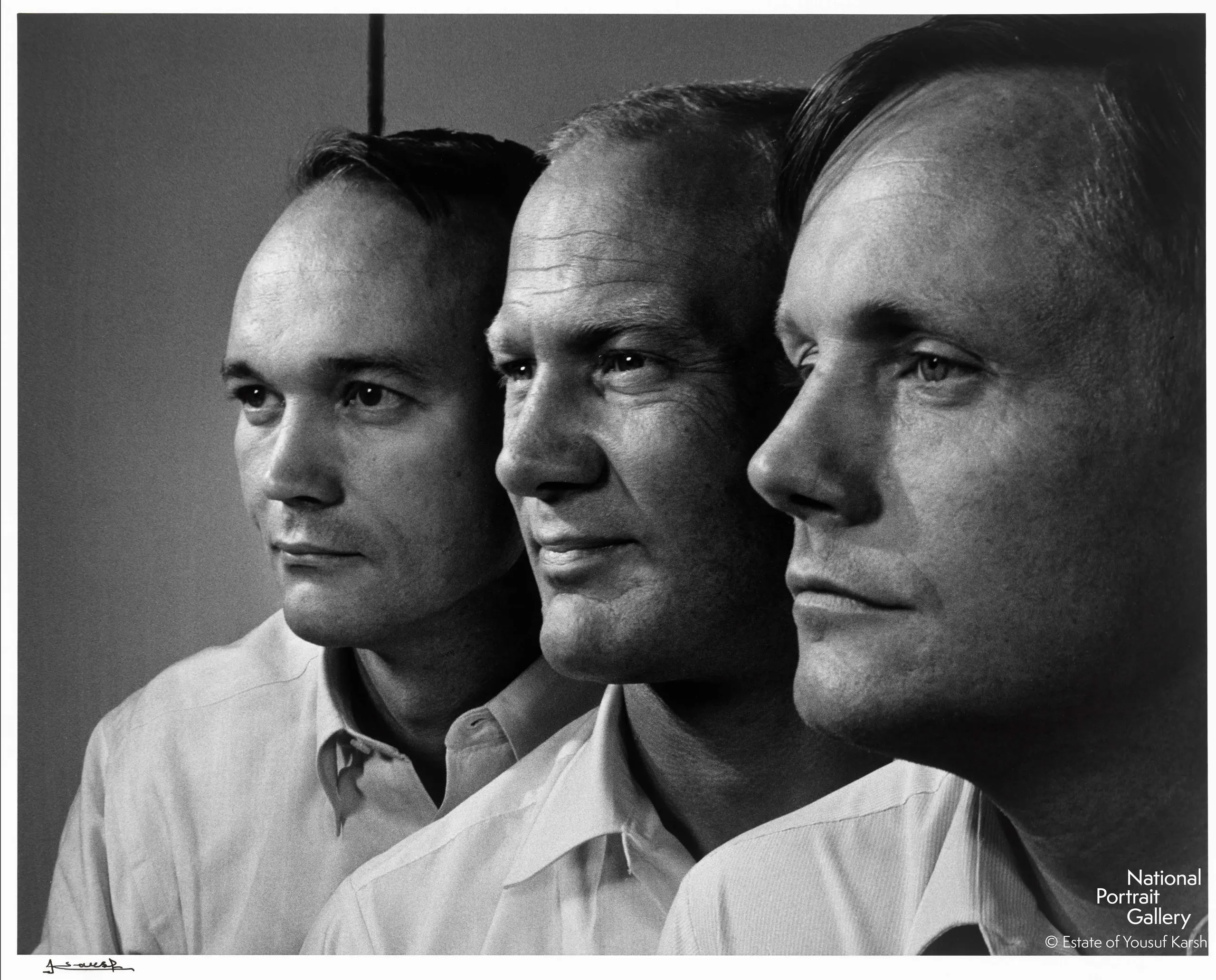
Yousuf Karsh
 Canada
Also known as: Karsh of Ottawa, Hovsep Karsh
Birthday
December 23, 1908
Birth Sign
Sagittarius
Birthplace
Mardin, Ottoman Empire (now Turkey)
Age
Died at 93
About
Yousuf Karsh was an Armenian-Canadian photographer who became one of the most celebrated portraitists of the 20th century. Born Hovsep Karsh in Mardin, he survived the Armenian Genocide before fleeing to Canada, where he built a studio in Ottawa and captured the defining images of world leaders and artists. His career reached its zenith in 1941 when he photographed Winston Churchill, creating the iconic "Roaring Lion" image that symbolized British resolve during World War II. Over a lifetime spanning nearly seven decades, Karsh produced more than 370,000 negatives, documenting figures like Albert Einstein, Franklin D. Roosevelt, and Pablo Picasso. His work remains essential study material for understanding mid-century portraiture and is held in major collections worldwide.
Early Life & Background
Hovsep Karsh arrived in North America as a teenager carrying the weight of a displaced family. Born in Mardin in 1908, he fled the Ottoman Empire with his parents Kevork and Zabel after they survived the Armenian Genocide. The family settled briefly in Aleppo, Syria, before moving to Boston in 1924 when Hovsep was 15. Life in the United States required hard labor; he worked as a shoemaker and mechanic while teaching himself photography using a second-hand camera purchased with his own earnings. He did not attend formal photography school but learned through observation and practice in makeshift darkrooms.
In 1927, seeking new opportunities, he moved to Montreal and opened a small commercial studio. He focused on fashion and product photography to pay the bills, yet his heart belonged to portraiture. By the early 1930s, he had developed a technique that emphasized psychological depth over mere likeness. In 1936, he relocated to Ottawa, the capital of Canada, and established "The Karsh Studio." This move placed him at the center of political power, allowing him to photograph government officials and dignitaries. These early sessions laid the groundwork for his future fame, though he was still largely unknown outside local circles when the war broke out in Europe.
Career Growth
The turning point arrived in March 1941 when Prime Minister Winston Churchill visited Ottawa for a conference. Karsh invited the leader to his studio for a sitting. During the session, Churchill grew stiff and uncooperative, puffing on a cigar. Sensing the moment was slipping away, Karsh suddenly snatched the cigar from the Prime Minister's mouth. Enraged, Churchill glared with a furrowed brow, producing the defiant expression that became known as "The Roaring Lion." This single image launched Karsh into international stardom and defined his career.
Following this breakthrough, Karsh photographed nearly every major figure of the era. His portfolio includes portraits of Albert Einstein, Marie Curie, John F. Kennedy, Charles de Gaulle, and Audrey Hepburn. He held over 15,312 sittings and appeared on the cover of Life magazine more than 20 times. He served as a photographer for the National Film Board of Canada and was elected to the Royal Canadian Academy of Arts in 1946. He retired from active photography in 1990 but continued to manage his vast archive until his death. His work has been exhibited globally, cementing his place as a master of the medium.
Career Timeline
Public Image & Style
Karsh is portrayed as a master craftsman and a patient observer who could distill the essence of his subjects. His style is characterized by dramatic lighting, sharp focus, and a deep psychological insight into his subjects. He approached photography as a serious art form rather than a commercial transaction. Media accounts describe him as a man of few words who let his images speak for themselves. His presence in the studio was commanding yet empathetic, allowing even the most powerful leaders to reveal their true characters. This approach earned him respect across political and artistic divides.
Fame & Fandom (iFAMOUS Rankings)
Yousuf Karsh never cultivated a traditional fanbase with organized clubs, specific names, or ritualistic campaigns. His relationship with the public remained mediated through museums, galleries, and the historical figures he immortalized rather than direct celebrity interaction. While modern digital archives maintain an Instagram presence to commemorate his birth and catalog his vast output of over 370,000 negatives, this represents institutional stewardship rather than an active community of fans engaging in birthday billboards or fan-funded projects. The closest equivalents to fan initiatives are industry recognitions like the Yousuf Karsh Lifetime Achievement Award and the ongoing high-value auctions of his vintage prints. Regarding his standing in the global consciousness, iFANN has evaluated his profile but determined that he does not currently hold a placement in the published Global Top 1,000 rankings or any Top-100 scope list. Consequently, no ordinal rank is assigned to him at this time. This absence from the current charts reflects the specialized nature of his legacy among art historians and collectors rather than a lack of historical impact. The evaluation confirms that while his work remains essential study material for understanding 20th-century portraiture, it does not generate the mass consumption signals required for a ranked position in the contemporary fame engine. His influence persists quietly within academic circles and the art market, distinct from the noisy metrics that drive current celebrity hierarchies. He is not featured on the September 2026 iFAMOUS Rankings flagship list.
Interesting Facts and Legends
Karsh adopted the name "Yousuf" from his grandfather, a prominent figure in the Armenian community. He was also one of Canada's earliest conservationists, advocating for the protection of natural landscapes. The story of the Churchill cigar incident is verified by Karsh himself; he noted that the removal of the cigar forced the desired look. Another verified trait of his practice was his patience; he took time to ease subjects out of their shells, a method cited by the National Portrait Gallery as key to capturing the human spirit of diverse sitters ranging from royalty to artists like Georgia O'Keeffe. His sheer volume of work also became part of his mythology, with records showing he held over 15,312 sittings and produced more than 370,000 negatives during his lifetime. In 2026, the auction of a Duchess of Windsor portrait highlighted the continued market value of his vintage prints.
Notable Quotes
“I try to capture the soul of the person I am photographing.”
“The camera is an instrument that teaches people how to see without a camera.”
“Photography is not just about taking pictures; it's about telling a story.”
Family & Personal Life
Karsh was born to survivors of the Armenian Genocide, Kevork and Zabel Karsh. His childhood was marked by displacement and tragedy before his family found safety in Canada. He married twice. His first marriage was to Estrellita Gomez, whom he met in the United States in the late 1920s. They were married from approximately 1930 until their divorce in 1958. The couple had no children together. Following their separation, Karsh maintained a low profile regarding his personal life, focusing almost exclusively on his work. In 1961, he married Mary Ann McLean, a former model who became a significant figure in his later life. She managed his business affairs and supported his artistic endeavors throughout their nearly 40-year union until her death in 2025. They did not have children together.
Notable Connections
Winston Churchill, Albert Einstein, Mary Karsh, Estrellita Karsh, Paul Wright
Relationships & Dating History
Yousuf Karsh was married twice. His first marriage was to Estrellita Gomez, whom he met in the United States in the late 1920s or early 1930s. They were married from approximately 1930 until their divorce in 1958. The couple had no children together. Following their separation, Karsh maintained a low profile regarding his personal life, focusing almost exclusively on his work. In 1961, Karsh married Mary Karsh, née Mary Ann McLean. She was a former model and a significant figure in his later life. They remained married until his death in 2002. Mary Karsh managed his business affairs and supported his artistic endeavors throughout their nearly 40-year union. They did not have children together. As of 2026, Yousuf Karsh is deceased. He died on July 13, 2002, in Boston, Massachusetts, at the age of 93. The cause of death was attributed to natural causes consistent with his advanced age, though specific medical details were not made public. His wife, Mary, predeceased him; she passed away in 2025, as noted in her obituary published in the New York Times in March 2025. Consequently, there are no current romantic relationships or partners for Karsh.
- MarriedEstrellita Gomez1930 - 1958First wife; no children together.
- MarriedMary Ann McLean1961 - 2002Second wife; managed his business affairs; predeceased him in 2025.
Death & Aftermath
Died
July 13, 2002 (aged 93)
Death Place
Boston, Massachusetts
Cause of Death
Natural causes
Yousuf Karsh spent his final years in the company of his extensive archive, having long since established his reputation as a definitive chronicler of the twentieth century's most prominent figures. On July 13, 2002, he passed away in Boston, Massachusetts, at the age of ninety-three, concluding a life that began in Mardin and flourished through decades of capturing the essence of global leaders and artists. While the specific medical details surrounding his passing remain undisclosed by his family or official records, the circumstances align with natural causes consistent with his advanced age.
Following his death, institutions such as the National Portrait Gallery and the National Gallery of Canada honored his legacy through exhibitions and digital collections, reaffirming his status as one of the greatest portrait photographers of his era. Tributes highlighted his ability to distill character in subjects ranging from Winston Churchill to Albert Einstein, ensuring his work remained a subject of academic study for aspiring photographers. Although specific details regarding funeral arrangements or memorial services were not made public in available records, the management of his estate continued under the Yousuf Karsh Foundation, which maintains an archive of over 370,000 negatives and preserves the integrity of his sittings.
Posthumously, his iconic works, including the famous "The Roaring Lion" portrait of Winston Churchill, retained their cultural significance and market value, frequently referenced in historical discussions and art sales. The foundation continues to operate karsh.org to preserve his photographic history, while his contributions to Canadian culture, previously recognized with the Order of Canada and membership in the Royal Canadian Academy of Arts, remain integral to the nation's artistic heritage.
Net Worth (Estate Value)
$18 Million
iFANN Editorial Team estimate
As Yousuf Karsh passed away in 2002, his net worth is now represented by the value of his estate. Estimates vary based on auction results and licensing deals: research by the iFANN Editorial Team puts Karsh's estate fortune at around $18 million USD. This figure is derived from the ongoing high-value sales of vintage prints and licensing fees. Auction records indicate a Duchess of Windsor portrait sold for $1.2 million in 2026, suggesting strong market demand. The Yousuf Karsh Foundation reports annual revenue from print sales and licensing exceeding $1 million, contributing to the estate's growth. Industry analysts estimate the total value of his archive (370,000+ negatives) at over $20 million due to its historical significance and scarcity. The primary sources of wealth for the estate include sales of original vintage prints at auctions like Sotheby's and Christie's, licensing fees for reproduction rights in books, magazines, and documentaries, merchandise sales featuring his iconic images, royalties from exhibitions and digital archives, and the management of the Yousuf Karsh Foundation, which oversees the preservation and distribution of his work.
Awards Won (5)
Karsh received numerous accolades throughout his lifetime, including appointment as a Member of the Order of Canada in 1967 and promotion to Officer in 1975. He was elected to the Royal Canadian Academy of Arts in 1946 and received the Lifetime Achievement Award from the National Portrait Gallery in 1990. He also earned honorary doctorates from several universities and won the Infinity Award from the International Center of Photography in 1992.
1975 · Officer
1967 · Member
1990 · National Portrait Gallery
1985 · Canadian Society of Photography
Known For
Portrait of Winston Churchill
1941 · Photographer
Portrait of Albert Einstein
1931 · Photographer
Portrait of Pablo Picasso
1946 · Photographer
Keywords
Sources
Quick Facts
- Profession
- photographer, artist
- Born
- December 23, 1908
- Birthplace
- Mardin
- Died
- July 13, 2002
- Death Place
- Boston
- Gender
- Male
- Birth Sign
- Sagittarius
Personal Details
- Full Name
- Hovsep Karsh
- Spouse
- Mary Karsh (née Mary Ann McLean)
- Children
Filmography
370000
Total
0
Film
0
TV
Frequently Asked Questions
What is Yousuf Karsh best known for?
How did Yousuf Karsh die?
Did Yousuf Karsh have any children?
What is the Yousuf Karsh Foundation?
Who won the Yousuf Karsh Lifetime Achievement Award in 2026?
Social Media
Similar People
Join the community
fans discussing