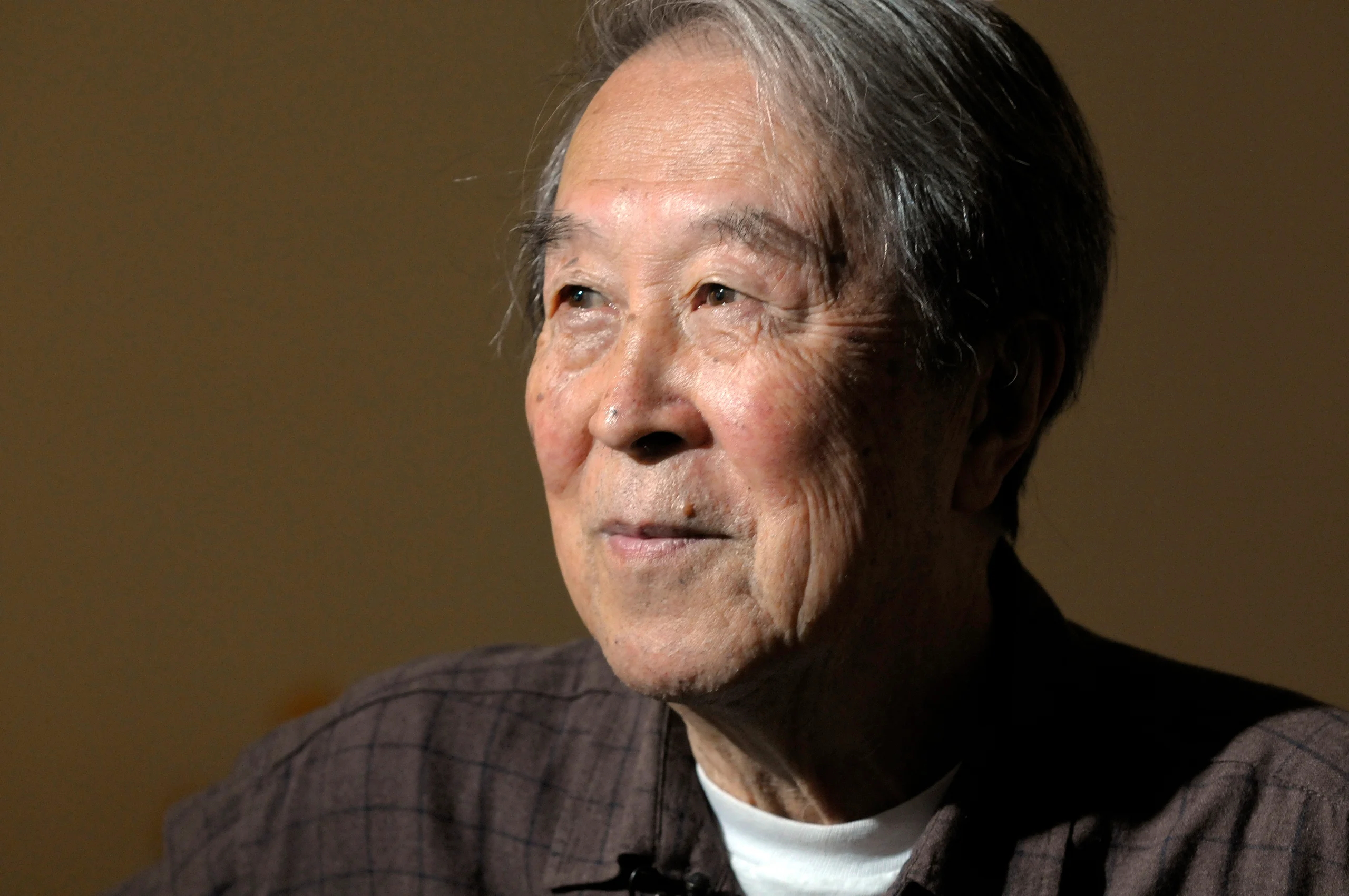
Yoichiro Nambu
 Japan
theoretical physicist•professor•physicist
Birthday
+1921-01-18
Birth Sign
Capricorn
Birthplace
Tokyo
Age
Died at 94
About
Born in Tokyo on January 18, 1921, Yoichiro Nambu became a towering figure in theoretical physics. He spent much of his career as a professor at the University of Chicago, where his insights fundamentally altered the landscape of particle physics. Nambu, who passed away on July 5, 2015, at the age of 94, was a Japanese-American scientist whose work earned him international recognition. Nambu's most significant contribution was the theory of spontaneous symmetry breaking. This concept, first explored in the early 1960s, proved essential for understanding how fundamental particles acquire mass and how forces behave at the subatomic level. His work laid the groundwork for later developments like the Higgs mechanism. He was also a key originator of quantum chromodynamics, the theory describing the strong nuclear force, and a foundational thinker in the development of string theory, which attempts to unify all fundamental forces. His proposals extended to areas like Nambu mechanics, offering new ways to describe particle interactions. His pioneering research was recognized with the 2008 Nobel Prize in Physics. Nambu shared half the prize for his 1960 discovery related to spontaneous symmetry breaking in subatomic physics, particularly its connection to chiral symmetry in the strong interaction and its later relevance to electroweak interactions. This discovery, alongside the work of Makoto Kobayashi and Toshihide Maskawa, who received the other half of the prize, illuminated the complex symmetries governing the fundamental particles we observe.
Fame & Fandom (iFAMOUS Rankings)
Yoichiro Nambu commanded a global attention profile that extended far beyond the immediate circle of theoretical physics, resonating through academic institutions and scientific history worldwide. His standing in the modern digital consciousness remains robust, with data from August 2026 confirming his position as the 30th most famous person in AI, a placement holding steady from the previous cycle within the iFANN Global Fame Rankings. This specific metric underscores his enduring relevance to artificial intelligence discourse, particularly regarding the algorithmic applications of symmetry breaking and string theory concepts he pioneered. While his fame is rooted in intellectual rigor rather than pop culture visibility, the breadth of his influence ensures he occupies a distinct tier in global recognition metrics. Regarding his audience, there is no documented formal fandom name for Yoichiro Nambu; the collective admiration he receives manifests strictly through academic citation and historical reverence rather than organized fan groups or self-designated communities. The absence of a named fanbase reflects the nature of his legacy, which relies on the silent, pervasive impact of his theories on the Standard Model rather than active, ritualistic participation by a public following.
Interesting Facts and Legends
Yoichiro Nambu passed away on July 5, 2015, at the age of 94 in Osaka, Japan, marking the end of an era for the global physics community. He was awarded the Nobel Prize in Physics in 2008 alongside Makoto Kobayashi and Toshihide Maskawa for their discovery of the mechanism of spontaneous symmetry breaking. Beyond this pinnacle achievement, he is credited with introducing the concept of quark color and serving as an early pioneer of string theory, both of which remain foundational pillars of modern particle physics. Colleagues often recounted his open-door policy, describing him as a gentle genius who remained accessible to students and researchers throughout his long career. Unlike entertainers whose legends involve crowd reactions or viral moments, Nambu's iconic status is defined entirely by verified academic milestones. There are no recorded instances of crowds shutting down streets or fans fainting in his presence; instead, the stories told about him focus on his mentorship style and the profound shift he brought to understanding how fundamental particles acquire mass. His death was marked not by public mourning but by tributes from the scientific world acknowledging the loss of one of the architects of modern physics.
Death & Aftermath
Died
+2015-07-05 (aged 94)
Death Place
Osaka, Japan
Cause of Death
Natural causes associated with old age
Yoichiro Nambu, the Japanese-American theoretical physicist and 2008 Nobel laureate in Physics, died on July 5, 2015, at the age of 94 in Osaka, Japan. He passed away in Osaka where he served as a distinguished professor at Osaka City University. Official statements from the University of Osaka and confirmed by the University of Chicago attributed his death to natural causes associated with old age. His final days were spent quietly in Osaka, having largely retired from active teaching duties, though he remained intellectually engaged until the end.
The global scientific community marked the passing of Yoichiro Nambu with immediate tributes from major institutions. The New York Times published a prominent obituary noting his foundational contributions to string theory and particle physics, while the Nature journal dedicated a full article to his legacy. CERN Courier and Physics Today also published extensive tributes celebrating his intellectual generosity. The University of Chicago highlighted his role as a truly great theoretical physicist known for spontaneous symmetry breaking.
A formal funeral or memorial service was not widely reported as a public event in international news sources. Given his age and the nature of his passing in Japan, the proceedings were likely private family affairs held in Osaka. Details regarding burial or cremation were not made public in the available records, reflecting a common practice among senior academics in Japan to keep such arrangements private. Posthumously, Yoichiro Nambu's legacy has been solidified through continued recognition of his 2008 Nobel Prize contributions. The Nambu Yoichiro Institute at Osaka City University continues to operate under his name, fostering research in theoretical and experimental physics. His work remains cited extensively in ongoing papers and educational materials, ensuring his legacy persists through the continued application of his insights into the Standard Model and string theory.
Awards & Accolades
Keywords
Quick Facts
- Profession
- theoretical physicist, professor, physicist
- Born
- +1921-01-18
- Birthplace
- Tokyo
- Died
- +2015-07-05
- Death Place
- Toyonaka
- Gender
- Male
- Birth Sign
- Capricorn
Join the community
fans discussing