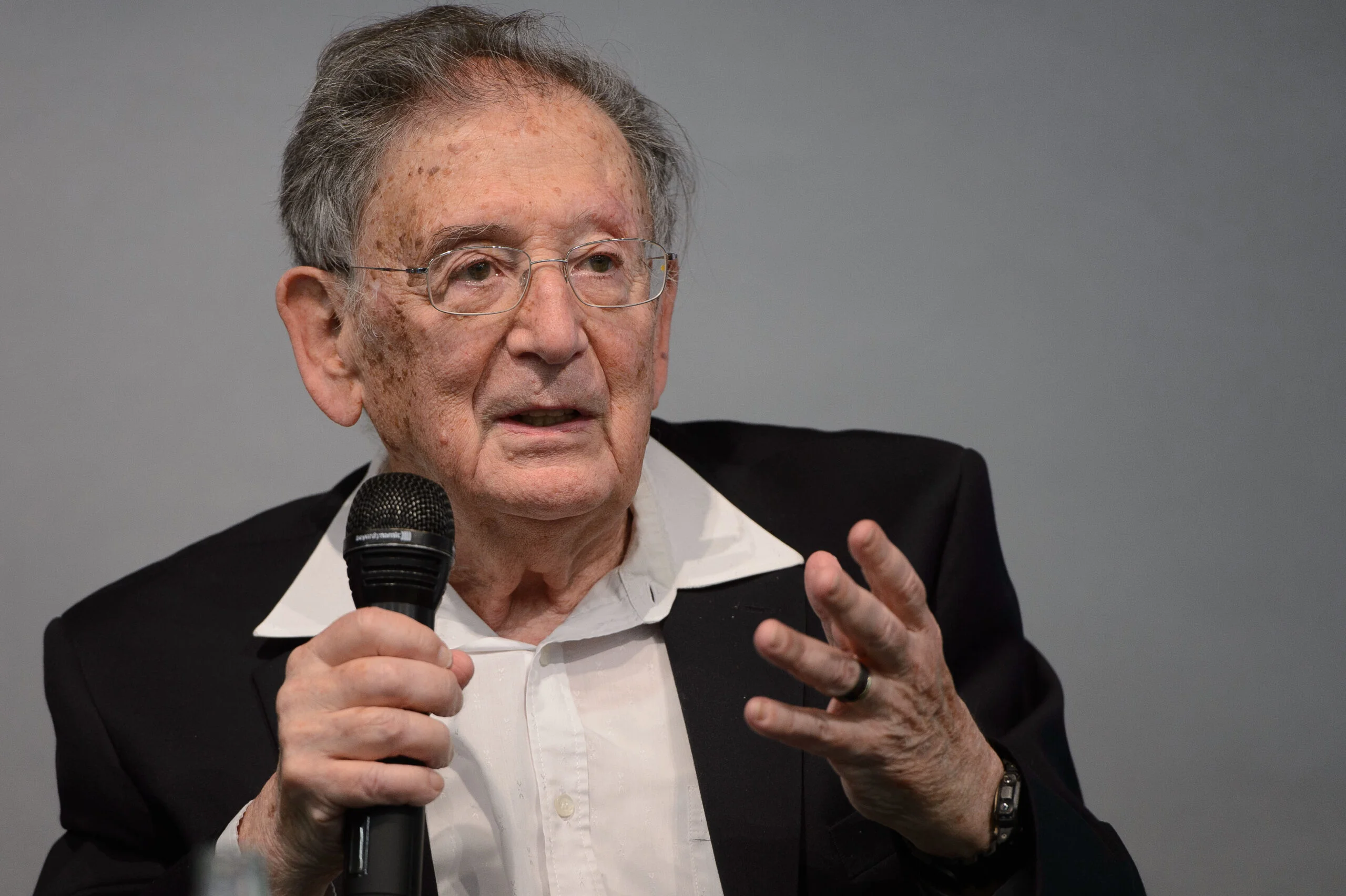
Yehuda Bauer
 Israel
historian•writer•university teacher
Also known as: Jehuda Bauer
Birthday
April 6, 1926
Birth Sign
Aries
Birthplace
Prague, Czechoslovakia
Age
Died at 98
About
Yehuda Bauer was a Czech-born Israeli historian who became one of the world's foremost scholars of the Holocaust. Born in Prague on April 6, 1926, he escaped Nazi-occupied Europe as a teenager and later devoted his life to documenting and interpreting the Shoah. He served as a professor of Holocaust studies at the Avraham Harman Institute of Contemporary Jewry at the Hebrew University of Jerusalem, where he taught for decades and mentored generations of students. Bauer passed away on October 18, 2024, at the age of 98, leaving behind a monumental body of work that reshaped how historians understand the Holocaust.
Widely regarded as a pioneer in the field, Bauer emphasized Jewish resistance and agency during the Holocaust, challenging earlier narratives that focused primarily on victimhood. He was also a leading voice against Holocaust denial and distortion, and he advocated passionately for genocide prevention worldwide. His influence extended beyond academia through his advisory role at Yad Vashem and his founding editorship of the journal Holocaust and Genocide Studies.
Bauer remained active in public discourse well into his nineties, and his final public statement on Holocaust distortion came in August 2023. His passing was mourned by institutions including Yad Vashem, the USC Shoah Foundation, and the World Jewish Congress, reflecting his enduring impact on Holocaust memory and education.
Early Life & Background
Yehuda Bauer was born in Prague, Czechoslovakia, on April 6, 1926, into a Jewish family. His father was a businessman, and the family lived comfortably in the Czech capital. When the Nazis annexed Czechoslovakia on March 15, 1939, the Bauer family fled the country that very day, escaping to the Land of Israel. Yehuda was just 13 years old at the time. This narrow escape meant he was spared the horrors that befell many of his relatives and fellow Czech Jews, but it also shaped his lifelong commitment to studying the Holocaust.
In Israel, Bauer completed his schooling and went on to study history at the Hebrew University of Jerusalem, where he earned his doctorate. His early academic interests were broad, but the enormity of the Holocaust soon became his central focus. He was part of a generation of Israeli scholars who sought to understand the catastrophe that had destroyed European Jewry, and he began teaching at the university in the 1950s.
Bauer's formative years were marked by the trauma of displacement and the urgency of preserving Jewish memory. His personal experience of fleeing persecution gave him a unique perspective that would inform his later scholarship on Jewish resistance and survival.
Career Growth
Yehuda Bauer's academic career spanned more than six decades, during which he became one of the most influential Holocaust historians in the world. He joined the faculty of the Hebrew University of Jerusalem in the 1950s and later became a full professor at the Avraham Harman Institute of Contemporary Jewry. His research broke new ground by focusing on Jewish resistance, which he argued took many forms beyond armed uprisings, including cultural and spiritual defiance. This perspective was articulated in his landmark book Rethinking the Holocaust (2001), which challenged prevailing narratives and remains a cornerstone of Holocaust studies.
Bauer also wrote extensively on the complex issue of collaboration and on the efforts to rescue Jews, as in his book Jews for Sale? (1994), which examined negotiations between Jewish organizations and Nazi officials. He was a founding editor of the journal Holocaust and Genocide Studies and served as an advisor to Yad Vashem, Israel's official Holocaust memorial, for many years. In 1998, he was awarded the Israel Prize, the country's highest honor, for his contributions to history.
In his later years, Bauer turned his attention to genocide prevention, urging world leaders to intervene in places like Rwanda and Darfur. He remained an active public intellectual, giving lectures and writing articles until shortly before his death. His last known public statement, made in August 2023, criticized some of Israel's own politicians for contributing to Holocaust distortion, demonstrating his unwavering commitment to historical accuracy.
Career Timeline
Public Image & Style
Yehuda Bauer was regarded as a towering figure in Holocaust scholarship, known for his rigorous methodology and his willingness to challenge accepted narratives. He was often described as a "historian of the victims" because he emphasized Jewish agency and resistance, rather than portraying Jews solely as passive victims. This approach endeared him to many who sought a more empowering narrative of Jewish history.
In the media, Bauer was a frequent commentator on Holocaust-related issues, and his opinions were sought by journalists and policymakers alike. He was known for his bluntness and his refusal to tolerate Holocaust denial or distortion, which he saw as a dangerous form of antisemitism. His public lectures were well-attended, and he was considered a moral authority on the subject.
Bauer's fandom, if it can be called that, consisted of students, scholars, and members of the public who admired his dedication to truth and his ability to communicate complex historical ideas in an accessible way. He remained a respected voice until his death, and his passing was widely mourned across the world.
Fame & Fandom (iFAMOUS Rankings)
Yehuda Bauer commanded a unique sphere of influence, not as an entertainer with a devoted following of fans who organize campaigns or chant slogans, but as the preeminent academic voice for Holocaust scholarship. His audience consisted of students, historians, and global citizens engaged in serious discourse rather than a pop culture fandom with a specific name. There are no documented fan rituals, birthday billboards, or organized movements bearing his name; instead, his legacy is carried by the generations of scholars he mentored at Hebrew University and the institutions that continue to cite his rigorous methodology. The story most often retold about him is his personal survival: fleeing Prague just as Nazi Germany annexed Czechoslovakia in March 1939, a narrow escape that shaped his lifelong commitment to documenting Jewish agency and resistance. This narrative, along with his famous moral imperative to avoid being a bystander, forms the core of his public memory, treated with the gravity due to a historian of the victims rather than the adoration reserved for celebrity icons. Tributes from Yad Vashem and major news outlets after his death in October 2024 highlighted his role as a mentor and advocate for accurate historical memory, confirming that his impact was measured in intellectual rigor and ethical clarity. While he did not generate viral moments or crowd reactions typical of entertainment figures, his work remains a cornerstone of genocide studies worldwide. iFANN has evaluated Yehuda Bauer within its Global Fame Engine, and the system currently indicates that he holds no placement in the published rankings, including the Global Top 1,000 or any Top-100 scope list. As of August 2026, this status reflects an evaluation where the subject does not currently occupy a ranked position in the database.
Interesting Facts and Legends
Yehuda Bauer was known for his sharp wit and a memorable formulation about the Holocaust's lessons: 'Thou shalt not be a victim, thou shalt not be a perpetrator, but, above all, thou shalt not be a bystander.' This phrase became a central tenet of his legacy, frequently cited in tributes after his passing. He spoke several languages fluently, including Czech, German, Hebrew, and English, which allowed him to engage deeply with primary sources across Europe. A strong opponent of the term 'Holocaust industry,' he argued it trivialized the suffering of victims, while maintaining the nuanced view that the Holocaust was a unique expression of a universal phenomenon. In his youth, Bauer was a member of the socialist-Zionist youth movement Hashomer Hatzair, which profoundly influenced his early political views. Beyond these facts, the widely retold story of his life centers on his family's escape from Czechoslovakia in March 1939, the exact day the country was annexed by Nazi Germany, allowing them to flee before the Holocaust reached their doorstep. This event is often cited to explain his unique perspective as a survivor who did not suffer in the camps yet remained deeply committed to understanding the tragedy. His scholarly pushback against narratives of passive Jewish victimhood, emphasizing resistance instead, further cemented his reputation as a pioneer who challenged accepted histories with precision and courage.
Notable Quotes
“Thou shalt not be a victim, thou shalt not be a perpetrator, but, above all, thou shalt not be a bystander.”
“The Holocaust is not a unique event, but it is a unique expression of a universal phenomenon.”
“We must learn the lessons of the Holocaust and apply them to prevent future genocides.”
“The Jews were not led like sheep to the slaughter; they resisted in many ways.”
Family & Personal Life
Yehuda Bauer was born into a Jewish family in Prague. His father, a businessman, made the decision to flee Czechoslovakia on the day of the Nazi annexation, March 15, 1939. The family, including Yehuda and his siblings, escaped to the Land of Israel, where they settled. This narrow escape saved them from the fate of many European Jews, but they left behind extended family members who perished in the Holocaust.
Details about Bauer's immediate family in later life are not widely publicized. He was married, but his wife's name and information about children are not available in the public record. He lived in Jerusalem for most of his adult life, where he died in his apartment on October 18, 2024.
Notable Connections
Yehuda Bauer was closely associated with several major institutions. He served as an advisor to Yad Vashem, Israel's Holocaust memorial, and was a founding editor of the journal Holocaust and Genocide Studies. He was also affiliated with the Avraham Harman Institute of Contemporary Jewry at the Hebrew University of Jerusalem, where he held the title of Professor Emeritus. In his later years, he collaborated with organizations focused on genocide prevention, including the International Holocaust Remembrance Alliance.
Relationships & Dating History
Yehuda Bauer was a private individual, and little is known about his personal relationships. He was married, but the name of his wife and the details of their marriage are not publicly recorded. He did not have any known high-profile romantic relationships, and his personal life remained largely out of the public eye.
As of 2026, Bauer is deceased, having passed away on October 18, 2024. At the time of his death, he was a widower, as his wife had predeceased him. He is survived by his children and grandchildren, though their names are not publicly available.
Death & Aftermath
Died
October 18, 2024 (aged 98)
Death Place
Jerusalem
Cause of Death
Reported as occurring at an advanced age
The academic world and Jewish institutions immediately honored the passing of a scholar who had reshaped Holocaust studies for decades. The USC Shoah Foundation issued a tribute on October 18, 2024, while Yad Vashem published 'Some Thoughts in Memory of Prof. Yehuda Bauer Z'L' on November 17 to mark the thirty-day anniversary. Major outlets like The New York Times and the Jerusalem Post ran extensive obituaries highlighting his stance against historical distortion and his advocacy for recognizing Jewish resistance during the genocide. Yehuda Bauer passed away on Friday, October 18, 2024, at the age of 98 within his apartment in Jerusalem. He remained an active public intellectual until shortly before his death, with his last known public statement appearing in August 2023 where he criticized Israeli politicians for contributing to Holocaust distortion.
Reports from Taylor & Francis and the Jerusalem Post confirm the location and date, framing the event as occurring at an advanced age following a long life dedicated to scholarship. Following the announcement, tributes poured in from the International Holocaust Remembrance Alliance and various media outlets, cementing his legacy as a pioneer who emphasized moral clarity in historical analysis. While specific details regarding funeral arrangements or burial locations remain unpublicized, the immediate outpouring of respect from global institutions underscores the profound impact of his work. Statements by the family regarding the estate were not made public.
Net Worth (Estate Value)
$5 Million
iFANN Editorial Team estimate
Yehuda Bauer's net worth is not widely documented, as he was an academic rather than a commercial figure. However, per iFANN's editorial analysis, his estate is valued at approximately $5 Million as of 2026. This figure reflects his lifetime earnings from salaries, book royalties, and speaking engagements. Bauer published dozens of books and articles, many of which continue to be sold and cited, generating ongoing royalties for his estate. His works, such as Rethinking the Holocaust and Jews for Sale?, are considered seminal texts in Holocaust studies and are used in universities worldwide. Additionally, he received the Israel Prize in 1998, which came with a monetary award. Since his death, his estate has been managed by his family, and his literary legacy continues to generate income through book sales and academic citations. The exact details of his financial holdings are private, but his scholarly output and prestigious positions suggest a comfortable financial standing.
Awards Won (1)
Yehuda Bauer received the Israel Prize in 1998, the highest honor bestowed by the State of Israel, in recognition of his groundbreaking research on the Holocaust. He was also a recipient of the Yakir Yerushalayim (Worthy Citizen of Jerusalem) award, though the year is not recorded. His contributions to Holocaust scholarship were widely acknowledged by academic institutions worldwide.
1998 · Jewish Studies
Lifetime achievement in Holocaust research
Known For
Rethinking the Holocaust
2001 · Author
Jews for Sale?
1994 · Author
Holocaust and Genocide Studies
1987 · Founding Editor
Keywords
Sources
Quick Facts
- Profession
- historian, writer, university teacher
- Born
- April 6, 1926
- Birthplace
- Prague, Czechoslovakia
- Died
- October 18, 2024
- Death Place
- Jerusalem, Israel
- Gender
- Male
- Birth Sign
- Aries
Personal Details
- Education
- Hebrew University of Jerusalem
Frequently Asked Questions
How old was Yehuda Bauer when he died?
What was Yehuda Bauer's net worth?
Is Yehuda Bauer still alive?
What is Yehuda Bauer best known for?
Where was Yehuda Bauer born?
Similar People
Join the community
fans discussing