 Japan
JapanAbout
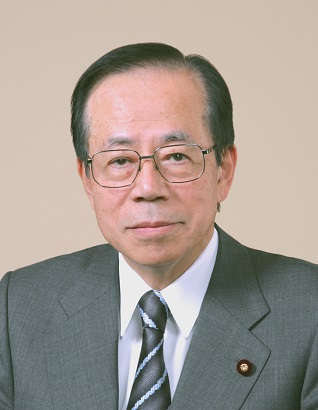
Yasuo Fukuda, born on July 16, 1936, in Takasaki, is a Japanese former politician and economist who served as Prime Minister of Japan from 2007 to 2008. He is the first son of a former prime minister, Takeo Fukuda, to also hold the post. Before his premiership, Fukuda served as Chief Cabinet Secretary from 2000 to 2004 under Prime Ministers Yoshirō Mori and Junichiro Koizumi, a record tenure that stood until Yoshihide Suga surpassed it. His career in politics began after a stint in the private sector, and he rose through the ranks of the Liberal Democratic Party (LDP) to become its president in September 2007, following Shinzo Abe's sudden resignation. During his time as prime minister, Fukuda focused on fiscal reform and diplomatic efforts, including hosting the G8 summit in 2008. However, his administration struggled with low approval ratings and a divided parliament, leading to his resignation in September 2008. He was succeeded by Tarō Asō, making him the first G8 leader to leave office that year. Fukuda's legacy includes his pragmatic approach to governance and his role in navigating Japan through a period of political instability.
Fame & Fandom
Yasuo Fukuda stands as the 83rd most famous person from Japan, a steady position that anchors his legacy in the iFANN Global Fame Rankings. This placement reflects a career defined by high-stakes governance rather than pop-culture spectacle. He served as Prime Minister of Japan from 2007 to 2008 and was the first son of a former prime minister to hold the post himself. His tenure as Chief Cabinet Secretary lasted four years, a record until Yoshihide Suga surpassed it. The public memory of Fukuda is not shaped by fan rituals or organized campaigns; no formal fandom name exists for him, nor do supporters gather for chart pushes or birthday billboards. His interaction with the world remained strictly within the channels of diplomacy and statecraft. While he met with global leaders like George W. Bush at the G-8 Summit in Toyako, these were official diplomatic exchanges, not fan events. The closest equivalent to viral engagement comes from his recent commentary on energy policy, where he warned about oil dependence in interviews during 2024 and 2025. These moments reflect a pragmatic figure whose influence is measured in policy shifts rather than merchandise sales. The rankings track his visibility across global media coverage and consumption signals worldwide, confirming his enduring relevance as a statesman. Unlike entertainers who cultivate mythos through performance, Fukuda's fame rests on documented political history. His resignation in September 2008 remains a defining narrative, driven by low poll ratings and parliamentary deadlock. There are no stories of crowds fainting or streets shutting down in his honor. His audience consists of voters, party members, and international observers who follow his advocacy for peaceful relations between Japan and China. The absence of a named fanbase underscores the distinction between political leadership and celebrity status. He remains a figure of historical significance, recognized globally for his role in shaping modern Japanese politics.
Interesting Facts and Legends
Yasuo Fukuda was born on July 16, 1936, in Takasaki. He worked in the private sector before entering politics, rising through the Liberal Democratic Party ranks. A defining legend of his career is his abrupt resignation on September 1, 2008, after just one year in power. This dramatic exit was driven by chronically low poll ratings and economic challenges, leading to Taro Aso succeeding him. Another significant chapter involves his focus on international relations, particularly continuing peace treaty discussions with Russia while meeting President Dmitry Medvedev in July 2008. In his later years, Fukuda has become known for advocating nuclear expansion and warning against Middle East oil dependence, drawing on his early experience working at a petroleum company during the first oil shock. Recent interviews in 2023 highlighted his commitment to passing friendly relations between Japan and China to future generations. These narratives form the core of his political legacy, distinguishing him from figures surrounded by entertainment folklore. His reputation as a calm leader focused on social welfare and steady governance persists long after his departure from office.
Awards & Accolades
Keywords
Quick Facts
- Profession
- politician, economist
- Born
- +1936-07-16
- Birthplace
- Takasaki
- Gender
- Male
- Spouse
- Kiyoko Fukuda
- Birth Sign
- Cancer
Personal Details
- Spouse
- Kiyoko Fukuda
Join the community
fans discussing