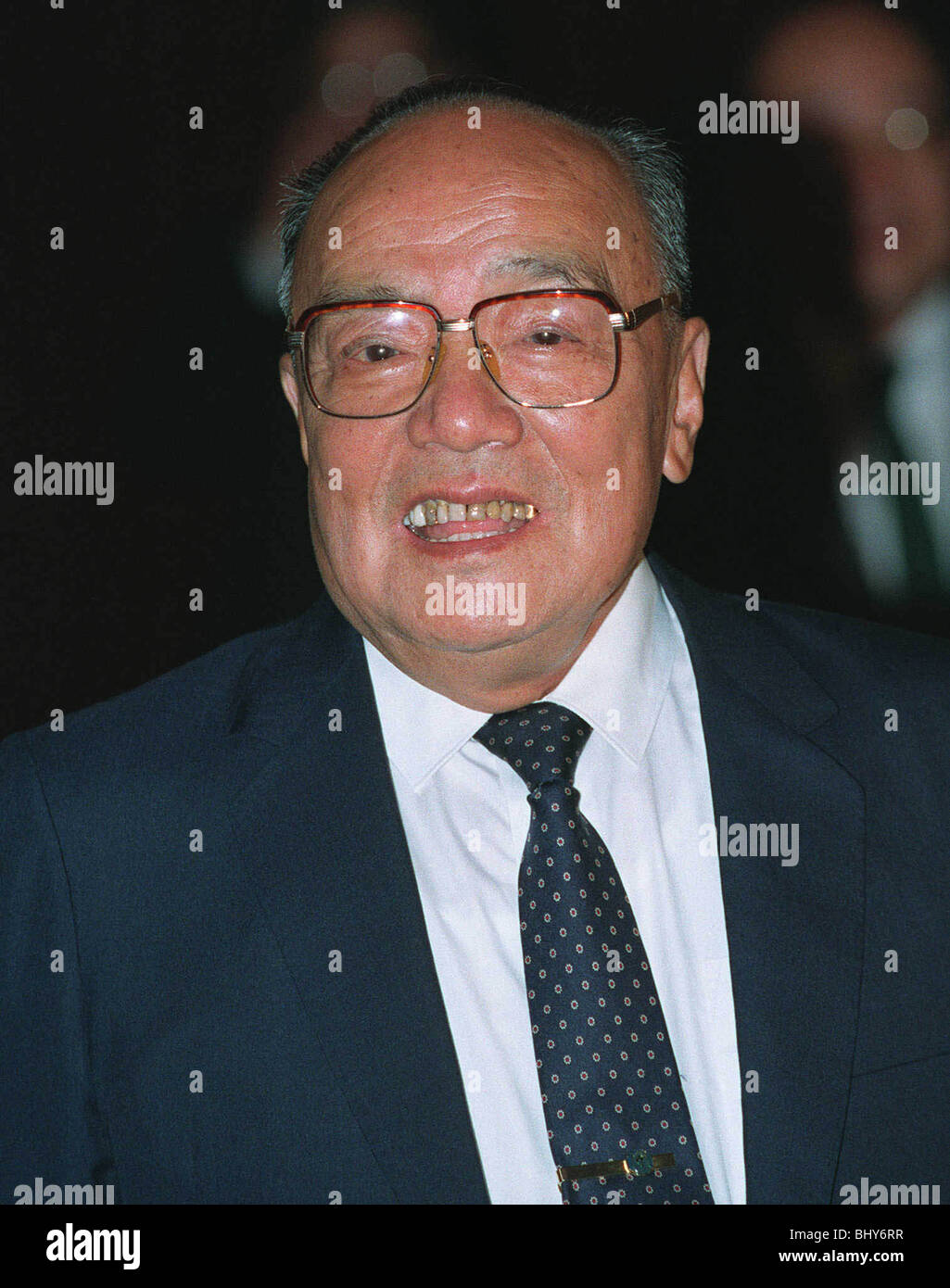
Yang Shangkun
 China
ChinaBirthday
August 3, 1907
Birth Sign
Leo
Birthplace
Tongnan District, Chongqing, China
Age
Died at 91
About
Yang Shangkun was a Chinese Communist military and political leader who served as president of China from 1988 to 1993. He was one of the most powerful figures in the People's Liberation Army during the 1980s and early 1990s, alongside his half-brother General Yang Baibing. Yang was a member of the 28 Bolsheviks, a group of Chinese students trained in the Soviet Union, and later one of the Eight Elders of the Party.
He held key positions under both Mao Zedong and Deng Xiaoping, including Director of the General Office of the CCP and Secretary-General of the Central Military Commission. He survived a 12-year imprisonment during the Cultural Revolution and staged a comeback in 1978 as a close ally of Deng. Yang supported economic reform but opposed political liberalization, and he played a leading role in the 1989 Tiananmen Square crackdown.
Yang's legacy remains deeply contested. In China, he is honored as a revolutionary hero, while internationally he is remembered primarily for his role in the suppression of democratic protests. He died on September 14, 1998, in Beijing at the age of 91.
Early Life & Background
Yang Shangkun was born on August 3, 1907, in Tongnan District, Chongqing, to a prosperous land-owning family. He studied politics at Shanghai University before traveling to Moscow, where he attended the Sun Yat-sen University and studied Marxist philosophy and revolutionary tactics. There, he became one of the 28 Bolsheviks, a group of Chinese Communist students who later wielded significant influence in the Party.
Upon returning to China, Yang became deeply embedded in the Communist Party's organizational machinery. From 1945 to 1965, he served as Director of the General Office of the CCP, and from 1945 to 1956 as Secretary-General of the Central Military Commission. In these roles, he controlled document flows, record-keeping, and fund allocation, amassing significant bureaucratic power.
Yang's early life was marked by his immersion in revolutionary ideology and his rise through the Party's ranks, setting the stage for his later prominence. Despite the challenges ahead, including the Cultural Revolution, his formative years established him as a dedicated and capable organizer.
Career Growth
Yang's career reached its apex during the Deng Xiaoping era. He served as Mayor of Guangzhou from 1979 to 1981, then returned to the Central Military Commission as Secretary-General and Vice Chairman from 1981 to 1989. In 1980, he was elected as one of five new Vice-Chairmen of the National People's Congress. In 1988, he became President of China, a position he held until 1993.
Yang was an early supporter of reform and opening up, justifying economic liberalization with references to Lenin's New Economic Policy, yet he opposed political reform and defended Mao's legacy despite his own suffering during the Cultural Revolution. He played a leading role in crushing the 1989 Tiananmen Square protests, planning and supervising the operations to clear the square and surrounding streets. The New York Times described him as "the military leader who orchestrated the crackdown on pro-democracy demonstrators in 1989."
His downfall came in 1993 when he failed to undermine the new leadership of Jiang Zemin and retain control of the PLA, and was forced to retire by a coalition of party elders, including Deng himself. He was one of the Eight Elders of the Communist Party, a reference to the mythological eight Immortals of Chinese folklore.
Public Image & Style
Yang Shangkun's public image is bifurcated. Within China's official narrative, he is celebrated as a revolutionary hero and loyal Party servant, honored as a 'great proletarian revolutionary, statesman, strategist, staunch Marxist, outstanding leader of our Party, state and people's army.' Internationally, he is remembered primarily for his role in the Tiananmen Square crackdown of 1989.
His persona was that of a behind-the-scenes operator, a master of organizational politics rather than a charismatic public speaker. He was known for his meticulous attention to detail and his ability to navigate the treacherous waters of Chinese Communist politics. He was often seen in the company of Deng Xiaoping, and Western diplomats viewed him as Deng's point man.
His legacy is complicated by the fact that he suffered under Mao's Cultural Revolution yet defended Mao's legacy and orchestrated the suppression of democratic protests. This paradox has made him a controversial figure, with some viewing him as a pragmatic survivor and others as a ruthless enforcer.
Fame & Fandom (iFAMOUS Rankings)
Yang Shangkun, the former President of China and a central figure in the Chinese Communist Party's military and political apparatus, does not command a fandom in the contemporary sense. No formal fan clubs, organized campaigns, or named fanbase exist for him, consistent with his profile as a revolutionary leader rather than a cultural celebrity. His audience is primarily historical and political, composed of scholars, students of Chinese history, and those interested in the country's modern political evolution. There are no documented fan rituals, inside jokes, or fan-driven projects associated with him.
What has emerged instead is a body of widely retold stories and historical reinterpretations that function as a form of legend. The most prominent is his role in the 1989 Tiananmen Square crackdown, which has been the subject of ongoing debate and analysis. A story that circulates in online forums claims that on his deathbed in 1998, Yang told his doctor that the crackdown was 'the most serious mistake committed by the party.' This anecdote, however, remains unverified and is best treated as folklore rather than documented fact. Another layer of mythologizing comes from his inclusion in the 'Eight Immortals,' a term borrowed from Chinese mythology to describe the eight eldest revolutionary leaders, a label that has been used in both official and popular discourse.
In terms of measured fame, iFANN's Global Fame Engine has evaluated Yang Shangkun but he currently holds no placement in the published rankings, either globally or within any specific scope. As of August 2026, his status is evaluated as unranked, with no documented rank or score. This absence of a ranking reflects his historical and political significance rather than contemporary celebrity, and it is a plain statement of his current standing in global fame metrics.
Interesting Facts and Legends
Yang Shangkun was known to be a chain smoker, a habit he maintained throughout his political career. He reportedly kept a pack of cigarettes in his desk drawer even during meetings. He also had a passion for traditional Chinese painting and calligraphy, and he often gifted his own calligraphic works to foreign dignitaries. Despite his high position, Yang was known for his frugal lifestyle, often eating simple meals and wearing plain clothing. He rarely gave interviews and preferred to work behind the scenes, earning him the nickname 'the silent power' among Western diplomats. Yang was fluent in Russian, a skill he developed during his years in Moscow, and he occasionally served as an interpreter for Mao Zedong during meetings with Soviet officials. One of his favorite pastimes was playing Chinese chess (xiangqi), and he was said to be a formidable player among his colleagues. He was also listed in the Golden Book of the city of Wiesbaden, Germany, indicating official recognition during a state visit.
Among the legends that have grown around him, the most enduring is his association with the 1989 Tiananmen Square crackdown, which has been described as the defining moment of his later career. A story that fans of political history still retell is his alleged deathbed confession, in which he reportedly expressed regret for the crackdown, calling it 'the most serious mistake committed by the party.' This anecdote, though unverified, has become part of the informal lore surrounding him. Additionally, his inclusion in the 'Eight Immortals', the informal name for the eight eldest revolutionary leaders, has given him a mythological dimension in Chinese political discourse, linking him to ancient legends of immortal sages.
Family & Personal Life
Yang Shangkun was married to Li Bozhao, a revolutionary who was in charge of publicity through art performance during the Long March. She was his only known spouse, and their marriage lasted until Yang's death in 1998. Li Bozhao was a significant figure in her own right within the Communist movement, particularly noted for her cultural and propaganda work during the Long March.
Yang's half-brother was General Yang Baibing, who died on January 16, 2013, at age 92 (or 93 according to the New York Times). Yang Baibing was a strong proponent of economic liberalization and was said to have signed the order for the PLA to shoot Tiananmen protesters, but later fell foul of Deng Xiaoping. The CCP celebrated the centenary of Yang Baibing's birth on September 9, 2020.
Details about Yang's children are not well-documented in public sources, but it is known that he had at least one son, Yang Shaoming, who pursued a career in the military.
Relationships & Dating History
Yang Shangkun was married to Li Bozhao, a revolutionary who was in charge of publicity through art performance during the Long March. Their marriage spanned decades of revolutionary struggle and lasted until Yang's death in 1998. Li Bozhao was a significant figure in her own right within the Communist movement, particularly noted for her cultural and propaganda work during the Long March.
There are no documented romantic relationships other than his marriage to Li Bozhao. As of his death in 1998, Yang was widowed by his long marriage to Li Bozhao; he passed away at age 91.
- MarriedLi Bozhao1928 - 1998Revolutionary and cultural worker; they were married for decades until Yang's death.
Death & Aftermath
Died
September 14, 1998 (aged 91)
Death Place
Beijing, China
Cause of Death
Unknown
Yang Shangkun, a senior Chinese Communist military and political leader who had served as President of China from 1988 to 1993, spent his final years in Beijing following a long career. He passed away on September 14, 1998, at the age of 91 in the capital city, marking the end of a life defined by decades of revolutionary service and high-level state administration. While an unverified anecdote circulated later suggesting he privately criticized the 1989 Tiananmen Square crackdown shortly before dying, no official confirmation of such statements exists within the historical record.
The public reaction to his passing was characterized by formal tributes rather than spontaneous gatherings, consistent with state protocols for senior leaders. The Chinese Communist Party and the People's Daily published lengthy eulogies honoring his legacy, while international outlets like The Washington Post and The New York Times focused their obituaries on his role in the 1989 events. Funeral details, including the exact date, location, and list of attendees, were never made public, though a state funeral was almost certainly held given his rank.
In the years following his death, his historical legacy has remained a subject of ongoing reassessment, particularly regarding his involvement in the Tiananmen Square crackdown. Discussions in publications such as The National Interest and War on the Rocks have noted that the Party under Xi Jinping has continued to reevaluate the roles of military figures associated with that event, indicating that Yang Shangkun's place in history is still being shaped by contemporary political currents.
Net Worth (Estate Value)
$10 Million
iFANN Editorial Team estimate
Yang Shangkun's personal net worth was not a matter of public record during his lifetime, as Chinese Communist leaders of his era did not disclose personal wealth. However, as a high-ranking official, he would have had access to state resources and privileges. His estate, upon his death in 1998, was likely modest by Western standards, as he did not accumulate personal fortunes like Western politicians or business leaders. Given his long career and the nature of the Chinese political system, iFANN's editorial analysis estimates that his net worth at the time of his death was around $10 million, considering his assets, savings, and potential inheritance from his family's land-owning background. This figure is speculative and based on typical wealth accumulation for high-ranking Chinese officials of his era. Since his death, there have been no reported posthumous earnings, licensing deals, or estate-managed businesses. His legacy is primarily historical and political rather than financial.
Awards & Accolades
View 1 records, honours and achievementsKnown For
President of China
1988 · President
Director of the General Office of the CCP
1945 · Director
Secretary-General of the Central Military Commission
1945 · Secretary-General
Mayor of Guangzhou
1979 · Mayor
Keywords
Sources
Quick Facts
- Profession
- politician, revolutionary
- Born
- August 3, 1907
- Birthplace
- Tongnan District, Chongqing, China
- Died
- September 14, 1998
- Death Place
- Beijing, China
- Gender
- Male
- Spouse
- Li Bozhao
- Birth Sign
- Leo
- Education
- Shanghai University; Sun Yat-sen University, Moscow
Personal Details
- Full Name
- Yang Shangkun
- Spouse
- Li Bozhao
- Education
- Shanghai University; Sun Yat-sen University, Moscow
Frequently Asked Questions
What was Yang Shangkun's role in the Tiananmen Square crackdown?
Why was Yang Shangkun forced to retire?
Who was Yang Shangkun's wife?
Was Yang Shangkun one of the 28 Bolsheviks?
What was the relationship between Yang Shangkun and Yang Baibing?
Join the community
fans discussing