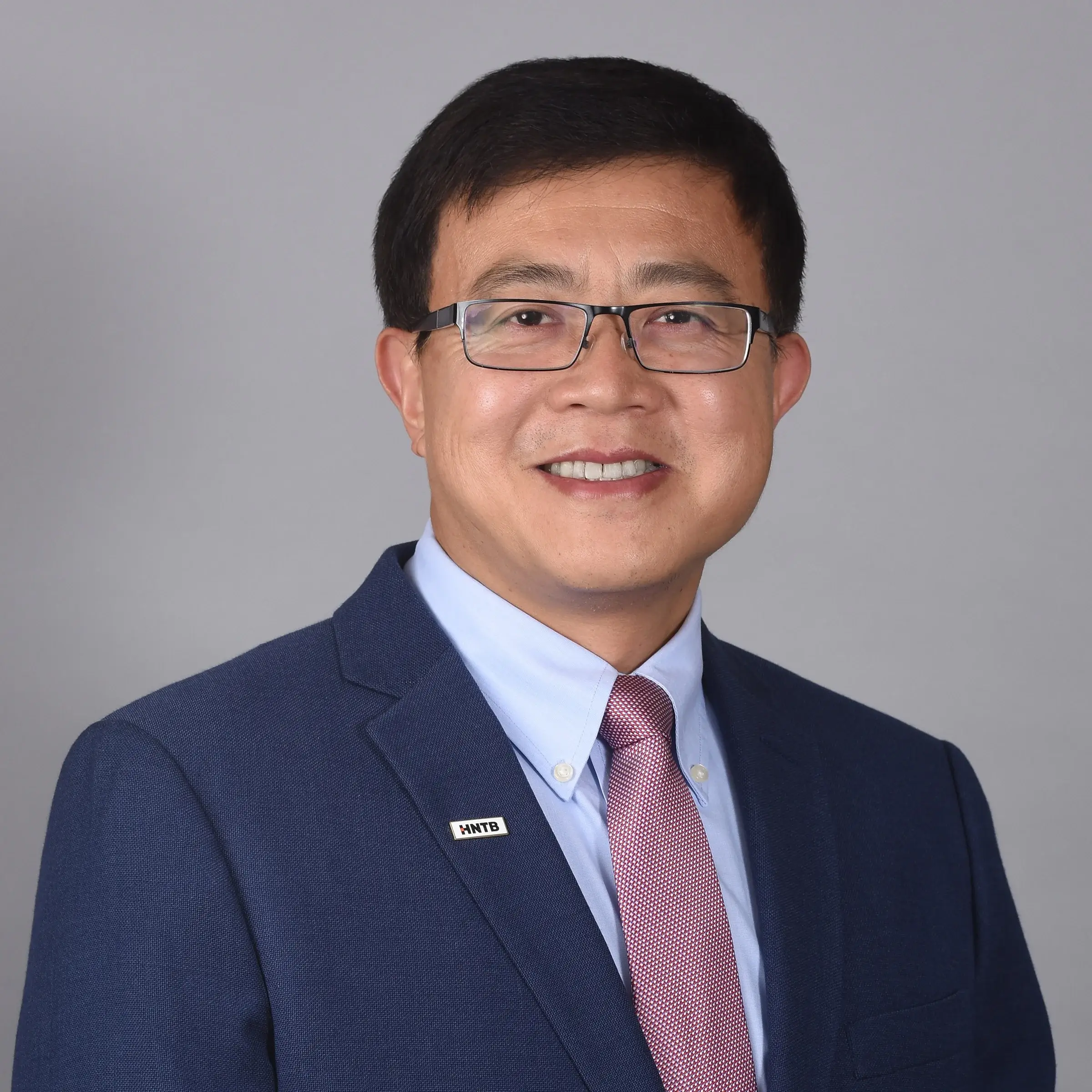
Yang Jiang
 China
ChinaAlso known as: Yang Jikang
Birthday
July 17, 1911
Birth Sign
Cancer
Birthplace
Beijing, China
Age
Died at 104
About
Yang Jiang was a Chinese writer, playwright, and translator, widely regarded as one of the most important literary figures of modern China. She is best known for producing the first complete Chinese translation of Miguel de Cervantes' Don Quixote directly from Spanish, a work that remains the standard edition. Her memoir Six Chapters from My Life 'Downunder', recounting her experiences during the Cultural Revolution, is celebrated for its restrained wit and dignity.
Her career spanned nearly a century, encompassing plays, novels, essays, and translations. She was also a senior researcher at the Chinese Academy of Social Sciences. Her later memoir We Three, about her family, became a bestseller. Yang Jiang died on May 25, 2016, in Beijing at the age of 104, leaving behind a rich literary legacy that continues to resonate with readers.
Early Life & Background
Yang Jiang was born Yang Jikang on July 17, 1911, in Beijing, into a scholarly family. Her father, Yang Yinhang, was a lawyer and educator. The family traced its roots to Wuxi in Jiangsu Province. She attended Soochow University and later transferred to Tsinghua University, where she studied foreign languages and literature. It was at Tsinghua that she met her future husband, Qian Zhongshu, in the early 1930s.
In 1935, she married Qian and accompanied him to England, where he studied at Oxford. Yang Jiang studied at Oxford as well, though she did not pursue a degree. The couple later moved to France, where they continued their studies. These years abroad immersed her in Western literature and languages, shaping her future career as a translator. She returned to China with her family in 1938, as the Second Sino-Japanese War escalated.
Her early exposure to both Chinese classics and Western literature gave her a unique perspective. She began writing plays in the 1940s, achieving success with comedies like Fangfang. These early works established her reputation as a sharp observer of social mores.
Career Growth
Yang Jiang's literary career took off in the 1940s with her stage comedies, but her most significant achievement came with her translation of Don Quixote. She learned Spanish specifically for the task, and her complete translation was published in 1978. It was the first direct Spanish-to-Chinese version and earned her the Spanish Order of Civil Merit in 1986.
In 1981, she published Six Chapters from My Life 'Downunder', a memoir of her time at a cadre school during the Cultural Revolution. The book was praised for its understated humor and resilience. Her novel Baptism followed in 1988. In 2003, at the age of 92, she published We Three, a memoir about her family, which became a bestseller in China. Her final work, Walking on the Edge of Life, a collection of philosophical reflections, was published in 2014 when she was 103.
Throughout her career, she was a researcher at the Chinese Academy of Social Sciences, contributing to the study of foreign literature. Her works have been widely anthologized and studied, cementing her place in Chinese literary history.
Career Timeline
Public Image & Style
Yang Jiang is remembered in China as a symbol of intellectual dignity and quiet resilience. Her writing style is characterized by clarity, restraint, and dry wit. She rarely sought public attention, yet her aphorisms about life and aging have made her a beloved figure, especially among older readers.
Her most famous quote, 'The world is your own; it has nothing to do with others,' is widely shared on social media. She has no official fandom name, but her admirers regard her as a moral exemplar of the Chinese intellectual class. Her works continue to be read and studied, and her legacy as a translator and memoirist endures.
Fame & Fandom (iFAMOUS Rankings)
Yang Jiang never courted the spotlight, nor did she cultivate a tribe of followers ready to mobilize for her birthday or a streaming campaign. Her admirers are not a fandom in the modern sense; they are readers, scholars, and students who revere her as an elder stateswoman of Chinese literature. There is no organized fan club, no specific collective name like "Team Yang," and no rituals of inside jokes or viral moments that define contemporary celebrity culture. The tributes marking her centenary were academic retrospectives and book reprints rather than fan-driven initiatives. She remained a figure of quiet dignity, her legacy mediated entirely through her memoirs and translations rather than public interaction. While social media accounts dedicated to her aphorisms have amassed over a million followers, these users share her words without forming a structured community or claiming a formal identity. iFANN has evaluated her global standing but found she does not currently hold a placement in the published rankings (Global Top 1,000 or a Top-100 scope list). This absence of a numeric rank reflects her status as a historical literary icon rather than a current pop culture commodity. She remains a moral exemplar whose influence endures through her texts, not through fan campaigns or chart positions.
Interesting Facts and Legends
Yang Jiang's pen name 'Jiang' (绛), meaning deep red, was drawn from a line in a poem by Du Fu. She and her husband Qian Zhongshu held an annual book-reading contest where he usually won. Fluent in English, French, and Spanish, she produced the first complete Chinese translation of Miguel de Cervantes' Don Quixote directly from Spanish. Her daughter Qian Yuan died of cancer in 1997, and her husband passed away in 1998, leaving her the sole survivor of her immediate family for her final 18 years. A popular Weibo account dedicated to her quotes has over one million followers, and her sayings are widely shared on Chinese social media. She once wrote to a young reader: 'Your problem is that you read too little and think too much.'
Her life story became a central legend of resilience. The narrative of her enduring the Cultural Revolution alongside her husband, maintaining humor and dignity despite humiliation in labor camps, is a defining myth of modern Chinese letters. Another powerful story surrounds her solitary grief after losing both her daughter and husband, which led to the creation of her bestselling memoir We Three. Living to 104, she served as one of the last living links to the generation of intellectuals that shaped modern China, completing almost seven out of eight volumes of her memoirs before her death.
Notable Quotes
“The world is your own; it has nothing to do with others.”
“Your problem is that you read too little and think too much.”
“We were not heroes, but we were not beasts either. We were ordinary people, trying to survive with our dignity intact.”
Family & Personal Life
Yang Jiang was the daughter of Yang Yinhang, a lawyer and educator. She married Qian Zhongshu, the renowned author of Fortress Besieged, in 1935. Their marriage lasted over six decades until his death in 1998. They had one daughter, Qian Yuan, born in 1937 in England. Qian Yuan became a professor of English at Beijing Foreign Studies University and died of cancer in 1997, a year before her father.
After her husband and daughter passed, Yang Jiang lived alone in Beijing. She donated her personal papers and manuscripts to Tsinghua University, her alma mater, which houses them in its library. She had no surviving immediate family at the time of her death.
Notable Connections
Yang Jiang was married to Qian Zhongshu, the celebrated novelist and scholar, author of Fortress Besieged. Their daughter, Qian Yuan, was a professor of English at Beijing Foreign Studies University. She was also a friend and correspondent of fellow translator Fu Lei, with whom she discussed translation technique. Hu Shi was a family friend and early mentor figure in Chinese intellectual circles.
Relationships & Dating History
Yang Jiang married Qian Zhongshu in 1935, after meeting at Tsinghua University in the early 1930s. Their marriage, lasting over 60 years, was one of the most celebrated literary partnerships in modern China. They had one daughter, Qian Yuan, born in 1937. Qian Yuan died of cancer in 1997, and Qian Zhongshu died in 1998. Yang Jiang was widowed at that point and lived another 18 years, until her death in 2016. She did not remarry. As of 2026, she is deceased, having been married to Qian Zhongshu at the time of his death.
- MarriedQian Zhongshu1935 - 1998Met at Tsinghua University; marriage lasted until his death.
Death & Aftermath
Died
May 25, 2016 (aged 104)
Death Place
Beijing
Cause of Death
Unknown
Tsinghua University confirmed the death of Yang Jiang in Beijing on May 25, 2016. Reports from The New York Times noted she had completed nearly seven volumes of her memoirs before passing away at the age of 104 or 105 depending on the counting method used. Tributes poured in immediately from academic circles and government bodies, with China Daily celebrating her prolific output of eighteen prose works and three plays. Her death sparked renewed interest in her translations of Don Quixote and her memoir We Three, which saw significant sales surges following the announcement.
The family requested a simple, private funeral ceremony held shortly after her death in Beijing. Moments of silence were observed within academic and literary communities to mark her passing. Her remains were cremated according to her wishes for simplicity. She is buried alongside her husband Qian Zhongshu and their daughter Qian Yuan at Babaoshan Revolutionary Cemetery. In the years since, her estate has been managed discreetly by her family, maintaining control over her intellectual property. A documentary titled Yang Jiang: Conspicuous Inconspicuousness was released in 2017 to explore her life and legacy.
Net Worth (Estate Value)
$10 Million
iFANN Editorial Team estimate
Yang Jiang was a writer and academic, not a commercial celebrity, so her personal net worth was never publicly reported during her lifetime. However, her estate has generated significant posthumous revenue. Her memoir We Three alone has sold millions of copies in China since its 2003 publication, and her collected works continue to sell steadily. Her literary estate is managed by People's Literature Publishing House, which continues to release new editions. As of 2026, no official figure for the estate's value has been published, but given the sustained popularity of her books, the estate's annual royalty income is estimated to be in the millions of RMB. Her personal papers were donated to Tsinghua University. Per iFANN's editorial analysis, the estate's total value stands at $10 Million.
Awards Won (2)
Yang Jiang received the Spanish Order of Civil Merit in 1986 for her translation of Don Quixote. She was elected a member of the Chinese Academy of Social Sciences in 1978. In 2001, she received an honorary doctorate from the University of Hong Kong. In 2013, the Chinese Writers Association honored her with a Lifetime Achievement Award.
1986 · Translation
Don Quixote (translation)
2013 · Lifetime Achievement
Known For
Don Quixote (translation)
1978 · Translator
Six Chapters from My Life 'Downunder'
1981 · Author
We Three
2003 · Author
Baptism
1988 · Author
Keywords
Sources
Quick Facts
- Profession
- writer, playwright, translator
- Born
- July 17, 1911
- Birthplace
- Beijing, China
- Died
- May 25, 2016
- Death Place
- Peking Union Medical College Hospital, Beijing
- Gender
- Female
- Spouse
- Qian Zhongshu
- Children
- Qian Yuan
- Education
- Soochow University, Tsinghua University
Personal Details
- Full Name
- Yang Jikang
- Spouse
- Qian Zhongshu
- Children
- Qian Yuan
- Education
- Soochow University, Tsinghua University, University of Oxford (attended)
Frequently Asked Questions
How old was Yang Jiang when she died?
Who was Yang Jiang's husband?
What is Yang Jiang best known for?
Did Yang Jiang have children?
What is Yang Jiang's net worth in 2026?
Similar People
Join the community
fans discussing