
Yakov Sinai
 Russia
Mathematician•physicist•university teacher
Also known as: Yakov Grigoryevich Sinay, Yakov G. Sinai, Ya. G. Sinai, Yakov Grigorevich Sinai
Birthday
September 21, 1935
Birth Sign
Virgo
Birthplace
Moscow, Russia
Age
91 years old
About
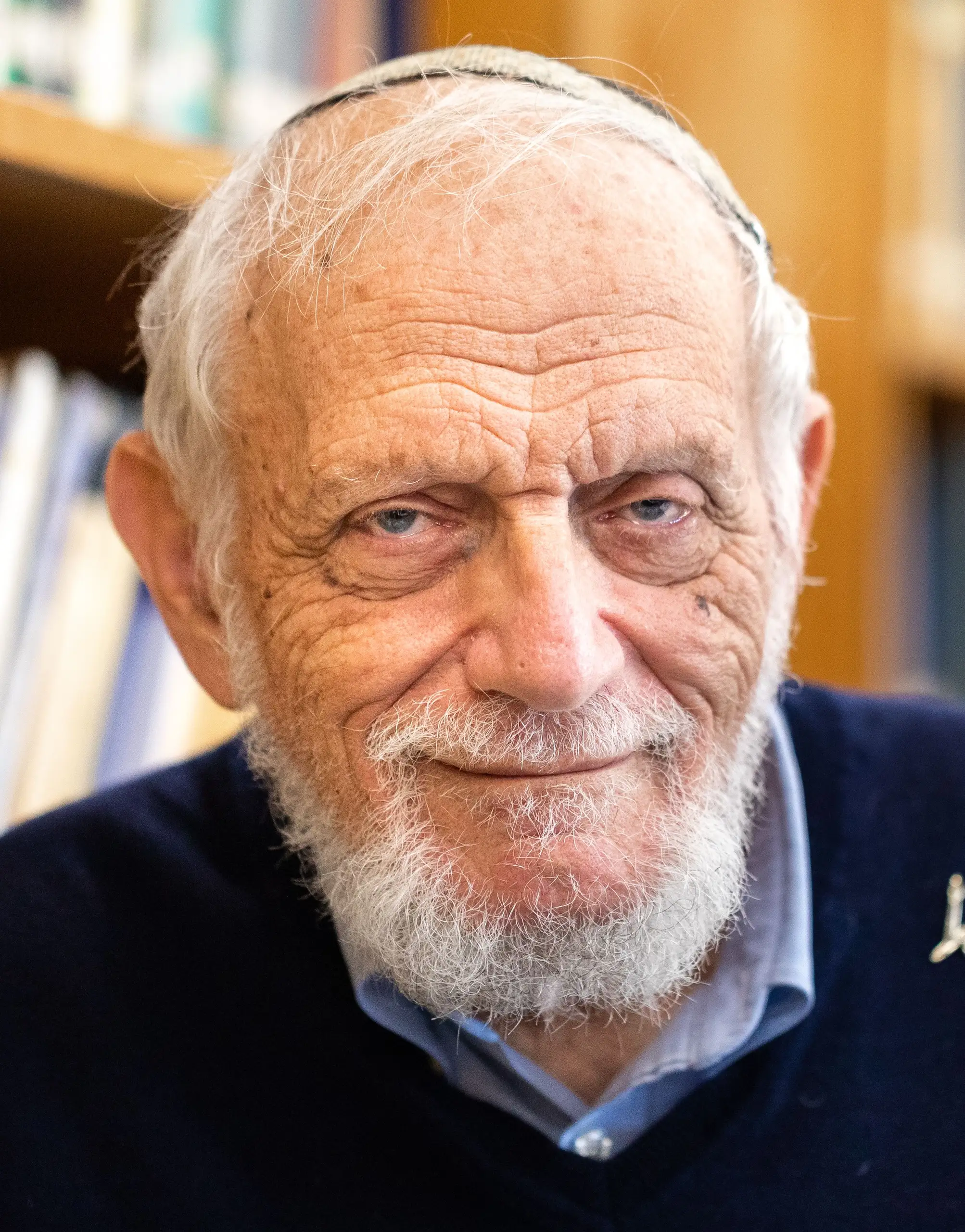
Yakov Sinai is a Russian-American mathematician whose work has reshaped the fields of dynamical systems, ergodic theory, and mathematical physics. Born in Moscow on September 21, 1935, he has spent decades probing the boundary between deterministic and random behavior, developing tools that now underpin modern statistical mechanics and probability theory.
Currently a professor of mathematics at Princeton University and a senior researcher at the Landau Institute for Theoretical Physics, Sinai remains an active figure in his field. His name appears on concepts like the Kolmogorov–Sinai entropy and the Sinai billiard, both fundamental to understanding chaos and complexity.
In 2014 he received the Abel Prize, often described as the Nobel of mathematics, for his lifelong contributions. His work has inspired generations of mathematicians and physicists, and his influence continues to be felt across the sciences.
Early Life & Background
Yakov Grigorevich Sinai was born in Moscow in 1935, into a family of scientists. His grandfather, a significant intellectual influence, introduced him to mathematics and the natural sciences, nurturing a curiosity that would define his career. Growing up in the Soviet Union, Sinai showed an early aptitude for abstract thinking.
He enrolled at Moscow State University, where he studied in the Department of Mechanics and Mathematics, known as Mekhmat. There he came under the mentorship of Andrey Kolmogorov, one of the towering figures of twentieth-century mathematics. Kolmogorov recognized Sinai's potential and guided his early research, which focused on the metric theory of dynamical systems.
During his graduate years in the late 1950s, Sinai developed the concept of entropy for dynamical systems, now called the Kolmogorov–Sinai entropy. This work, completed under Kolmogorov's supervision, laid the groundwork for his entire career. He also absorbed the cultural heritage of his family, which included the study of the Bible and Talmud, a background that would later influence his perspective on the interplay between order and randomness.
Career Growth
After completing his doctorate, Sinai's career accelerated rapidly. In the 1960s and 1970s, he made landmark contributions to statistical mechanics, particularly through his analysis of the Ising model and phase transitions. His work on hyperbolic dynamical systems led to the famous Sinai billiard, a model of a particle moving in a box with circular obstacles, which demonstrated that even simple deterministic systems can exhibit chaotic behavior.
In 1971, Sinai became a senior researcher at the Landau Institute for Theoretical Physics in Moscow, a position he has maintained ever since. This dual affiliation with both mathematics and physics allowed him to bridge the two disciplines.
In 1993, he moved to Princeton University, where he became a professor of mathematics. His arrival marked a new chapter, and he continued to produce influential research on probability, dynamical systems, and mathematical physics. His work on the renormalization group method in fluid dynamics, presented in a 2010 lecture, exemplifies his ongoing exploration of complex phenomena.
The crowning achievement of his career came in 2014, when he was awarded the Abel Prize for his fundamental contributions to dynamical systems, ergodic theory, and mathematical physics. The prize, presented by Crown Prince Haakon of Norway, carried a monetary award of 6 million Norwegian kroner, roughly $1 million at the time.
Career Timeline
Public Image & Style
Sinai is regarded as one of the most influential mathematicians of his generation, known for his clarity of thought and ability to connect abstract ideas with physical intuition. Colleagues describe him as a generous mentor and a deep thinker, someone who values elegance in mathematics.
His public persona is that of a humble scholar, dedicated to the pursuit of knowledge rather than fame. He rarely gives interviews, but when he does, he speaks with quiet authority, often emphasizing the role of intuition and the beauty of mathematics.
In the mathematics community, he is celebrated for bridging the gap between deterministic and probabilistic systems, and his work has inspired a devoted following among researchers in dynamical systems and statistical mechanics.
Fame & Fandom (iFAMOUS Rankings)
Yakov Sinai commands a following defined not by billboards or viral trends, but by the profound reverence of the global mathematical community. His audience consists of rigorous scholars and students who trace their intellectual lineage back to his lectures, creating a unique ecosystem where admiration is measured in citations and solved conjectures rather than merchandise sales. While he lacks a formal fandom name or organized fan clubs, his influence ripples through every corner of modern physics and probability theory, sustained by an academic legacy that spans generations.
This quiet intensity has propelled him into the upper echelons of digital fame metrics. He is currently recognized as the 62nd most famous person in AI, a position he has held steady across recent cycles within the iFANN Global Fame Rankings. This placement reflects a global attention span that tracks deep engagement across media coverage, search, and consumption signals worldwide, elevating a pure mathematician to a figure of significant cultural weight in technology and science.
Interesting Facts and Legends
Yakov Sinai has supervised 40 doctoral students, and his academic descendants number over 450, a reflection of his influence as a mentor. His grandfather, who played a pivotal role in his upbringing, was a scientist himself, and Sinai often credits him for sparking his interest in mathematics. In an interview, Sinai remarked that mathematics can be more exquisite than poetry, because it sometimes yields completely unexpected answers. He has a deep appreciation for the arts, particularly literature and music, which he says informs his mathematical thinking. A lesser-known fact: Sinai's family studied the Bible and Talmud, and he has spoken about how this cultural heritage shaped his view of the world. While there is no formal fanbase or viral folklore surrounding the mathematician, his legacy includes widely celebrated milestones like receiving the 2014 Abel Prize for fundamental contributions to dynamical systems. This award stands as the defining moment of his public recognition, cementing his status among the elite of his field rather than through pop culture phenomena. In August 2026, the 62nd most famous person in AI remains a steady placement within the iFANN Global Fame Rankings, reflecting his enduring impact on theoretical foundations that underpin modern computational models.
Notable Quotes
“Mathematics can be more exquisite than poetry. Because sometimes it yields totally unpredictable answers.”
“To be a good mathematician, you need inner voice.”
Family & Personal Life
Details about Sinai's immediate family, including his parents and any siblings, are not widely publicized. He was born into a family of scientists in Moscow, and his grandfather was a significant influence on his intellectual development. The family's Jewish heritage, including the study of religious texts, was part of his upbringing.
As of 2026, Sinai is not known to be married, and no information about children is available. He has kept his personal life private, focusing public attention on his work.
Notable Connections
Andrey Kolmogorov, his doctoral supervisor and mentor, shaped Sinai's early career. He also counts Hillel Furstenberg and Gregory Margulis among his peers, both of whom later won the Abel Prize for related work.
Relationships & Dating History
Salary, Net Worth In 2026
$1 Million
iFANN Editorial Team estimate
Yakov Sinai's net worth remains difficult to estimate precisely given his status as a dedicated academic rather than a public celebrity. His primary income stems from his professorial salary at Princeton University, which for a senior mathematics professor likely ranges in the low six figures annually. He also secures research grants and funding from various academic institutions throughout his career. Per iFANN's editorial analysis, his total estimated wealth stands at $1 Million. In 2014, the Abel Prize brought him approximately $1 million, a one-time windfall that significantly boosted his personal finances. Over his long career, accumulated savings and investments have likely grown his wealth further. As of 2026, his true worth may be higher, considering decades of academic earnings and prize money.
Awards Won (2)
Yakov Sinai has received numerous prestigious awards, most notably the 2014 Abel Prize, often considered the Nobel Prize of mathematics. He is also a Fellow of the Royal Society, elected in recognition of his revolutionary contributions to mathematics.
2014 · Mathematics
Fundamental contributions to dynamical systems, ergodic theory, and mathematical physics
2009 · Honorary Fellowship
For contributions to mathematics
Known For
Kolmogorov–Sinai entropy
1959 · Co-developer
Sinai billiard
1970 · Creator
Abel Prize
2014 · Recipient
Keywords
Sources
Quick Facts
- Profession
- Mathematician, physicist, university teacher
- Born
- September 21, 1935
- Birthplace
- Moscow, Russia
- Gender
- Male
- Birth Sign
- Virgo
- Nationality
- Russian-American
- Field
- Mathematics, Physics
- Institution
- Princeton University, Landau Institute
Personal Details
- Full Name
- Yakov Grigorevich Sinai
- Education
- Moscow State University (Mekhmat)
Frequently Asked Questions
What is Yakov Sinai known for?
Did Yakov Sinai win the Abel Prize?
Where does Yakov Sinai teach?
What is Yakov Sinai's nationality?
How old is Yakov Sinai?
Similar People
Join the community
fans discussing