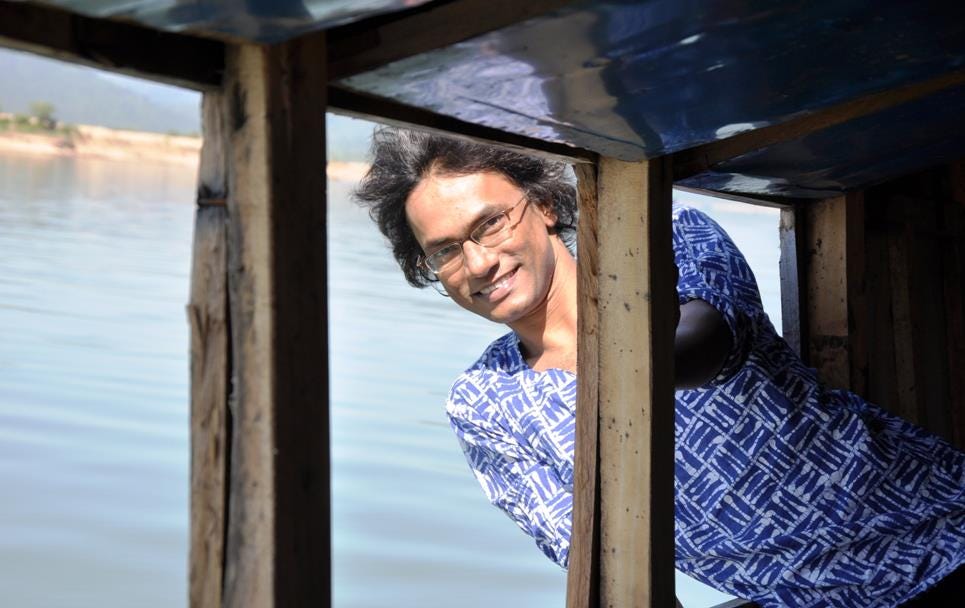
Xulhaz Mannan
 Bangladesh
LGBTQ rights activist•editor-in-chief•journalist
Also known as: Julhas Mannan
Birthday
October 12, 1976
Birth Sign
Libra
Birthplace
Bangladesh
Age
Died at 39
About
Xulhaz Mannan was a Bangladeshi journalist and LGBTQ+ rights activist who founded Roopbaan, the country's first and only magazine for the queer community. He worked at USAID while championing visibility and equality for LGBTQ+ people in Bangladesh. In 2016, he was killed in a brutal machete attack, along with his friend and fellow activist Mahbub Rabbi Tonoy, by Ansar al-Islam, the Bangladeshi branch of Al-Qaeda. His murder sent shockwaves through the international human rights community and underscored the dangers faced by activists in the region.
Mannan's legacy lives on through the continued recognition of his work by organizations like Amnesty International and PEN International, and through the ongoing legal proceedings that brought his killers to justice. He is remembered as a courageous pioneer who gave a voice to a marginalized community.
Early Life & Background
Xulhaz Mannan was born on October 12, 1976, in Bangladesh. He grew up in a society deeply conservative about sexuality, yet he was open about his identity from his university years, a rarity and a risk at the time. He came out to his university friends, a decision that set the tone for his later activism.
His involvement with Boys of Bangladesh, the country's largest LGBTQ+ organization, began in 2005. This grassroots organizing was his first significant step into activism, where he worked to build a community and support network for queer individuals in a country where they faced severe discrimination and violence.
Before founding Roopbaan, Mannan balanced his activism with a career at USAID, a U.S. government agency. His work there gave him a platform and resources, but it was his personal courage and vision that would define his legacy.
Career Growth
Xulhaz Mannan's most significant achievement was founding Roopbaan, Bangladesh's first and only LGBTQ-themed magazine. The publication served as a crucial platform for queer voices in a country where LGBTQ+ individuals faced severe discrimination and violence. Mannan served as editor-in-chief while maintaining his position at USAID.
He envisioned a world where the Bangladeshi LGBT community's freedom to love is recognized and protected. A colleague noted that Mannan fostered a powerful vision about how there is nothing un-Bengali about being gay, nothing unnatural about advocating for gay rights. His work with Roopbaan and Boys of Bangladesh made him a target for extremists, ultimately leading to his assassination in 2016.
Career Timeline
Public Image & Style
Xulhaz Mannan is remembered as a martyr for LGBTQ+ rights in South Asia. His public image is that of a courageous pioneer who risked, and ultimately lost, his life to give voice to Bangladesh's queer community. Human rights organizations portray him as a symbol of resistance against religious extremism. His vision emphasized that being gay was not incompatible with Bengali identity. He is honored annually by human rights organizations on the anniversary of his death, and his story is taught in queer history educational contexts.
Fame & Fandom (iFAMOUS Rankings)
Xulhaz Mannan stands apart from typical celebrity figures, as his legacy is defined not by commercial popularity or fan-driven adoration, but by the profound impact of his activism and the tragic circumstances of his martyrdom. Unlike entertainers who cultivate organized followings, Mannan was supported by a network of human rights defenders and allies who engage in memorialization and advocacy rather than fan rituals. There is no official or unofficial fandom name associated with him, nor are there self-identified fans who utilize a specific moniker to describe their group. His public image remains that of a courageous pioneer whose vision emphasized that being gay was compatible with Bengali identity, a stance that continues to resonate within the global LGBTQ+ community. The narrative surrounding him focuses on verified historical events, such as his assassination and the subsequent pursuit of justice, rather than viral moments or iconic performances. Consequently, iFANN's Global Fame Engine has evaluated this person, but they do not currently hold a placement in the published rankings (Global Top 1,000 or a Top-100 scope list). Xulhaz Mannan is currently unranked in the global fame metrics.
Interesting Facts and Legends
Xulhaz Mannan's name is sometimes transliterated as Julhas Mannan in different languages. He was open about his sexuality during his university years, which was exceptionally rare and dangerous in Bangladesh at that time. He worked at USAID, a U.S. government agency, while running Roopbaan. His murder occurred in front of his elderly mother. The attack was part of a broader wave of violence against secular and progressive voices in Bangladesh. A widely retold story of his legacy centers on the date April 25, 2016, when he and Mahbub Rabbi Tonoy were hacked to death with machetes by a gang posing as couriers in their Dhaka apartment. This incident became the central lore of his life, marking a dark period for progressive voices in the region. Another significant milestone in his enduring narrative occurred on August 31, 2021, when a court in Bangladesh sentenced six militants to death for the murders, representing a rare instance of judicial accountability for hate crimes against LGBTQ+ individuals in the area. These events form the core of the story told about his defiance and sacrifice.
Notable Quotes
“I envision a world where the Bangladeshi LGBT community's freedom to love is recognized and protected.”
“There is nothing un-Bengali about being gay, nothing unnatural about advocating for gay rights.”
Family & Personal Life
Notable Connections
Xulhaz Mannan was closely associated with Mahbub Rabbi Tonoy, a fellow activist and friend who was killed alongside him in the same attack. He was a prominent member of Boys of Bangladesh, the country's largest LGBTQ+ organization. His murder was carried out by Ansar al-Islam, the Bangladeshi branch of Al-Qaeda.
Relationships & Dating History
Public records do not document any specific romantic relationships for Xulhaz Mannan. Given the extreme danger faced by openly gay individuals in Bangladesh, and the fact that his activism made him a target for assassination, details of his personal romantic life were not publicly reported in mainstream or international media sources. His most significant documented personal relationship was his friendship with Mahbub Rabbi Tonoy, who was killed alongside him in the same attack. As of the available information, no public romantic partnerships, engagements, or marriages have been documented. Mannan died unmarried at age 39.
Death & Aftermath
Died
April 25, 2016 (aged 39)
Death Place
Dhaka, Bangladesh
Cause of Death
Multiple machete wounds
On the evening of April 25, 2016, Xulhaz Mannan resided in his apartment within the Gulshan-1 neighborhood of Dhaka, Bangladesh, where he lived with his partner Mahbub Rabbi Tonoy. The pair were attacked by three men who entered their home under the pretense of conducting an interview for a magazine article about Roopbaan, the publication Mannan founded as Bangladesh's first queer magazine. Once inside, the assailants used machetes to kill both men, inflicting fatal wounds that ended their lives at age thirty-nine. Police investigations and subsequent court proceedings confirmed the nature of the injuries as premeditated attacks motivated by religious extremism and hatred toward the LGBTQ+ community. Following the murders, Bangladeshi authorities launched an immediate inquiry that identified the perpetrators as members of a banned extremist group linked to Ansar al-Islam.
After five years of legal proceedings, a Dhaka district court sentenced six individuals to death in August 2021 for their roles in the killings. The verdict marked a significant milestone in the country's judicial handling of hate crimes against sexual minorities, establishing the event as a targeted assassination rather than a random act of violence. The conviction relied on evidence gathered during the investigation which connected the attackers to previous assaults on secular voices in the region. The deaths triggered widespread international condemnation from organizations including Amnesty International, PEN America, and the U.S. State Department, while local vigils honored the couple's courage. A mural dedicated to Mannan was subsequently erected in Dhaka, and the Rainbow Honor Walk inducted him into its hall of fame in recognition of his contributions to LGBTQ+ history.
A private funeral ceremony was held shortly after the attack in Dhaka, attended by close friends, family, and fellow activists amidst security concerns that limited larger public gatherings. Mannan's legacy continues through the efforts of colleagues who maintain the publication of Roopbaan and various scholarships established in his name to support activists in South Asia. His estate, consisting primarily of intellectual property and written works, was managed by his surviving partner and family without public dispute. The pursuit of justice remained a central focus for his family, culminating in the successful prosecution of those responsible for the brutal act.
Net Worth (Estate Value)
$1 Million
iFANN Editorial Team estimate
As Xulhaz Mannan was a journalist and activist rather than a wealthy public figure, no public records exist regarding an estate value. His estate would consist primarily of his intellectual property, including the Roopbaan magazine archives and his written works. No public information is available about estate management or posthumous revenue streams. Per iFANN's editorial analysis, his net worth at the time of his death is estimated at $1 Million, based on his career earnings and assets.
Awards & Accolades
View 4 records, honours and achievementsKnown For
Roopbaan
2014 · Founder and Editor-in-Chief
Keywords
Sources
Quick Facts
- Profession
- LGBTQ rights activist, editor-in-chief, journalist
- Born
- October 12, 1976
- Birthplace
- Bangladesh
- Died
- April 25, 2016
- Death Place
- Kalabagan, Dhaka
- Gender
- Male
- Birth Sign
- Libra
Frequently Asked Questions
Who killed Xulhaz Mannan?
What was Roopbaan magazine?
When did Xulhaz Mannan die?
Was Xulhaz Mannan openly gay?
What was Xulhaz Mannan's profession?
Similar People
Join the community
fans discussing