
Xbox Series S
 United States
"The little console that could — next-gen gaming at 1440p"
Overview
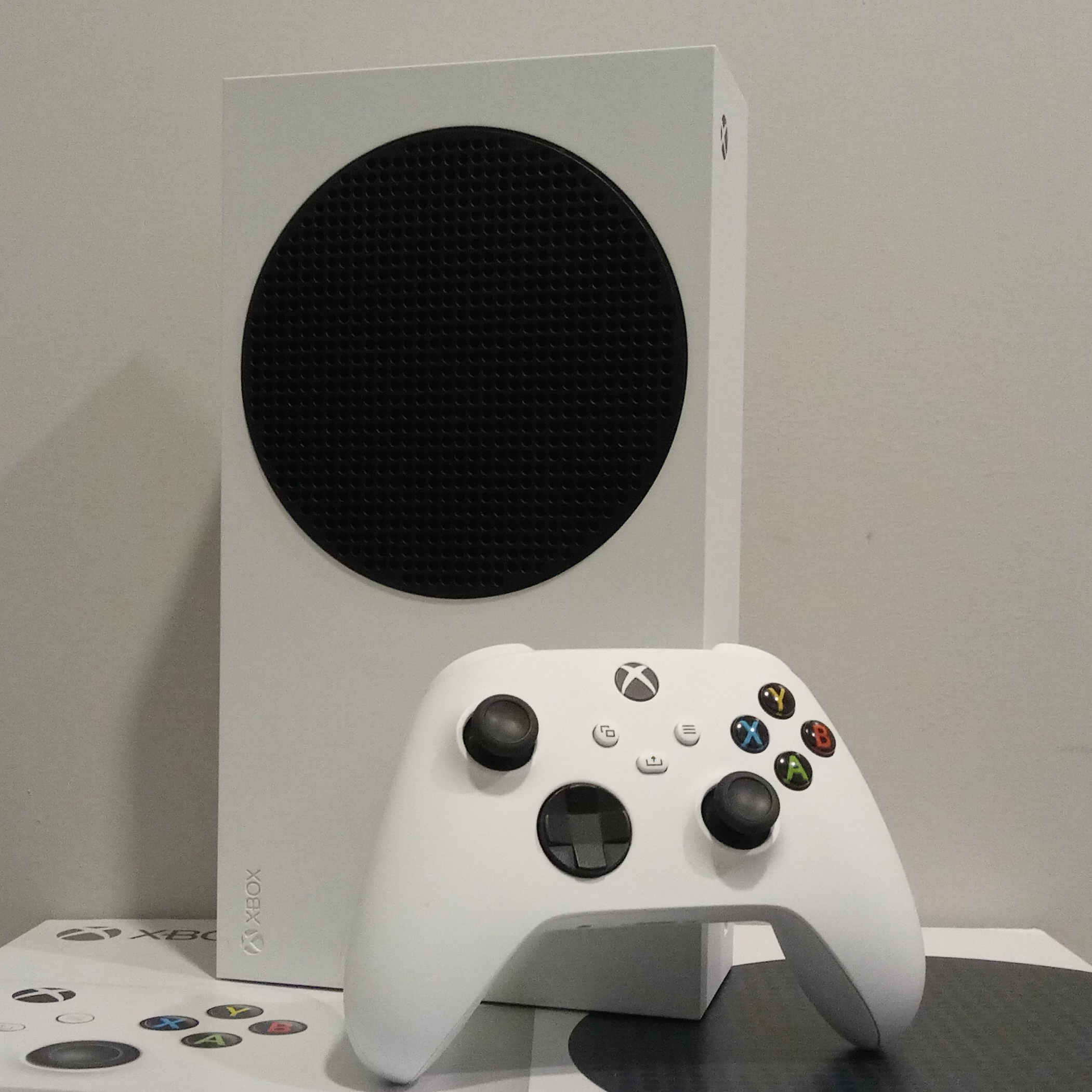
When Microsoft launched the Xbox Series S on November 10, 2020, it made a bold bet: that a smaller, cheaper, all-digital console could deliver a genuine next-gen experience without the 4K horsepower of its big brother, the Xbox Series X. And for the most part, it worked. The Series S targets 1440p at 60 frames per second, with support for up to 120 FPS in select titles, and uses hardware-accelerated ray tracing and a custom NVMe SSD to dramatically cut load times. Its compact white chassis is roughly 60% smaller than the Series X, making it easy to stash in tight entertainment centers or take to a friend's place.
Under the hood, the Series S shares the same CPU architecture as the Series X, an eight-core AMD Zen 2 processor, but scales back the GPU to 4 teraflops and reduces system RAM to 10 GB of GDDR6. That lower memory has been a recurring talking point among developers. Some studios, like the team behind the upcoming cyberpunk platformer Replaced, have publicly discussed the challenge of fitting their games into the Series S's memory envelope. Microsoft has responded by freeing up additional memory headroom, giving developers hundreds of extra megabytes to work with in recent SDK updates. The console also supports variable refresh rate on compatible displays and Dolby Vision for HDR, though VRR is more commonly associated with PC gaming.
The digital-only nature of the Series S means every game must be downloaded from the Microsoft Store or played via Xbox Game Pass. That subscription service is arguably the console's killer app: with Game Pass Ultimate, players get access to hundreds of titles, including day-one releases like Fable (coming Autumn 2026) and Beast of Reincarnation (Summer 2026), both shown at the Xbox Developer_Direct 2026. Smart Delivery ensures you always get the best version of a game for your hardware, whether you own a Series S or a Series X. And backward compatibility covers four generations of Xbox games, often with improved framerates and faster loading on the SSD.
Gameplay
The Series S is built around speed and accessibility. The custom SSD slashes load times to just a few seconds in most games, and Quick Resume lets you suspend up to three titles simultaneously and jump back in almost instantly. The console supports 1440p output natively, with 4K upscaling for compatible displays, and can hit 120 FPS in games like Halo Infinite and Call of Duty: Warzone when connected to a 120Hz screen. Ray tracing is present but often at lower resolutions or with fewer effects than the Series X. Games like Control, which got a free next-gen upgrade in February 2021, still look impressive but may run at 1080p with ray tracing enabled.
Because the Series S is all-digital, every game must be installed to the 512 GB internal SSD (with 364 GB usable). That fills up fast with modern titles, but you can expand storage via a proprietary Seagate or WD expansion card that plugs into the back, or use a standard USB 3.1 external drive for backward-compatible Xbox One, 360, and original Xbox games. The console also supports Xbox Play Anywhere, so digital purchases on Xbox unlock the PC version too, and cross-network play is enabled for supported titles. Variable refresh rate is available on HDMI 2.1 displays, smoothing out frame pacing hiccups in demanding scenes.
Story
The Xbox Series S was revealed to the public in September 2020, just two months before launch, surprising many with its aggressive $299 price point. Microsoft positioned it as the most affordable way to play next-gen games, targeting the same audience that had made the Xbox One S All-Digital Edition a modest success. The console's design language, a matte white box with a black circular vent, was immediately distinctive, and its small footprint made it a conversation piece.
In the years since launch, the Series S has been both praised and debated. It brought next-gen features like ray tracing and SSD speeds to a mass audience, but its lower memory and GPU power have caused headaches for some developers. The Replaced team at Sad Cat Studios, for instance, had to optimize heavily to get their game running on the console ahead of its April 14, 2026 release on Game Pass. Microsoft has quietly adjusted the SDK over time, giving developers more memory headroom and better tools. The console's cultural impact is tied to its role in making next-gen gaming more accessible, a small white box that, for many, represents the first step into a new generation without breaking the bank.
Keywords
Sources
Game Info
- Developer
- Microsoft
- Publisher
- Microsoft
- Release Date
- November 10, 2020
- Modes
- Single-player, Multiplayer, Online Multiplayer, Cross-platform Play
- Platforms
- Xbox Series S
- Launch Price
- $299
- Storage
- 512 GB (364 GB usable)
- Target Resolution
- 1440p (4K upscaled)
- Maximum Framerate
- 120 FPS
- GPU Power
- 4 teraflops
- RAM
- 10 GB GDDR6
Join the community
fans discussing