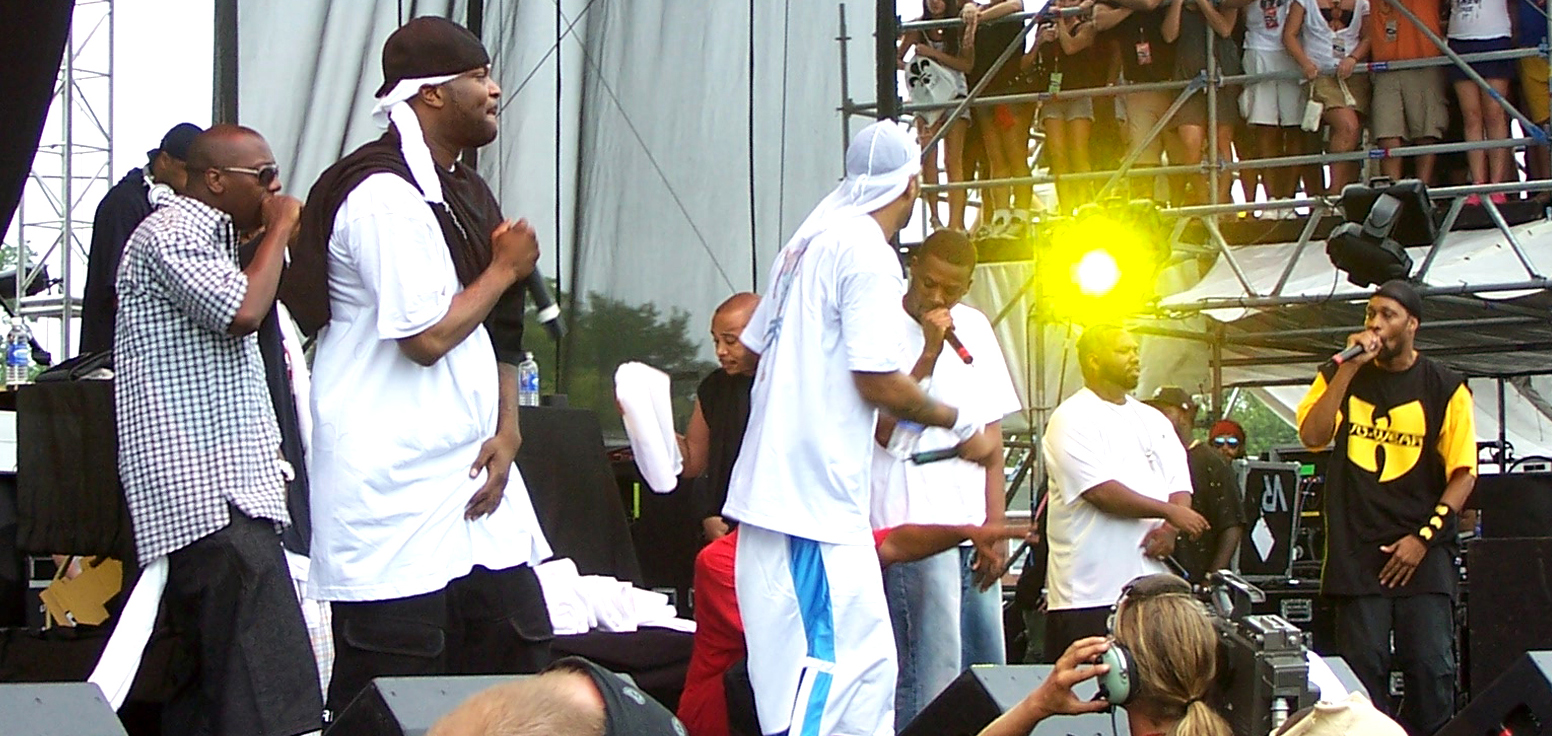
Wu-Tang Clan
 United States
Wu-Tang Killa Bees
Fandom
9
Members
About
Wu-Tang Clan, a hip-hop collective originating from Staten Island, New York City, in 1992, was founded by Robert Diggs, known as RZA, alongside his cousins Gary Grice (GZA) and Russell Jones (Ol' Dirty Bastard). The group's core lineup solidified around nine MCs who had been active in local rap circles. RZA took on the primary role of leader, producer, and musical director, shaping the group's distinctive sound and approach to the music industry. The members developed their skills through years of informal freestyling and performances within their community.
The group secured a deal with Steve Rifkind's Loud Records in 1992. Their debut single, "Protect Ya Neck," arrived in 1993, followed by their influential debut album, Enter the Wu-Tang (36 Chambers), released on November 9, 1993. This album reached No. 41 on the Billboard 200 and No. 7 on the Top R&B/Hip-Hop Albums chart. Over time, it earned 3× Platinum certification from the RIAA, becoming a seminal work in hip hop. Following this, individual members released successful solo projects between 1994 and 1996, which further expanded the group's creative output and collective brand.
In 1997, Wu-Tang Clan returned with their highly anticipated double album, Wu-Tang Forever. This release debuted at No. 1 on the Billboard 200, selling 612,000 copies in its first week, and eventually achieved 4× Platinum status. Subsequent albums, including The W (2000) and Iron Flag (2001), continued to evolve the group's sound. In 2015, they released Once Upon a Time in Shaolin, an experimental album with a single copy sold for $2 million to Martin Shkreli, making it the most expensive work of music ever sold. The group maintains an active presence in music and will be inducted into the Rock and Roll Hall of Fame in 2026, acknowledging their lasting contributions to music.
Formation Story
The foundation of Wu-Tang Clan began in Staten Island, New York City, during 1992. RZA, GZA, and Ol' Dirty Bastard, all cousins, initiated the collective. RZA, acting as the primary architect, envisioned a group that could operate as a unified entity while allowing individual members to pursue solo careers under the broader Wu-Tang umbrella. This strategy aimed to maximize their collective and individual financial success.
The members did not undergo a formal training program or an audition process in the traditional sense. Instead, their skills were honed through years of collaborative rapping, street cyphers, and local performances that built their individual reputations and collective chemistry. RZA’s early production work, often using limited equipment like a Boss DR-660 drum machine and an Ensoniq ASR-10 sampler, defined their raw, distinctive sound.
After attracting attention with their unique style and RZA's production, the group signed with Loud Records in 1992. Their debut single, "Protect Ya Neck," was released in 1993, introducing their aggressive, multi-layered lyrical approach to a wider audience. The release of their debut album, Enter the Wu-Tang (36 Chambers), on November 9, 1993, solidified their presence in the hip-hop landscape, blending martial arts themes with gritty street narratives and innovative production.
Members
Former Members
Sub-Units
Gravediggaz (1994)
RZAFrukwanToo PoeticPrince Paul
Killarmy (1995)
4th Disciple9th PrinceKinetic 9IslordDom PachinoKilla SinShoGun Assason
Sunz of Man (1996)
Killah Priest60 Second AssassinHell RazahProdigal Sunn
Theodore Unit (2005)
Ghostface KillahTrife DieselShawn Wigs
Meth, Ghost & Rae (2011)
Method ManGhostface KillahRaekwon
Czarface (2013)
Inspectah Deck7LEsoteric
Musical Style
Wu-Tang Clan's musical style developed significantly across different eras, but always maintained a core identity rooted in RZA's production. Their initial sound, heard on 1993's Enter the Wu-Tang (36 Chambers), was characterized by a lo-fi, minimalist approach. RZA crafted beats with gritty drums, prominent soul samples, and distinctive snippets from martial arts films. Lyrical content during this period often explored street life, Shaolin philosophy, and competitive battle raps, delivered by the distinct voices of the nine members.
The mid-1990s saw a period of solo releases, which allowed each member to explore individual styles while still benefiting from RZA's evolving production. Albums like Method Man's Tical brought dark, bass-heavy beats, while Raekwon's Only Built 4 Cuban Linx helped define mafioso rap with its cinematic narratives. GZA's Liquid Swords featured intricate, chess-themed lyricism over more polished, atmospheric soundscapes. RZA’s production during this time became more layered and refined, setting the stage for the group's mainstream breakthrough.
By 1997, with Wu-Tang Forever, the group's sound expanded further, incorporating orchestral elements, cleaner mixes, and more complex arrangements. Lyrical themes diversified to include discussions of legacy, wealth, and spiritual growth, reflecting their increased prominence. Later albums, such as 2007's 8 Diagrams, saw RZA experiment with live instrumentation and rock influences, showcasing an ambitious departure from their original sound, while more recent works like A Better Tomorrow aimed for a contemporary take on their classic style.
Discography
| Title | Year |
|---|---|
| Once Upon a Time in Shaolin | 2015 |
| A Better Tomorrow | 2014 |
| Keep Watch | 2014 |
| 8 Diagrams | 2007 |
| The Heart Gently Weeps | 2007 |
| Iron Flag | 2001 |
| Rules | 2001 |
| Uzi (Pinky Ring) | 2001 |
| The W | 2000 |
| Gravel Pit | 2000 |
| Protect Ya Neck (The Jump Off) | 2000 |
| Wu-Tang Clan & Friends Unreleased | 2000 |
| Wu-Chronicles | 1999 |
| Wu-Tang Forever | 1997 |
| It's Yourz | 1997 |
| Triumph | 1997 |
| Wu-Tang Clan Ain't Nuthing ta F' Wit | 1994 |
| C.R.E.A.M. | 1994 |
| Enter the Wu-Tang (36 Chambers) | 1993 |
| Method Man | 1993 |
| Protect Ya Neck | 1993 |
Tours
Wu-Tang Clan: 30th Anniversary Tour
2023 · 15 shows
Wu-Tang Clan: 25th Anniversary Tour
2018 · 30 shows
Wu-Tang Clan: The Saga Continues Tour
2017 · 20 shows
A Better Tomorrow Tour
2014 · 15 shows
Wu-Tang Clan Reunion Tour
2013 · 20 shows
8 Diagrams World Tour
2007 · 25 shows
Iron Flag Tour
2002 · 30 shows
The W Tour
2000 · 40 shows
Wu-Tang Clan 1997 World Tour
1997 · 50 shows
Cultural Impact
Wu-Tang Clan's arrival in the early 1990s had a significant impact on hip-hop, particularly by injecting new energy into East Coast rap. Their raw, unfiltered sound and distinctive lyrical delivery offered a counterpoint to the prevailing West Coast G-funk sound, helping to re-establish New York City as a dominant force in the genre. The group's innovative business model, which allowed individual members to sign solo deals with different labels while maintaining group unity, influenced subsequent artist collectives and redefined how groups could navigate the music industry.
Beyond music, Wu-Tang Clan influenced fashion with their emphasis on urban wear, often featuring their iconic 'W' logo, which resonated deeply with their fan base. Their immersion in martial arts cinema and Eastern philosophy also introduced a unique aesthetic and lyrical vocabulary into mainstream culture, influencing everything from slang to visual arts. The group's narratives, often dealing with the struggles and triumphs of inner-city life, provided a voice for many and fostered a strong sense of community among their listeners.
Their cultural footprint extends to various media, including video games, television shows, and documentaries, which have explored their story and impact. The group's ability to maintain relevance across decades, performing for diverse audiences and collaborating with artists from different genres, further demonstrates their lasting influence. Their unique approach to storytelling and sound continues to inspire new generations of artists and listeners.
Fandom Culture
Wu-Tang Clan cultivated a loyal and expansive fan base, often referred to as the "Wu-Tang Killa Bees," a term that also encompasses the various affiliated artists and groups connected to the collective. This sense of extended family and shared ideology fostered a strong community among their listeners. Fans often embraced the group's unique slang, martial arts references, and philosophical undertones, creating a distinct subculture within hip-hop.
Unlike traditional K-pop groups, Wu-Tang Clan did not have specific fan colors or lightsticks. Instead, fan projects often revolved around celebrating their album anniversaries, attending reunion tours, and supporting the extensive solo careers of individual members. The group's consistent touring schedule over the years has allowed fans to experience their powerful live performances, reinforcing the bond between the artists and their audience. The enduring appeal of their debut album, Enter the Wu-Tang (36 Chambers), continues to draw new listeners while retaining long-time devotees, ensuring their presence in hip-hop culture.
Awards Won (18)
Wu-Tang Clan has received several significant awards throughout their career, acknowledging their impact on hip-hop. They won two Soul Train Music Awards for Best Rap Album, first in 1994 for Enter the Wu-Tang (36 Chambers) and again in 1998 for Wu-Tang Forever. The Source Awards recognized them multiple times, including Best New Artist in 1994, and Best Group and Best Album for Enter the Wu-Tang (36 Chambers) in 1995. They also secured Billboard Music Awards for Top Rap Artist in 1997 and Top Rap Album in 1998 for Wu-Tang Forever.
Top Rap Album
for: Wu-Tang Forever
Top Rap Artist
Best Rap Album
for: Wu-Tang Forever
Best Rap Album
for: Enter the Wu-Tang (36 Chambers)
Best Group
Best Album
for: Wu-Tang Forever
Best Group
Best Album
for: Enter the Wu-Tang (36 Chambers)
Best New Artist
Fame & Fandom
Trivia
RZA initially referred to himself as Prince Rakeem before adopting his more well-known moniker.
The group's name, Wu-Tang Clan, is a reference to the 1983 martial arts film Shaolin and Wu Tang, reflecting their deep integration of martial arts themes and philosophy into their music and imagery.
Before Wu-Tang Clan's formation, RZA and GZA were part of a group called All in Together Now.
The single copy of their 2015 album, Once Upon a Time in Shaolin, was stored in a custom-made nickel-silver box before its sale.
Staten Island, their home borough, officially designated a portion of Vanderbilt Avenue and Targee Street as "Wu-Tang Clan District" in 2019.
Keywords
Sources
Quick Facts
- Type
- Hip-Hop Group
- Formed
- 1992
- Origin
- Staten Island, New York City
- Label
- Loud Records, Columbia/Sony Music, Wu-Tang Records, Asylum Records, Soul Temple Records, RCA Records, SRC Records
- Genres
- East Coast hip-hop, hardcore hip-hop, gangsta rap, mafioso rap
- Members
- 9
- Status
- Active
Group Info
- Fandom
- Wu-Tang Killa Bees
- Formed
- 1992-00-00
- Debut
- 1993-11-09
- Debut Song
- Protect Ya Neck
- Origin
- Staten Island, New York City, USA
- Company
- Wu-Tang Clan Management
- Label
- Loud Records, Columbia/Sony Music, Wu-Tang Records, Asylum Records, Soul Temple Records, RCA Records, SRC Records
- Status
- Active
Also Known As
Join the community
fans discussing