World Health Organization
 Switzerland
"Directing and coordinating international health within the United Nations system."
About
The World Health Organization (WHO) is a specialized agency of the United Nations responsible for international public health. Founded in 1948, it operates as a non-profit, intergovernmental body dedicated to improving global health outcomes. The WHO's core mandate is to act as the directing and coordinating authority on international health, setting norms and standards, providing technical assistance to member states, and coordinating responses to disease outbreaks.
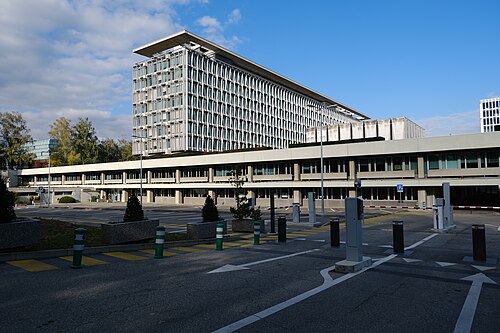
The organization is headquartered in Geneva, Switzerland, and employs approximately 8,000 people. It is structured around six regional offices and 141 country offices, allowing it to address health issues at local, regional, and global levels. The WHO is led by a Director-General, who oversees the organization's strategic direction and operations.
Over its history, the WHO has led major public health achievements, including the global eradication of smallpox, significant progress toward polio eradication, and coordinated responses to pandemics such as HIV/AIDS, H1N1 influenza, Ebola, and COVID-19. Its recommendations influence national health policies worldwide, and its annual World Health Day on April 7 draws global attention to pressing health issues.
Mission
The WHO's mission is to promote better health for everyone, everywhere. It provides technical assistance to member nations, creates international standards on health and medicine, and coordinates responses to disease outbreaks. The organization also hosts international and regional meetings and conferences on health-related issues, aiming to achieve universal health coverage and strengthen global health security.
History
The WHO's origins trace back to several earlier international health bodies, including the International Sanitary Conferences starting in 1851, the Pan-American Sanitary Bureau in 1902, the International Office of Public Hygiene in 1907, and the Health Organization of the League of Nations in 1920. The initial plan to create a global health organization emerged during the establishment of the United Nations in 1945. It took two years of negotiations, led by representatives from China, Norway, and Brazil, to secure agreement from all 51 UN members and 10 future members. The WHO's constitution was adopted and came into force on April 7, 1948, a date now commemorated annually as World Health Day.
Since its founding, the WHO has led major initiatives such as the global eradication of smallpox, declared successful in 1980, and efforts to control polio, which remains ongoing. It has coordinated responses to numerous disease outbreaks, including the 2009 H1N1 pandemic, the 2014 Ebola outbreak in West Africa, and the COVID-19 pandemic declared in 2020. The organization has also faced controversies, particularly related to its handling of disease outbreaks, perceived political influence from member states, and the speed and transparency of its responses, leading to calls for reform.
Subdivisions
Regional Office for Africa
Covers 47 member states in the African region.
Regional Office for the Americas
Covers 35 member states in North and South America.
Regional Office for South-East Asia
Covers 11 member states in South-East Asia.
Regional Office for Europe
Covers 53 member states in Europe.
Regional Office for the Eastern Mediterranean
Covers 21 member states in the Middle East and North Africa.
Regional Office for the Western Pacific
Covers 27 member states in East Asia and the Pacific.
Notable People
Tedros Adhanom Ghebreyesus
Director-General · 2017–present
First African to lead the WHO; oversaw response to COVID-19 pandemic.
Margaret Chan
Director-General · 2006–2017
Led WHO during H1N1 pandemic and Ebola outbreak in West Africa.
Gro Harlem Brundtland
Director-General · 1998–2003
Former Prime Minister of Norway; launched the WHO Framework Convention on Tobacco Control.
Milestones
1948
WHO Constitution comes into force on April 7, establishing the organization.
1980
World Health Assembly declares smallpox eradicated, the first disease ever eradicated by human effort.
2005
Revised International Health Regulations adopted to strengthen global health security.
2014
WHO declares the Ebola outbreak in West Africa a Public Health Emergency of International Concern.
2020
WHO declares COVID-19 a pandemic on March 11, coordinating global response efforts.
Sources
Organization Info
- Founded
- April 7, 1948
- Headquarters
- Geneva, Switzerland
- Country
- Switzerland
- Director-General
- Tedros Adhanom Ghebreyesus
- Parent
- United Nations
- Type
- Government
- Employees
- 8,000
- Member States
- 194
- Annual Budget (2022-2023)
- $6.7 billion
Financials
- 000
- Employees
- 8000
Official Website
www.who.int
Join the community
fans discussing