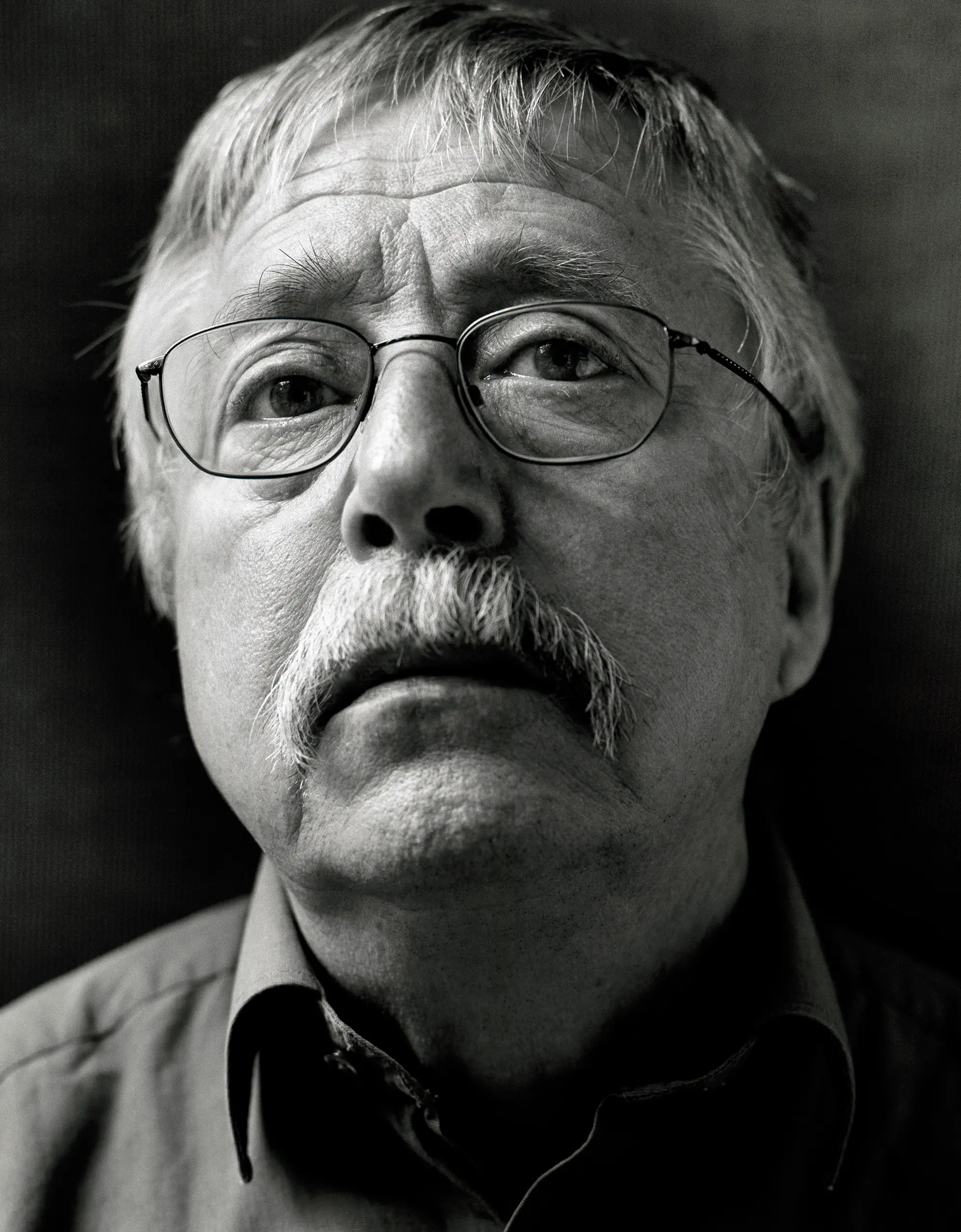
Wolf Biermann
 Germany
singer-songwriter•poet•dissident
Birthday
November 15, 1936
Birth Sign
Scorpio
Birthplace
Hamburg, Germany
Age
89 years old
Height
5 ft 9 in (175 cm)
About
Wolf Biermann is a German singer-songwriter, poet, and dissident whose life and work have been defined by his principled opposition to authoritarianism. Born in Hamburg in 1936, he moved to East Germany as a teenager, drawn by communist ideals, but his critical songs soon clashed with the state. His 1968 anthem "Ermutigung" became a symbol of resistance, and his expatriation in 1976 turned him into a moral voice for a divided Germany.
Now in his late eighties, Biermann remains a respected cultural figure, celebrated for his sharp wit and unwavering integrity. His music and poetry continue to inspire, and his legacy is honored through exhibitions and tributes. He lives in Hamburg and Paris with his wife Ingrid, still writing and occasionally performing.
Early Life & Background
Biermann's childhood was shadowed by tragedy. His father, Dagobert Biermann, a Jewish communist and resistance fighter, was deported to Auschwitz in 1943 and murdered there. That loss shaped his lifelong anti-fascism and political consciousness. Growing up in Hamburg during World War II, he witnessed the war's devastation firsthand.
At seventeen, in 1953, Biermann made a fateful decision: he declared allegiance to the Communist Party and moved to East Germany, believing he could help build a better socialist society. Settling in East Berlin, he studied philosophy and mathematics at Humboldt University. There, he also worked with the Berliner Ensemble, Bertolt Brecht's theater company, absorbing the master's epic style and merging it with folk traditions. His early songs, written in the late 1950s and early 1960s, combined poetic sophistication with sharp social critique, but as the GDR's repressive nature became clear, his work turned increasingly critical, setting the stage for conflict with authorities.
Career Growth
Biermann's breakthrough came in the mid-1960s as his songs circulated through underground channels, often banned from official publication. In 1968, he wrote "Ermutigung" ("Encouragement"), a call for courage that became an anthem of quiet defiance, even as it was suppressed. The decisive moment arrived in November 1976. While on tour in West Germany, the GDR government revoked his citizenship, effectively exiling him. The move sparked a wave of protest from East German intellectuals and artists, leading to a mass exodus of cultural figures and marking a turning point in the GDR's history.
After settling in Hamburg and Paris, Biermann continued to write and perform, becoming a symbol of resistance. In 2002, the newspaper DIE WELT hired him as a regular author, a surprising role for a lifelong critic of establishment institutions. In 2021, he performed "Ermutigung" in Belarusian in solidarity with Belarusian activists. A major retrospective, "Wolf Biermann. A Poet and Songwriter in Germany," opened at the German Historical Museum in Berlin in July 2023, drawing international attention to his enduring relevance.
Career Timeline
Public Image & Style
Biermann's public image is that of a principled dissident and the moral conscience of German culture. Known for his sharp wit and intellectual rigor, he combines folk music with sophisticated poetry, often delivering biting social commentary with dry humor. The media portrays him as a figure who united East and West Germany through his moral authority.
His fans are primarily older Germans who lived through the division, but his work continues to attract younger listeners interested in political music. He has no official fandom name, but he is universally referred to simply as "Biermann" in German cultural discourse.
Fame & Fandom
Wolf Biermann's supporters do not march under a single banner or chant a specific name; they are simply admirers of the *Liedermacher* tradition who view him as a living monument to resistance. His fanbase consists largely of intellectuals and activists who align with his political legacy rather than commercial pop culture, gathering not for chart-topping hits but to honor a moral compass that united East and West Germany. This cultural alignment transformed his 1976 expulsion into a rally where thousands welcomed him in West Berlin, turning an airport arrival into a historic political event. Despite this massive historical following, iFANN's Global Fame Engine has evaluated Wolf Biermann, but he does not currently hold a placement in the published rankings. The engine notes that while his influence remains profound across German-speaking Europe, he lacks the current global volume required for a Top 1,000 position or any scope list. Consequently, no numerical rank or score is assigned to his current standing in the worldwide hierarchy of fame. Fans continue to engage through exhibitions and interviews rather than organized digital campaigns, treating his work as a serious contribution to human rights history. The absence of a formalized fandom name reflects the organic nature of his support, which relies on shared values rather than marketing. While modern stars cultivate viral moments, Biermann's legacy is cemented in museum halls and history books, making his audience a custodian of memory rather than a consumer base driven by trends.
Interesting Facts and Legends
Wolf Biermann's father was murdered at Auschwitz in 1943, a tragedy that fueled his lifelong anti-fascism and shaped his artistic voice. Early in his career, he collaborated with the Berliner Ensemble, Bertolt Brecht's renowned theater company, before developing his own distinct style. His song "Ermutigung" was banned in East Germany yet evolved into an underground anthem for dissidents. Critics have often noted that he is "not Germany's Bob Dylan, he's Germany's Wolf Biermann," emphasizing his unique identity. The 1976 expatriation sparked a massive protest movement that led to the emigration of many top East German artists. In 2002, he accepted a position at DIE WELT newspaper, a surprising move given his history as a critic of establishment institutions. A legendary moment occurred during his November 1976 concert in Leipzig, where authorities felt compelled to revoke his citizenship immediately after the show. Fans still retell the story of how his arrival in West Berlin turned into a political rally, effectively hewing the first crack into the Berlin Wall. In 2023, a major exhibition in Berlin reinforced his status as a unifying figure, featuring appearances by actors like Jan Josef Liefers at the Brandenburg Gate.
Notable Quotes
“Do not let yourself be intimidated, do not let yourself be intimidated.”
“I am not the German Bob Dylan. I am the German Wolf Biermann.”
“They thought they could silence me by taking away my passport. They gave me a world audience instead.”
Family & Personal Life
Biermann's father, Dagobert, a Jewish communist and resistance fighter, was deported to Auschwitz in 1943 and murdered there. His mother, Emma, survived the war and raised him in Hamburg. The trauma of his father's death profoundly shaped his political and artistic outlook.
Biermann's first marriage was to actress and singer Eva-Maria Hagen; they had a daughter, Catherine "Cathy" Biermann, before divorcing in the 1960s. He later had a long-term relationship with poet Elke Erb. His second wife was Pamela Wedekind, granddaughter of playwright Frank Wedekind, with whom he had a son, Felix. Since the 1990s, he has been married to Ingrid Biermann, who has been his constant companion. He lives with Ingrid in Hamburg and Paris.
Notable Connections
Bertolt Brecht influenced his theatrical and poetic style. His first wife, Eva-Maria Hagen, was an actress and singer. Poet Elke Erb was a long-term partner. Second wife Pamela Wedekind was the granddaughter of playwright Frank Wedekind. Current wife Ingrid Biermann has been his companion through later years. Longtime friend Ekkehard Maaß has performed his songs in tribute events.
Relationships & Dating History
Biermann's first marriage was to actress and singer Eva-Maria Hagen in the 1950s. The couple had a daughter, Catherine, before divorcing in the 1960s. He then had a long-term relationship with poet Elke Erb. In the 1970s, he married Pamela Wedekind, granddaughter of playwright Frank Wedekind; they had a son, Felix, but later divorced.
In the 1990s, he married Ingrid Biermann, who has been his steadfast partner since. As of 2026, Biermann is married to Ingrid, and they reside in Hamburg and Paris.
- MarriedEva-Maria Hagen1955 - 1965First wife, actress and singer; had daughter Catherine.
- DatedElke Erb1965 - 1970Long-term relationship with poet Elke Erb.
- MarriedPamela Wedekind1970 - 1980Second wife, granddaughter of playwright Frank Wedekind; had son Felix.
- MarriedIngrid Biermann1990 - presentCurrentCurrent wife, married since the 1990s.
Salary, Net Worth In 2026
$2 Million
iFANN Editorial Team estimate
iFANN currently estimates Wolf Biermann's net worth at $2 Million as of 2026. This figure reflects his sustained career as a political artist rather than a mainstream commercial entertainer. His income streams include book royalties, performance fees, and his long-running column for DIE WELT newspaper. While he never pursued blockbuster success, his consistent publication record and occasional live performances have generated a modest but steady financial foundation over decades. The estate operates as a literary and musical concern rather than a major commercial enterprise. Royalties from his enduring songs, including the iconic "Ermutigung," continue to contribute to his wealth, and his catalog remains accessible on streaming platforms.
Awards Won (4)
Wolf Biermann has received several prestigious awards honoring his literary and political contributions, including the Heinrich Heine Prize in 2007 and the German National Prize in 2016. He also holds the Federal Cross of Merit and an honorary doctorate from Humboldt University.
2007 · Literary
Lifetime achievement
2016 · Cultural
Lifetime achievement
Known For
Ermutigung
1968 · Songwriter and performer
Dissident activism in East Germany
1976 · Political dissident
Keywords
Sources
Quick Facts
- Profession
- singer-songwriter, poet, dissident
- Born
- November 15, 1936
- Birthplace
- Hamburg, Germany
- Gender
- Male
- Spouse
- Ingrid Biermann
- Birth Sign
- Scorpio
Personal Details
- Full Name
- Wolf Biermann
- Height
- 5 ft 9 in (175 cm)
- Spouse
- Ingrid Biermann
- Children
- Catherine "Cathy" Biermann, Felix Biermann
- Education
- Humboldt University of Berlin (philosophy, mathematics)
Frequently Asked Questions
Why was Wolf Biermann expelled from East Germany?
What is Wolf Biermann's most famous song?
Is Wolf Biermann still alive?
Who is Wolf Biermann married to?
What happened to Wolf Biermann's father?
Join the community
fans discussing