 United States
“The finale, Ubique, also has to rate highly, for sheer perversity at the very least – Nottingham reaches new levels of creepiness in his final scenes with Lucrezia.”
Girls With Guns
Girls With Guns
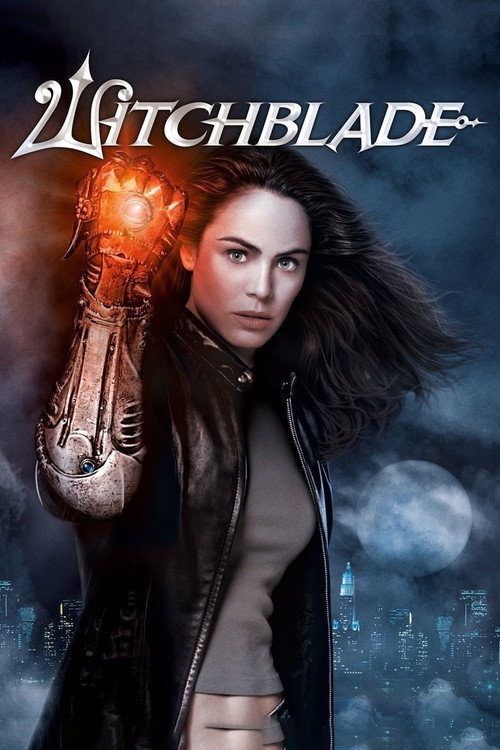
At a crime scene in Lower Manhattan, NYPD detective Sara Pezzini touches a strange metallic gauntlet and feels a jolt that rewires her life. That artifact, the Witchblade, bonds with her, granting strength and reflexes that bend the rules of physics. The series that follows, which aired on TNT from June 2001 to August 2002, is part police procedural and part supernatural thriller, rooted in the Top Cow comic created by Marc Silvestri, David Wohl, Brian Haberlin, Christina Z, and Michael Turner.
Yancy Butler plays Sara as a tough, weary cop who suddenly has to hide glowing armor beneath her trench coat. Her partner Jake McCartey (David Chokachi) provides grounded support, while the shadowy billionaire Kenneth Irons (Anthony Cistaro) and his lethal aide Ian Nottingham (Eric Etebari) pull strings from the edges. Over 23 episodes and a pilot film, the show builds a mythology around Celtic legends and ancient conspiracies, all while Sara tries to keep her job and her sanity.
The series earned a cult following for its noir-drenched New York atmosphere, Butler's committed physical performance, and a willingness to take strange narrative risks. It was canceled before its second season finale could properly wrap things up, leaving a finale that still sparks debate among fans.
Sara Pezzini is a homicide detective in New York City, working cases that range from routine street killings to ritualistic murders that defy explanation. Her life takes a turn when she discovers the Witchblade, a sentient gauntlet that has existed for millennia and chooses its own bearer. Once bonded, Sara gains superhuman strength, speed, and the ability to manifest the Witchblade as a weapon. But the artifact demands balance; it can overwhelm her if she loses control, and it attracts enemies who want to steal or destroy it.
The first season centers on a series of murders tied to an ancient Celtic ritual meant to resurrect a warrior queen. Sara undergoes the Periculum, a trial where she meets previous bearers and learns the Witchblade's true history. She also uncovers her grandmother's past as an Allied spy, a thread that ties the artifact to World War II. Kenneth Irons, who seems to know more about the Witchblade than anyone, operates as a gray figure, sometimes helping Sara, sometimes using her for his own ends. Ian Nottingham, Irons' enforcer, develops a complicated and tense relationship with Sara, caught between loyalty and attraction.
Season two opens with a creative reset: Sara essentially wishes the events of the first season into a plot-hole, and the timeline diverges. Kenneth Irons dies early on, though in the Witchblade universe death is not always permanent. New threats emerge, including a designer drug epidemic, assassins targeting Sara, and a villain with multiple personality disorder. The season deepens the mythology, introducing characters like Lucrezia and Gabriel, and pushes Sara to confront the Witchblade's darker impulses. The relationship between Sara and Nottingham grows more intense and disturbing, while a mysterious man with wavy grey hair lurks in the background, setting up a final confrontation that never fully arrives.
Throughout both seasons, the show balances standalone police cases with a serialized myth arc. Sara's struggle is not just against external enemies but against the Witchblade itself, which has a will of its own and demands sacrifices. The series explores themes of legacy, power, and the cost of protecting others, all set against a grimy, stylized version of New York.
Critical Consensus
Witchblade earned a cult following for Yancy Butler's gritty performance and its noir atmosphere, but critics pointed to inconsistent writing, uneven effects, and a convoluted mythology. The blend of police procedural and supernatural fantasy was ambitious for its time, though budget constraints showed.
“The finale, Ubique, also has to rate highly, for sheer perversity at the very least – Nottingham reaches new levels of creepiness in his final scenes with Lucrezia.”
Girls With Guns
Girls With Guns
“Among the interesting themes on view are the way both Pezzini and Nottingham both struggle to come to terms with the loss of their fathers, albeit temporarily in the latter's case.”
Girls With Guns
Girls With Guns
“As Gabriel says in the finale, 'Death is a revolving door.' I profess myself quite satisfied with how this was handled.”
Girls With Guns
Girls With Guns
“I do recall being immensely irritated by the strobe-lit fight scenes, however, the sort of thing you do when you're trying to hide ineptness.”
Girls With Guns
Girls With Guns
Yancy Butler
Sara Pezzini
David Chokachi
Jake McCartey
Anthony Cistaro
Kenneth Irons
Eric Etebari
Ian Nottingham
Will Yun Lee
Danny Woo
Lazar Rockwood
Lazar
Directors
David Jackson, Neill Fearnley
Writers
Ralph Hemecker, Marc Silvestri, J.D. Zeik, Richard C. Okie, Bruce A. Taylor, Roderick Taylor
Composer
Joel Goldsmith
Producer
Ralph Hemecker
Join the community
fans discussing