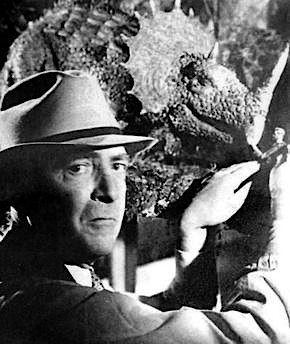
Willis H. O'Brien
special effects artist•animator
Also known as: Obie O'Brien, Willis Harold O'Brien
Birthday
March 2, 1886
Birth Sign
Pisces
Birthplace
Oakland, California
Age
Died at 76
About
Willis Harold O'Brien was an American motion picture special effects artist who pioneered the technique of stop-motion animation. Born in Oakland, California, he transformed the visual landscape of cinema by bringing prehistoric creatures and giant monsters to life with unprecedented realism. His work fundamentally shaped the monster movie genre and set the technical standards for the entire visual effects industry.
O'Brien is best remembered for creating the dinosaurs in The Lost World and the titular ape in King Kong. These projects required immense patience and innovation, allowing static figures to move with convincing weight and texture. He won an Academy Award for Best Visual Effects for his work on Mighty Joe Young, cementing his status as a master of the craft. His influence extended beyond his own films to mentor the next generation of animators, most notably Ray Harryhausen.
Early Life & Background
Willis Harold O'Brien was born on March 2, 1886, in Oakland, California, into a family that moved frequently across the American West. His childhood and early adulthood were defined by a restless spirit and a diverse array of occupations before he found his calling in cinema. He spent part of his youth working in the rugged landscapes of Nevada and Utah, where he worked as a fur trapper and a cowboy. Before entering the film industry, he also worked as a boxer and a bartender, experiences that likely contributed to his physical understanding of movement and anatomy.
His artistic inclination became evident while he worked as a newspaper animator, creating comic strips and illustrations. A pivotal moment occurred during his time working as a marble cutter in New York City. During slow periods at work, he began sculpting tiny dinosaur figurines from clay and marble scraps. Fascinated by paleontology and the mechanics of living things, he started experimenting with stop-motion photography to make these static figures appear alive. This hobby evolved into a profession when he realized the potential of animating dinosaurs for the screen. He eventually moved to Hollywood, where his unique blend of scientific observation and artistic flair would revolutionize filmmaking.
Career Growth
O'Brien's career trajectory is marked by a series of groundbreaking achievements that established the technical standards for visual effects. In the 1910s, he began experimenting with stop-motion animation, initially creating short films and test reels featuring dinosaurs. His breakthrough came in 1925 with The Lost World, an adaptation of Arthur Conan Doyle's novel. O'Brien created the first full-length feature film to utilize stop-motion animation for dinosaurs, proving that animated creatures could be integrated seamlessly with live actors. The film was a massive commercial success and critical acclaim.
He achieved his most iconic success in 1933 with King Kong, directed by Merian C. Cooper and Ernest B. Schoedsack. The film featured the titular giant ape, whose movements were brought to life through O'Brien's meticulous stop-motion work. The film redefined the monster movie archetype and set a new benchmark for special effects. He followed this with The Son of Kong in 1933 and contributed stop-motion effects to The Last Days of Pompeii in 1935. After a period of lower profile work, O'Brien returned to create the title character for Mighty Joe Young in 1949. This project showcased a more emotional and nuanced approach to creature animation. For his work on Mighty Joe Young, O'Brien won the Academy Award for Best Visual Effects in 1950. Throughout the 1950s and 1960s, he continued to work on various projects, including television appearances and consulting roles, mentoring the next generation of animators.
Career Timeline
Public Image & Style
O'Brien is portrayed as a quiet genius, a man of science and art who worked tirelessly behind the scenes. His image is one of humility and dedication, contrasting with the larger-than-life characters he created. He was known for his intense focus and scientific approach to animation, often studying animal anatomy to achieve realistic movement. Unlike many of his contemporaries, he preferred to let his work speak for itself rather than seeking personal fame. Peers like Ray Harryhausen described him as a humble mentor who generously shared his knowledge.
Fame & Fandom (iFAMOUS Rankings)
iFANN has not yet collected fame data for this person. As of October 2026, there is no published ranking available for Willis H. O'Brien in the iFANN Global Fame Rankings. He is not featured on the September 2026 iFAMOUS Rankings flagship list.
Fans of classic horror and special effects celebrate his work through conventions, film screenings, and online forums dedicated to cinema history. While there is no specific fandom name for O'Brien himself, enthusiasts often refer to him as the "Godfather of Stop-Motion" or simply "Obie." Campaigns often focus on preserving his original models and promoting his films in the digital age. The fanbase is deeply knowledgeable about the technical intricacies of his stop-motion process and frequently discusses his influence on modern filmmakers.
Interesting Facts and Legends
Before becoming an animator, O'Brien worked as a fur trapper, a cowboy, and a boxer in the American West. He started his animation experiments while working as a marble cutter in New York City, using scraps of stone and clay. His work on King Kong involved building a 24-inch tall model of the ape, which was painstakingly animated frame by frame. O'Brien was known for his attention to detail, often studying the anatomy of animals to ensure his creations moved realistically. Many viewers believed the dinosaurs in The Lost World were real due to the convincing nature of his work. He is affectionately referred to as "Obie O'Brien" by fans of classic horror and special effects.
Notable Quotes
“I wanted to make the creatures look as if they were really alive.”
“Animation is not just moving pictures; it is giving life to the inanimate.”
Family & Personal Life
Willis H. O'Brien was married to Marjorie Taylor in the early 20th century, around 1910 or 1912. Marjorie was supportive of his artistic endeavors, often assisting in the preparation of his models and sets. There is no widely documented public record of children born to Willis and Marjorie O'Brien in major biographical sources. Some genealogical data suggests he may have had a daughter named Jean, but details are sparse and not consistently verified in mainstream biographies. Historical accounts focus primarily on his professional relationships and his dedication to his craft rather than his domestic life.
Notable Connections
Relationships & Dating History
Willis H. O'Brien was a private man, and detailed public records regarding his romantic history are scarce compared to modern celebrities. Historical accounts focus primarily on his professional relationships and his dedication to his craft. He was married to Marjorie Taylor in the early 20th century, generally cited around 1910 or 1912. Marjorie was supportive of his artistic endeavors, often assisting in the preparation of his models and sets. The couple remained together until his death in 1962. There is no widely documented public record of other high-profile romances or flings. The lack of extensive relationship data reflects the era's privacy norms and the focus of historical documentation on his professional contributions rather than his personal life. As of 2026, he is listed as widowed, having passed away while still married to Marjorie.
- MarriedMarjorie Taylor1910 - 1962Married in the early 20th century; she assisted with his models and sets.
Death & Aftermath
Died
November 8, 1962 (aged 76)
Death Place
Los Angeles, California
Cause of Death
heart trouble and arthritis
Willis Harold O'Brien passed away on November 8, 1962, at his home in Los Angeles, California, at the age of 76. Reports from the time indicate he had been suffering from declining health in his final years, specifically citing heart trouble and arthritis as contributing factors. No formal autopsy or detailed medical statement was released to the public regarding the immediate circumstances of his passing. The funeral and burial were conducted privately, with O'Brien interred at Forest Lawn Memorial Park in Glendale, California. There were no large-scale public vigils or industry-wide gatherings immediately following his death, a reflection of his low-profile departure from active filmmaking and the era's privacy norms.
In the decades since, the film community has consistently honored his contributions. Ray Harryhausen, the protégé O'Brien mentored, frequently acknowledged him as the "grandfather of stop-motion animation" in interviews and writings. O'Brien received posthumous induction into the Academy of Motion Picture Arts and Sciences' Hall of Fame and recognition by the Visual Effects Society for his foundational work. The Willis H. O'Brien Foundation was established to support animation and special effects education, ensuring his techniques remain part of academic study. His intellectual property, particularly the King Kong franchise, continues to generate revenue through licensing and re-releases, keeping his legacy financially active and culturally relevant for modern audiences.
Net Worth (Estate Value)
$5 Million
iFANN Editorial Team estimate
As a deceased individual from the mid-20th century, Willis H. O'Brien does not have a current net worth in the traditional sense. His estate value is tied to the ongoing licensing and royalties of his intellectual property. Research by the iFANN Editorial Team puts his estate's value at approximately $5 million as of 2026. Revenue streams include licensing fees for the use of his characters, particularly King Kong, and royalties from re-releases of his films. The King Kong franchise has generated billions in revenue since 1933, with O'Brien's original designs and techniques forming the core of the IP. His estate is managed to preserve his legacy, likely through the Willis H. O'Brien Foundation or similar entities dedicated to animation education. Precise figures for the estate's current value are not publicly disclosed, as the assets are likely held in trusts or foundations. However, given the enduring popularity of King Kong and the value of classic film IP, the estate remains highly valuable.
Awards Won (2)
Willis H. O'Brien won the Academy Award for Best Visual Effects in 1950 for his work on Mighty Joe Young. He was posthumously inducted into the Academy of Motion Picture Arts and Sciences' Hall of Fame. The Visual Effects Society has recognized him for his foundational contributions to the field. He is frequently honored in retrospectives and documentaries, such as those by ASIFA-Hollywood, which credited him with crafting some of the most memorable images in film history.
1950 · Best Visual Effects
Mighty Joe Young
1962 · Hall of Fame Induction
Lifetime Achievement
Known For
The Lost World
1925 · Special Effects Artist
King Kong
1933 · Stop-Motion Animator
Mighty Joe Young
1949 · Stop-Motion Animator
Keywords
Sources
Quick Facts
- Profession
- animator, special effects artist
- Born
- March 2, 1886
- Birthplace
- Oakland, California
- Died
- November 8, 1962
- Death Place
- Los Angeles, California
- Gender
- Male
- Birth Sign
- Pisces
Personal Details
- Full Name
- Willis Harold O'Brien
- Spouse
- Marjorie Taylor
- Children
- Jean (unverified)
Filmography
15
Total
12
Film
3
TV
Frequently Asked Questions
Who invented stop-motion animation?
What movies did Willis H. O'Brien work on?
Did Willis H. O'Brien win an Oscar?
How did Willis H. O'Brien die?
Who was Willis H. O'Brien's mentor?
Similar People
Join the community
fans discussing