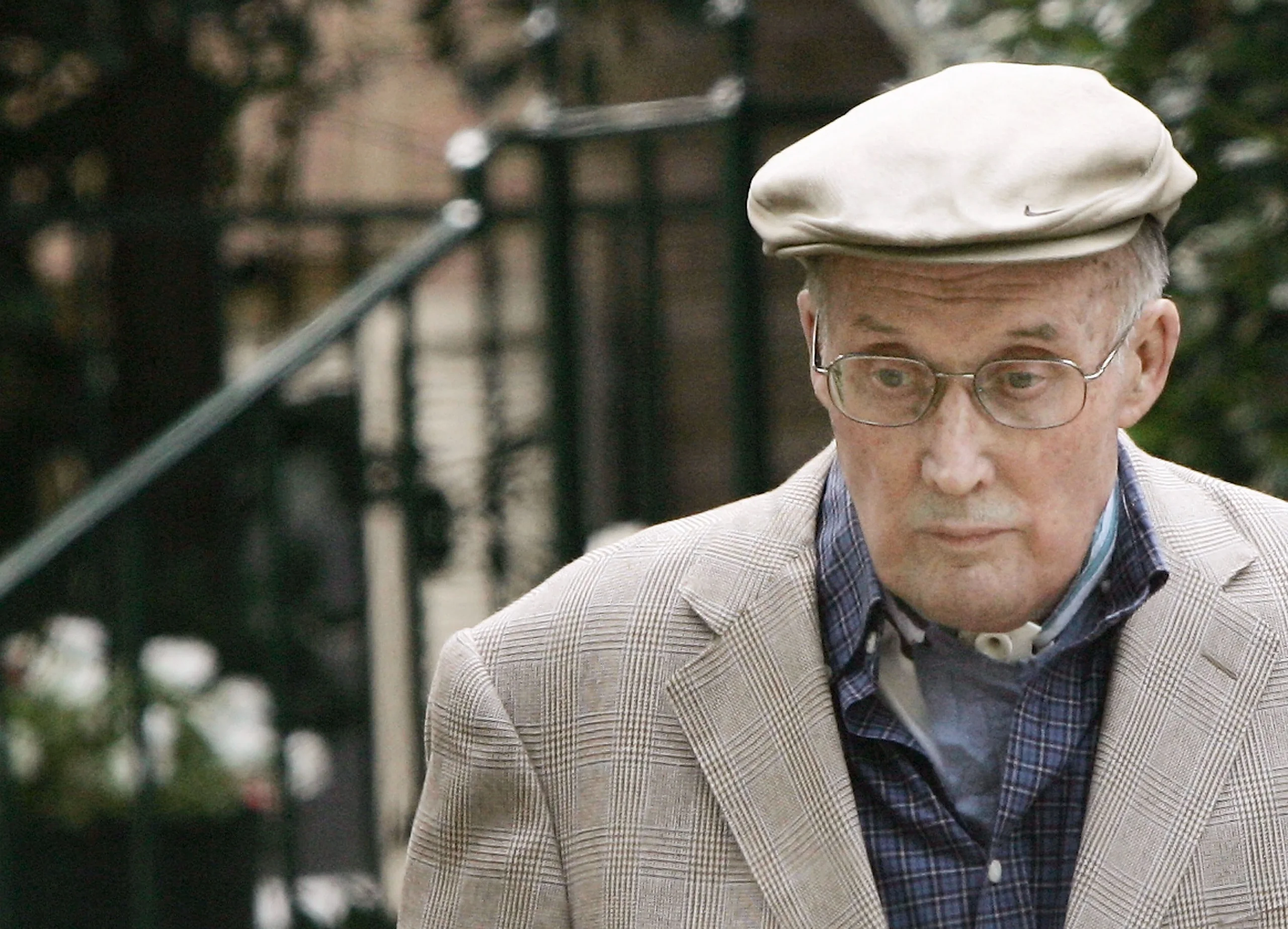
William Rehnquist
Also known as: Chief Justice Rehnquist, Bill Rehnquist
Birthday
October 1, 1924
Birth Sign
Libra
Birthplace
Milwaukee, Wisconsin
Age
Died at 80
About
William Hubbs Rehnquist arrived in Milwaukee on October 1, 1924, and eventually rose to become the 16th chief justice of the United States. His path to the bench began with service in the U.S. Army Air Forces between 1943 and 1946. After leaving the military, he pursued higher education at Stanford University and Harvard University before attending Stanford Law School. There, he edited the Stanford Law Review and graduated first in his class. He clerked for Justice Robert H. Jackson during the 1952–1953 term before moving to Phoenix, Arizona, to practice law privately. His career took a political turn when he advised Barry Goldwater during the 1964 presidential election. President Richard Nixon later appointed him U.S. Assistant Attorney General of the Office of Legal Counsel in 1969. In that role, Rehnquist helped orchestrate the resignation of Justice Abe Fortas after Fortas accepted money from financier Louis Wolfson. Nixon nominated Rehnquist to the Supreme Court in 1971 to replace John Marshall Harlan II. The Senate confirmed him that year, though his hearings drew scrutiny over past actions involving voter suppression and his stance on Brown v. Board of Education. Despite these controversies, he quickly became the most conservative voice on the Burger Court. Ronald Reagan elevated him to Chief Justice in 1986 following Warren Burger's retirement. Rehnquist held this position until his death on September 3, 2005, serving nearly 19 years as chief justice and making him the fifth-longest-serving in that specific role. He led the Rehnquist Court with intellectual rigor, earning respect even from justices who frequently disagreed with him. His judicial legacy rests heavily on cases defining federal power and individual rights. He wrote majority opinions in United States v. Lopez (1995) and United States v. Morrison (2000), ruling both times that Congress exceeded its authority under the Commerce Clause. Rehnquist also presided over the impeachment trial of President Bill Clinton. On social issues, he dissented in Roe v. Wade (1973) and continued arguing against that decision in Planned Parenthood v. Casey (1992). His final major contribution came in Bush v. Gore, where he voted with the majority to halt the Florida recount in the 2000 presidential election. Rehnquist died at age 80, leaving behind a record of strict federalism and conservative jurisprudence.
Early Life & Background
William Hubbs Rehnquist entered the world in Milwaukee, Wisconsin, on October 1, 1924. He grew up in the nearby suburb of Shorewood as the son of Charles Rehnquist, a paper salesman, and his wife Nona. The family environment emphasized academic achievement and civic duty, values that would shape Rehnquist's future trajectory. He attended Shorewood High School, where he distinguished himself as a top student. His early interest in history and politics became evident during his teenage years, setting the stage for a life dedicated to the law. When World War II erupted, Rehnquist enlisted in the U.S. Army Air Forces in 1943. He served until 1946, completing his duties as a radar operator in the South Pacific. This period of military service instilled a sense of discipline and responsibility that he carried throughout his professional life. Upon returning to civilian life, he enrolled at Stanford University in California, seeking to broaden his educational horizons beyond his Midwestern roots. He earned a bachelor's degree in 1947, graduating with honors. Rehnquist then turned his attention to legal studies, initially enrolling at Harvard University for a brief period before transferring back to Stanford Law School. At Stanford, he thrived academically, editing the Stanford Law Review and finishing at the top of his class in 1952. His time at Stanford Law was pivotal, not only for his academic success but also for meeting Margaret Ann Glennon, a fellow student who would become his wife. After graduation, he briefly worked as a law clerk for Supreme Court Justice Robert H. Jackson during the 1952–1953 term. This experience provided him with an intimate look at the inner workings of the highest court in the land. Following his clerkship, he moved to Phoenix, Arizona, to begin his private practice, marking the start of his journey toward the national stage.
Career Growth
Rehnquist's ascent into the national spotlight began in earnest when he advised Senator Barry Goldwater during the 1964 presidential campaign. His sharp legal mind and conservative convictions caught the attention of the Republican establishment. In 1969, President Richard Nixon appointed him as Assistant Attorney General of the Office of Legal Counsel. In this role, he played a significant part in the administration's efforts regarding the resignation of Supreme Court Justice Abe Fortas, a move that demonstrated his loyalty and political acumen. The pivotal moment of his career arrived in 1971 when Nixon nominated him to the Supreme Court to fill the vacancy left by John Marshall Harlan II. Although his confirmation hearings were marred by controversy surrounding memos he had written as a young lawyer advocating for voter suppression and opposing desegregation, the Senate confirmed him. He took his seat as Associate Justice in 1972, quickly establishing himself as the court's most consistent conservative voice. In 1986, President Ronald Reagan elevated Rehnquist to the position of Chief Justice following the retirement of Warren Burger. He served in this capacity for nearly 19 years, becoming the fifth-longest-serving Chief Justice in American history. During the "Rehnquist Court," he championed a vision of federalism that sought to limit the power of the federal government and return authority to the states. Key decisions during this era included United States v. Lopez (1995) and United States v. Morrison (2000), which struck down federal laws as exceeding Congress's commerce clause powers. He also presided over the impeachment trial of President Bill Clinton in 1999 and cast the deciding vote in Bush v. Gore (2000), effectively determining the outcome of the 2000 presidential election. His tenure ended only with his death in 2005, leaving an indelible mark on the interpretation of the Constitution.
Career Timeline
Public Image & Style
Rehnquist projected an image of a stern, intellectual, and deeply committed jurist. He was often portrayed by the media as a "quiet man" with a hidden sense of humor, balancing his serious demeanor with moments of levity. His signature style was the formal judicial robe, and his content was strictly legal and constitutional. He maintained a low profile outside the courtroom, focusing entirely on his duties and avoiding the trappings of celebrity. His colleagues respected him for his intellect and dedication, even when they disagreed with his rulings. Rehnquist's public persona was one of unwavering principle and rigorous adherence to the rule of law.
Fame & Fandom (iFAMOUS Rankings)
iFANN has not yet collected fame data for this person. As a public servant and judge rather than an entertainer, Rehnquist does not have a traditional fandom. However, he maintains a dedicated following among legal scholars, law students, and constitutional historians who study his opinions and legacy. His work is analyzed academically rather than celebrated culturally, with a focus on the impact of his rulings on American jurisprudence. Fan campaigns or rituals do not exist, as his contributions are evaluated through the lens of legal theory and historical significance.
Interesting Facts and Legends
William Rehnquist was known for his quirky sense of humor, often finding amusement in the formalities of the judiciary. He famously wore a robe with a collar that he found restrictive and amusingly uncomfortable, a detail that humanized his stern public persona. Before his judicial career, he served as a radar operator in the U.S. Army Air Forces during World War II, a role that required precision and quick thinking. He graduated first in his class from Stanford Law School in 1952, a testament to his academic prowess. His confirmation to the Supreme Court was controversial due to past writings on civil rights, which he later defended as consistent with his view of the Constitution at the time. Rehnquist was also a fan of baseball and often attended games, bringing a touch of normalcy to his high-profile life. Additionally, in 1988, he wrote for a unanimous Court in Hustler Magazine v. Falwell, a landmark First Amendment decision that solidified protections for parody. His ability to preside over the court's opening session just weeks before his death, despite knowing he was terminally ill, is often cited as a testament to his dedication.
Notable Quotes
“I have never believed that the Constitution is a living document.”
“The decision in Roe v. Wade was an exercise of raw judicial power.”
Family & Personal Life
William Rehnquist met Margaret Ann Glennon while they were both students at Stanford Law School. They married in 1947 and shared a quiet domestic life together until her death in 2002, three years before his own passing. The couple had two children: James Rehnquist and Nancy Rehnquist. Margaret passed away from lung cancer, leaving William to raise their children and manage their household alone for several years. Their home in Arlington, Virginia, was a place of privacy and stability, far removed from the public eye. Rehnquist remained deeply devoted to his family throughout his life, often citing them as his primary source of support and joy.
Notable Connections
Relationships & Dating History
William Rehnquist was married to Margaret Ann Glennon, whom he met while attending Stanford Law School. The couple wed in 1947 and remained together for nearly 58 years, sharing a quiet and private life away from the public eye. Their marriage was characterized by mutual support and devotion, with Margaret playing a crucial role in his personal life during his rise through the ranks of the legal profession. They had two children, James and Nancy, who grew up in the shadow of their father's prominent career. Margaret passed away in 2002 from lung cancer, three years before her husband. Rehnquist was widowed at the time of his death in 2005, and there were no subsequent relationships recorded. His life outside the court was defined by his commitment to his family and his dedication to his judicial duties.
- MarriedMargaret Ann Glennon1947 - 2002Met at Stanford Law School; she died of lung cancer in 2002.
Death & Aftermath
Died
September 3, 2005 (aged 80)
Death Place
Arlington, Virginia
Cause of Death
anaplastic thyroid cancer
Chief Justice William Rehnquist presided over the Supreme Court's opening session for the 2005 term on August 24, a final public appearance before his health deteriorated rapidly. He spent his last days under palliative care at his residence in Arlington, Virginia, passing peacefully in his sleep on September 3, 2005, at the age of 80. The official cause was anaplastic thyroid cancer, a rare and aggressive malignancy diagnosed just three months prior after he noticed a lump in his neck. The nation responded with immediate tributes from President George W. Bush, who called him a great American, while the Supreme Court observed a moment of silence the following October with justices wearing black armbands.
A private funeral ceremony took place on September 7 at the National Cathedral in Washington, D.C., attended by the President, the First Lady, and high-ranking government officials. Rehnquist was subsequently interred at Arlington National Cemetery near the tomb of his late wife, Margaret. Posthumous recognition included the establishment of the William H. Rehnquist Center at the University of Arizona College of Law to promote constitutional research. Biographies analyzing his nearly 33-year tenure appeared shortly after, cementing his legacy within legal scholarship without public probate disputes or major commercial releases.
Net Worth (Estate Value)
$0
iFANN Editorial Team estimate
As a federal judge, William Rehnquist's financial standing was derived primarily from his salary and real estate holdings. During his tenure as Chief Justice, his annual salary was approximately $223,500 in 2005, reflecting the compensation for the highest judicial office in the United States. His estate consisted mainly of his home in Arlington, Virginia, and personal assets accumulated over his long career. Unlike entertainment figures, Rehnquist did not generate significant posthumous revenue through licensing, merchandise, or commercial ventures. The value of his estate was modest compared to celebrities, typical for a high-ranking federal official without extensive outside business interests. No major commercial releases or probate disputes followed his death, and the estate remains managed according to standard legal protocols for deceased public servants.
Awards & Accolades
View 6 records, honours and achievementsKnown For
United States v. Lopez
1995 · Author of Majority Opinion
Bush v. Gore
2000 · Associate Justice
Roe v. Wade
1973 · Dissenting Opinion
Hustler Magazine v. Falwell
1988 · Author of Unanimous Opinion
Keywords
Sources
Quick Facts
- Profession
- judge, lawyer, historian
- Born
- October 1, 1924
- Birthplace
- Milwaukee, Wisconsin
- Died
- September 3, 2005
- Death Place
- Arlington, Virginia
- Gender
- Male
- Birth Sign
- Libra
Personal Details
- Full Name
- William Hubbs Rehnquist
- Spouse
- Margaret Ann Glennon
- Children
- James Rehnquist, Nancy Rehnquist
- Education
- Stanford University (BA), Stanford Law School (LLB), Harvard University (brief study)
Frequently Asked Questions
What caused William Rehnquist's death?
How long did William Rehnquist serve as Chief Justice?
Who replaced William Rehnquist on the Supreme Court?
What was William Rehnquist's most famous case?
Where was William Rehnquist buried?
Similar People
Join the community
fans discussing