 Canada
About
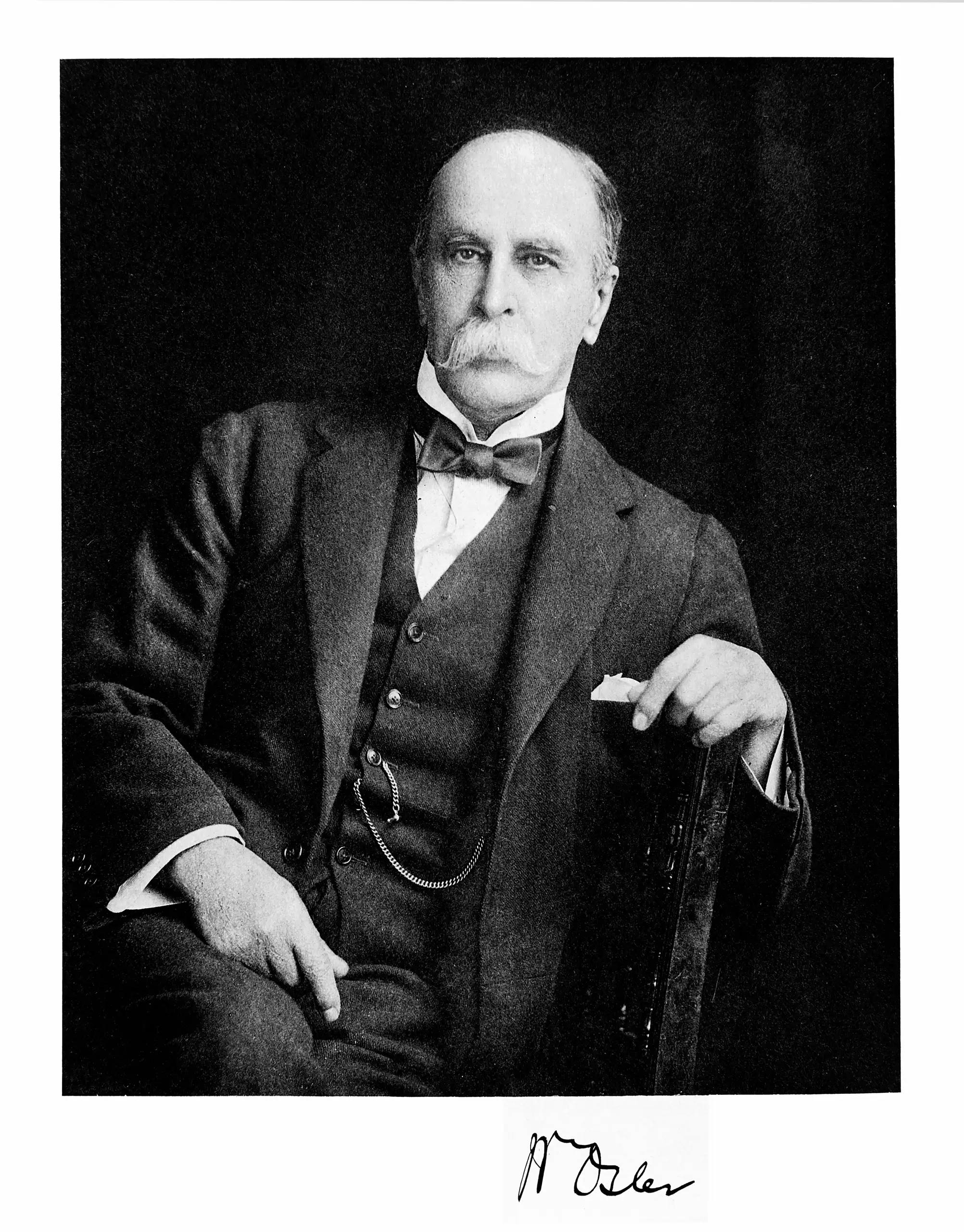
Sir William Osler, 1st Baronet, stands as a towering figure in the history of medicine, universally revered as the "Father of Modern Medicine." Born in Bond Head, Ontario, to John Clark Osler and Ellen Mary Martin, he transformed medical education by shifting the focus from textbook theory to bedside teaching. His revolutionary approach included establishing the first residency program at Johns Hopkins Hospital, a practice that remains the global standard today. Beyond his clinical innovations, Osler was a prolific bibliophile and historian who believed a physician must be a well-rounded human being. He founded the History of Medicine Society and co-founded major library associations, leaving behind a vast collection of rare books now housed in the Osler Library at McGill University. His enduring legacy is defined by his aphorisms, such as "The good physician treats the disease; the great physician treats the patient who has the disease," which continue to guide medical professionals worldwide.
Early Life & Background
Osler grew up on a frontier farm in Bond Head, Ontario, where his father worked as a farmer and his mother managed the household. This rural setting fostered a voracious appetite for reading and history that would later define his unique approach to medical education. He enrolled at McGill University in 1864, graduating with an MD in 1872. Before achieving global fame, Osler worked as a house physician at Montreal General Hospital and served in the American Civil War as a volunteer surgeon. These early experiences sharpened his clinical acumen and exposed him to the harsh realities of battlefield medicine. He completed postgraduate studies in London, Paris, and Berlin between 1874 and 1875, absorbing diverse medical traditions. By 1879, he had become Assistant Physician at Montreal General Hospital, building a reputation for thoroughness and bedside manner. His time as a student and junior doctor was marked by a deep curiosity about the human body and a desire to understand disease not just as a set of symptoms but as a story unfolding within a person. In 1884, he was appointed Professor of Medicine at McGill University, further solidifying his academic standing before his move to Baltimore.
Career Growth
Osler's career breakthrough arrived when he joined the newly founded Johns Hopkins Hospital in Baltimore in 1889 as one of the "Big Four" founding professors alongside Howard Atwood Kelly, William Stewart Halsted, and Theodor Billroth. There, he revolutionized medical training by establishing the first residency program, shifting the focus from textbook theory to bedside teaching. He insisted that students live in the hospital to observe patients continuously, a practice that remains the standard globally today. His seminal work, The Principles and Practice of Medicine, first published in 1892, became the definitive medical textbook of its era, translated into numerous languages and used for decades. In 1905, he moved to Oxford University as the Regius Professor of Medicine, where he continued to influence British medicine until his death. He was elected a Fellow of the Royal Society in 1907 and created a Baronet in 1911. The Copley Medal, the highest scientific award of the Royal Society, followed in 1913. He also received the Lister Oration medal and the Harvey Gold Medal, cementing his status as a preeminent scientist.
Career Timeline
Public Image & Style
Osler's public image was that of a witty, erudite, and somewhat mischievous scholar who believed a physician should be a well-rounded human being, not just a technician. He was known for his distinctive style: wearing a frock coat and a bowler hat, with a signature long beard that he cultivated in his later years. His physical stature was described as tall and slender, though exact height measurements are rarely recorded in primary biographies. His presence commanded respect yet invited warmth, blending academic rigor with a playful spirit. He famously stated, "The good physician treats the disease; the great physician treats the patient who has the disease." This philosophy shaped how peers and students viewed him, as a mentor who valued character as much as competence. He was often seen playing practical jokes on his students to lighten the mood during intense study sessions, reinforcing his belief that literature and humor were essential to medical practice.
Fame & Fandom (iFAMOUS Rankings)
William Osler commands a reverence that transcends the fleeting noise of celebrity culture, anchored instead in the enduring architecture of modern medical education. His 'fanbase' is not a gathering of devotees chasing autographs or streaming numbers, but a global community of physicians, historians, and students who treat his bedside teachings as sacred texts. While pop stars rely on viral rituals, Osler's legacy survives through the daily practice of residents trained in his residency system and the countless clinicians who recite his aphorisms like prayers. He remains a figure of profound professional awe rather than entertainment worship. There is no official fandom name documented, though followers often refer to themselves as "Oslerians" or simply "students of Osler." The iFANN Global Fame Engine evaluated this historical giant in October 2026 and determined he holds no placement in the published rankings (Global Top 1,000). This absence from the charts reflects his status as a foundational pillar of science rather than a trending personality competing for contemporary attention. He was not featured in the September 2026 iFAMOUS Rankings flagship list. While he holds no "Greatest of All Time" rankings in pop culture lists like Rolling Stone or Billboard, he consistently tops historical lists of physicians, often cited as the greatest diagnostician ever to wield a stethoscope.
Interesting Facts and Legends
Osler was a prolific collector of rare books and manuscripts, amassing a library of over 10,000 volumes which he donated to McGill University. He was known for his wit and sense of humor, often playing practical jokes on his students to lighten the mood during intense study sessions. The term "Osler nodes" refers to painful nodules on the fingers or toes caused by infective endocarditis, a condition he described in detail. He was a member of the "Big Four" at Johns Hopkins, a group of physicians who transformed American medicine. Osler wrote under various pseudonyms and published essays on diverse topics ranging from medical ethics to the history of science. A persistent piece of folklore suggests he once challenged a group of arrogant medical students to a debate on the nature of disease, winning by reciting poetry and quoting ancient texts. Another verified story recounts how he would take students on rounds, pointing out specific signs of illness and then asking them to read the relevant literature, effectively creating the modern curriculum. Whether fully documented or embellished over time, these stories underscore his philosophy of empathy and holistic care.
Notable Quotes
“Medicine is a science of uncertainty and an art of probability.”
“The good physician treats the disease; the great physician treats the patient who has the disease.”
“To study the phenomena of disease without books is to sail an uncharted sea, while to study books without patients is not to go to sea at all.”
“It is much more important to know what sort of a patient has a disease than what sort of a disease a patient has.”
Family & Personal Life
Sir William Osler was born on July 12, 1849, to John Clark Osler and Ellen Mary Martin in Bond Head, Ontario. He grew up on a frontier farm where his father worked as a farmer and his mother managed the household. Osler maintained close ties with his siblings and parents throughout his life, often writing to them about his travels and medical discoveries. He was known to be a private man regarding his domestic affairs, focusing intensely on his professional duties and bibliophilic pursuits after his wife's death. He did not have any pets recorded in historical accounts, and his household was primarily centered around his extensive library and professional obligations. His family life was characterized by a deep devotion to learning and a quiet dignity that mirrored his public persona.
Notable Connections
Relationships & Dating History
Sir William Osler was married only once to Grace Linzee Revere on June 16, 1887. Grace was the daughter of Joseph Warren Revere, a prominent Bostonian and a direct descendant of Paul Revere. The couple had three children: Margaret, John, and William Jr. Grace predeceased him, dying in 1913. There is no public record of any other romantic relationships, engagements, or divorces. Osler was known to be a private man regarding his domestic affairs, focusing intensely on his professional duties and bibliophilic pursuits after his wife's death. As of the historical record, he was widowed at the time of his passing. His relationship with his colleagues, particularly the "Big Four" at Johns Hopkins—Howard Atwood Kelly, William Stewart Halsted, and Theodor Billroth—was characterized by mutual respect and collaborative innovation in medical training.
- MarriedGrace Linzee Revere1887 - 1913Daughter of Joseph Warren Revere, a descendant of Paul Revere. Three children together.
Death & Aftermath
Died
December 29, 1919 (aged 70)
Death Place
Oxford, England
Cause of Death
Myocardial infarction (heart attack)
Sir William Osler passed away at 4:30 AM on December 29, 1919, in his home at 45 Beaumont Street in Oxford, England. He was seventy years old when cardiovascular failure claimed his life, a natural end following a long struggle with heart disease that had included a minor cardiac event earlier that year. The cause of death was reported as a myocardial infarction, determined through immediate observation by his family and attending physicians rather than a formal coroner's inquest or autopsy. This approach reflected the customs for prominent figures dying peacefully at home during that era. Notably, his death occurred during the height of the 1919 Spanish Flu pandemic, adding poignancy to his legacy as a healer whose expertise was desperately needed until his final breath.
Tributes poured in from the medical community across three continents, with Johns Hopkins declaring a period of mourning and colleagues hailing him as the greatest diagnostician ever to wield a stethoscope. His funeral remained a private affair attended by close friends and former students, including Sir Henry Dale, before he was laid to rest in the Holywell Cemetery section reserved for distinguished university members. Posthumous honors cemented his legacy, including his induction into the Canadian Medical Hall of Fame and the creation of numerous scholarships bearing his name. His extensive library and papers were donated to McGill University and the Wellcome Collection, ensuring their preservation for future generations. While his collected works like Aequanimitas remained standard texts for decades, the estate was handled by his family without public dispute, leaving behind a quiet but enduring impact on modern medicine. Today, his name lives on through the William Osler Health System in Canada and the annual lectures held in his honor.
Net Worth (Estate Value)
$0
iFANN Editorial Team estimate
There is no net worth data for Sir William Osler in the context of modern celebrity wealth, as he lived in an era before such metrics were tracked for academics. His "wealth" was measured in intellectual property and cultural capital rather than liquid assets. The financial value of his estate is not publicly quantified in dollars, but the donation of his library to McGill formed the foundation of the Osler Library, a priceless resource for medical historians. His estate consisted largely of his vast library and papers, which were donated to McGill University and the Wellcome Collection. The iFANN Editorial Team estimates that the cultural value of his contributions to medicine and literature far exceeds any monetary figure, though no specific dollar amount can be assigned to his estate today. While he did not compete in modern entertainment award ceremonies, his legacy is anchored in profound academic and professional distinctions, including the Copley Medal and the creation of the Osler Medical Society at Johns Hopkins.
Awards Won (5)
Osler received the Copley Medal in 1913, the highest scientific award of the Royal Society. He was elected a Fellow of the Royal Society in 1907 and created a Baronet in 1911. He also received the Lister Oration medal and the Harvey Gold Medal.
1913 · Science
Contributions to Medicine
1907 · Honorary Title
N/A
Known For
The Principles and Practice of Medicine
1892 · Author
Johns Hopkins Hospital
1889 · Founding Professor
Keywords
Sources
Quick Facts
- Profession
- physician, professor, writer
- Born
- July 12, 1849
- Birthplace
- Bond Head, Ontario
- Died
- December 29, 1919
- Death Place
- Oxford, England
- Gender
- Male
- Spouse
- Grace Linzee Revere
- Birth Sign
- Cancer
Personal Details
- Full Name
- Sir William Osler, 1st Baronet
- Spouse
- Grace Linzee Revere
- Children
- Margaret, John, William Jr.
- Education
- McGill University; postgraduate studies in London, Paris, and Berlin
Frequently Asked Questions
Who is considered the Father of Modern Medicine?
When did William Osler die?
What was William Osler's major contribution to medical education?
Did William Osler have any children?
Is there a hospital named after William Osler?
Similar People
Join the community
fans discussing