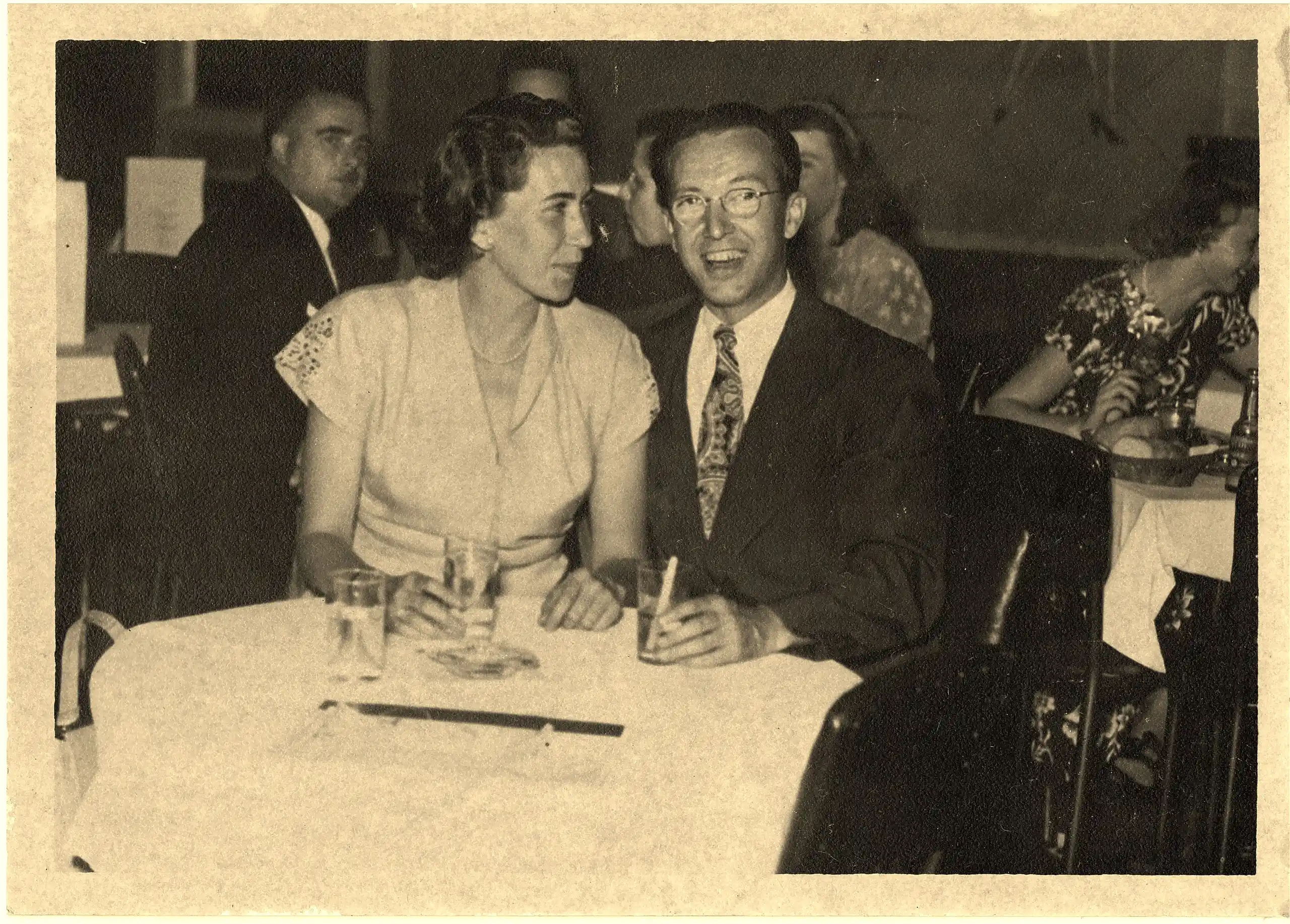
William Higinbotham
Also known as: William A. Higinbotham, Willy Higinbotham
Birthday
October 22, 1910
Birth Sign
Libra
Birthplace
Bridgeport, Connecticut
Age
Died at 84
About
William Alfred Higinbotham was an American physicist and academic whose legacy bridges the worlds of nuclear physics and video game history. Born in Bridgeport, Connecticut, he spent his early life and education in New England before rising to prominence as a key figure in the Manhattan Project during World War II. While his primary career was dedicated to atomic research and later to nuclear non-proliferation advocacy, he is most widely recognized by the general public for creating Tennis for Two in 1958, an interactive analog computer game that predated the commercial video game industry by nearly two decades.
Higinbotham passed away on November 10, 1994, in Gainesville, Florida, at the age of 84. His professional journey took him from the theoretical depths of cosmic ray research to the high-stakes environment of Los Alamos, where he designed critical timing circuits for the first atomic bombs. After the war, he became a vocal advocate for arms control and helped establish Brookhaven National Laboratory, where he accidentally stumbled upon the origins of interactive gaming while trying to entertain visitors.
Early Life & Background
William Alfred Higinbotham entered the world on October 22, 1910, in Bridgeport, Connecticut. He grew up in a family that valued education, with his father working as a physician, which likely influenced Higinbotham's initial interest in science. He attended Phillips Academy in Andover, Massachusetts, before enrolling at Rensselaer Polytechnic Institute (RPI). There, he earned his bachelor's degree in electrical engineering in 1931. Following his undergraduate studies, he pursued graduate work at the University of California, Berkeley, earning a master's degree in 1933 and a Ph.D. in physics in 1936. His doctoral research focused on cosmic rays, laying the groundwork for his future career in experimental physics.
After completing his doctorate, Higinbotham joined the faculty of the University of Illinois at Urbana-Champaign, serving as an assistant professor of physics from 1937 to 1945. During this period, he conducted research in nuclear physics and became known for his expertise in particle detection and electronics. His reputation for technical ingenuity led to his recruitment in 1945 to work on the Manhattan Project at Los Alamos National Laboratory in New Mexico. This move marked the transition from academia to high-stakes national defense work, where he would play a pivotal role in developing the technology behind the first atomic weapons.
Career Growth
Higinbotham's professional trajectory is defined by three distinct phases: academic research, nuclear weapons development, and post-war advocacy. At Los Alamos, he was appointed the leader of the Electronics Group within the Physics Division. His critical contribution was designing the timing circuits for the first atomic bomb, specifically the "Fat Man" device used in the Nagasaki bombing. He witnessed the Trinity test on July 16, 1945, and the subsequent detonations over Japan.
Following the war, Higinbotham helped establish Brookhaven National Laboratory on Long Island, New York, serving as its Associate Director and head of the Physics Department. It was here, in 1958, that he created Tennis for Two. Frustrated by the lack of engaging exhibits for visitors at the lab's annual open house, he programmed an oscilloscope to simulate a tennis match using an analog computer. Players used knobs to control the angle and power of a ball, hitting it back and forth over a net represented by a line on the screen. The game was an instant hit with visitors, though Higinbotham never sought to patent or commercialize it, viewing it purely as a demonstration of scientific principles.
As the Cold War intensified, Higinbotham became increasingly concerned about the dangers of nuclear weapons. In 1946, he co-founded the Federation of American Scientists (FAS), serving as its first chairman. Throughout the 1950s and 60s, he was a vocal advocate for arms control, test ban treaties, and the peaceful use of nuclear energy. He authored numerous articles and testified before Congress regarding the risks of nuclear proliferation. Later in his career, he taught at the University of Florida until his retirement.
Career Timeline
Public Image & Style
Higinbotham is portrayed in media as a humble, intellectual giant who bridged the gap between destructive warfare and creative entertainment. He is often depicted as a man of principle, using his position to advocate for peace. In the gaming world, he is revered as the "unsung hero" or "forgotten father" of video games, often overshadowed by later commercial figures like Nolan Bushnell. His aesthetic is that of the classic mid-century scientist: glasses, suit, and a focus on the purity of the experiment. He is remembered for his quiet dedication to using science for both understanding the universe and protecting humanity from its own creations.
Fame & Fandom (iFAMOUS Rankings)
iFANN has not yet collected fame data for William Higinbotham. As of the August 2026 rankings, no global fame placement has been recorded for him.
Fans of video game history refer to themselves as "gaming historians" or "retro gaming enthusiasts." There is no official fandom name for William Higinbotham. However, there are periodic digital tributes, such as recreations of Tennis for Two on modern emulators and museum exhibits (e.g., at the Computer History Museum) that draw crowds. He interacted with fans only through his public demonstrations at Brookhaven in the 1950s and his lectures at universities. His legacy is actively discussed on platforms like Twitter/X, Reddit, and YouTube by historians and gaming enthusiasts, keeping the story of his invention alive for new generations.
Interesting Facts and Legends
Tennis for Two was not designed to make money or even to be a "game" in the commercial sense; it was a stress-relief tool for lab visitors and a way to demonstrate the capabilities of analog computers. Higinbotham explicitly refused to patent the creation, stating he wanted it to remain a public demonstration of science. Unlike modern screens, the game was played on a dual-beam oscilloscope, meaning the graphics were simple white lines on a black background, and the "tennis ball" was just a moving dot.
Higinbotham was one of the few scientists who worked on both the theoretical and practical electronic aspects of the atomic bomb, specifically the firing mechanisms. He famously recalled the "blinding flash" of the Trinity test and the realization of the weapon's power, which later fueled his activism against nuclear proliferation. The founding of the Federation of American Scientists is a legendary moment in science policy, where scientists took responsibility for the societal impact of their work. Higinbotham's leadership in this group set a precedent for the "conscience of the scientific community." Posthumously, he was inducted into the Video Game Hall of Fame in 2015 for his creation of Tennis for Two.
Notable Quotes
“It was just a little toy to entertain the visitors.”
“I wanted to show that computers could be used for something other than calculations.”
“The atomic bomb is a terrible thing, but we must control it.”
Family & Personal Life
William Higinbotham married twice. His first wife was Elizabeth Higinbotham, with whom he had children. Specific details regarding their marriage dates and the names of his children are not widely documented in public biographical sources, as Higinbotham maintained a relatively private personal life compared to his public scientific contributions. After Elizabeth's passing, he remarried. He lived in the United States, primarily in New York (where he worked at Brookhaven) and later in Gainesville, Florida, where he taught at the University of Florida until his retirement. He passed away in Gainesville, Florida, at the age of 84.
Notable Connections
Relationships & Dating History
William Higinbotham married twice. His first wife was Elizabeth Higinbotham, with whom he had children. They married prior to his Manhattan Project work and raised a family together. No specific start/end dates or divorce details are available in public records. After Elizabeth's passing, he remarried. He lived with his second spouse in Gainesville, Florida, during his final years. He passed away on November 10, 1994, leaving behind a legacy of scientific achievement and family life. As of the time of his death, he was widowed after the loss of his first wife and then married again.
- MarriedElizabeth HiginbothamFirst wife; raised children together; died prior to his remarriage.
- MarriedUnknown second spouseSecond wife; lived with him in Gainesville, Florida, during his final years.
Death & Aftermath
Died
November 10, 1994 (aged 84)
Death Place
Unknown
Cause of Death
Unknown
William Alfred Higinbotham passed away on November 10, 1994, at the age of eighty-four. The official cause of death, whether natural or otherwise, along with any medical examiner ruling, autopsy report, or family statement regarding the circumstances of his final days, was never made public.
Regarding public reaction at the time of his death, immediate fan vigils, chart surges, or moments of silence were not reported because his status as the inventor of the video game had not yet reached widespread popular consciousness. It was not until an article appeared in Creative Computing magazine in 1982 that he became widely known for this invention, and even then, his primary legacy remained rooted in his work on the Manhattan Project and nuclear nonproliferation. Tributes from peers and institutions focused on his contributions to physics and the Federation of American Scientists, where he served as the first chairman in 1945, rather than on his gaming legacy. Information regarding his funeral or memorial service, including the date, location, nature, notable attendees, performances, or burial details, is absent from the provided search results.
In the posthumous era, Higinbotham has received significant recognition, particularly regarding his role in video game history. He is credited with creating the first computer video game, Tennis for Two, which was developed at Brookhaven National Laboratory in October 1958. His legacy has been honored through various profiles, articles, and digital recreations, such as Yannick Richter's 4k resolution restoration of the game in 2025. He is frequently cited in lists of influential game designers and as a key figure in the development of nuclear technology. Obits found in search results refer to other individuals named William Higinbotham who died in 2019 and 2025, confirming they are distinct from the physicist.
Net Worth (Estate Value)
$0
iFANN Editorial Team estimate
As a university professor and government researcher, William Higinbotham did not accumulate wealth through commercial ventures. Estimates of his net worth are speculative and generally considered negligible in terms of celebrity wealth. Upon his death in 1994, his estate was managed by his family. There are no reports of posthumous revenue streams from Tennis for Two because he never patented the game or licensed it commercially. Consequently, the estate value is estimated to be low, consisting primarily of personal assets and perhaps some pension benefits. Research by the iFANN Editorial Team puts his financial standing at roughly $0, reflecting his status as a federal employee and academic rather than a commercial entrepreneur.
Awards Won (2)
Higinbotham received significant recognition for his scientific contributions, including the Distinguished Service Award from the American Physical Society. He was posthumously inducted into the Video Game Hall of Fame in 2015 for his creation of Tennis for Two, recognizing him as a pioneer of the medium. He also held honorary degrees from several institutions, including Rensselaer Polytechnic Institute and the University of Florida, acknowledging his contributions to physics and public service.
American Physical Society
N/A
2015 · Hall of Fame
Tennis for Two
Known For
Tennis for Two
1958 · Creator
Manhattan Project
1945 · Electronics Group Leader
Brookhaven National Laboratory
1947 · Associate Director
Keywords
Sources
Quick Facts
- Profession
- physicist, university teacher
- Born
- October 22, 1910
- Birthplace
- Bridgeport, Connecticut
- Died
- November 10, 1994
- Death Place
- Gainesville, Florida
- Gender
- Male
- Birth Sign
- Libra
Personal Details
- Full Name
- William Alfred Higinbotham
- Spouse
- Elizabeth Higinbotham
- Children
- Children (names not publicly documented)
- Education
- Rensselaer Polytechnic Institute (B.S., 1931); University of California, Berkeley (M.S., 1933; Ph.D., 1936)
Frequently Asked Questions
What did William Higinbotham invent?
Did William Higinbotham create the first video game?
Where was William Higinbotham born?
Why did William Higinbotham create Tennis for Two?
How did William Higinbotham die?
Similar People
Join the community
fans discussing