
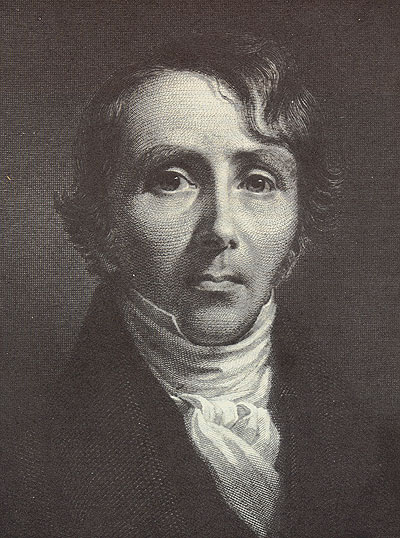
William Ellery Channing
 United States
Birthday
April 7, 1780
Birth Sign
Aries
Birthplace
Newport, Rhode Island, USA
Age
Died at 62
About
William Ellery Channing was an American minister and theologian. He is most famous for his leadership in the early Unitarian movement in America, with his 1819 "Baltimore Sermon" serving as a foundational text for American Unitarianism. Channing's eloquent sermons and essays emphasized reason, the unity of God, and moral character, establishing him as the leading voice of liberal Protestant theology. His influence also extended to social reform, where he advocated against slavery and war. Channing remains distinctive for his role in shaping a more rational and morally-focused approach to faith, and he is remembered today as a key figure whose ideas continue to resonate within liberal religious traditions.
Early Life & Background
William Ellery Channing was born on April 7, 1780, in Newport, Rhode Island, USA. Born into a family that, while prominent, was not characterized by great wealth, Channing spent his formative years in Newport. His maternal grandfather, William Ellery, was a signer of the Declaration of Independence, a connection that rooted Channing firmly within New England's Revolutionary elite. His early education included attendance at a local Latin school before he matriculated at Harvard College, from which he graduated in 1798.
It was during his years at Harvard that Channing underwent a profound intellectual and religious transformation. He began to move away from the strict tenets of Calvinist doctrines, embracing instead a more rational and ethical form of Christianity. Following his graduation, Channing accepted a position as a private tutor for a wealthy family in Richmond, Virginia, a move that would prove formative. This period proved to be a pivotal experience in his intellectual and moral development, as it exposed him directly to the institution of slavery and the aristocratic lifestyle of the Southern elite. Channing found these aspects of Southern society morally troubling, and the experience profoundly reinforced his later outspoken opposition to slavery.
Upon his return to Newport, though physically weakened, Channing entered a period of deep introspection regarding his spiritual path. He resolved to prepare for the ministry, undertaking theological studies in both Massachusetts and Rhode Island. During this time, he consciously aligned himself with the liberal wing of Congregationalism, a theological stance that would define his career. In 1803, William Ellery Channing was ordained, subsequently becoming the pastor of the Federal Street Church in Boston, a significant pulpit he would hold for nearly four decades.
Career Growth
Channing's defining moment came on May 5, 1819, when he delivered the "Baltimore Sermon" at the ordination of Jared Sparks in Baltimore. The sermon, formally titled "Unitarian Christianity," systematically rejected the Trinity, argued for the unity of God, emphasized the moral perfection of Christ, and insisted that Scripture must be read with reason. It was widely reprinted and marked Channing as the chief theologian of American Unitarianism. Throughout the 1820s, he published influential sermons on self-culture, education, and the moral purpose of religion. In 1835, he issued "Slavery," a major treatise condemning slavery as morally destructive and calling for gradual, peaceful emancipation. In the late 1830s, he wrote on war, temperance, and poverty, endorsing humanitarian causes. Despite poor health, he continued preaching and writing until his death in 1842. His Federal Street pulpit became nationally known, and his essays were standard texts in liberal Protestant circles.
Career Timeline
Public Image & Style
Channing was known for his eloquent, carefully structured sermons delivered in a gentle but morally intense tone. He had a rational, measured approach to doctrine, emphasizing character formation and conscience over emotional rhetoric. Contemporary observers saw him as a dignified and serious thinker, a moral leader of liberal Protestantism. His fandom was essentially the 19th-century Unitarian community and liberal Protestant laity, who revered him as a principal teacher. Today, Unitarian Universalists frequently cite him as a founding figure. His preserved voice in printed sermons is characterized by urbanity, earnestness, and reasoned moral appeal.
Fame & Fandom
William Ellery Channing commands a global attention that spans centuries of theological discourse, with his influence tracked across media coverage, search, and consumption signals worldwide. His standing in historical records is precise and current: he is the 43rd most famous person in Pastors, a position which has held steady from the previous cycle within the iFANN Global Fame Rankings. This placement reflects his enduring status as the defining voice of American Unitarianism rather than fleeting modern celebrity. The audience for Channing consists of historians, theologians, and adherents of the Unitarian Universalist Association who revere him as a foundational intellectual leader; there is no formal fandom name documented for this group, nor are there organized fan clubs or campaigns dedicated to his memory. His legacy is maintained through academic curricula and the preservation of historic sites rather than viral social media movements or commercial endorsements. While he cannot interact directly with his admirers, his pulpit at the Federal Street Church once served as the primary venue where radical ideas challenged the status quo of his time. Today, his works remain accessible as public-domain classics, sustaining a quiet but consistent reverence among scholars of liberal Protestant theology.
Interesting Facts and Legends
Ralph Waldo Emerson famously designated Channing the "Star of the American Church," a title reflecting the immense prestige he held during his lifetime. To distinguish him from his nephew, also named William Ellery Channing who became a Transcendentalist poet, contemporaries referred to the elder as "Dr. Channing" and the younger as "Ellery Channing." Although Channing significantly influenced the Transcendentalists through his emphasis on moral self-culture, he remained wary of their more radical speculations. He advocated for gradual emancipation over immediate abolition, occasionally criticizing radical tactics even while condemning slavery as an evil. His sermons and essays remain available as public-domain religious classics, yet no modern estate generates revenue from his work.
The Baltimore Sermon of 1819 stands as the definitive moment of his career, a ninety-minute declaration titled "Unitarian Christianity" that systematically rejected the Trinity and established the foundational tenets of American Unitarianism. This event sparked an intense intellectual shockwave across the United States, solidifying his reputation as the foremost preacher of the era. Another documented anecdote involves Channing and a woman named Duchess Quamino at his Newport home, a story often cited to illustrate his character and his stance on human dignity against the backdrop of slavery.
Notable Quotes
“Christianity aims at the perfection of the human soul.”
“Every person has a duty to cultivate the noble powers of his nature.”
“Slavery is a violation of rights, a war on the human soul, a degradation of man.”
“Reason is God's voice in the soul.”
Family & Personal Life
Channing was the third child of William Channing and Lucy Ellery. His maternal grandfather, William Ellery, was a signer of the Declaration of Independence. He married Ruth Gibbs, who was his lifelong partner during his Boston pastorate; they had multiple children. His nephew, also named William Ellery Channing, became a noted Transcendentalist poet. Channing lived primarily in Boston but maintained ties to Newport. He struggled with periods of ill health and physical weakness, partly related to his time in Virginia and the stress of his pastoral and intellectual labors.
Notable Connections
Channing worked alongside Andrews Norton, another Unitarian theologian, to shape early Unitarian doctrine. Ralph Waldo Emerson admired Channing and called him the 'Star of the American Church,' though Emerson later diverged philosophically. His nephew, poet William Ellery Channing, was influenced by his moral ideals. Jared Sparks, whose ordination occasioned the Baltimore Sermon, was part of his network.
Relationships & Dating History
Channing married Ruth Gibbs in the early 19th century. She was his lifelong spouse during his Federal Street pastorate in Boston; they had children and maintained a family household that hosted many visitors. The marriage remained intact until Channing's death in 1842. There is no credible documentation of other romantic partners, affairs, or separations, consistent with his clerical standing and the era's conventions.
- MarriedRuth Gibbs1800 - 1842Married in the early 19th century; she was his lifelong spouse during his Boston pastorate.
Death & Aftermath
Died
October 2, 1842 (aged 62)
Death Place
Unknown
Cause of Death
Unknown
Net Worth (Estate Value)
As a 19th-century Boston pastor and intellectual, Channing earned a ministerial salary sufficient for a middle-class lifestyle but not large wealth. He was not noted as either very rich or impoverished. His estate consisted of personal effects, modest book royalties, and possibly minor property. His writings have entered the public domain, so there is no modern revenue stream. No credible net worth estimate exists for his era.
Awards & Accolades
View 2 records, honours and achievementsKnown For
Baltimore Sermon (Unitarian Christianity)
1819 · Preacher and theologian
Federal Street Church pastorate
1803 · Pastor
Slavery (treatise)
1835 · Author
Keywords
Sources
Quick Facts
- Profession
- pastor, theologian, writer
- Born
- +1780-04-07
- Birthplace
- Newport
- Died
- +1842-10-02
- Death Place
- Bennington
- Gender
- Male
- Spouse
- Ruth Gibbs
- Birth Sign
- Aries
Personal Details
- Full Name
- William Ellery Channing
- Spouse
- Ruth Gibbs
- Children
- Multiple children, including a nephew named William Ellery Channing (poet)
- Education
- Harvard College, graduated 1798
Frequently Asked Questions
Who was William Ellery Channing?
What is the Baltimore Sermon and why is it important?
What were William Ellery Channing's views on slavery?
How did William Ellery Channing influence the Transcendentalists?
Is William Ellery Channing still relevant today?
Similar People
Join the community
fans discussing