 Germany
About
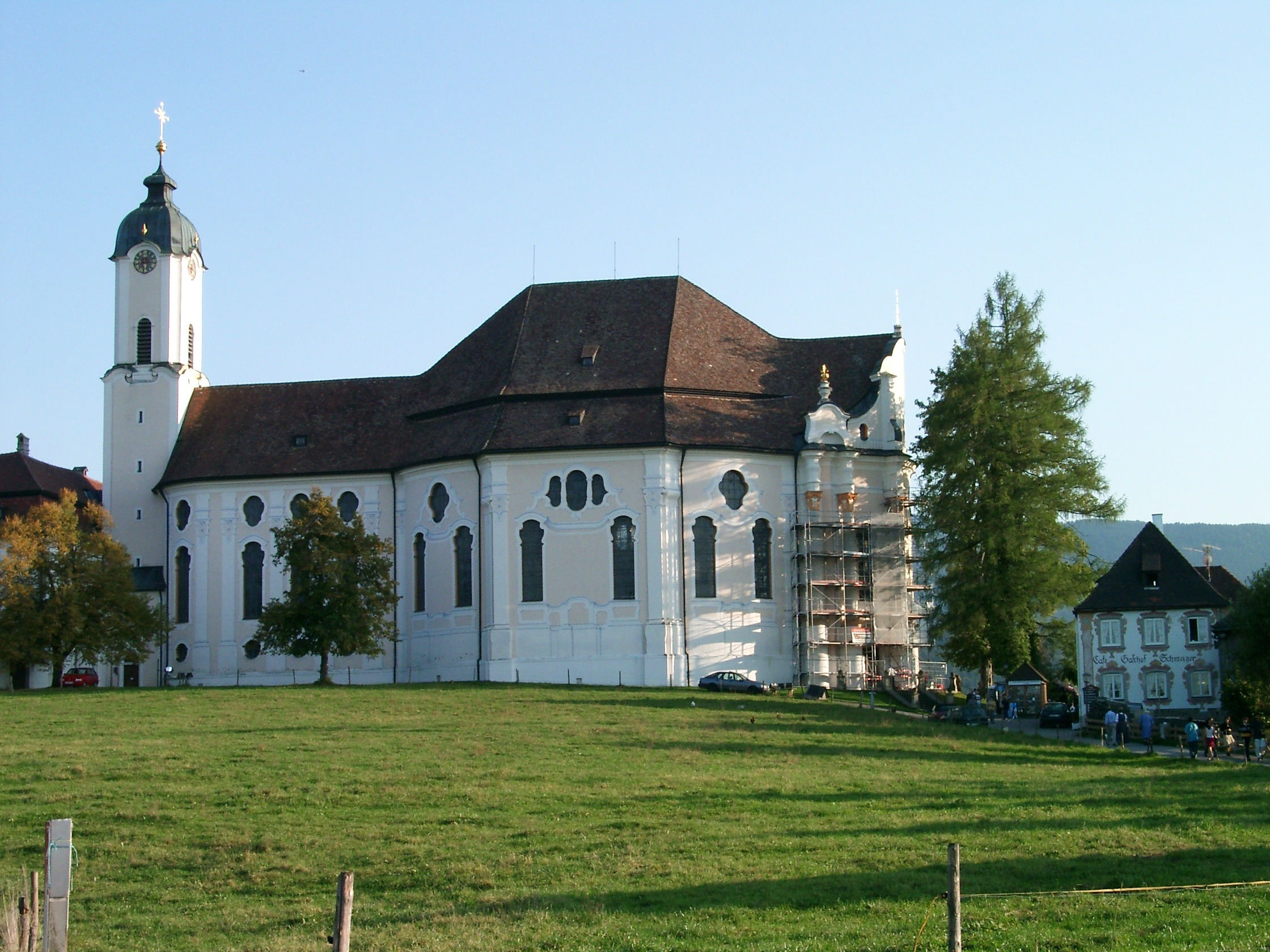
The Wieskirche, formally the Pilgrimage Church of the Scourged Savior on the Meadow, stands in a quiet meadow in the Bavarian village of Wies, part of the municipality of Steingaden. This oval Rococo church, completed in 1754, is widely considered the finest example of Bavarian Rococo architecture, a harmonious fusion of architecture, sculpture, and painting that creates an almost heavenly atmosphere. Its interior, awash with pastel colors, gilded stucco, and luminous frescoes, draws both pilgrims and art lovers from around the world. The church was inscribed as a UNESCO World Heritage Site in 1983, recognized for its outstanding universal value as a masterpiece of European ecclesiastical art.
The church's origins lie in a reported miracle in 1738, when a wooden figure of the scourged Christ, carved by local sculptor Georg Anton Sturm, appeared to weep tears in a farmhouse. The figure soon became a pilgrimage magnet, and the growing crowds prompted the construction of a dedicated church. The design was entrusted to Dominikus Zimmermann, with his brother Johann Baptist Zimmermann handling the painting and stucco work. Dominikus's devotion was such that he moved into a small house near the site and lived there for the last eleven years of his life, personally supervising every detail until the interior was completed in 1757.
Today, the Wieskirche remains an active parish and pilgrimage church within the Archdiocese of Munich and Freising. It hosts regular Catholic services, pilgrimage events, and occasional concerts, and it is a key stop on Germany's Romantic Road tourist route. The church's serene setting in the foothills of the Alps, combined with its architectural splendor, makes it a highlight for travelers exploring Bavaria. While it does not maintain a prominent social media presence, its official website provides visitor information, service times, and historical background.
Mission
The Wieskirche serves as a place of Catholic worship and pilgrimage, dedicated to the veneration of the Scourged Savior. Its mission is to provide a spiritual home for the local parish, to welcome pilgrims who come seeking healing and grace, and to preserve the church's artistic and architectural heritage for future generations. The church also aims to share its cultural significance with visitors from around the world, offering guided tours and educational programs that highlight its religious and historical importance.
History
The story of the Wieskirche begins with a wooden figure of the scourged Christ, carved around 1730 by sculptor Georg Anton Sturm for the monastery of Steingaden. The figure was displayed in a farmhouse in the hamlet of Wies, and in 1738, a farmer's wife claimed to have seen tears in the eyes of the figure. Word spread quickly, and the site became a place of pilgrimage, drawing thousands of faithful. The monastery, initially skeptical, recognized the potential and commissioned a church to accommodate the pilgrims. Dominikus Zimmermann, already known for his work on the pilgrimage church of Steingaden, was chosen as architect. Construction began in 1745 and the church was consecrated in 1754, with the interior completed by 1757. Dominikus lived in a small house next to the church from 1754 until his death in 1766, ensuring that every detail met his exacting standards. The church survived secularization in the early 19th century, when many Bavarian monasteries were dissolved, but it remained a pilgrimage site. In 1983, it was added to the UNESCO World Heritage List, citing its exceptional Rococo architecture and its role as a testament to the religious fervor of the era.
Notable People
Dominikus Zimmermann
Architect · 1685-1766
Designed and supervised the construction of the Wieskirche, living nearby for the last eleven years of his life.
Johann Baptist Zimmermann
Painter and Stucco Artist · 1680-1758
Created the frescoes and stucco decorations that define the church's Rococo interior.
Milestones
1738
Reported miracle of the weeping figure of Christ
1745
Construction of the church begins under Dominikus Zimmermann
1754
Church consecrated; interior completed by 1757
1983
Inscribed as a UNESCO World Heritage Site
Sources
Organization Info
- Founded
- 1754
- Headquarters
- Wies 12, 86989 Steingaden, Germany
- Country
- Germany
- Parent
- Archdiocese of Munich and Freising
- Type
- Religious
- Architect
- Dominikus Zimmermann
- UNESCO Inscription
- 1983
- Location
- Wies 12, 86989 Steingaden, Germany
Official Website
www.wieskirche.de
Join the community
fans discussing