Whang-od
 Philippines
Also known as: Apo Whang-od, Maria Whang-od Oggay, The Last Mambabatok
Birthday
February 17, 1917
Birth Sign
Aquarius
Birthplace
Buscalan, Tinglayan, Kalinga, Philippines
Age
109 years old
About
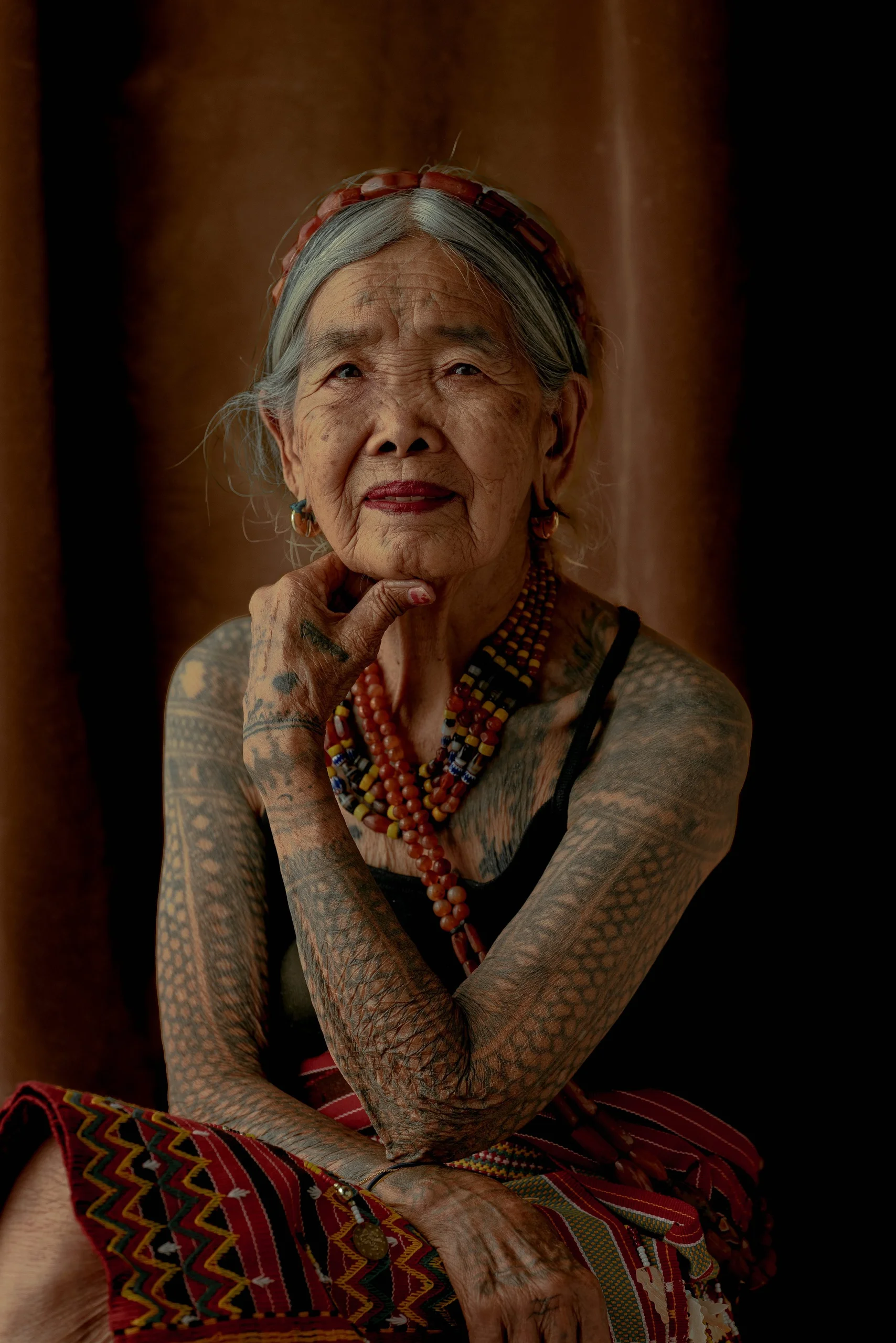
Whang-od Oggay, born February 17, 1917, in the mountain village of Buscalan, Tinglayan, Kalinga, Philippines, is the last and oldest mambabatok, or traditional Kalinga tattoo artist. A member of the Butbut people, she has spent over eight decades practicing an art form that once marked the bravery of headhunters. Her hands, steady even at 109, have become a living bridge to a fading past.
Whang-od began tattooing at age 11, learning from her father, who was a mambabatok himself. In the old days, Butbut warriors earned tattoos through acts of valor in combat, and women received them for beauty and protection. With tribal warfare long gone, Whang-od now tattoos tourists who trek to her remote village, keeping the tradition alive one needle prick at a time. She uses a pomelo thorn, charcoal, and water, tapping the ink into skin with a bamboo stick, a method unchanged for centuries.
Her fame has grown far beyond Kalinga. In April 2023, she became the oldest person ever to appear on the cover of Vogue, gracing the Philippines' Beauty Issue. The National Commission for Culture and the Arts honored her with the Dangal ng Haraya Award in 2018, and she was nominated for the Gawad Manlilikha ng Bayan, or National Living Treasures Award, in 2017. Though she speaks only Kalinga and Ilocano, her art speaks a universal language of resilience and heritage.
Early Life & Background
Whang-od was born in 1917 in Buscalan, a remote village perched in the Cordillera mountains. Her father, a mambabatok himself, began teaching her the craft when she was just 11 years old. In those days, tattooing was not a livelihood but a rite of passage. Men earned intricate chest and arm patterns through acts of bravery in headhunting raids, while women received geometric designs on their arms and necks as markers of beauty and as protection against evil spirits.
She learned the ancient technique using a pomelo thorn dipped in a mixture of charcoal and water, tapped into the skin with a bamboo stick. The process was painful and slow, but Whang-od showed an early aptitude. By her teens, she was already tattooing members of her community. When she was 25, the man she loved died in a logging accident. She never married and instead poured her devotion into her art, a decision that would shape her life and legacy.
For decades, Whang-od tattoed only her fellow Butbut people. The practice nearly died out as tribal warfare ceased and younger generations lost interest. But her reputation endured, and in the early 2000s, word of the last mambabatok began to spread beyond the mountains.
Career Growth
Whang-od's breakthrough came not through a single event but through a slow trickle of visitors who made the arduous trek to Buscalan. Around 2007, she took on her great-niece, Grace Palicas, as an apprentice, defying tradition to ensure the art survived. The BBC featured her in a 2016 travel piece, and international attention grew steadily.
In 2018, the National Commission for Culture and the Arts awarded her the Dangal ng Haraya Award, recognizing her contributions to Filipino cultural heritage. She had been nominated for the National Living Treasures Award a year earlier. Her biggest moment came in April 2023, when she appeared on the cover of Vogue Philippines' Beauty Issue at 106, becoming the oldest person ever to grace a Vogue cover. The image of her weathered hands holding a thorn went viral, cementing her status as a global icon.
Today, tourists from around the world line up to receive her tattoos, often waiting for hours in her hut. Each session is a link to a thousand-year-old tradition. She continues to work, her hands still steady, and her presence described by one visitor in 2024 as "gangster as ever."
Career Timeline
Public Image & Style
Whang-od is revered as a living legend, a symbol of resilience and indigenous pride. Visitors describe her as graceful, with deeply wrinkled skin that tells its own story. She is often photographed with a calm, almost timeless presence, and her image has been shared widely on social media, though she herself has no online presence.
Her fame has brought both celebration and concern. While many honor her, some have used her likeness on merchandise without permission, prompting interventions from the National Commission on Indigenous Peoples to protect her rights. For her fans, she represents a direct link to a pre-colonial past, and receiving a tattoo from her is seen as a pilgrimage.
Fame & Fandom (iFAMOUS Rankings)
The community surrounding Whang-od is not a structured organization with a catchy name or official membership drives. Instead, it is a loose coalition of admirers who identify simply as followers of the living legend and guardians of Kalinga heritage. This fanbase operates organically through social media and tourism boards rather than formal campaigns. Her official Instagram account serves as a primary hub for updates, while her fame has sparked a massive influx of tourists to Buscalan following viral features in international publications like Vogue and National Geographic. The most significant ritual for these fans is the arduous pilgrimage itself; travelers trek for days to reach her hut, treating the visit as a spiritual rite of passage where they receive centuries-old tattoos. Fans actively celebrate her milestones, exploding with tributes on her 109th birthday, though high-profile figures also seek her out to honor their roots. Despite the commercial tensions that occasionally arise regarding unauthorized merchandise, the core of this movement remains a deep-seated respect for her age and skill. This global attention places her firmly among the world's most recognized cultural icons. According to the latest data from the iFANN Global Fame Rankings, she holds the position of the 83rd most famous person in Philippines and ranks as the 67th most famous person from Philippines, holding steady from the previous cycle.
Interesting Facts and Legends
Whang-od's tattoos are crafted using a recipe unchanged for centuries: a pomelo thorn dipped in charcoal and water, with no machines or modern ink ever touching her skin. She speaks only Kalinga and Ilocano, communicating with global visitors through gestures and smiles despite having no bank account or fixed pricing structure. Her great-niece Grace Palicas stands as her sole apprentice, ensuring the tradition passes through bloodlines since Whang-od herself has never left the Philippines. Before gracing the cover of Vogue, she had never even seen a copy of the magazine. The story of her being the last surviving practitioner of the ancient batok tradition has evolved into a powerful mythos; if she were to stop, the art form would die with her. A pivotal moment occurred in 2017 when a Matador Network video titled "Whang-Od: The Last True Tattoo Artist" went viral, transforming her remote village into a global pilgrimage site. More recently, celebrities like Miss Universe Philippines 2025 Chelsea Manalo and veteran actor Richard Gomez traveled to Buscalan to receive tattoos, reinforcing her status as a national treasure. In July 2026, at age 109, her great-niece performed a tattoo on Miss Universe Philippines 2026 Bea Millan-Windorski, symbolizing the passing of the torch while maintaining the legacy.
Notable Quotes
“Tattoos are one of our greatest treasures. Unlike material things, no one can take them away from us when we die.”
“For Grace to become a good mambabatok, she will need passion and patience.”
Family & Personal Life
Whang-od was born to a father who was a mambabatok, and he passed the craft to her, a rare honor for a woman in the Butbut culture. She had a brother, though little is known about him. The man she loved died in a logging accident when she was 25, and she chose not to marry or have children. Her great-nieces, including Grace Palicas, have become her family and her legacy. She lives in her ancestral home in Buscalan, surrounded by the mountains that have been her lifelong backdrop.
Notable Connections
Whang-od's father, also a mambabatok, was her first teacher, passing down an art that has been in her family for generations. Her great-niece, Grace Palicas, is her dedicated apprentice, learning the ancient techniques to carry on the tradition. The National Commission for Culture and the Arts has recognized her work, and Vogue Philippines featured her on its cover in 2023.
Relationships & Dating History
Whang-od was in love with a man from her village, but he died in a logging accident when she was 25. Grief-stricken, she chose never to marry or have children, dedicating her life to her art instead. She has remained single ever since, a decision that has allowed her to focus entirely on preserving the mambabatok tradition. As of 2026, she is 109 and still single, with no romantic partner.
- DatedUnnamed beloved? - 1942Her only known love, who died in a logging accident when she was 25.
Salary, Net Worth In 2026
$500 Thousand
iFANN Editorial Team estimate
iFANN currently estimates Whang-od's net worth at $500 Thousand as of 2026. Her income flows primarily from the tattoos she administers to visitors, who often pay a few hundred pesos each, alongside generous donations left by travelers. She has never established a fixed price list, accepting whatever amount guests offer. While recent years have seen merchandise sales featuring her likeness, including t-shirts and prints, she has seen little of those profits due to exploitation concerns. These issues prompted interventions from the National Commission on Indigenous Peoples to protect her interests. Living without a bank account in her simple village home, her true wealth resides in her cultural legacy rather than material possessions.
Awards Won (2)
Whang-od has received the Dangal ng Haraya Award from the National Commission for Culture and the Arts in 2018, and the Presidential Medal of Merit, though the year is not publicly documented. She was also nominated for the National Living Treasures Award in 2017.
2018 · Cultural Heritage
Traditional Kalinga tattooing
Merit
Cultural preservation
Known For
Traditional Kalinga tattooing
1928-present · Mambabatok (tattoo artist)
Vogue Philippines cover
2023 · Cover model
Keywords
Sources
Quick Facts
- Profession
- tattoo artist
- Born
- February 17, 1917
- Birthplace
- Buscalan, Tinglayan, Kalinga, Philippines
- Gender
- Female
- Birth Sign
- Aquarius
- Ethnicity
- Butbut (Kalinga)
- Languages
- Kalinga, Ilocano
Personal Details
- Full Name
- Whang-od Oggay
Frequently Asked Questions
Who is Whang-od?
How old is Whang-od in 2026?
What is a mambabatok?
Is Whang-od still tattooing in 2026?
Where does Whang-od live?
Join the community
fans discussing