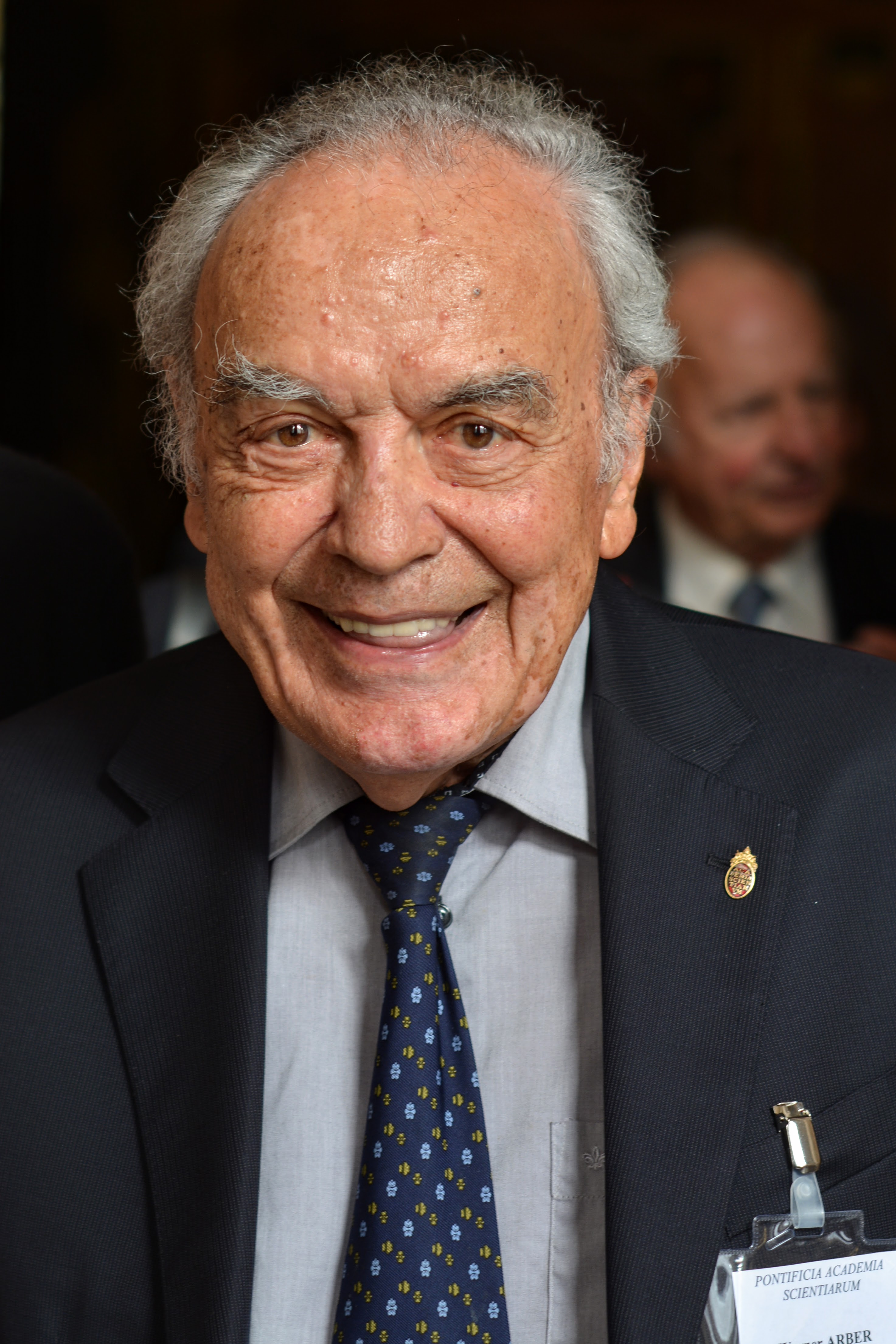
Werner Arber
 Switzerland
geneticist•physician•university teacher
Birthday
+1929-06-03
Birth Sign
Gemini
Birthplace
Gränichen
Age
97 years old
About
Werner Arber, born on June 3, 1929, in Gränichen, Switzerland, is a distinguished figure in microbiology and genetics. His early career saw him contribute significantly to the understanding of genetic material. Arber pursued a path that combined his medical background with a deep curiosity about the fundamental mechanisms of life, eventually leading him to pivotal discoveries in molecular biology.
Fame & Fandom
Werner Arber stands as a figure of enduring scientific stature, currently recognized as the 56th most famous person in AI according to the iFANN Global Fame Rankings, a placement he has maintained with steady consistency through the August 2026 cycle. This standing within the artificial intelligence sector reflects the profound and lasting influence of his foundational work on genetic mechanisms, which continues to underpin modern computational biology and bioinformatics. The rankings, compiled by the iFANN Global Fame Rankings system, aggregate global attention across diverse media channels and consumption patterns to determine such positions. While his name appears prominently in technical literature and historical records of molecular discovery, his public profile remains anchored in professional achievement rather than popular culture spectacle. Consequently, there is no formalized fanbase or specific nomenclature for those who follow his legacy; the audience that engages with his work consists primarily of researchers, students, and historians of science who approach his contributions with academic reverence. Unlike entertainment figures who cultivate dedicated communities with rituals and branded gatherings, Arber's supporters are dispersed across institutions and disciplines, united by the impact of his discoveries on the broader understanding of life itself.
Interesting Facts and Legends
Werner Arber was born on June 3, 1929, in Gränichen, Switzerland, and holds dual qualifications as a physician and a geneticist. His career is defined by the pivotal discovery of restriction enzymes, substances capable of cutting DNA at specific sequences, a breakthrough achieved alongside Daisy Dussoix and later celebrated with Daniel Nathans and Hamilton Othanel Smith. This work earned him the Nobel Prize in Physiology or Medicine in 1978 and established the bedrock for modern genetic engineering. Arber served as a professor at the University of Geneva, where he investigated spontaneous variation in microorganisms. The narrative surrounding his legacy is one of quiet revolution in the laboratory rather than dramatic public events; there are no recorded instances of crowds gathering for his appearances or viral moments disrupting daily life. Instead, his story is preserved in peer-reviewed journals and official archives detailing his methodical research. Although his co-recipients have passed away, such as Hamilton O. Smith in October 2025, these events are treated as factual updates within the scientific community rather than folklore. Arber remains a central figure in the Lindau Nobel Laureate Meetings, engaging with the next generation of scientists through lectures that focus strictly on the mechanics of life.
Awards & Accolades
Keywords
Quick Facts
- Profession
- geneticist, physician, university teacher
- Born
- +1929-06-03
- Birthplace
- Gränichen
- Gender
- Male
- Birth Sign
- Gemini
Join the community
fans discussing