 Poland
About
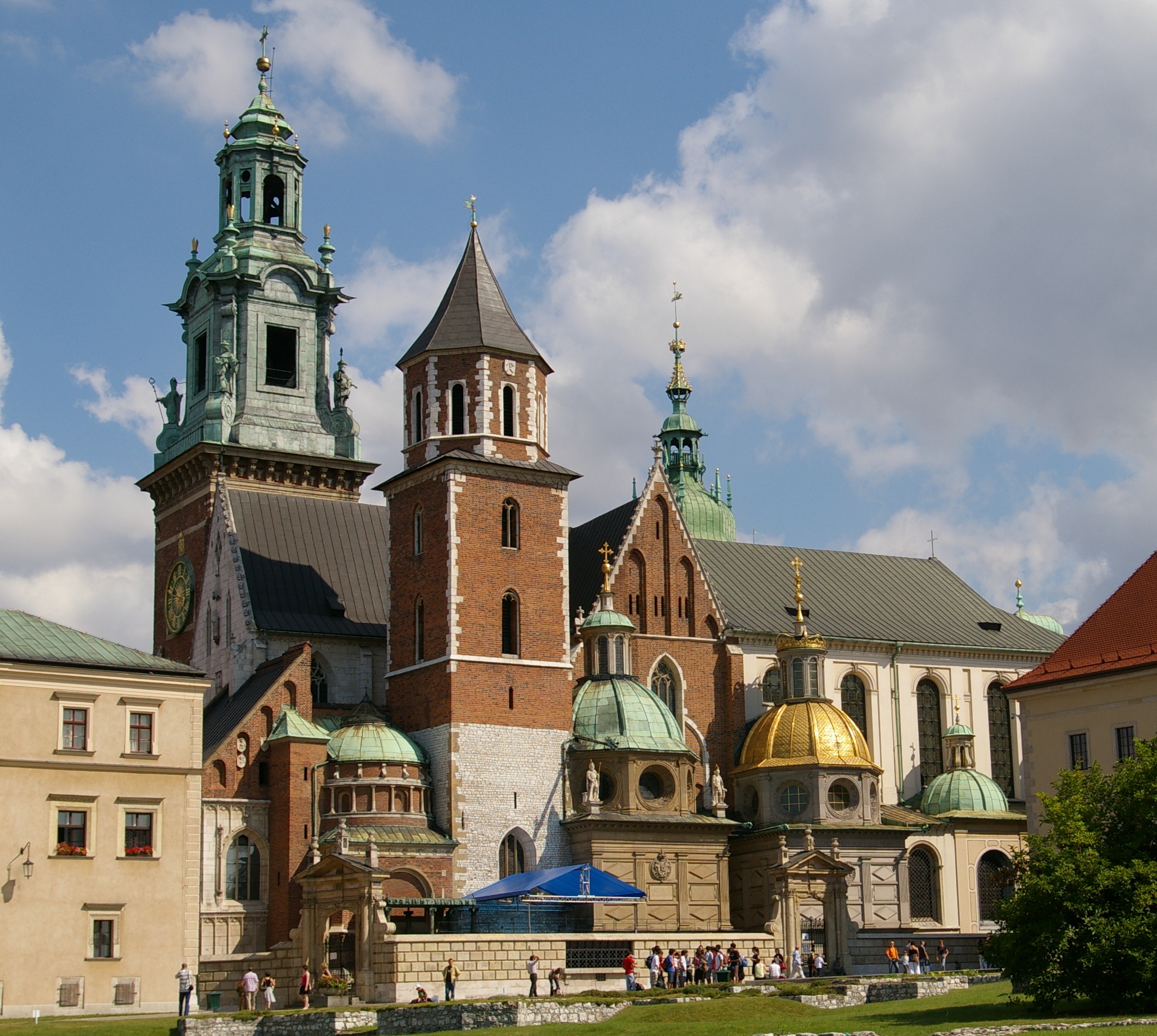
The Archcathedral Basilica of Saint Stanislaus and Saint Wenceslaus, commonly known as Wawel Cathedral, is a nearly thousand-year-old Roman Catholic church situated on Wawel Hill in Kraków, Poland. For centuries, it has held profound national significance, serving as the primary site for the coronations of Polish monarchs and as the final resting place for many kings, queens, national heroes, and poets. The cathedral is an integral part of the larger Wawel Castle Complex, a UNESCO World Heritage Site that stands as a prominent landmark overlooking the city.
The current Gothic structure, consecrated in 1364, is the third church to be built on this historically rich site. Its origins trace back to an 11th-century Romanesque stone church, followed by a larger Romanesque edifice in the 12th century. Over the subsequent centuries, the cathedral underwent numerous expansions and modifications, with the addition of various chapels, mausoleums, and towers that reflect a blend of architectural styles, including Renaissance and Baroque influences. This evolution has resulted in a unique architectural tapestry, with no single design dominating the entire structure.
Beyond its architectural grandeur, Wawel Cathedral is a living monument to Polish history and identity. It houses an impressive collection of art and historical artifacts, including the famed Wawel Tapestries. The Sigismund Chapel, often described as the jewel of Polish Renaissance architecture, is a particular highlight. The cathedral continues to function as an active place of worship, attracting a steady stream of visitors drawn to its spiritual atmosphere, historical importance, and artistic treasures.
Mission
Wawel Cathedral serves as the spiritual center of Poland, functioning as a national sanctuary and a place of worship. Its mission encompasses preserving the historical and cultural heritage of the nation, acting as the site for royal coronations and royal burials, and continuing its role as a significant religious institution for the Catholic faithful.
History
The history of Wawel Cathedral is deeply intertwined with the history of Poland itself. The first church on Wawel Hill, a Romanesque stone structure, was likely built around 1020. This was replaced by a larger Romanesque basilica in the 12th century. The foundation stone for the current Gothic cathedral was laid in 1320, and its consecration took place in 1364. This marked the beginning of its role as the primary coronation church for Polish rulers.
Over the centuries, the cathedral was continuously expanded and enriched. The construction of numerous chapels, funded by noble families and royalty, began in the late 14th century and continued into the 17th century. The Sigismund Chapel, added between 1519 and 1533, is a prime example of Renaissance architecture and houses the tomb of King Sigismund I the Old. The cathedral also became the burial site for many Polish kings, including Władysław II Jagiełło, Casimir III the Great, and John III Sobieski, as well as national heroes like Tadeusz Kościuszko and Józef Piłsudski.
The cathedral has witnessed countless significant events, from coronations and royal weddings to funerals and national commemorations. It has also suffered damage from fires and wars, necessitating periods of restoration and reconstruction. Despite these challenges, it has maintained its status as the symbolic heart of the Polish nation and a testament to its rich history and cultural heritage.
Subdivisions
Sigismund Chapel
Considered the pearl of the Polish Renaissance, this chapel houses the tomb of King Sigismund I the Old and his son Sigismund II Augustus. It features a distinctive golden dome.
Royal Tombs
The crypts beneath the cathedral contain the sarcophagi of numerous Polish monarchs, including Casimir III the Great, Louis I of Hungary, Władysław II Jagiełło, and John III Sobieski.
Cathedral Museum
Part of the cathedral complex, displaying religious artifacts, historical vestments, and artworks.
Notable People
Saint Stanislaus
Patron Saint of Poland
His relics are interred in the cathedral, making it a major pilgrimage site.
Grzegorz Ryś
Metropolitan Archbishop of Kraków · 2025-present
Inaugurated at Wawel Cathedral, continuing the tradition of the archbishop's office being tied to the cathedral.
King Sigismund I the Old
King of Poland · Reigned 1506-1548
Buried in the Sigismund Chapel, a masterpiece of Renaissance art.
King Władysław II Jagiełło
King of Poland · Reigned 1386-1434
The first monarch to be buried in the cathedral, initiating the tradition.
Milestones
c. 1020
Construction of the first church on Wawel Hill.
12th century
Construction of a larger Romanesque basilica.
1320
Beginning of construction for the current Gothic cathedral.
1364
Consecration of the Gothic cathedral.
1519-1533
Construction of the Sigismund Chapel.
1972
The cathedral was granted the status of an Archcathedral Basilica by Pope Paul VI.
2025
Formal inauguration of Cardinal Grzegorz Ryś as Metropolitan Archbishop of Kraków.
Sources
Organization Info
- Founded
- +1020
- Headquarters
- Wawel Hill, Kraków, Poland
- Country
- Poland
- Metropolitan Archbishop of Kraków
- Grzegorz Ryś
- Type
- Religious
- Official Name
- Archcathedral Basilica of Saint Stanislaus and Saint Wenceslaus
- Location
- Wawel Hill, Kraków, Poland
- Architectural Style
- Gothic, Renaissance, Baroque
- Age
- Nearly 1,000 years old
- UNESCO Status
- Part of the Wawel Castle Complex World Heritage Site
Official Website
www.katedra-wawelska.pl/en/
Join the community
fans discussing