
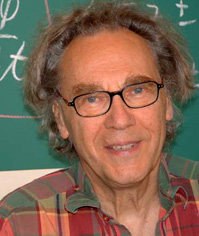
Walter Lewin
 Netherlands
astronomer•university teacher•astrophysicist
Birthday
January 29, 1936
Birth Sign
Sagittarius
Birthplace
The Hague, Netherlands
Age
90 years old
About
Walter Hendrik Gustav Lewin is a Dutch astrophysicist and retired MIT physics professor, best known for his charismatic introductory physics lectures that reached millions online. Born January 29, 1936 in The Hague, he earned his PhD in nuclear physics from Delft University of Technology in 1965 and joined MIT's faculty in 1966, remaining for 43 years. His research in X-ray astronomy included the first discovery of a slowly rotating neutron star via all-sky balloon surveys. Lewin recorded 105 lectures distributed through MIT OpenCourseWare, YouTube, and edX, garnering about 2 million views annually. His popular science book For the Love of Physics was translated into at least nine languages. In December 2014, MIT revoked his Professor Emeritus title after finding he sexually harassed an online student in an MITx course.
Early Life & Background
Lewin grew up in the Netherlands in a family that valued education; his father was Walter Simon Lewin and his mother Pieternella Johanna van der Tang. He attended secondary school in the Netherlands before enrolling at Delft University of Technology, where he chose physics as his discipline. There he specialized in nuclear physics, completing his doctoral thesis in 1965. His transition to astrophysics began shortly after his PhD, when he moved to the United States to join MIT's Physics Department in 1966. No detailed records of his childhood hobbies or early influences exist in major biographical sources, but his academic trajectory from nuclear physics to X-ray astronomy marked the start of his career.
Career Growth
At MIT, Lewin became a pioneer in X-ray astronomy, using balloon-borne detectors and satellite instruments to study cosmic X-ray sources. His team discovered the first slowly rotating neutron star through all-sky surveys, a milestone in astrophysics. Over his career he published more than 450 scientific articles. But his most visible impact came from teaching: for over 30 years he taught MIT's core physics courses, Mechanics, Electricity & Magnetism, and Vibrations & Waves, using dramatic demonstrations like swinging from a pendulum. In the early 2000s, his lectures were uploaded to MIT OpenCourseWare and later to YouTube and edX, where they attracted a global audience. He received three MIT teaching prizes (edX says five total) and was the only MIT professor in The Princeton Review's "The Best 300 Professors" list. His book For the Love of Physics (2011) became an international success. However, in December 2014 MIT revoked his emeritus title after an investigation confirmed he sexually harassed an online student in an MITx course the previous year.
Career Timeline
Public Image & Style
Lewin's public persona is defined by his theatrical, energetic teaching style: he used bold physical demonstrations, clear chalkboard work, and an enthusiastic tone to make physics intuitive. Science media portrayed him as a "physics superstar" whose lectures inspired many to love the subject. After the 2014 misconduct case, his image became mixed, admired for his teaching but criticized for serious ethical violations. Online communities still circulate his lectures, but his institutional association with MIT was severed.
Fame & Fandom (iFAMOUS Rankings)
Walter Lewin's audience, often self-styled as "Lewinistas," formed a distinct digital culture defined by an almost ritualistic devotion to his theatrical demonstrations. Unlike typical academic followings, this group treated his lectures as performance art, actively preserving and mirroring his content across the internet after MIT removed his courses in 2014. Fans organized grassroots efforts to keep his iconic pendulum swings and Van de Graaff generator shocks accessible, viewing the physics lessons not just as education but as a shared heritage of scientific wonder. This community celebrated his willingness to risk personal safety on stage, creating inside jokes about his "mad scientist" persona while championing his mission to democratize elite knowledge. The fanbase remains a powerful force in online education, driven by organic sharing rather than formal campaigns. Their loyalty is anchored in specific, verified moments that blurred the line between rigorous science and entertainment, ensuring his legacy survives institutional boundaries. This unique blend of academic rigor and viral spectacle has cemented his standing in global cultural memory. Walter Lewin is currently ranked as the 62nd most famous person from Netherlands the 62nd most famous person from Netherlands according to the iFANN Global Fame Rankings, holding steady from the previous cycle. These placements reflect his enduring reach across media coverage and consumption signals worldwide.
Interesting Facts and Legends
Walter Lewin's lecture demonstrations frequently became viral sensations, including his routine use of dropping objects to illustrate gravity. One legendary moment involved him swinging on a 15-foot pendulum to demonstrate conservation of energy, a stunt he performed repeatedly with increasing intensity. His popular science book, For the Love of Physics, achieved rapid international success, being translated into at least nine languages within a year of publication. While official publisher records list three undergraduate teaching awards, edX mentions five, suggesting additional unnamed recognitions for his instructional excellence. He holds the distinction of being the only MIT professor featured in The Princeton Review's "The Best 300 Professors" list. Beyond the documented facts, fans still retell the story of his "dangerous" ladder climbs where he held charged spheres near his head, a visual that solidified his reputation as a physicist magician. Another widely circulated legend involves his use of a Van de Graaff generator to give himself massive electric shocks, often repeating the act multiple times in a single lecture to explain charge distribution. These performances created a sense of awe that turned abstract laws into visceral experiences for millions of viewers.
Notable Quotes
“Physics is not the most important thing. Love is.”
“I have never seen a student who couldn't understand physics if they were taught properly.”
“The beauty of physics is that it explains the world around us in a simple, elegant way.”
“My lectures are my life. I put everything I have into them.”
Family & Personal Life
Lewin's parents were Walter Simon Lewin and Pieternella Johanna van der Tang. He was born and raised in The Hague, Netherlands, and has Dutch nationality. No information about siblings is available in reliable sources. He lives in Cambridge, Massachusetts, as listed by his publisher. There is no public record of a spouse, children, or pets.
Notable Connections
Relationships & Dating History
No reliable public information exists about Walter Lewin's romantic relationships, marriages, or dating history. He is a private individual in this regard, and major biographical sources do not mention a spouse or partner. The only documented personal conduct issue is the 2013 sexual harassment case involving an online student, which was not a consensual relationship. As of 2026, his relationship status is unknown.
Awards Won (6)
Lewin received three MIT prizes for excellence in undergraduate teaching, and edX notes a total of five teaching awards. He also received a NASA Award for Exceptional Scientific Achievement, an Alexander von Humboldt Award, and a Guggenheim Fellowship for his astrophysics research.
Scientific Achievement
X-ray astronomy research
Research
Astrophysics research
Known For
For the Love of Physics
2011 · Author
MIT Physics Lectures (8.01, 8.02, 8.03)
2000 · Professor
Discovery of rotating neutron star
1966 · Researcher
Keywords
Sources
Quick Facts
- Profession
- astronomer, university teacher, astrophysicist
- Born
- +1936-01-29
- Birthplace
- The Hague
- Gender
- Male
- Birth Sign
- Sagittarius
Personal Details
- Full Name
- Walter Hendrik Gustav Lewin
- Education
- PhD in nuclear physics, Delft University of Technology, 1965
Frequently Asked Questions
How old is Walter Lewin?
What is Walter Lewin's net worth?
Is Walter Lewin still teaching in 2026?
What is Walter Lewin best known for?
Why was Walter Lewin's emeritus title revoked?
Social Media
Join the community
fans discussing