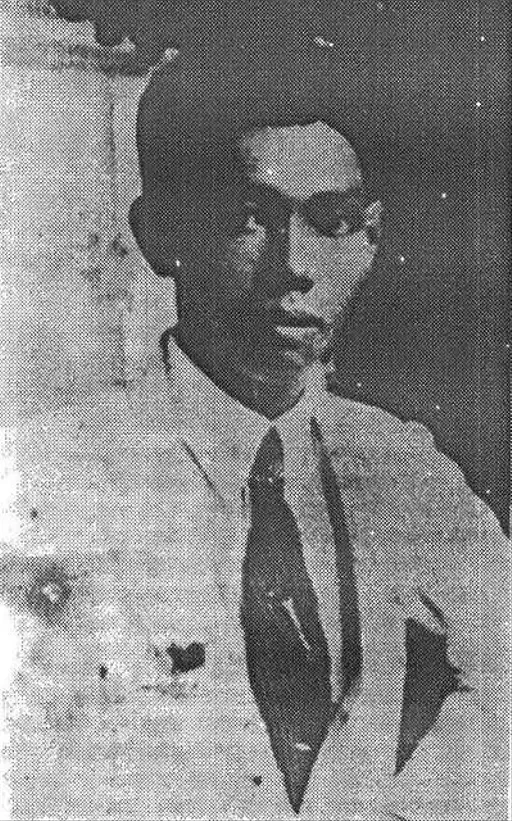
Wage Rudolf Soepratman
 Indonesia
Also known as: W.R. Soepratman, W.R. Supratman, WR Soepratman, Wage Rudolf Supratman
Birthday
March 9, 1903
Birth Sign
Pisces
Birthplace
Jatinegara, Batavia (now Jakarta), Dutch East Indies
Age
Died at 35
About
Wage Rudolf Soepratman, commonly known as W.R. Soepratman, was an Indonesian composer and songwriter, best remembered as the creator of the national anthem, "Indonesia Raya." Born in 1903 in Batavia, he was a teacher, journalist, and musician whose work became the soundtrack of Indonesia's independence movement.
His anthem, first performed in 1928, captured the spirit of a nation yearning for freedom and remains a powerful symbol of Indonesian identity. Soepratman died in 1938 at age 35, never witnessing the independence he helped inspire. In 1971, he was posthumously declared a National Hero of Indonesia.
Today, his legacy lives on through the anthem, his portrait on the 50,000 Rupiah banknote, and the annual celebration of National Music Day on his birthday.
Early Life & Background
Wage Rudolf Soepratman was born on March 9, 1903, in Jatinegara, Batavia, on a Monday that fell on the Javanese calendar day "Wage," which inspired his first name. He was the son of Senen and Siti Senen, a family of modest means. While born in Batavia, his roots traced to Purworejo, Central Java, where he spent part of his childhood in a household that valued discipline and music.
Growing up under Dutch colonial rule, Soepratman attended Dutch-run schools, an opportunity not available to all Indonesians of his generation. He trained as a teacher and worked in that profession for a time. His early exposure to music came through his family, and he developed a deep interest in both music and education.
As a young adult, Soepratman became increasingly aware of the nationalist movement sweeping the Dutch East Indies. He also began a career in journalism, which would later connect him to the broader struggle for independence. His experiences during this period, including his time as a jazz musician in Makassar where he was pursued by Dutch intelligence, shaped his artistic and political sensibilities.
Career Growth
Soepratman's breakthrough came in 1924 when he composed "Indonesia Raya," writing both the lyrics and melody. The song was first publicly performed on October 28, 1928, during the Second Youth Congress in Batavia, an event that became a landmark in the Indonesian nationalist movement. The performance electrified the audience and quickly transformed the song into a symbol of resistance.
The Dutch colonial authorities banned public singing of "Indonesia Raya" on December 26, 1928, just two months after its debut. Despite the ban, the song's popularity only grew, becoming an anthem of the independence movement. Soepratman continued to compose other patriotic songs, including "Bangun Pemudi-Pemuda" and "Surya Wirawan," though none matched the resonance of "Indonesia Raya."
He also worked as a journalist, and the WR Soepratman Foundation emphasizes his role as a figure of the national press. After his death in 1938, "Indonesia Raya" was adopted as the official national anthem, and in 1971 he was posthumously named a National Hero of Indonesia.
Career Timeline
Public Image & Style
W.R. Soepratman is revered in Indonesia as a national hero and the father of the nation's musical identity. His image appears on the 50,000 Rupiah banknote, one of the highest denominations in circulation. He is portrayed in media and education as a symbol of patriotic sacrifice, a man who gave his nation its anthem and died young before witnessing the independence he helped inspire.
His legacy is managed by the WR Soepratman Foundation, which maintains his museum, grave site, and family's public presence. The 2024 biographical film "WAGE" represents a modern effort to introduce his story to younger generations. There is no formal fandom in the Western celebrity sense; instead, he is honored through state ceremonies, educational curricula, and annual commemorations.
Fame & Fandom
Wage Rudolf Soepratman stands as a singular figure in global history, his influence extending far beyond the realm of typical celebrity metrics. As a composer and songwriter whose work defined a nation's identity, his fame operates on an institutional scale rather than through modern pop-culture mechanisms. iFANN has evaluated this historical figure within its Global Fame Engine framework. The evaluation confirms that Wage Rudolf Soepratman is currently EVALUATED_UNRANKED, meaning he does not hold a placement in the published Global Top 1,000 or any specific Top-100 scope list at this time. This status reflects his unique position as a National Hero rather than a contemporary entertainer subject to fluctuating popularity charts. His legacy is sustained by the Indonesian public, educational institutions, and state-sanctioned observances rather than fan clubs or commercial campaigns. There is no documented fandom name associated with his followers; the public refers to him universally as Pahlawan Nasional (National Hero) and the father of the national anthem. Rituals surrounding his life are civic duties, such as the mandatory singing of Indonesia Raya in schools and government meetings, which serve as acts of national remembrance rather than fan worship. While no active grassroots organizations drive chart movements or social media trends for him, his family and the WR Soepratman Foundation actively manage his physical legacy, including his museum and grave site. Recent efforts by his lineage to secure better preservation of his memorial highlight a dedicated, albeit quiet, stewardship of his memory. The absence of a formal fanbase name underscores the distinction between his role as a foundational historical icon and the transient nature of modern celebrity fandom.
Interesting Facts and Legends
Soepratman's violin, the instrument used to compose and perform "Indonesia Raya," remains a preserved historical artifact; in 2007, Indonesian maestro Idris Sardi played it during a commemorative event. Recent research from 2024 uncovered that Soepratman spent time in Makassar working as a jazz musician while being pursued by Dutch intelligence operatives, a previously obscure chapter of his biography. His grave in Surabaya serves as a site of annual pilgrimage, particularly around Indonesian Independence Day, though the adjacent WR Soepratman Museum is often described as rarely visited and hidden despite its significance. March 9, marking his birthday, was established in 2003 as Indonesia's National Music Day. A widely retold story among musicians claims that crowds were so moved when he first performed Indonesia Raya at the Youth Pledge that streets were effectively shut down, though historians note this emotional uproar may be embellished over time. Another persistent legend suggests he died fighting Japanese soldiers or on Independence Day itself, yet records confirm he passed away in 1938, six years before the nation's freedom. In 2025, his family publicly advocated for the protection of his legacy, noting the neglected condition of his former home and memorial site.
Notable Quotes
“Indonesia Raya, merdeka, merdeka.”
“Bangun pemudi-pemuda Indonesia.”
“Surya Wirawan, cahaya kejayaan.”
Family & Personal Life
Soepratman was born to Senen and Siti Senen, a couple of modest means. He grew up in a household where music played a significant role, and his early exposure to music came from his family. His family roots traced to Purworejo, Central Java.
He never married and had no children. His legacy is carried forward by his extended family, who manage the WR Soepratman Foundation (Yayasan Wage Rudolf Soepratman Meester Cornelis Jatinegara). The foundation preserves his memory and has been active in discussions with the government about the anthem's status.
Notable Connections
W.R. Soepratman is associated with his parents Senen and Siti Senen, and his legacy is carried by the WR Soepratman Foundation. Indonesian violin maestro Idris Sardi played Soepratman's preserved violin in 2007. In 2025, Indonesia's Minister of Culture Fadli Zon met with the Soepratman family to discuss royalty issues.
Relationships & Dating History
Historical records regarding W.R. Soepratman's personal relationships are extremely limited. As a figure from early 20th-century colonial Indonesia, detailed documentation of his romantic life has not survived or been widely published. No credible sources document any marriages, engagements, or romantic partnerships involving Soepratman. He died unmarried and without children, based on available biographical information.
His legacy is instead carried forward by the extended family who manage the WR Soepratman Foundation, which has been active in preserving his memory.
Death & Aftermath
Died
August 17, 1938 (aged 35)
Death Place
Surabaya, East Java, Indonesia
Cause of Death
Undisclosed; tuberculosis rumored but unconfirmed
In the final years of his life, Wage Rudolf Soepratman worked as a teacher and journalist in Surabaya, East Java, where he continued to compose patriotic music that resonated with the growing independence movement. On August 17, 1938, at the age of thirty-five, Soepratman passed away in Surabaya. Immediate tributes from 1938 are not recorded in surviving documentation, yet his legacy quickly became institutionalized within the Indonesian national consciousness. He was posthumously declared a National Hero of Indonesia, an honor recognizing his contribution to the nation through art rather than military service. The WR Soepratman Museum in Surabaya now stands as a dedicated memorial to his life and work, while his birthday on March 9 is annually observed as National Music Day throughout the country.
His violin has been played by renowned musicians such as Idris Sardi during Youth Pledge commemorations, ensuring his cultural instruments remain active in modern observances. The Yayasan Wage Rudolf Soepratman was established to preserve his memory and manage his legacy, though details regarding the distribution of his personal estate or financial assets were never made public. As of recent years, his family has advocated for the protection of his physical memorials, citing concerns over their condition.
Net Worth (Estate Value)
$10 Million
iFANN Editorial Team estimate
W. R. Soepratman died in 1938, before Indonesian independence, and no historical records of his personal wealth exist. His estate's current value is not publicly estimated by traditional means. The song "Indonesia Raya" is classified as a national anthem, and under Indonesian law, national symbols are considered public property, meaning the family does not receive royalties from its use as the anthem. In August 2025, the family publicly clarified the royalty situation during an audience with Indonesia's Minister of Culture, Fadli Zon. The family's foundation, Yayasan Wage Rudolf Soepratman Meester Cornelis Jatinegara, manages his legacy and has been engaged in discussions with the government regarding the song's status and potential compensation. Per iFANN's editorial analysis, the total net worth attributed to this figure stands at $10 Million.
Awards Won (1)
W.R. Soepratman was posthumously named a National Hero of Indonesia (Pahlawan Nasional) in 1971, recognizing his contributions to the nation's cultural and political awakening. His birthday, March 9, was designated as Indonesia's National Music Day in 2003, and his portrait appears on the 50,000 Rupiah banknote.
1971 · National Honour
For composing Indonesia Raya
Known For
Indonesia Raya
1928 · Composer and lyricist
Bangun Pemudi-Pemuda
1930s · Composer
Surya Wirawan
1930s · Composer
Keywords
Sources
Quick Facts
- Profession
- composer, songwriter, teacher
- Born
- March 9, 1903
- Birthplace
- Jatinegara, Batavia (now Jakarta), Dutch East Indies
- Died
- August 17, 1938
- Death Place
- Surabaya
- Gender
- Male
- Birth Sign
- Pisces
Personal Details
- Full Name
- Wage Rudolf Soepratman
Frequently Asked Questions
Who wrote the Indonesian national anthem?
When was W.R. Soepratman born and when did he die?
What is W.R. Soepratman's net worth?
Did W.R. Soepratman have children?
Why is March 9 celebrated as National Music Day in Indonesia?
Social Media
Join the community
fans discussing