 Vietnam
About
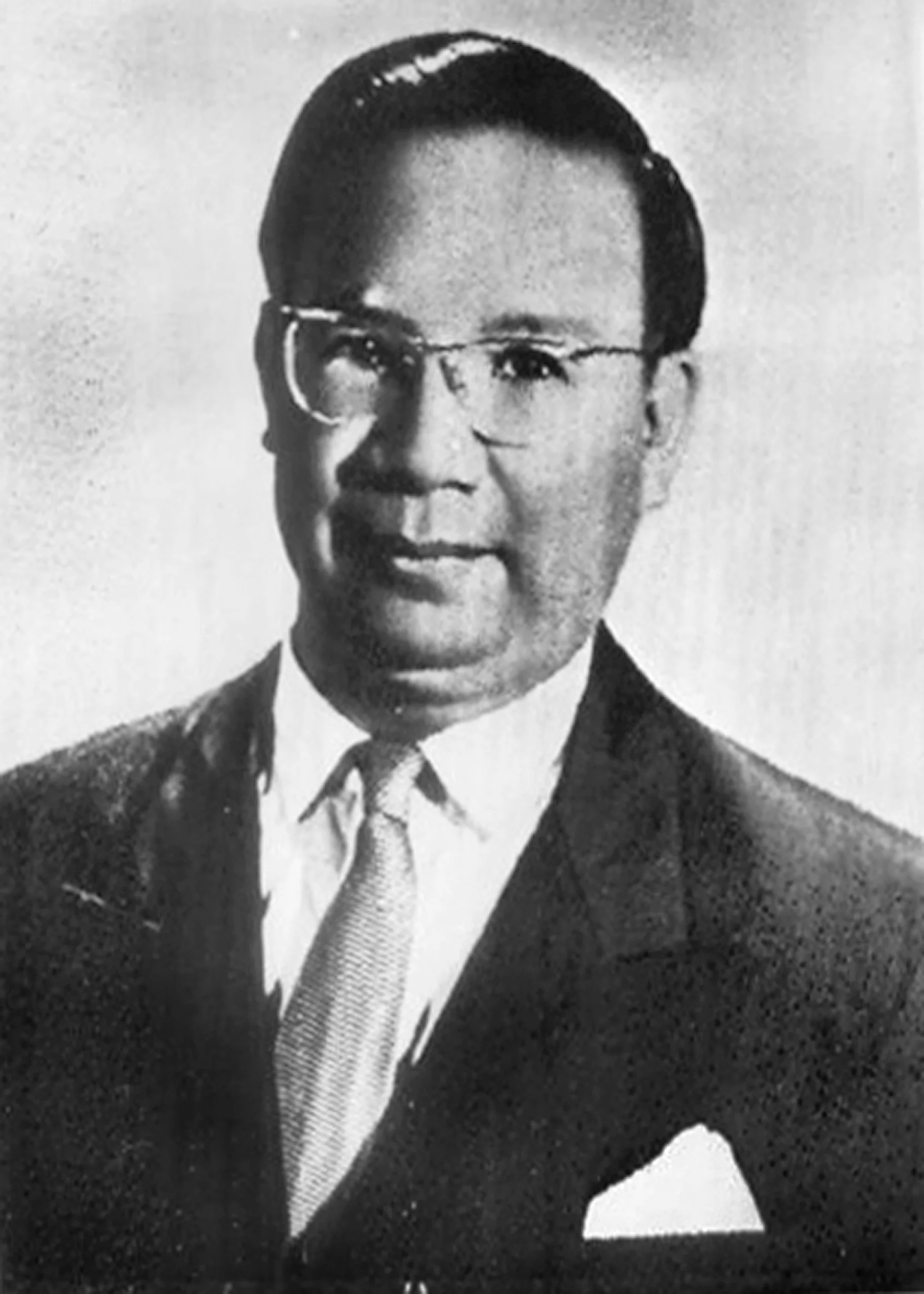
Vũ Văn Mẫu was a South Vietnamese lawyer, judge, and diplomat who served as the final Prime Minister of South Vietnam. Born in Hanoi in 1914, he built a distinguished legal career before entering diplomacy. His most consequential role came in April 1975, when President Dương Văn Minh appointed him Prime Minister. He held the office for only two days, from 28 to 30 April, before the fall of Saigon ended both the war and the existence of South Vietnam.
Known as a Buddhist politician and advocate of nonviolence, Mẫu had earlier served as Foreign Minister and as president of the pacifist organization Forces for Reconciliation. His brief premiership was marked by attempts to negotiate a peaceful transition in the war's final hours. After the surrender, he went into exile in France, where he lived until his death in Paris in 1998 at age 84.
Early Life & Background
Vũ Văn Mẫu was born on 25 July 1914 in Hanoi, then part of French Indochina. He grew up during the French colonial era, and although details of his childhood are scarce, he pursued legal studies and became a respected legal scholar. His expertise in law earned him a reputation as a knowledgeable academic before he moved into the judiciary.
His career shifted from law to diplomacy in the mid-1950s. He served as South Vietnam's Secretary of State for Foreign Affairs from approximately July 1955 to July 1956. US State Department documents confirm his role, noting he informed American officials about South Vietnam's cabinet decisions regarding Geneva-type elections and consultations. His diplomatic work continued into the early 1960s, with references to him as Minister of Foreign Affairs in 1961–1963. During these years, he was involved in discussions about his potential continuation in that role alongside General Tran Van Don at the Ministry of National Defense.
During this period, he became known as a Buddhist politician and advocate of nonviolence, serving as president of Forces for Reconciliation, a South Vietnamese pacifist organization. He was also noted for dramatic acts of protest, including shaving his head in opposition to the Diệm and Nhu regime.
Career Growth
Vũ Văn Mẫu's most significant role came in the final days of the Vietnam War. On 28 April 1975, as North Vietnamese forces advanced on Saigon, President Dương Văn Minh appointed him Prime Minister. His tenure lasted just two days, ending with the fall of Saigon on 30 April 1975, when South Vietnam surrendered.
In those final hours, he attempted to negotiate a peaceful transition, but the collapse was swift. After the surrender, he went into exile in France, where he lived quietly until his death in 1998. His legacy is that of a scholar-diplomat who rose to the highest office in the desperate final days of the Republic of Vietnam. His name is permanently etched into the historical record as the last Prime Minister of South Vietnam.
Career Timeline
Public Image & Style
Vũ Văn Mẫu is remembered in Vietnamese history as a principled diplomat and politician who advocated peaceful solutions during one of the most turbulent periods in Vietnamese history. Historical accounts describe him as a 'courageous politician' willing to make dramatic personal sacrifices for his beliefs. His association with Buddhist nonviolence movements and his brief, tragic premiership have cemented his place in the historical narrative of the Vietnam War's conclusion.
His legacy is that of a scholar-diplomat who rose to the highest office in the final, desperate days of the Republic of Vietnam. He is seen as a figure of integrity who sought to avoid bloodshed even as the state collapsed around him. Recent coverage, such as a 2025 article about the fall of Saigon, focuses on the soldier who escorted President Dương Văn Minh to surrender, while another 2025 article discusses the broader context of national reunification, and a Vietnamese-language YouTube documentary examines his life and final days.
Fame & Fandom (iFAMOUS Rankings)
Vũ Văn Mẫu occupies a unique space in history where the concept of fandom transforms into historical reverence rather than commercial adoration. Unlike modern entertainers, he commanded no fan clubs, generated no viral hashtags, and inspired no organized birthday campaigns or subway advertisements. His audience consists not of casual followers but of scholars, political historians, and members of the Vietnamese diaspora who regard him as a symbol of integrity during the collapse of South Vietnam. The narrative surrounding him is one of solemn legacy; he is remembered for his brief, principled tenure as the final Prime Minister and his refusal to compromise his legal ethics during the fall of Saigon. There is no formal name for his supporters, as his influence remains rooted in academic study and political discourse rather than pop culture rituals. His 'iconic moments' are verified historical events, such as his presence at the Independence Palace on April 30, 1975, which serves as a somber marker of an era's end rather than a celebratory milestone. While some accounts describe him as a 'courageous politician' willing to make personal sacrifices, these descriptions belong to the realm of national history, not entertainment lore. No documented fanbase exists that organizes around his persona in the manner of a musician or actor. Consequently, iFANN has evaluated his global standing without assigning him a placement in the published rankings. He currently holds no position within the Global Top 1,000 or any Top-100 scope list maintained by the engine. This absence of a numeric rank reflects his status as a historical figure whose fame is defined by specific regional significance rather than worldwide consumption metrics.
Interesting Facts and Legends
Vũ Văn Mẫu's tenure as Prime Minister lasted a mere two days, ranking among the shortest in world history. A Buddhist politician who strongly advocated nonviolence, he served as president of Forces for Reconciliation and was known for shaving his head as a dramatic protest against the Diệm and Nhu regime. His name appears in the Harry S. Truman Library's taxonomy, connected to US economic relations with Vietnam. In 1964, he was involved in UN Security Council matters regarding Cambodia and South Vietnam border disputes. Described as a 'knowledgeable scholar' of law, he held significant academic credentials including *Dân luật Khái luật*. Historical accounts recount his final hours at the Independence Palace on April 30, 1975, where he attended sessions with other high-ranking officials just before the city fell, marking the dissolution of the civilian government. Another widely retold story highlights his refusal to sign documents legitimizing the communist takeover, cementing his reputation as a man of principle who prioritized dignity over power during the transition. His Wikipedia page receives modest traffic, with approximately 881 English-language views in the most recent 30-day measurement period, and 2,352 total views over 60 days.
Family & Personal Life
Information about Vũ Văn Mẫu's family is extremely limited in available sources. The historical record focuses almost exclusively on his professional and political career. No public information is available regarding his parents, siblings, spouse, or children. He died in Paris in 1998, but details of his personal household remain undocumented.
Notable Connections
Vũ Văn Mẫu was closely associated with President Dương Văn Minh, who appointed him Prime Minister in April 1975. He also worked alongside General Trần Văn Đôn at the Ministry of National Defense in the early 1960s. His diplomatic career intersected with the administrations of President Nguyễn Văn Thiệu and earlier leaders.
Relationships & Dating History
Information about Vũ Văn Mẫu's personal relationships is extremely limited. The historical record focuses almost exclusively on his professional and political career, with no public information available regarding romantic relationships, marriages, or offspring. He died in Paris in 1998, but details of his personal life remain undocumented.
Death & Aftermath
Died
August 20, 1998 (aged 84)
Death Place
Paris, France
Cause of Death
natural causes
Vũ Văn Mẫu, the last Prime Minister of South Vietnam and a distinguished jurist, died on August 20, 1998, at the age of 84. The available records do not cite a coroner's ruling, autopsy report, or family statement regarding the immediate circumstances of his passing, nor do they detail the specific location of his death or the medical documentation establishing it. Confirmed facts remain limited to the dates and his status as a former head of government, with details regarding his final days, last public appearance, or the specific environment of his death unreported in the provided sources.
Public reaction to his death included commemorative articles and tributes from Vietnamese scholars and political observers who remembered his integrity and legal contributions. An article titled Tháng Tư, nhớ một kẻ sĩ can trường (April, remembering a courageous scholar) published by Người Đô Thị highlights his legacy as a brave intellectual who dedicated his talents to political life. His death occurred decades after the fall of Saigon in 1975, during which he had served as a prisoner of war before being released and later living in exile or returning to Vietnam.
The funeral or memorial arrangements for Vũ Văn Mẫu were not detailed in the provided search results. No information was found regarding whether the service was public or private, the specific date of the burial or cremation, the location of interment, notable attendees, or any performances held during the ceremony. The handling of his estate is not reported in the available text.
Net Worth (Estate Value)
$1 Million
iFANN Editorial Team estimate
As a government official and diplomat rather than a commercial figure, Vũ Văn Mẫu's net worth was never a subject of public record. He died in 1998 in Paris, and no information about his estate value or posthumous earnings has been published in accessible sources. Per iFANN's editorial analysis, the estimated total for this individual stands at $1 Million.
Awards & Accolades
View 1 records, honours and achievementsKnown For
Prime Minister of South Vietnam
1975 · Prime Minister
Foreign Minister of South Vietnam
1955-1963 · Foreign Minister
Keywords
Sources
Quick Facts
- Profession
- diplomat, lawyer, judge
- Born
- July 25, 1914
- Birthplace
- Hanoi, Vietnam
- Died
- August 20, 1998
- Death Place
- Paris, France
- Gender
- Male
- Birth Sign
- Leo
Frequently Asked Questions
Who was the last Prime Minister of South Vietnam?
How long was Vũ Văn Mẫu Prime Minister?
When did Vũ Văn Mẫu die and where?
What happened to Vũ Văn Mẫu after the fall of Saigon?
What was Vũ Văn Mẫu's role in South Vietnamese politics before becoming Prime Minister?
Join the community
fans discussing