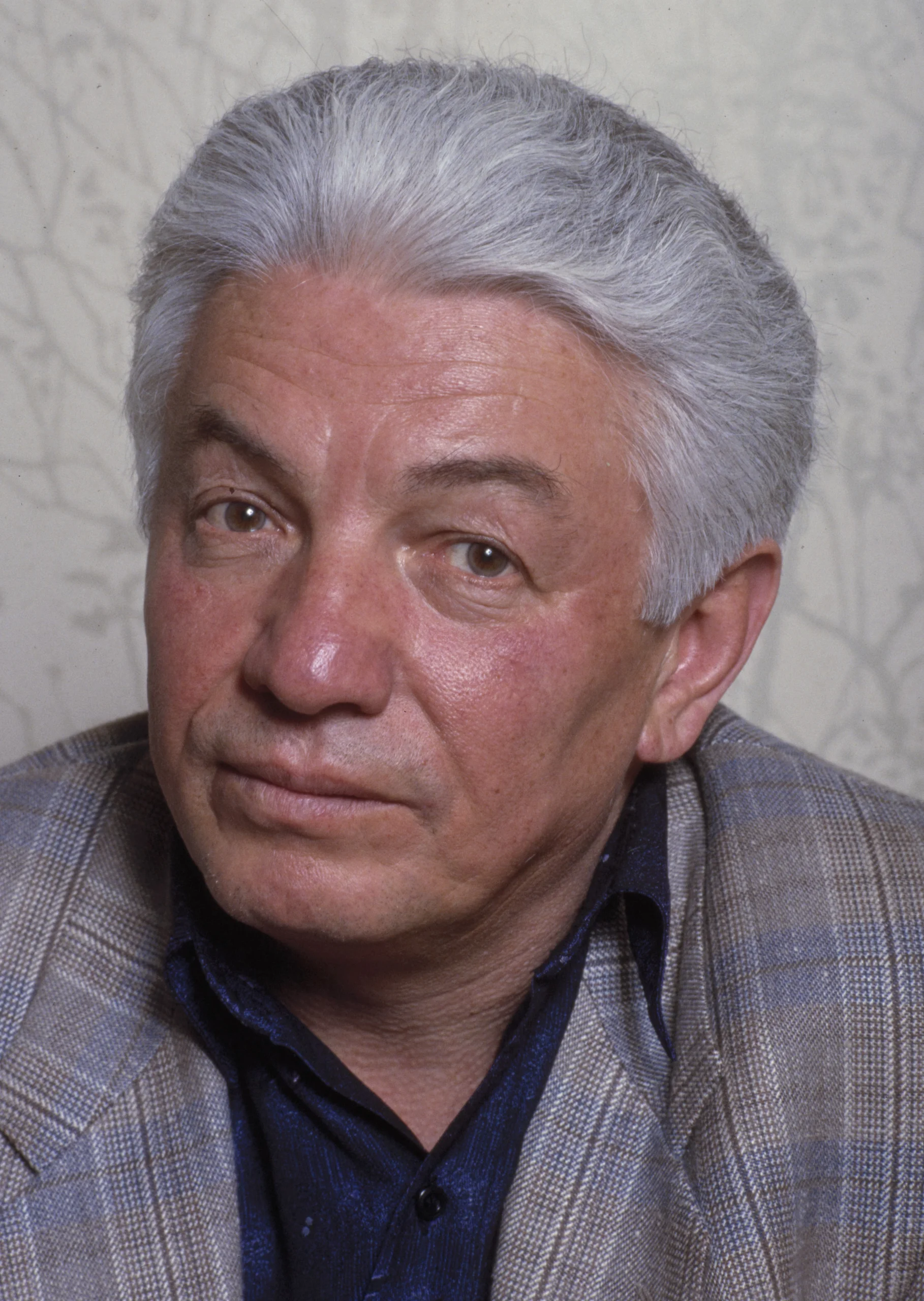
Vladimir Voinovich
 Russia
Birthday
September 26, 1932
Birth Sign
Libra
Birthplace
Dushanbe, Tajik SSR, Soviet Union
Age
Died at 85
About
Vladimir Voinovich was a Russian writer and satirist whose biting humor made him one of the Soviet Union's most feared and admired literary voices. Born in Dushanbe in 1932, he became known as the first genuine comic writer to emerge from the Soviet system, a reputation built on works like The Life and Extraordinary Adventures of Private Ivan Chonkin and the dystopian Moscow 2042. His writing combined absurdist wit with sharp political critique, earning him both international acclaim and the enmity of Soviet authorities.
Voinovich's career was marked by constant tension with the state. Expelled from the Union of Soviet Writers in 1974 and stripped of his citizenship in 1980, he spent a decade in exile before returning to Moscow in 1990. In his later years, he remained a vocal critic of Vladimir Putin, continuing to use satire as a weapon against authority until his death in 2018. His legacy endures as a testament to the power of humor in the face of oppression.
Early Life & Background
Vladimir Voinovich was born on September 26, 1932, in Dushanbe, Tajikistan, then part of the Soviet Union. His father was a journalist, a profession that exposed young Vladimir to the world of words from an early age. But the family's life was shaped by the upheavals of the Stalinist era, and Voinovich's formal education was often interrupted.
Instead of a traditional academic path, his early adulthood was spent in a series of working-class jobs. He worked as a carpenter, a metalworker, and a construction worker in Kazakhstan and the Far East. These experiences gave him a direct, ground-level view of ordinary Soviet life, material he would later mine for his satirical fiction. The physical labor also kept him connected to the common people, a perspective that would distinguish his writing.
In the late 1950s, Voinovich began writing poetry and short prose. He later attended the Maxim Gorky Literature Institute in Moscow, a prestigious training ground for Soviet writers, though his time there was complicated by his growing independence from official literary norms. His early works showed promise, but it was his prose that would eventually define his career, leading to the creation of his most famous character, Private Ivan Chonkin.
Career Growth
Voinovich's breakthrough came with The Life and Extraordinary Adventures of Private Ivan Chonkin, written between 1963 and 1969. The novel follows a simple-minded soldier stranded in a village on the eve of the German invasion of the USSR in 1941. It was never published in the Soviet Union during his time there, circulating instead in samizdat and first appearing abroad in 1969. The book drew immediate international attention and was praised as a masterpiece of social surrealism.
The sequel, Pretender to the Throne, continued Chonkin's saga, also published abroad. In 1986, while in exile, Voinovich published Moscow 2042, a dystopian satire that imagined a future Russian state with eerie prescience. Decades later, commentators noted how the novel seemed to predict the rise of Vladimir Putin. His other works include The Fur Hat (1987) and The Anti-Soviet Soviet Union (1985).
After returning to Moscow in 1990, Voinovich resumed his literary career and became a persistent critic of Putin's leadership. In 2014, he spoke out against Russia's annexation of Crimea. He continued writing and commenting until his death in 2018, leaving behind a body of work that remains sharply relevant.
Career Timeline
Public Image & Style
Voinovich's public image was defined by his role as a dissident satirist. Western media portrayed him as a heroic figure who risked everything to tell the truth through humor. The Independent described him as a 'Russian dissident and satirist who lampooned the Soviets and Putin,' while The New York Times emphasized his role as a thorn in the side of the Brezhnev-era authorities.
His signature style was sharp wit and social surrealism, blending absurdist humor with pointed political critique. He was described as the 'first genuine comic writer' produced by the Soviet system. His readership has historically been concentrated among those interested in Russian literature and Soviet dissident culture, and his most famous work, Chonkin, has achieved cult status. There is no officially named fandom, but his works are studied in university courses on Soviet literature.
Fame & Fandom
Vladimir Voinovich commanded a global audience of literary scholars, political historians, and enthusiasts of dissident satire, yet his fame remains distinct from the metrics of contemporary pop culture. His influence persists through the enduring circulation of his novels and their relevance to modern geopolitical discourse. In August 2026, Vladimir Voinovich is evaluated by iFANN's Global Fame Engine but does not currently hold a placement in the published rankings (Global Top 1,000 or a Top-100 scope list). The platform notes that while his name carries significant weight in specific academic and historical circles, he has not achieved a ranked position within the current scope of the top-tier lists. Consequently, no formal fandom name exists for his readership; his admirers are best described as a diffuse community of literary enthusiasts and students of Soviet history rather than an organized collective with a designated title. While no official fan clubs or structured campaigns have emerged, the character of Ivan Chonkin serves as a recurring cultural touchstone among those familiar with his work. The narrative of his expulsion from the Soviet Union and the prescient nature of his dystopian predictions continue to generate discussion, sustaining his legacy without the need for a branded fanbase.
Interesting Facts and Legends
Before establishing himself as a writer, Vladimir Voinovich worked as a carpenter, metalworker, and construction worker, experiences that deeply informed his portrayals of ordinary Soviet citizens. His novel Moscow 2042, published in 1986, has been repeatedly cited in the 2020s for its eerie predictions regarding Russian politics, including the rise of a figure resembling Vladimir Putin. He was a member of the Serbian Academy of Sciences and Arts, an unusual honor for a Russian writer. In 2025, The Bulwark discussed whether President Trump's interest in Greenland might have been influenced by a Voinovich novel, concluding it was not, but the discussion itself demonstrated the enduring cultural relevance of his satire. A widely retold legend concerns the origin of his most famous work, The Life and Extraordinary Adventures of Private Ivan Chonkin. Written in the 1960s, the novel was immediately suppressed by Soviet authorities and first published abroad, leading to Voinovich's expulsion from the Writers' Union in 1974. Another iconic moment occurred in 1980 when he was formally stripped of his citizenship and exiled, a bureaucratic act that became emblematic of the state's treatment of dissidents. These events remain central to how his life and work are remembered today.
Notable Quotes
“I have been instructed to inform you that the patience of the Soviet authorities and the...”
“Humor is the most effective weapon against tyranny.”
“The truth is always funny, especially when it is terrible.”
Family & Personal Life
Details about Voinovich's family are sparse, as was common for Soviet-era dissidents who faced constant surveillance. He was married at the time of his death in 2018, and his family was involved in announcing his passing. Specific information about his spouse and children has not been widely documented in public sources.
His father was a journalist, a profession that influenced his early exposure to writing. The family's life was marked by the turbulence of the Stalinist period, though specific details remain private. Voinovich's estate continues to be managed by his family.
Notable Connections
Voinovich's life intersected with several key figures of his era. Leonid Brezhnev was the Soviet leader during the period when his works were suppressed. Vladimir Putin, whom Voinovich criticized in his later years, ironically awarded him the Pushkin Prize in 2001. The Serbian Academy of Sciences and Arts honored him with membership, an unusual distinction for a Russian writer.
Relationships & Dating History
Public information about Voinovich's romantic relationships is limited, as was typical for Soviet-era literary figures who faced constant surveillance. He was married at the time of his death in 2018, and his family was involved in announcing his passing. However, detailed chronological information about his marriages, dating history, and partnerships is not well-documented in available sources.
His marriage appears to have been a stable and private partnership, with his spouse supporting him through the difficult years of exile and rehabilitation. Specific names and dates are not publicly known. His family life remained largely out of the public eye, a deliberate choice given the political pressures he faced.
Death & Aftermath
Died
July 27, 2018 (aged 85)
Death Place
Moscow, Russia
Cause of Death
Unknown
Vladimir Nikolayevich Voinovich died in Moscow on July 27, 2018, at the age of eighty-five. Family members and friends verified the event to media outlets shortly after it occurred, while state media simply stated that he had died.
Public reaction to his death was immediate and widespread among literary peers, institutions, and officials. The New York Times published an obituary on August 1, 2018, highlighting his role in vexing Soviet authorities during the Brezhnev era and noting his transition from a national pariah to a literary hero who eventually won the State Prize of the Russian Federation. Radio Free Europe/Radio Liberty reported the news on July 28, 2018, citing confirmation from family and friends. Tributes appeared in major publications such as The Independent and The Washington Examiner, which recalled his satire lampooning both the Soviets and Vladimir Putin.
Posthumously, Voinovich's legacy has continued to be recognized through re-evaluations of his work, particularly his dystopian novel Moscow 2042, which gained renewed attention for its eerily accurate prediction of Vladimir Putin's rise to power. A 2022 article in The Washington Post specifically analyzed how the book envisioned a future ruled by an ex-KGB agent resembling the current Russian leader. Information regarding his funeral or memorial service remains unreported in public sources, including details concerning burial, cremation, or the handling of his estate.
Net Worth (Estate Value)
$2 Million
iFANN Editorial Team estimate
As a dissident writer whose works were banned in his home country for years, Voinovich's financial circumstances were modest compared to Western commercial authors. Precise net worth figures are not available from major celebrity wealth-tracking sources, but his estate has continued to generate revenue through royalties from his books, which remain in print internationally. His most famous works, The Life and Extraordinary Adventures of Private Ivan Chonkin and Moscow 2042, continue to be published and sold worldwide. Posthumous critical attention, such as the 2022 Washington Post article about Moscow 2042 predicting Putin, has sparked renewed interest in his oeuvre. His estate is managed by his family, who were involved in the announcement of his death. Per iFANN's editorial analysis, as of 2026, the estate's value is estimated at around $2 Million, reflecting steady but modest sales of his literary works and the enduring relevance of his satire.
Awards Won (1)
Voinovich received the Pushkin Prize in 2001, a major Russian literary award presented by President Vladimir Putin himself. He was also elected a member of the Serbian Academy of Sciences and Arts, an honor recognizing his literary achievements. These accolades reflect his standing as a significant figure in world literature.
2001 · Literature
For achievements in literature, specifically for poetry
Known For
The Life and Extraordinary Adventures of Private Ivan Chonkin
1969 · Author
Moscow 2042
1986 · Author
The Anti-Soviet Soviet Union
1985 · Author
Keywords
Sources
Quick Facts
- Profession
- Writer, Satirist
- Born
- September 26, 1932
- Birthplace
- Dushanbe, Tajik SSR, Soviet Union
- Died
- July 27, 2018
- Death Place
- Moscow, Russia
- Gender
- Male
- Birth Sign
- Libra
- Age at Death
- 85
Personal Details
- Full Name
- Vladimir Nikolayevich Voinovich
- Education
- Maxim Gorky Literature Institute (attended, did not complete)
Frequently Asked Questions
Was Vladimir Voinovich a dissident?
What is Vladimir Voinovich's most famous book?
Did Vladimir Voinovich predict Putin?
When did Vladimir Voinovich die?
Why was Vladimir Voinovich exiled?
Join the community
fans discussing