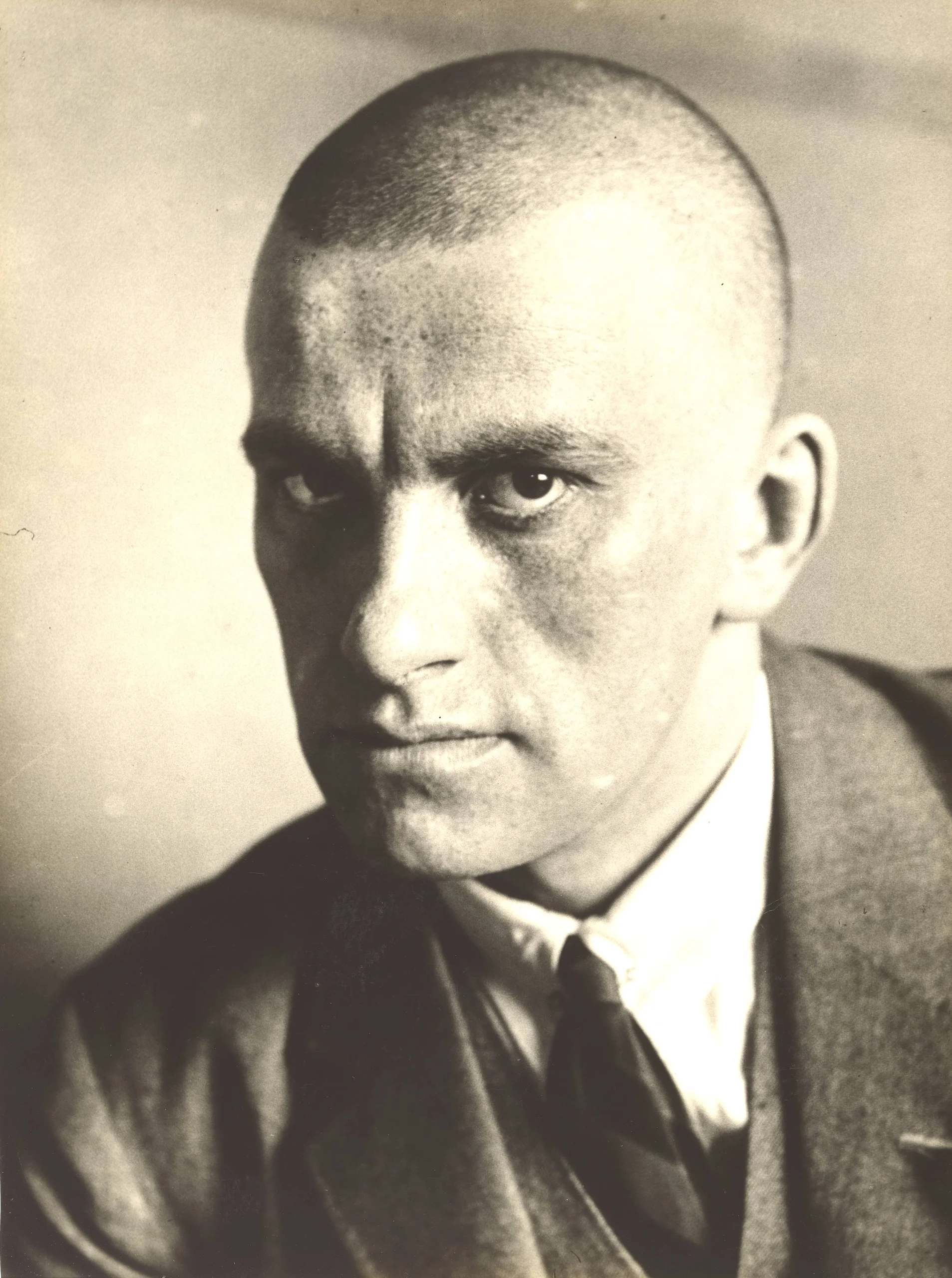
Vladimir Mayakovsky
 Russia
Also known as: Vladimir Vladimirovich Mayakovsky, Vladimir Maiakovsky, Vladimir Mayakov
Birthday
July 7, 1893
Birth Sign
Cancer
Birthplace
Baghdati, Georgia
Age
Died at 36
Height
5 ft 9 in (175 cm)
About
Vladimir Vladimirovich Mayakovsky was a preeminent Russian poet, playwright, artist, and actor who defined the cultural landscape of the early Soviet Union. As the leading voice of Russian Futurism, he rejected traditional aesthetics in favor of a jagged, explosive style known as "mass verse." His career spanned the tumultuous years of the Russian Civil War and the rise of the Bolshevik state, during which he served as a prolific agitprop worker creating posters and performing poetry readings that electrified crowds.
Mayakovsky's work ranged from long narrative poems to satirical plays and propaganda art. He co-founded the journal LEF and directed massive theatrical spectacles like Mystery Bouffe. Despite his initial fervor for the revolution, his relationship with the state grew strained in the late 1920s as Socialist Realism became the mandated doctrine. His final public appearance occurred in early 1930 before his tragic death by suicide at the age of thirty-six.
Early Life & Background
Born in Baghdati, located in the Kutais Governorate of the Russian Empire, Mayakovsky was the youngest child of Ukrainian parents. His father managed a state-operated sawmill, but the family faced financial hardship after his father died when Vladimir was nine. Following this loss, the family relocated to Moscow, where Vladimir completed his secondary education at the Second Moscow Gymnasium. His time there was cut short due to his involvement in political activism and student protests, which led to his expulsion in 1908.
After leaving school, he immersed himself in revolutionary circles and joined the Bolshevik party. He attended the Moscow School of Painting, Sculpture, and Architecture but left without graduating, preferring the bohemian underground art scene over formal instruction. During these formative years, he began writing poetry and experimenting with visual art. His first major breakthrough arrived in 1912 with the publication of A Slap in the Face of Public Taste, a manifesto co-signed with other Futurists that explicitly rejected classical artistic traditions. This radical declaration set the stage for his subsequent rise as a literary force.
Career Growth
Mayakovsky's career flourished alongside the 1917 Revolution, transforming him into a central figure in Soviet cultural life. He threw himself into propaganda work, designing iconic posters such as Beat the Whites with the Red Wedge and delivering poetry readings that drew massive audiences. In 1918, he co-founded the journal LEF and directed the premiere of Mystery Bouffe, a massive theatrical spectacle featuring hundreds of performers, a real boat, and a giant puppet representing capitalism.
Throughout the 1920s, he toured the Soviet Union regularly, gaining mass popularity for his unique style of recitation. His 1926 poem Talking With the Taxman About Poetry marked a turning point where his satire clashed with official expectations. By 1929, his plays The Bedbug and The Bathhouse faced harsh criticism from censors for their perceived formalism and mockery of Soviet bureaucracy. Despite the growing pressure, he continued to produce work until his death in 1930, leaving behind a legacy of revolutionary art that challenged both artistic norms and political orthodoxy.
Career Timeline
Public Image & Style
Known for his distinctive mustache, flamboyant dress, and booming theatrical voice, Mayakovsky projected an image of radical energy and emotional intensity. He often wore a red tie and a fur coat, matching the bold, jagged typography of his poetry books. His aesthetic was defined by his striking poster art and his ability to command large stages. Media perception of him shifted from a revolutionary hero to a controversial figure as the state tightened its grip on culture. His volatile personality and temper often led to clashes with fellow writers and critics, cementing his reputation as a difficult but indispensable genius.
Fame & Fandom (iFAMOUS Rankings)
Vladimir Mayakovsky stands as the 59th most famous person in Art & Design, a position he holds according to the iFANN Global Fame Rankings. This placement reflects his enduring prominence in global attention across media coverage and cultural consumption signals. While he commands this specific niche with remarkable consistency, the nature of his following remains distinct from modern celebrity fandoms. There is no formal collective name for his admirers; instead, his legacy is sustained by literary scholars, historians, and devotees of Russian Futurism who engage with his work through academic institutions and state-sponsored cultural events rather than grassroots digital campaigns.
The mythology surrounding Mayakovsky is extensive, forming a core part of Soviet cultural lore long after his tragic end. He is featured at No. 58 in the September 2026 iFAMOUS Rankings. His explosive poetry readings at venues like the House of Literature in Leningrad are legendary, where audiences reportedly wept or erupted into ecstatic applause during performances of A Cloud in Trousers. He lived a life as dramatic as his art, notably residing with Osip and Lilya Brik while treating them as family despite his unrequited love for Lilya, a dynamic that earned him the self-deprecating moniker "family dog." Recent re-examinations in 2026 have even surfaced details about an American descendant, Elena Vladimirovna Mayakovskaya, adding new layers to his personal history without diminishing the power of the stories fans still retell about his fiery personality and final days.
Interesting Facts and Legends
Mayakovsky referred to himself as a "family dog" in letters to Lilya Brik, a phrase that has become a cultural shorthand for unrequited love in Russian literature. His poetry readings at the House of Literature in Leningrad were legendary events where audiences reportedly wept, fainted, or erupted into ecstatic applause. He was a skilled painter and graphic designer who created some of the most iconic Soviet propaganda posters. A vegetarian and staunch atheist, he often mocked religious traditions in his work. His poem A Cloud in Trousers was originally written as a series of short lyrics that he later combined into a single narrative structure.
Notable Quotes
“A line is a fuse that's lit. The line smolders, the rhyme explodes, and by a stanza a city is blown to bits.”
“I am a family dog.”
“To be a poet means to be a man who has lost his mind, but keeps his heart.”
Family & Personal Life
Mayakovsky was the youngest of three children born to Ukrainian parents in Georgia. After his father died when he was nine, his mother raised him and his siblings in Moscow. He had no children of his own. His personal life was dominated by a complex triangle involving himself, Lilya Brik, and her husband Osip Brik. He lived with the couple for over a decade, maintaining a passionate but unrequited love for Lilya while referring to himself as their "family dog." His marriage to Elena Stolyarova in 1929 was brief and unhappy, ending in divorce just days before his death. Recent discoveries in 2026 have identified an American descendant, Elena Vladimirovna Mayakovskaya, adding a new chapter to his family history.
Notable Connections
Lilya Brik, Osip Brik, Vsevolod Meyerhold, Boris Pasternak, Joseph Stalin
Relationships & Dating History
Mayakovsky's personal life was dominated by a complex, lifelong triangle involving himself, Lilya Brik, and her husband, Osip Brik. They met in 1914 through mutual friends in Moscow. Mayakovsky lived with the couple in their apartment for over a decade, referring to himself as their "family dog." While Lilya remained his primary muse and intellectual partner, she never married him or left Osip. Their relationship ended not with a breakup but with a gradual cooling as Lilya began an affair with writer Elsa Triolet in 1929. Mayakovsky died shortly after this deterioration.
In 1928, Mayakovsky met Elena Stolyarova during a trip to the Caucasus. He married her in 1929, partly to escape the suffocating dynamic with the Brik household. The marriage was brief and unhappy; they separated shortly after, and the divorce was finalized just days before his death. No children were born from this union. In 1929, he also had a public romantic fling with Elsa Triolet, Lilya Brik's new lover. Her arrival marked the beginning of the end for Mayakovsky's emotional stability. The affair is documented in letters from Mayakovsky expressing despair over losing Lilya's attention to Triolet. No children resulted from this liaison.
- DatedLilya Brik1914 - 1930Passionate, unrequited love affair and domestic partnership; lived together for over a decade.
- MarriedElena Stolyarova1929 - 1930Brief and unhappy marriage; divorced days before his death.
- DatedElsa Triolet1929 - 1930Public romantic fling; affair with Lilya Brik's new lover.
Death & Aftermath
Died
April 14, 1930 (aged 36)
Death Place
Moscow, Russia
Cause of Death
Suicide by gunshot wound
On the afternoon of April 14, 1930, Vladimir Mayakovsky ended his life at the age of thirty-six in his Moscow apartment on Bolshaya Nikitskaya Street. He shot himself in the chest, leaving a suicide note addressed to Lilya Brik that pleaded for her not to blame anyone and asked that she either remarry or cease mourning him if she remained single. The official investigation concluded the death was a suicide based on the weapon found, the nature of the wound, and the contents of the note. Thousands of mourners filled the streets of Moscow as the funeral procession moved to Vagankovo Cemetery, where he was buried three days later on April 17.
The Soviet state immediately mobilized to canonize the poet, with the press hailing him as a "poet of the revolution." While early tributes came from peers like Boris Pasternak, the regime later solidified his status under Joseph Stalin, who declared him "the best and most talented poet of our Soviet epoch" in 1935. His legacy became a state-managed asset; the government published collected works, named streets and schools after him, and established the Mayakovsky Theater. Although his reputation fluctuated during periods of stricter censorship, his estate continues to generate revenue through global sales of his poetry, licensing rights for educational materials, and merchandise. The State Literary Museum in Moscow remains the primary custodian of his archives.
Net Worth (Estate Value)
$5 Million
iFANN Editorial Team estimate
As a deceased historical figure whose estate was managed by the Soviet state, Mayakovsky does not possess a modern net worth in the celebrity sense. However, his estate continues to generate significant revenue through royalties from the global sales of his collected works, translations, and audiobooks. Licensing rights for his poems used in films, documentaries, and educational materials contribute to ongoing income streams. Merchandise including posters, books, and memorabilia sold in Russia and internationally further bolster the estate's value. The estate is currently managed by the State Literary Museum in Moscow and various publishing houses. Research by the iFANN Editorial Team puts his estate's value at around $5 million, derived from these continuous revenue sources and the enduring demand for his literary contributions.
Awards & Accolades
View 4 records, honours and achievementsKnown For
A Cloud in Trousers
1915 · Poet
The Bedbug
1929 · Playwright
Mystery Bouffe
1918 · Director
Keywords
Sources
Quick Facts
- Profession
- poster artist, poet, actor
- Born
- July 7, 1893
- Birthplace
- Baghdati
- Died
- April 14, 1930
- Death Place
- Moscow
- Gender
- Male
- Birth Sign
- Cancer
Personal Details
- Full Name
- Vladimir Vladimirovich Mayakovsky
- Height
- 5 ft 9 in (175 cm)
- Children
- Education
- Second Moscow Gymnasium (expelled), Moscow School of Painting, Sculpture, and Architecture (left without degree)
Filmography
3
Total
0
Film
0
TV
Frequently Asked Questions
How did Vladimir Mayakovsky die?
Who was Vladimir Mayakovsky's main muse?
What was Mayakovsky's most famous poem?
Did Vladimir Mayakovsky have children?
Why was Vladimir Mayakovsky's work censored?
Similar People
Join the community
fans discussing