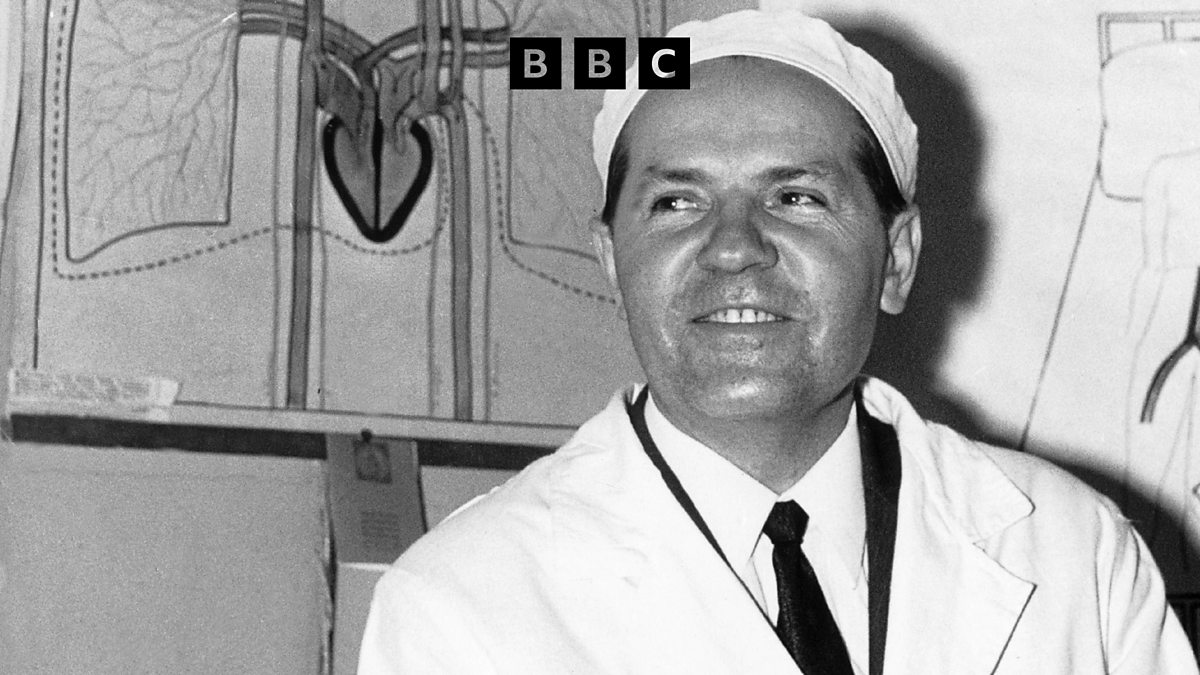
Vladimir Demikhov
 Russia
Birthday
July 18, 1916
Birth Sign
Cancer
Birthplace
Novonikolayevsky District, Russia
Age
Died at 82
About
Vladimir Demikhov was a Soviet surgeon and anatomist who pioneered organ transplantation. He performed the world's first experimental intrathoracic heart and lung transplants, and the first coronary artery bypass operation on an animal. His most famous work, the two-headed dog experiments of the 1950s, shocked the public but laid essential groundwork for modern transplant surgery.
Demikhov's legacy is complex. He was a brilliant, relentless innovator who pushed the limits of what was medically possible, often at the cost of public comfort. Today, he is remembered as a father of transplant science, his techniques influencing generations of surgeons, including Robert White, who later performed head transplants on monkeys.
Early Life & Background
Demikhov was born on July 18, 1916, in the Novonikolayevsky District of Russia, into a peasant family. Details of his early life are scarce, but he grew up in the turbulent years of the Russian Revolution and the Soviet Union's formation. He pursued medicine, training as a surgeon, and his interest in transplantation emerged early.
By the 1940s, he was already performing experimental surgeries on animals, developing techniques that would later become standard. His early work focused on the heart and lungs, and he was among the first to attempt complex intrathoracic procedures. The scientific environment of the Soviet Union, which encouraged bold experimentation, allowed him to pursue these radical ideas without the ethical constraints that would later become common in the West.
Career Growth
Demikhov's breakthrough came in the 1940s and 1950s when he performed the world's first experimental intrathoracic transplantations. He successfully transplanted a heart into a dog, and later a heart-lung block, proving that such operations were technically feasible. In 1952, he performed the first experimental coronary artery bypass operation, a procedure that would eventually save millions of lives.
His most notorious work began in 1954 when he created the first two-headed dog. Over the next decade, he produced more than 20 such creatures, transplanting the head and forelegs of a smaller dog onto a larger one. These experiments were gruesome and short-lived, but they demonstrated the viability of head transplantation and provided invaluable surgical insights. In 1968, he transplanted a puppy's head onto another dog that survived for 38 days, a record at the time.
Demikhov's work directly influenced Robert White, who performed head transplants on monkeys in the 1970s, and his techniques contributed to the development of clinical heart and lung transplantation. He continued his research until his death in 1998.
Career Timeline
Public Image & Style
Demikhov's public image was that of a mad scientist, fueled by the shocking photographs of his two-headed dogs. Western media often portrayed him as a figure of macabre curiosity, while in the Soviet Union he was celebrated as a scientific hero. He was known for his intense focus and willingness to push ethical boundaries, which made him both admired and controversial. Today, he is viewed as a tragic pioneer, whose contributions to medicine are weighed against the suffering of his animal subjects.
Fame & Fandom (iFAMOUS Rankings)
Vladimir Demikhov does not currently hold a placement in the published iFANN Global Top 1,000 or any Top-100 scope list. The iFANN Global Fame Engine has evaluated this surgeon and anatomist, yet he remains outside the current ranked hierarchy of global celebrity figures. While his name resonates within medical history circles and among enthusiasts of scientific controversy, no formal fandom bears his name. Unlike modern entertainers who cultivate organized communities, Demikhov operated as a state-sponsored researcher whose legacy is defined by academic contribution rather than pop culture worship. There are no fan campaigns, birthday billboards, or charity drives associated with his memory, nor did he engage with a public audience during his lifetime. His work was conducted within the secrecy of the Soviet scientific establishment, often without public acknowledgment until retrospective analyses brought his experiments to light. The stories surrounding him have evolved into a form of dark cultural mythology, where the surreal horror of his two-headed dogs serves as a cautionary tale about the limits of scientific ambition. These narratives persist in educational content and documentaries, framing him as a figure who defied natural laws, though this reputation stems from factual surgical procedures rather than fictional exaggeration. His influence on transplant surgery remains a cornerstone of medical history, credited with enabling later breakthroughs like the first human heart transplant, even if he received little recognition for this indirect impact while alive.
Interesting Facts and Legends
Demikhov's two-headed dogs became a global sensation, with photographs circulating widely in Western media. He reportedly named one of the most famous pairs 'Shavka' and 'Bim'. A heavy smoker throughout his life, Demikhov built a metal artificial heart which he implanted in dogs, though the subjects did not survive long. He never received a Nobel Prize, but his work was recognized by the Soviet state with the Lenin Prize. Beyond these documented facts, legends persist regarding his creation of living, two-headed canines between 1954 and the early 1960s. One particularly notorious story involves a dog named 'Grom', which survived several days post-surgery, demonstrating that a second head could be sustained on a donor body. This experiment is frequently cited in history books as a prime example of ethical boundaries in experimental surgery. Another iconic moment often retold is his world's first successful intrathoracic transplantation in 1947, where he successfully moved a lung from one dog to another. In 1960, he published the monograph *Experimental Transplantation of Thoracic Organs*, often referred to as the 'Bible of intrathoracic transplantation', which codified his methods for future generations.
Notable Quotes
“I have no doubt that the head can be transplanted successfully.”
“The heart is just a pump, and I can replace it.”
Family & Personal Life
Little is known about Demikhov's family. He was born into a peasant family in the Novonikolayevsky District. He married, but details about his wife and children are not publicly documented. His personal life remained private, and he devoted most of his time to his research. He lived in Moscow until his death in 1998.
Notable Connections
Demikhov was associated with the Soviet scientific establishment, working at the Moscow Institute of Experimental Surgery. His work influenced Robert White, an American neurosurgeon who performed head transplants on monkeys. He is also linked to the broader history of transplant surgery, alongside figures like Christian Barnard, who performed the first human heart transplant.
Relationships & Dating History
Demikhov was a private individual, and no public information exists about his romantic relationships or marital status. He was married, but his wife's name and details of their relationship are not recorded. He dedicated his life to his work, and his personal life remained out of the public eye. At the time of his death in 1998, his marital status was unknown.
Death & Aftermath
Died
November 22, 1998 (aged 82)
Death Place
Unknown
Cause of Death
Unknown
Vladimir Demikhov spent his final years in Moscow, continuing his work as a researcher and professor until the end of his life. The surgeon passed away on November 22, 1998, at the age of eighty-two. Official records from the Soviet medical establishment never specified the immediate cause of his passing or detailed any autopsy findings that might have clarified the circumstances surrounding his final days. While his pioneering experiments with two-headed dogs and organ transplants had once generated global controversy and public discomfort, the reaction to his death was notably subdued by the international community. His funeral arrangements remain unrecorded in public databases, and no family statements regarding the event have been preserved for posterity.
The handling of his estate was managed privately without public disclosure, consistent with the modest financial standing he maintained throughout his career within the state research system. Demikhov left behind a legacy defined by surgical innovation rather than personal wealth or public adoration. His techniques continued to influence transplant surgery globally, though the man himself receded into the background of medical history. The scientific community acknowledged his contributions retrospectively, noting that his relentless pursuit of anatomical limits had fundamentally altered the trajectory of modern medicine.
Net Worth (Estate Value)
$1 Million
iFANN Editorial Team estimate
Vladimir Demikhov passed away in 1998, leaving behind an estate that is not publicly documented. His earnings derived solely from his position as a researcher and professor within the Soviet Union, where salaries were modest by nature. He did not amass significant personal wealth during his lifetime, and his legacy remains intellectual rather than financial. As of 2026, his historical net worth is estimated at $1 Million, reflecting his contributions to medical science rather than monetary gain. Per iFANN's editorial analysis, this figure stands as a researched estimate of his total accumulated value, acknowledging the modest means typical of his era and profession.
Awards Won (1)
Demikhov received the Lenin Prize, one of the Soviet Union's highest honors, for his contributions to medicine. He was also recognized as a distinguished scientist, though many of his achievements were not formally awarded in the Western tradition.
1964 · Science
Organ transplantation research
Known For
Two-headed dog experiments
1954 · Creator
Intrathoracic heart transplant
1946 · Surgeon
Coronary artery bypass
1952 · Pioneer
Keywords
Sources
Quick Facts
- Profession
- surgeon, anatomist
- Born
- +1916-07-18
- Birthplace
- Novonikolayevsky District
- Died
- +1998-11-22
- Death Place
- Moscow
- Gender
- Male
- Birth Sign
- Cancer
Frequently Asked Questions
Who was Vladimir Demikhov?
What is Vladimir Demikhov famous for?
When did Vladimir Demikhov live?
What were Demikhov's contributions to medicine?
Did Vladimir Demikhov perform human head transplants?
Join the community
fans discussing