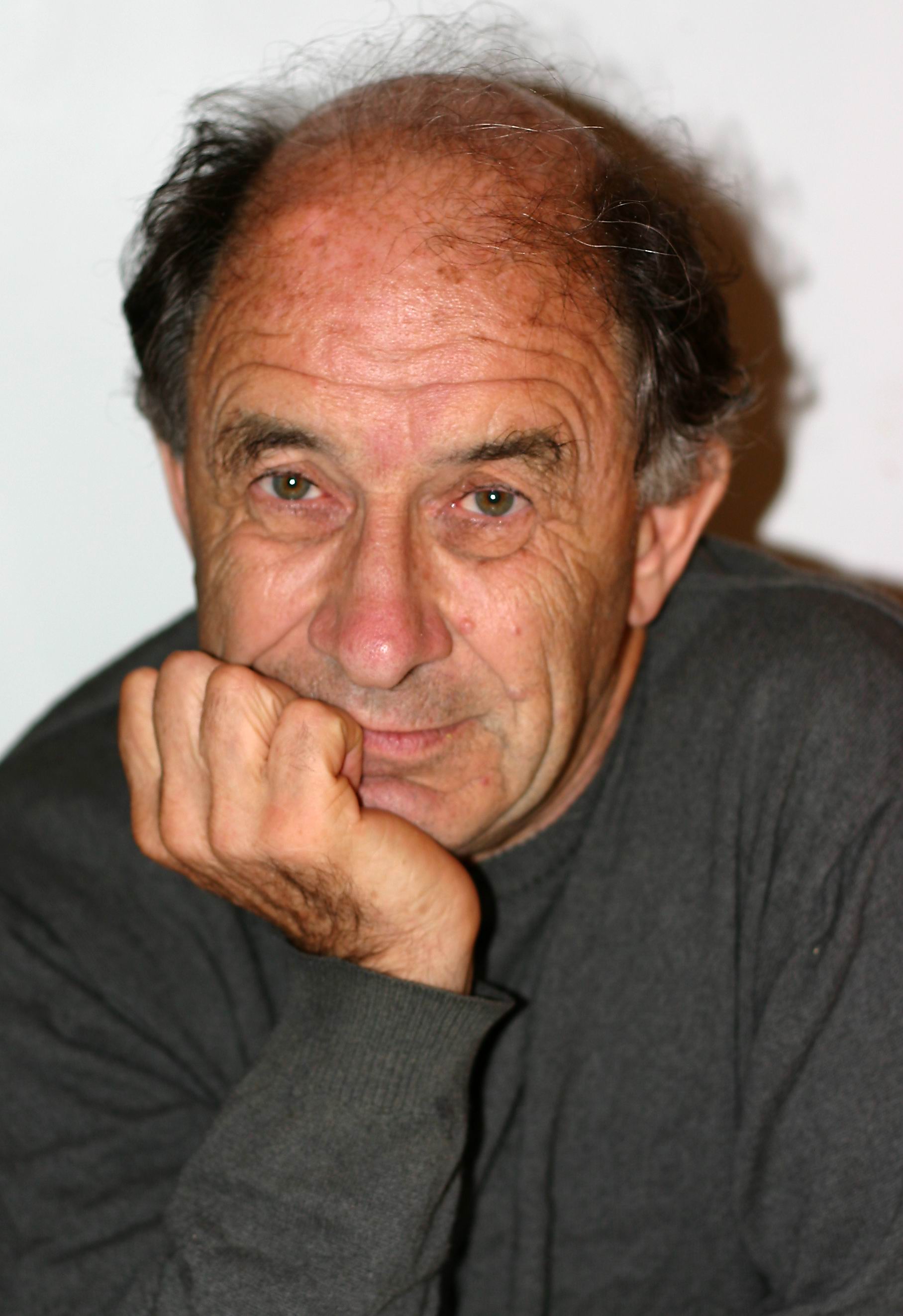
Vladimir Arnold
 Russia
mathematician•topologist•university teacher
Birthday
+1937-06-12
Birth Sign
Gemini
Birthplace
Odesa
Age
Died at 72
About
Born in Odesa on June 12, 1937, Vladimir Arnold became one of the most influential mathematicians of the Soviet and Russian eras. His career, which spanned decades until his death on June 3, 2010, saw him make profound contributions across a wide spectrum of mathematical fields. Arnold's early work, even as a teenager, showed exceptional promise. At just 19, he provided the solution to Hilbert's thirteenth problem, a significant early achievement that set the stage for his future endeavors. Arnold's research touched upon dynamical systems, algebra, topology, and the geometry of real algebraic and symplectic spaces. He is particularly celebrated for his work on the Kolmogorov–Arnold–Moser (KAM) theorem, which explores the stability of dynamical systems. Alongside Andrey Kolmogorov and Jürgen Moser, he helped establish this fundamental area. He also co-founded topological Galois theory and played a key role in the development of symplectic topology. His work extended into classical mechanics, where he offered a differential-geometric perspective on hydrodynamics, and into singularity theory. Later in his career, he turned his attention to discrete mathematics. Beyond his research, Arnold was a passionate educator and communicator. He taught at Moscow State University from 1961 to 1986 and later at Paris Dauphine University starting in 1993, also holding a position at the Steklov Mathematical Institute from 1986. He was instrumental in founding the Independent University of Moscow. Arnold authored several influential textbooks, including Mathematical Methods of Classical Mechanics and Ordinary Differential Equations, making complex subjects accessible to many. His books have been translated into numerous languages. He received major accolades for his work, including the Crafoord Prize in 1982, the Wolf Prize in Mathematics in 2001, and the Shaw Prize in 2008.
Fame & Fandom (iFAMOUS Rankings)
The reverence surrounding Vladimir Arnold is distinct from the adoration of pop icons; it is a deep, academic devotion where his name serves as shorthand for geometric intuition and rigorous physical insight. While he never courted a mass audience or cultivated a fanbase with a formal moniker, his legacy thrives within the global mathematical community through a unique blend of scholarly respect and modern technological resurgence. His influence extends far beyond the classroom, sparking renewed interest in nonlinear dynamics and inspiring new architectures in artificial intelligence that bear his name. This enduring presence ensures that his contributions remain vital to contemporary science, bridging the gap between 20th-century Soviet mathematics and 21st-century computational theory. Vladimir Arnold is currently the 25th most famous person in AI, a standing confirmed by the iFANN Global Fame Rankings. This placement reflects his steady relevance as his theoretical frameworks find practical application in machine learning models known as Kolmogorov-Arnold Networks. The ranking holds steady from the previous cycle, underscoring the consistency of his relevance in a rapidly evolving field.
Interesting Facts and Legends
Vladimir Arnold's legacy is defined by his profound contributions to mathematics rather than celebrity culture, as he cultivated no formal fandom or organized fanbase. His "fans" are exclusively the global mathematical community, colleagues, students, and researchers who revere his work without engaging in traditional fan rituals or public displays. The most widely retold story of his career centers on his development of the Kolmogorov–Arnold–Moser theorem at just 20 years old, a defining moment proving that chaos follows hidden order within integrable systems. Another enduring legend involves his sudden death in Paris on June 3, 2010, which marked the end of an era for Soviet-era mathematical rigor and prompted immediate tributes from major publications describing him as a giant of the field. Beyond these verified events, folklore preserves his sharp tongue and fierce advocacy for the Russian style of mathematics, emphasizing geometric intuition over abstract formalism. While modern applications like Kolmogorov-Arnold networks demonstrate the enduring relevance of his theories, there are no records of fan-funded projects or viral incidents involving crowds disrupting his appearances. In the August 2026 cycle of the iFANN Global Fame Rankings, he is recognized as the 25th most famous person in AI, holding steady from the previous cycle.
Death & Aftermath
Died
+2010-06-03 (aged 72)
Death Place
Paris, France
Cause of Death
reported as pancreatitis
Vladimir Igorevich Arnold passed away in a Paris hospital on June 3, 2010, at the age of seventy-two. The official medical determination cited pancreatitis as the cause, a conclusion drawn from standard hospital reporting rather than a public autopsy or coroner's inquest. While some initial accounts described the event as sudden and unexpected, later clarifications noted that he had been enduring a long-term illness involving pancreatic cancer before his final days. The mathematical world reacted with immediate and profound grief, characterizing him as a giant of the field and an inspiring teacher. Major institutions like the Royal Society published detailed biographical memoirs, while publications such as Physics Today and The Guardian released extensive obituaries highlighting his contributions to dynamical systems and singularity theory. Tributes poured in from peers who remembered his prolific creativity and his decades-long influence across Soviet and Russian mathematics.
Although specific details of the funeral ceremony remain unrecorded in available sources, the circumstances suggest a private service attended by colleagues and family, honoring his dual affiliations with Moscow State University and the French Academy of Sciences. He was buried in Russia, though the exact cemetery location is not specified in the records. His legacy has continued to expand significantly since his passing, with his name seeing renewed attention in scientific literature. In 2024, researchers developed Kolmogorov-Arnold networks based on his approximation theorem, marking a resurgence in applying his theories to neural network architecture. His works remain widely cited, and the mathematical community continues to honor his memory through the ongoing publication of his lectures and writings.
Awards & Accolades
Keywords
Quick Facts
- Profession
- mathematician, topologist, university teacher
- Born
- +1937-06-12
- Birthplace
- Odesa
- Died
- +2010-06-03
- Death Place
- Paris
- Gender
- Male
- Birth Sign
- Gemini
Join the community
fans discussing