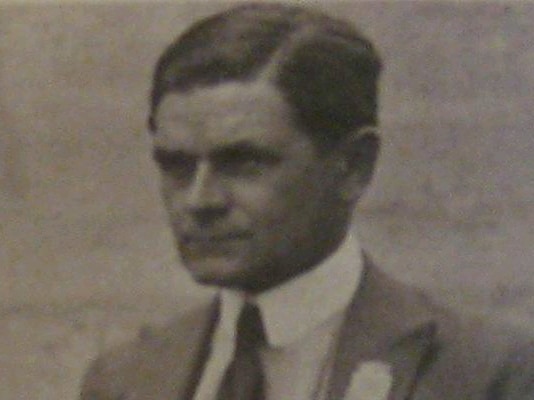
Vittorio Pozzo
 Italy
Italyassociation football player•journalist•association football coach
Also known as: Il Vecchio Maestro
Birthday
March 2, 1886
Birth Sign
Pisces
Birthplace
Turin, Italy
Age
Died at 82
Height
5 ft 9 in (1.75 m)
About
Vittorio Pozzo was the only football manager in history to win two FIFA World Cups, leading Italy to victory in 1934 and 1938. An Italian tactician and journalist, he invented the Metodo formation (2-3-2-3) that balanced defense and attack, influencing modern systems like 4-2-4 and 4-3-3. Beyond the World Cup, he guided Italy to an Olympic gold medal in 1936 and two Central European International Cups (1930, 1935). Known as "Il Vecchio Maestro" (The Old Master), Pozzo is revered for his tactical innovations and dignified leadership. As of 2026, his record of consecutive World Cup titles remains unmatched. His legacy includes induction into the Italian Football Hall of Fame in 2011 and consistent recognition among the greatest managers of the early 20th century.
Early Life & Background
Pozzo grew up in Turin, the son of a railway official. He attended technical school and developed an early passion for football, then a nascent sport in Italy. As a young man, he studied in France and Switzerland, absorbing different footballing cultures that would later shape his tactical thinking. His playing career was brief: he played as a midfielder for Grasshopper Club Zürich from 1905 to 1906, then returned to Italy to play for Torino from 1906 until a knee injury forced his retirement at age 25.
After retiring, Pozzo turned to journalism, writing for La Stampa and other publications. His journalistic work gave him a tactical perspective and helped him build connections in football administration. In 1912, he was appointed coach of the Italian national team for the first time, but World War I interrupted his tenure. During the war, he served as a war correspondent, covering battles for Italian newspapers. After the war, he returned to journalism and covered major tournaments. His pivotal moment came in 1929 when he was reappointed as Italy's national team manager, a role he would hold for nearly two decades.
Career Growth
Pozzo's second stint as Italy manager began in 1929 and ushered in a golden era. In 1930, he won the first Central European International Cup, a precursor to the European Championship. The 1934 World Cup on home soil saw his Metodo formation in full effect, as Italy defeated Czechoslovakia 2-1 in the final. Pozzo's ability to blend players from rival clubs like Juventus and Torino was key to team cohesion. In 1935, he won a second Central European International Cup. At the 1936 Berlin Olympics, Italy won the gold medal, making Pozzo the only manager to win both the Olympics and the World Cup. The pinnacle came in 1938, when Italy defended their World Cup title in France, beating Hungary 4-2 in the final. Pozzo remains the only manager to win two World Cups. He left the national team in 1948 after 97 matches (64 wins, 20 draws, 13 losses) and returned to journalism, writing for La Stampa until his death in 1968. In 1924, he managed Italy at the Paris Olympics, reaching the quarterfinals. He turned down lucrative offers to manage foreign clubs, preferring to stay in Italy.
Career Timeline
Public Image & Style
Pozzo cultivated an image of dignified authority, always appearing in a suit and tie, often with a fedora hat. On the touchline, he was calm and analytical, rarely shouting. Italian media portrayed him as "Il Vecchio Maestro", a wise, paternal figure who transformed Italian football. Foreign media respected his tactical genius but sometimes scrutinized his role under Mussolini's fascist regime. Historians note he focused purely on football and avoided political statements, never joining the Fascist Party. Fans and tactical analysts revere him as a foundational figure, with tribute articles and museum exhibits at the Italian Football Federation headquarters commemorating his legacy. He was approximately 1.75 m tall based on period photographs. Historical accounts describe him as measured, intellectual, and occasionally sardonic in interviews.
Fame & Fandom (iFAMOUS Rankings)
Vittorio Pozzo commands a global reputation defined by singular historical achievement rather than contemporary celebrity metrics. His standing in the modern consciousness is that of an immutable record-holder, revered by historians and football purists for being the only manager to secure two FIFA World Cup titles. Despite this unparalleled legacy, iFANN's Global Fame Engine evaluated his profile in August 2026 and determined he currently holds no placement within the published rankings, including the Global Top 1,000 or any Top-100 scope list. This absence of a numerical rank reflects the nature of his fame as a distant figure from the pre-digital era rather than a lack of significance. The audience surrounding his name consists entirely of those who study football history, with no formal fandom name documented in available records. Unlike modern icons, there are no organized fan clubs, digital campaigns, or specific rituals associated with his memory; the reverence he receives is retrospective, emerging from academic circles and national pride rather than active community participation. While foreign media once scrutinized his political context, the current narrative focuses exclusively on his tactical genius and the unbroken nature of his World Cup record. No viral moments or crowd disruptions define his legend today, as his impact was felt through strategic innovation and dignified leadership during an era when management was insulated from public spectacle. The lack of a named fanbase underscores the historical distance between his active years and the present day, leaving his legacy to be carried by facts rather than folklore.
Interesting Facts and Legends
Vittorio Pozzo was a polyglot fluent in French, German, and English, which allowed him to dissect foreign tactics with precision. He maintained strict professional standards, insisting his players wear suits and ties while traveling and handing each man a paper inscribed with "VINCERE" before matches. Although he never managed a club at the highest level, he discovered Giuseppe Meazza and mentored him into stardom. His Metodo formation drew inspiration from the Swiss Danubian School and the English WM system. After his death, his archives were donated to the Italian Football Federation, and he received the FIFA Order of Merit. Streets named after him include Via Vittorio Pozzo in Turin and other Italian cities. Notable quotes include: "The game of football is simple. But it is terribly difficult to play simply." A widely retold story describes Pozzo as a football immortal tempered in the trenches of World War I, a background that shaped his stoic approach to command. This narrative frames his tactical triumphs not merely as games but as disciplined exercises born of survival. Historians frequently cite his role as the mastermind behind the 1938 World Cup victory as the pinnacle of his career, emphasizing how he transformed the Italian squad through innovation. While some note he remains less known globally due to the Fascist era context, experts universally regard him as the greatest manager of the competition. His legacy stands as a verified historical fact: the unique treble of Olympic gold and back-to-back World Cups achieved within four years.
Notable Quotes
“The game of football is simple. But it is terribly difficult to play simply.”
“I have always believed that the best way to prepare a team is to make them understand that they are playing for something greater than themselves.”
“Victory is not everything, but the effort to win is.”
“A team is not eleven individuals. It is one soul in eleven bodies.”
“When you wear the blue shirt of Italy, you carry the hopes of millions. Do not disappoint them.”
Family & Personal Life
Pozzo married a woman named Giuseppina, though few details about her background are documented. The couple had no children. Pozzo was intensely private about his personal life, and little is known about his family beyond his marriage. He lived in Turin for most of his life. His father was a railway official, but no information about his mother or siblings has survived in English sources. After his death, his estate was managed by the Italian Football Federation, which received his personal archives. Pozzo was born on 2 March 1886 in Turin and died on 21 December 1968 in Turin at age 82.
Notable Connections
Pozzo worked closely with star players like Giuseppe Meazza, who captained Italy in the 1938 World Cup win, and Giovanni Ferrari, a key midfielder in both 1934 and 1938. He also relied on Luis Monti, Angelo Schiavio, and Silvio Piola. His administrative allies included Ferruccio Novo, president of Torino, and Ottorino Barassi of the Italian Football Federation.
Relationships & Dating History
Pozzo married Giuseppina, whose full maiden name is not documented in English sources. The couple likely married in the 1910s or 1920s and remained together until Pozzo's death in 1968. They had no children. Pozzo was intensely private about his personal life, and no other romantic relationships have been documented by credible sources. As of 2026, Pozzo is deceased and was widowed at the time of his death. His wife survived him but little else is documented about their relationship in English-language sources.
- MarriedGiuseppina Pozzo? - 1968Pozzo married Giuseppina, but few details about their relationship are documented. They had no children.
Death & Aftermath
Died
December 21, 1968 (aged 82)
Death Place
Turin, Italy
Cause of Death
Unknown
The passing of Vittorio Pozzo in late December 1968 marked the end of an era for Italian football, though immediate public mourning was not characterized by the mass vigils or chart surges that define modern celebrity deaths. Retrospective coverage decades later consistently frames him as a football immortal whose tactical innovations and unique record of two World Cup victories established him as a pioneer of the sport. The man known as Il Vecchio Maestro left behind a legacy that continues to be invoked in analyses of coaching history, yet the immediate reaction in 1968 remained relatively quiet compared to his towering status in the game.
Pozzo died on December 21, 1968, at the age of 82 in Turin, Italy, where he had lived for most of his life. No official cause of death was made public in available records, nor were details regarding hospital statements, autopsy findings, or specific circumstances surrounding his final days released to the press. As an elderly figure who passed naturally, his death did not trigger any police investigation, inquest, or legal proceedings. The absence of such reports suggests a private departure without controversy or sudden medical emergency requiring public inquiry.
Following his death, no specific information regarding the date, location, or nature of the funeral service has been preserved in English sources. Posthumously, however, his standing has only grown, with FIFA releasing unseen images of his work in 2025 and numerous publications celebrating his creation of the Metodo formation. He remains the only manager to win consecutive World Cups, a record that stands unmatched as the years pass.
Net Worth (Estate Value)
As a football manager and journalist in early-to-mid 20th century Italy, Pozzo was not wealthy by modern standards. His income came from his salary as Italy national team manager, a government-funded position, and his journalist salary from La Stampa. He had no known endorsement deals or business ventures. No publicly available credible estimates exist for his net worth or estate value. Football managers in that era earned modest salaries compared to today's multi-million-dollar contracts. His legacy is primarily historical rather than commercial.
Awards Won (6)
Pozzo won two FIFA World Cups (1934, 1938), an Olympic gold medal (1936), and two Central European International Cups (1930, 1935). He was posthumously inducted into the Italian Football Hall of Fame in 2011 as a pioneer of Italian football.
1938 · Winner
Italy national team
1934 · Winner
Italy national team
1936 · Football
Italy national team
Known For
1934 FIFA World Cup
1934 · Manager
1938 FIFA World Cup
1938 · Manager
1936 Olympic Gold Medal
1936 · Manager
Keywords
Quick Facts
- Profession
- association football player, journalist, association football coach
- Born
- +1886-03-02
- Birthplace
- Turin
- Died
- +1968-12-21
- Death Place
- Turin
- Gender
- Male
- Birth Sign
- Pisces
Personal Details
- Full Name
- Vittorio Pozzo
- Height
- 5 ft 9 in (1.75 m)
- Spouse
- Giuseppina Pozzo
- Education
- Technical school in Turin; studied in France and Switzerland
Frequently Asked Questions
How many World Cups did Vittorio Pozzo win?
What formation did Vittorio Pozzo invent?
Was Vittorio Pozzo a fascist?
How old was Vittorio Pozzo when he died?
Did Vittorio Pozzo have children?
Similar People
Join the community
fans discussing