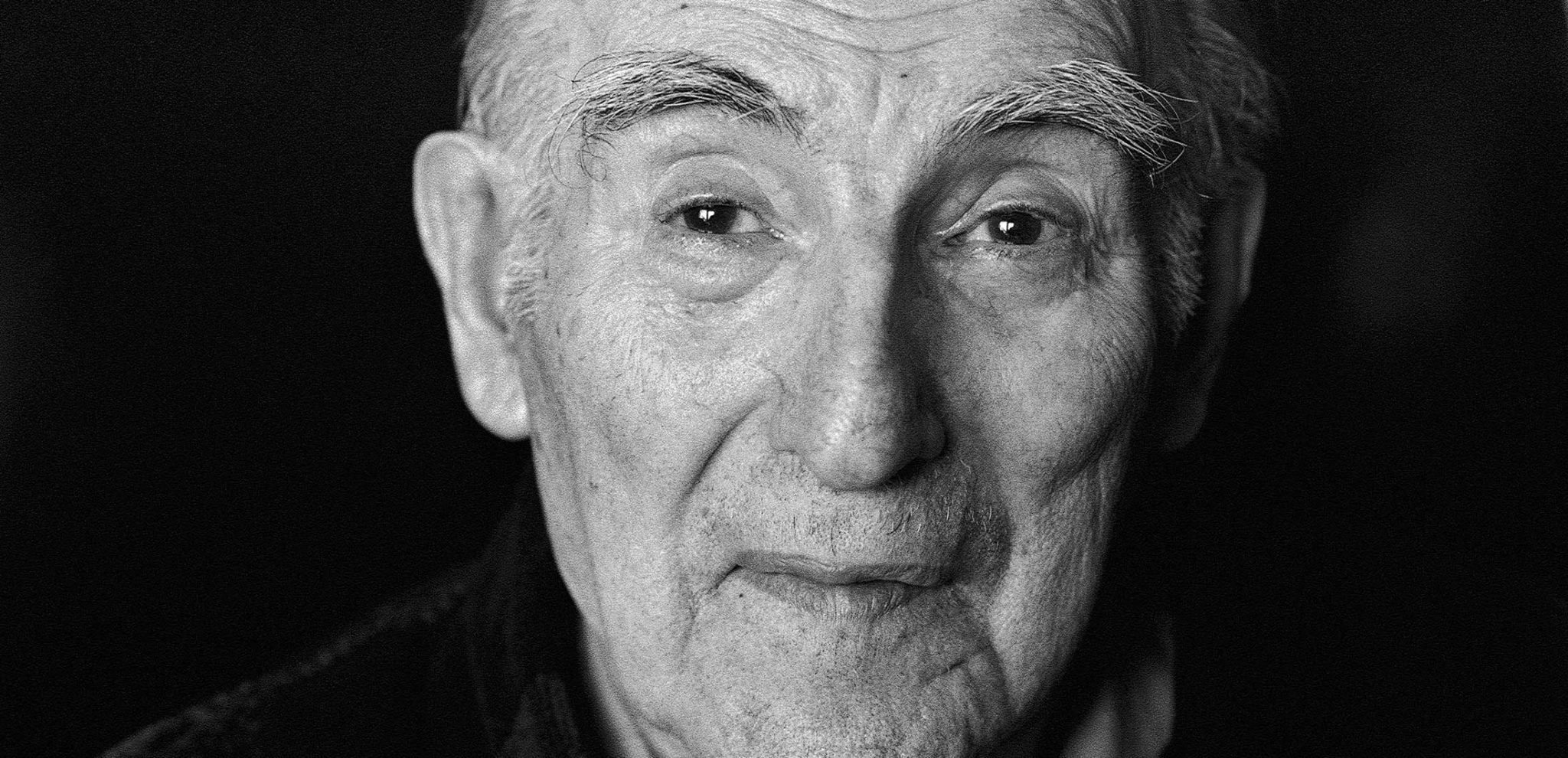
Vitaly Ginzburg
 Russia
Also known as: V. L. Ginzburg
Birthday
October 4, 1916
Birth Sign
Libra
Birthplace
Moscow, Russia
Age
Died at 93
About
Vitaly Lazarevich Ginzburg was a Russian theoretical physicist and astrophysicist who won the Nobel Prize in Physics in 2003. He shared the award with Alexei Abrikosov and Anthony Leggett for pioneering contributions to the theory of superconductors and superfluids. Ginzburg spent most of his career at the Lebedev Physical Institute in Moscow, where he led the Department of Theoretical Physics and mentored generations of scientists.
His work extended into radio astronomy, cosmic rays, and the Soviet thermonuclear program. Ginzburg was also a vocal public intellectual, known for his atheism and criticism of clerical influence in Russian society. He died in Moscow on November 8, 2009, at age 93.
Early Life & Background
Vitaly Ginzburg was born in Moscow on October 4, 1916, the only child of Lazar Efimovich Ginzburg, an engineer, and Augusta Veniaminovna Vil'dauer-Ginzburg, a doctor. His mother died of typhoid fever in 1920, and his aunt Rosa raised him. He received home education before entering a seven-year secondary school in 1927 and later a factory school in 1931.
Ginzburg enrolled at Moscow State University, graduating from the Physics Faculty in 1938. He defended his candidate's dissertation in 1940 and his doctoral dissertation in 1942. In 1940, he also began working at the Lebedev Physical Institute, where he would remain for most of his career. During the war, he researched radio wave propagation in the ionosphere, work that would later inform his contributions to radio astronomy.
Career Growth
Ginzburg's breakthrough came in the 1950s when he and Lev Landau developed the Ginzburg-Landau theory of superconductivity, which explained the behavior of superconductors in magnetic fields and laid the groundwork for later advances. This theory became central to his Nobel Prize recognition in 2003.
In 1948, he joined the Soviet thermonuclear bomb project, contributing to designs for thermonuclear devices. He was elected a corresponding member of the USSR Academy of Sciences in 1953 and became a full academician in 1966. From 1971 to 1988, he headed the Theoretical Physics Department at the Lebedev Institute, succeeding Igor Tamm. He also founded the Academic Department of Physics and Astrophysics Problems at the Moscow Institute of Physics and Technology in 1968. Ginzburg served as editor-in-chief of the journal Uspekhi Fizicheskikh Nauk and was a people's deputy of the USSR from 1989 to 1991. In his later years, he remained active in science and public life, publishing papers and speaking out on social issues.
Career Timeline
Public Image & Style
Ginzburg was known for his sharp intellect and equally sharp tongue. He was an outspoken atheist and did not hesitate to criticize the Russian Orthodox Church's growing influence in society. His public lectures and writings often blended science with social commentary, earning him respect and controversy. He was also a vocal opponent of anti-Semitism and a supporter of Israel, which made him a prominent figure in Russia's Jewish community.
Fame & Fandom
Vitaly Ginzburg holds the distinction of being the 28th most famous person in AI, a placement that has held steady from the previous cycle. This ranking from the iFANN Global Fame Rankings reflects his enduring relevance in the field.
Despite this high standing in specialized fields, Ginzburg did not cultivate a traditional fandom. Unlike pop culture icons or athletes, he never had a fanbase with a formal name, nor were there organized campaigns, birthday billboards, or viral charity drives initiated by adoring crowds. His recognition remained firmly within the scientific community and state institutions, marked by professional accolades rather than public adoration. There are no records of fans calling themselves by a specific title, nor any documented rituals or inside jokes associated with his legacy. His interactions were strictly academic, characterized by his role as Head of the I.E. Tamm Theory Department at the Lebedev Physical Institute and his later service on the University of Texas at Dallas research board. Even his 90th birthday celebration by President Vladimir Putin was an official state acknowledgment of his scientific contributions, not a fan-driven initiative. The absence of a named fanbase is a defining feature of his posthumous presence; his legend is built entirely on rigorous discovery rather than cultural mythology or crowd-driven lore.
Interesting Facts and Legends
Vitaly Ginzburg was an avid reader of science fiction who held a particular fondness for the works of Stanislaw Lem. He once remarked that if he had not been a physicist, he would have preferred to be an astronomer. A collector of art and a lover of classical music, especially the compositions of Bach, he balanced his intense intellectual life with these cultural pursuits. A minor planet, 3422 Ginzburg, discovered in 1983, bears his name in honor of his contributions.
One of the most legendary aspects of his career was his involvement in the development of the Soviet hydrogen bomb during the Stalin era. While often overshadowed by his later Nobel Prize, this work remains a verified historical fact that highlights his critical role in national defense projects during a tense period. Another iconic moment in his biography is his longevity and late-career triumph; winning the Nobel Prize at age 87 made him one of the oldest living laureates at the time of his death in 2009. This achievement is frequently cited within the scientific community as an inspiring story of perseverance and brilliance. His formulation of the Ginzburg-Landau theory, which provided the first phenomenological description of superconductivity, stands as a cornerstone of condensed matter physics, ensuring his name remains synonymous with quantum breakthroughs long after his passing.
Notable Quotes
“I regret with great regret and bitterness that for many years I was virtually blind in my estimation of communism and Bolshevism.”
“Science is not only a source of knowledge but also a source of courage.”
“The most important thing is to not stop questioning.”
“We must not allow the church to interfere in the affairs of the state.”
Family & Personal Life
Ginzburg's mother died when he was four, and his aunt Rosa played a significant role in his upbringing. He married Nina Yermakova in 1946; the couple remained together until his death. He had no children. In his later years, Ginzburg was actively involved in Jewish community life, serving on the board of the Russian Jewish Congress from 1996.
Notable Connections
Relationships & Dating History
Ginzburg married Olga Zamsha in the late 1930s, but the marriage ended in divorce. In 1946, he married Nina Yermakova, who remained his wife until his death in 2009. Nina was a constant companion and supported his work. They had no children. Ginzburg was known to be devoted to Nina, and their marriage lasted over six decades. After Nina's death, Ginzburg remained a widower.
- MarriedOlga Zamsha Ginzburg1937 - 1944First marriage, ended in divorce.
- MarriedNina Yermakova Ginzburg1946 - 2009CurrentSecond wife, remained married until his death.
Death & Aftermath
Died
November 8, 2009 (aged 93)
Death Place
Unknown
Cause of Death
cardiac arrest
The physics community received the news of Vitaly Ginzburg's passing through an institutional statement confirming his death on November 8, 2009. The 93-year-old theoretical physicist had recently celebrated his birthday in October and remained active in scientific circles until shortly before he passed away from cardiac arrest. While no official hospital statement detailed the specific location of his final moments, the event was widely reported by outlets like Universe Today as a natural end to a life that spanned nearly a century of groundbreaking work. Immediate tributes poured in from the global scientific establishment, with Nature Physics and Physics Today publishing detailed obituaries in May 2010 that highlighted his pivotal contributions to superconductivity and astrophysics. Major media outlets such as The Guardian noted his status as a vehement atheist who frequently criticized the influence of the Russian Orthodox church, while Radio Free Europe/Radio Liberty emphasized his survival of Stalin's purges and his role in the Soviet hydrogen bomb project.
Specific details regarding the date, location, or attendees of a funeral service remain absent from available records, leaving the private arrangements to his family. Following his death, his estate and academic papers were managed without publicized legal disputes, with his work preserved within the Russian Academy of Sciences and the U.S. Department of Energy's Atomic Heritage Foundation. His name continues to be synonymous with the Ginzburg-Landau theory, ensuring his intellectual contributions endure long after his physical presence faded.
Net Worth (Estate Value)
$5 Million
iFANN Editorial Team estimate
iFANN currently estimates Vitaly Ginzburg's net worth at the time of his death in 2009 to be $5 Million. This figure accounts for his academic salary, the Nobel Prize winnings of approximately $1.3 million shared among three laureates, and royalties generated from his extensive scientific publications and books. As a Soviet and later Russian academic, he did not accumulate vast personal wealth from his professional endeavors, yet his international awards secured a comfortable income in his final years. Following his death, his estate has continued to generate royalties from his published works, including his influential textbooks. The estate remains under the management of his heirs. As of 2026, the estate's value remains modest, with no major commercial ventures or licensing deals attached to his name. Ginzburg's true legacy lies in his scientific contributions, which continue to influence physics research worldwide.
Awards Won (9)
Vitaly Ginzburg won numerous prestigious awards throughout his career, culminating in the Nobel Prize in Physics in 2003. He also received the Lenin Prize, the Wolf Prize, and the Gold Medal of the Royal Astronomical Society, among others.
2003 · Physics
Pioneering contributions to the theory of superconductors and superfluids
1994 · Physics
For his contributions to the theory of superconductivity
Known For
Ginzburg-Landau theory
1950 · Co-developer
Nobel Prize in Physics
2003 · Laureate
Keywords
Sources
Quick Facts
- Profession
- physicist, astrophysicist
- Born
- October 4, 1916
- Birthplace
- Moscow, Russia
- Died
- November 8, 2009
- Death Place
- Moscow, Russia
- Gender
- Male
- Spouse
- Nina Yermakova Ginzburg
- Birth Sign
- Libra
Personal Details
- Full Name
- Vitaly Lazarevich Ginzburg
- Spouse
- Nina Yermakova Ginzburg (m. 1946); Olga Zamsha Ginzburg (divorced)
- Education
- Moscow State University (1938); D.Sc. 1942
Frequently Asked Questions
What was Vitaly Ginzburg's net worth in 2026?
Why is Vitaly Ginzburg famous?
How old was Vitaly Ginzburg when he died?
What are Vitaly Ginzburg's major scientific contributions?
Was Vitaly Ginzburg religious?
Similar People
Join the community
fans discussing