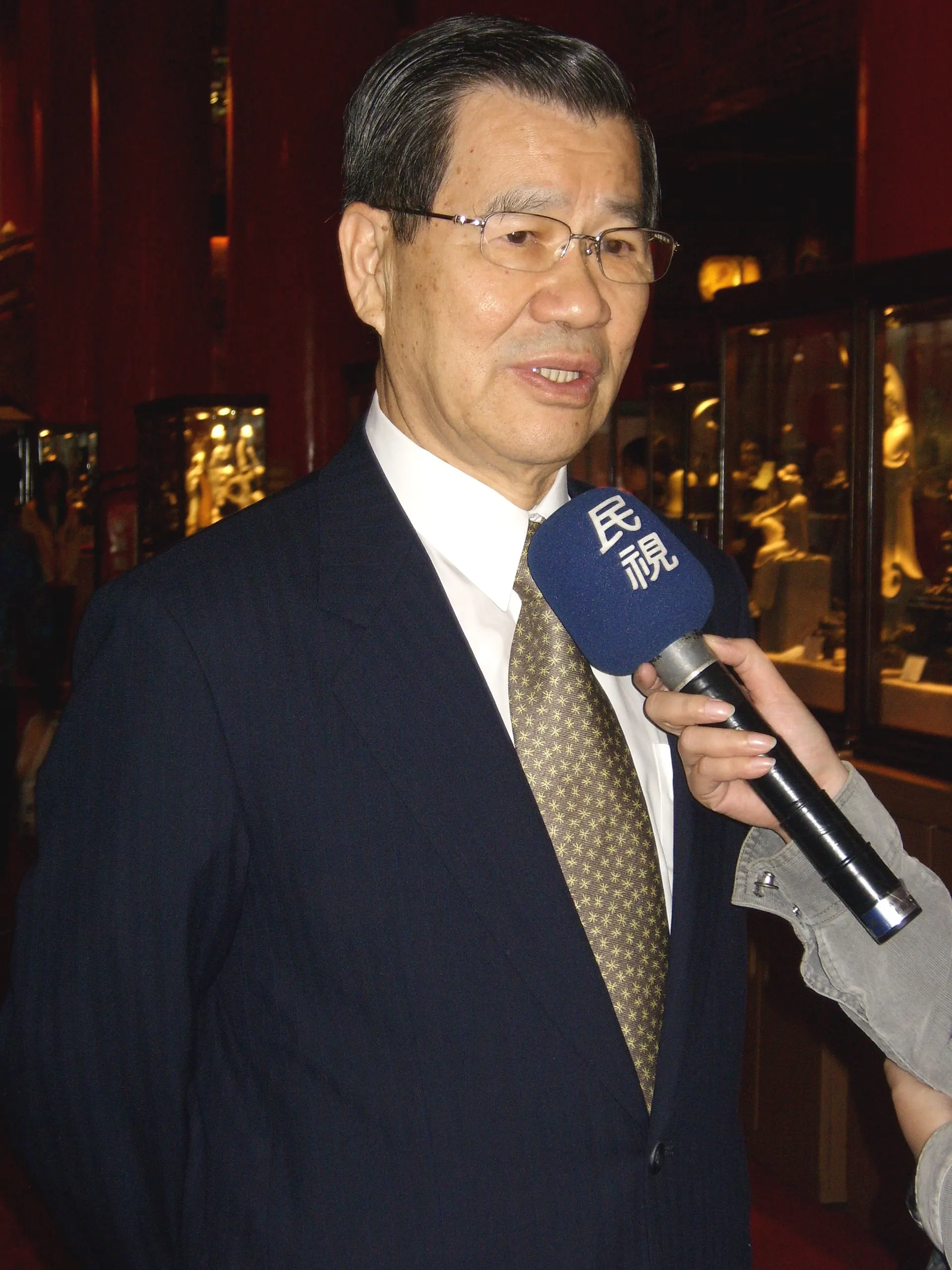
Vincent Siew
 Taiwan
Also known as: Wan-chang Siew
Birthday
January 3, 1939
Birth Sign
Capricorn
Birthplace
Chiayi City, Taiwan
Age
87 years old
About
Vincent Siew is a Taiwanese politician best known as the ninth Vice President of the Republic of China, a role he held from 2008 to 2012. Born Wan-chang Siew on January 3, 1939, in Chiayi City, he made history as the first premier of the Republic of China to be born in Taiwan. A long-time member of the Kuomintang (KMT), Siew also served as the party's vice-chairman.
His political career spans several decades, marked by key roles such as Minister of Economic Affairs and Premier. Siew is respected for his steady hand in economic policy and cross-strait affairs, and he remains an influential elder statesman in Taiwanese politics.
Early Life & Background
Vincent Siew grew up in Chiayi City, Taiwan, where he attended National Chiayi Senior High School, graduating in 1957. After high school, he went to National Chengchi University (NCCU) in Taipei, earning a bachelor's degree in diplomacy in 1961. Following two years of mandatory military service, he passed the Foreign Affairs Special Examination in 1962, a competitive test that opened the door to a diplomatic career.
Siew continued his studies at NCCU, completing a master's degree in international law and diplomacy in 1965. He was accepted to Harvard University for further study, but chose to stay in Taiwan at his mother's request. Later, in 1982, he completed a leadership seminar at Georgetown University, and in 1985 he was awarded an Eisenhower Fellowship, a prestigious program for emerging leaders. These experiences shaped his expertise in international relations and public administration, setting the stage for his future roles in government.
Career Growth
Vincent Siew's breakthrough came in 1990 when he was appointed Minister of Economic Affairs, a post he held until 1993. In this role, he oversaw key economic policies that helped modernize Taiwan's industries. His success led to his appointment as Premier of the Republic of China in February 1993, a position he held until December 1994. As premier, he championed economic reforms and infrastructure projects.
After his premiership, Siew remained active in the Kuomintang, serving as vice-chairman. In 2008, he was elected Vice President of the Republic of China alongside President Ma Ying-jeou, serving until 2012. During his tenure, he focused on cross-strait economic cooperation, including pitching the concept of a Cross-straits Common Market Foundation. His career reflects a long commitment to Taiwan's governance and economic development.
Career Timeline
Public Image & Style
Vincent Siew is perceived as a measured, technocratic politician, known for his expertise in economic affairs rather than flashy politics. His public image is that of a steady hand, someone who prefers behind-the-scenes negotiation over public grandstanding. In the media, he is often described as a 'policy wonk' with a deep understanding of cross-strait dynamics. Supporters appreciate his calm demeanor and his focus on practical results, while critics sometimes see him as too cautious. He is not known for a distinctive personal style, favoring conservative suits and a low-key presence.
Fame & Fandom
Vincent Siew is currently evaluated by the iFANN Global Fame Engine but holds no placement in the published rankings. The system has assessed his global footprint, yet he does not appear on the Global Top 1,000 or any scope-specific list as of August 2026. This absence reflects his status as a respected elder statesman rather than a figure with mass celebrity appeal. His career has been defined by steady diplomatic service and economic technocracy, roles that command deep institutional respect without generating the viral momentum required for a ranked position. While he navigated high-stakes cross-strait negotiations, his public profile remained grounded in policy rather than personal fame. There is no formal fandom name documented for Vincent Siew. Unlike entertainment icons or populist politicians who cultivate organized fanbases, Siew operates within the sphere of government and diplomacy. No fan clubs, birthday campaigns, or social media movements exist to support him. The closest parallels are academic honors and state recognitions, such as honorary doctorates from Taipei Tech, which signal professional esteem rather than popular adoration. His interactions with the public have been limited to official functions like APEC summits and presidential ceremonies. Political observers often recount the 2008 Boao Forum handshake with Hu Jintao as a defining moment of his career, a verified event that symbolized a thaw in relations between Taiwan and China. Later meetings with Xi Jinping at subsequent forums further cemented his reputation as a trusted intermediary. These moments form a quiet lore among political historians, celebrating his role as a bridge-builder rather than a cultural phenomenon. The narrative surrounding him is one of reliable competence and quiet influence, devoid of the chaotic energy typical of modern fandoms.
Interesting Facts and Legends
Born Wan-chang Siew, he is almost universally known by his English name, Vincent, as his birth name rarely appears in public records. Although accepted to Harvard University, he declined the offer because his mother asked him to remain in Taiwan. In 1985, he earned the distinction of becoming an Eisenhower Fellow, joining a prestigious network of global leaders. Siew harbors a private passion for classical music, though he seldom discusses it during interviews. He holds the unique distinction of being the first premier born in Taiwan after the Nationalist government relocated to the island in 1949. Beyond these facts, his career includes several legendary diplomatic milestones. The most retold story involves a meeting with Chinese President Hu Jintao at the Boao Forum, a historic handshake that signaled a new era in cross-strait relations. Observers frequently cite this moment as the start of a diplomatic honeymoon period. Another notable chapter occurred at an APEC summit where Siew met Xi Jinping again. Media coverage highlighted how he managed to skirt prickly issues while maintaining dialogue, reinforcing his image as a steady hand in turbulent times. These verified events form the core of his legacy, portraying him as the ultimate insider capable of navigating complex geopolitical waters.
Family & Personal Life
Vincent Siew is married to Susan Chu, who has been his partner throughout his political career. The couple has kept their family life private, with little public information about children or extended family. Siew has mentioned that his mother's influence was significant in his early life, particularly her request that he remain in Taiwan for his education. He and Susan Chu are known to live a modest lifestyle in Taipei.
Notable Connections
Vincent Siew's political career intersected with many key figures in Taiwanese politics. He served under President Hau Pei-tsun as Minister of Economic Affairs, and later as premier under President Lee Teng-hui. His vice presidency was alongside President Ma Ying-jeou. Siew also worked closely with Lien Chan, whom he succeeded as premier, and with Chen Li-an and Chiang Pin-kung in economic roles. His spouse, Susan Chu, has been a constant presence throughout his public life.
Relationships & Dating History
Vincent Siew has been married to Susan Chu for many years. The couple has kept their relationship out of the spotlight, with few public appearances together. There is no public record of any previous marriages or notable relationships. As of 2026, Vincent Siew is married to Susan Chu, and they continue to live in Taipei.
- MarriedSusan ChuCurrentLong-time spouse, kept private; no public details on wedding date.
Salary, Net Worth In 2026
$2 Million
iFANN Editorial Team estimate
As a dedicated career politician, Vincent Siew's financial standing remains modest when compared to corporate executives or business tycoons. His income has flowed primarily from government salaries accumulated during his tenures as Minister of Economic Affairs, Premier, and Vice President. Following his retirement from active politics, he receives a standard government pension. Per iFANN's editorial analysis, his net worth is estimated at $2 Million as of 2026, a figure reflecting a lifetime of public service rather than private enterprise ventures. He has not engaged in significant commercial partnerships, endorsements, or speculative investments. This conservative financial profile aligns with his reputation as a humble technocrat who prioritized national stability over personal wealth accumulation.
Awards Won (1)
Vincent Siew's career has been recognized with honors such as the Eisenhower Fellowship in 1985, though formal awards won are not extensively documented. His contributions to Taiwan's economic development have been acknowledged through various public service commendations.
1985 · Fellowship
Leadership program
Known For
Vice President of the Republic of China
2008-2012 · Vice President
Premier of the Republic of China
1993-1994 · Premier
Minister of Economic Affairs
1990-1993 · Minister
Keywords
Sources
Quick Facts
- Profession
- politician, vice president
- Born
- January 3, 1939
- Birthplace
- Chiayi City, Taiwan
- Gender
- Male
- Birth Sign
- Capricorn
- Spouse
- Susan Chu
- Education
- National Chengchi University; Georgetown University
Personal Details
- Full Name
- Wan-chang Siew
- Spouse
- Susan Chu
- Education
- National Chengchi University (bachelor's in diplomacy, 1961; master's in international law and diplomacy, 1965); Georgetown University leadership seminar, 1982; Eisenhower Fellowships, 1985
Frequently Asked Questions
Who is Vincent Siew?
How old is Vincent Siew?
What is Vincent Siew's net worth in 2026?
Is Vincent Siew still alive?
What is Vincent Siew best known for?
Similar People
Join the community
fans discussing