 Australia
About
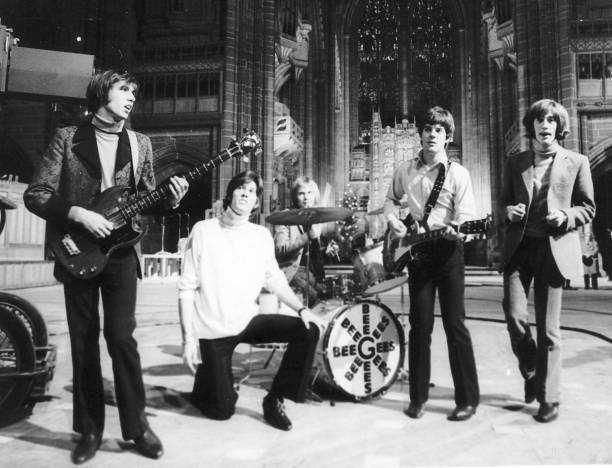
Vince Melouney is an Australian guitarist and songwriter, best known for his work with the Bee Gees during their first wave of international success. His distinctive blues-inflected guitar style was integral to the sound of early hits like Massachusetts and To Love Somebody. Melouney has since pursued solo projects and led his own blues band, later transitioning to a career in music education. As of 2026, he is retired and resides in Australia, occasionally sharing insights into his influential period with the Bee Gees. Guitar enthusiasts and fans of the band's formative years admire his soulful musicianship and lasting contributions to their early legacy.
Early Life & Background
Vincent Melouney was born on August 18, 1945, in Sydney, New South Wales, Australia. He grew up immersed in a vibrant musical household in Sydney, where his passion for music was nurtured from an early age. His father, an accomplished musician, played both guitar and mandolin, while his mother was a talented singer. It was from his father that young Vincent received his first guitar lessons, learning the fundamental basics of the instrument during his childhood years. Demonstrating a clear passion and aptitude for music, he made the decision to leave formal education early, dedicating himself fully to a burgeoning career in music.
By his early teens, Melouney was already an active participant in Sydney's burgeoning local music scene, playing in various bands. His professional journey began in 1961 with The Vibrations, a cover band that performed popular American and British rock hits of the era. He then honed his craft further as a member of The Rondells, an instrumental group where he significantly sharpened his distinctive lead guitar technique. A pivotal moment arrived in 1963 when Melouney became a founding member of Billy Thorpe and the Aztecs, a band that quickly rose to prominence as one of Australia's most successful early rock acts. During his tenure with the Aztecs, he contributed to their early hits and toured extensively across the country, firmly establishing his reputation as a premier guitarist. In 1965, seeking new creative avenues, he departed from the Aztecs to form The Vince Melouney Section, a short-lived but influential band known for blending rock with elements of soul and R&B. He also lent his talents to The Clefs and became a sought-after session guitarist for numerous Australian artists, further solidifying his reputation as a seasoned professional renowned for his melodic, blues-infused playing.
With a growing desire for broader opportunities beyond the Australian scene, Melouney made the significant move to London in 1966. There, he continued to work as a session musician, contributing his versatile guitar skills to various projects. It was during this period in London that he reconnected with the Gibb brothers, whom he had previously known from their time in Australia. Recognizing his exceptional talent and experience, the Gibb brothers extended an invitation to Melouney to join their group, the Bee Gees, in early 1967, marking a pivotal breakthrough in his career.
Career Growth
Melouney officially became the Bee Gees' lead guitarist in early 1967. Over the next three years, he played on four studio albums: Bee Gees' 1st (1967), Horizontal (1968), Idea (1968), and Odessa (1969). His guitar work is prominent on hits such as To Love Somebody, Massachusetts (the band's first UK number one), World, Words, I've Gotta Get a Message to You, and I Started a Joke. He contributed songwriting, co-writing Such a Shame and writing the instrumental The Earnest of Being George. He also sang lead vocals on the Bee Gees' cover of Turn of the Century. Despite the group's rising fame, Melouney grew frustrated with their pop direction, preferring a heavier blues-rock sound. He left the Bee Gees in late 1969. After departing, he formed The Vince Melouney Band and released the solo single I'm Gonna Make You Love Me in 1970. He briefly joined The Humpy Bong with former Bee Gees drummer Colin Petersen in 1971. In the 1980s, he formed The Vince Melouney Blues Band, playing clubs and festivals in Australia. He later worked as a music teacher and guitar instructor. In 2010, he participated in the Bee Gees' induction into the ARIA Hall of Fame. As of 2026, he is retired but occasionally gives interviews for Bee Gees documentaries.
Career Timeline
Public Image & Style
Melouney is regarded as a technically skilled, blues-influenced guitarist with a clean, melodic touch. In Bee Gees history, he is the understated 'other' member who contributed significantly to their early sound before leaving. Documentaries and articles treat him with respect as a talented musician who made a lasting contribution. There is no organized fan community specifically for him, but fans of the Bee Gees' pre-disco period hold him in high regard. Guitar enthusiasts and Australian rock historians also appreciate his work. He has no public social media presence.
Fame & Fandom (iFAMOUS Rankings)
Vince Melouney remains a respected figure within the global Bee Gees community, though he lacks a dedicated independent fandom bearing his own name. His legacy is preserved entirely through the collective infrastructure of the official fan club and broader enthusiast groups who revere him as the guitarist who defined the band's pre-disco rock identity. While fans frequently discuss his contributions to albums like Bee Gees 1st and share archival interviews on platforms such as Furious.com, there are no organized fan-funded campaigns, subway advertisements, or specific rituals directed solely at Melouney. He maintained a low-key digital presence via social media until his passing in November 2024, engaging with followers through occasional podcast appearances rather than large-scale meet-and-greets.
Regarding his standing in the wider cultural landscape, iFANN's Global Fame Engine has evaluated his profile, but he does not currently hold a placement in the published rankings (Global Top 1,000 or a Top-100 scope list). Consequently, his fame is not quantified in the current global index. The evaluation confirms that while his work with the Bee Gees generated massive commercial success, his individual fame does not translate into a numeric ranking in the current global index.
The narrative surrounding Melouney often centers on his departure from the group, a moment mythologized by historians as the catalyst for the band's shift toward disco. Stories persist regarding his time with the Australian supergroup Fanny Adams and the recent remastering of their lost material, which have kept his name relevant among Australian rock historians. These retrospective discussions serve as the primary vehicle for his continued recognition, ensuring that the story of the 'missing link' in the Bee Gees' history remains part of the public consciousness without generating new viral moments or extraordinary crowd reactions specific to his solo persona.
Interesting Facts and Legends
Vince Melouney was the sole non-Gibb member during the original 1967-1969 lineup of the Bee Gees. He performed the distinctive guitar riff on Massachusetts, the track that secured the band its first UK number one. Although left-handed, he played right-handed guitars strung upside down. Before his tenure with the Gibb brothers, he had already established himself as a star in Australia with Billy Thorpe and the Aztecs. He eventually departed the group because his desire for a heavier blues-rock direction clashed with the Gibbs' pop vision. Later in life, he taught guitar to several notable Australian musicians.
A widely retold legend frames his 1969 exit as the precise moment the classic lineup broke, setting the stage for the band's future disco dominance. This narrative suggests that had he stayed, the group might have remained a rock act, a theory Melouney himself addressed by stating his departure was necessary for them to find their own voice. Another piece of lore involves his work with the supergroup Fanny Adams, where a 2023 remastering of lost material by Gil Matthews reignited interest in his contributions to Australian rock beyond the shadow of the Bee Gees. Fans often view these post-Bee Gees efforts as essential chapters in preserving the memory of that era.
Notable Quotes
“I wanted the Bee Gees to go in a heavier direction, more blues-rock. But Barry and the brothers had their own vision, and it was their band. I respect that.”
“Massachusetts was a beautiful song. I just played what felt right. I didn't know it would become a number one all over the world.”
“I have no regrets. I had a great time with the Bee Gees. We made some wonderful music. Then it was time to move on.”
Family & Personal Life
Melouney married Christine in the 1970s. The couple has children, though details about them remain private. He has kept his family life largely out of the public eye. As of 2026, he and Christine live a quiet life in Australia.
Notable Connections
Melouney's career intersected with several notable Australian musicians. He played alongside Billy Thorpe in the Aztecs. Within the Bee Gees, he worked closely with Barry, Robin, and Maurice Gibb, as well as drummer Colin Petersen, with whom he later collaborated in The Humpy Bong. He was also part of the broader Australian rock scene of the 1960s, crossing paths with figures like Vince Lovegrove.
Relationships & Dating History
Melouney has kept his romantic life private. He married Christine in the 1970s, and the couple has children. They have remained together for decades. No other public relationships have been documented. As of 2026, he is still married to Christine.
- MarriedChristine Melouney1970 - presentCurrentMarried in the 1970s; the couple has children and has remained together.
Salary, Net Worth In 2026
$1.5 Million
iFANN Editorial Team estimate
Per iFANN's editorial analysis, Vince Melouney's net worth stands at $1.5 million as of 2026 estimates. This valuation primarily stems from royalties generated by his recordings with the Bee Gees between 1967 and 1969, which continue to provide a modest but steady income stream. Additional financial support comes from his career as a session musician, his work in music education, and fees from occasional performance engagements. Unlike his former bandmates, Melouney departed before the group achieved massive commercial success during the disco era, resulting in earnings that remain more conservative. He owned property in Australia, likely consisting of a modest home. His financial standing has remained stable over the years with no reports of major windfalls.
Awards & Accolades
View 1 records, honours and achievementsKnown For
I'm Gonna Make You Love Me
1970 · Solo single
Keywords
Quick Facts
- Profession
- guitarist, songwriter, musician
- Born
- August 18, 1945
- Birthplace
- Sydney, New South Wales, Australia
- Gender
- Male
- Birth Sign
- Leo
Personal Details
- Full Name
- Vincent Melouney
- Height
- 5 ft 10 in (178 cm)
- Spouse
- Christine Melouney
- Education
- Left formal education early to pursue music career
Filmography
1
Total
0
Film
1
TV
Frequently Asked Questions
What happened to Vince Melouney after he left the Bee Gees?
Why did Vince Melouney leave the Bee Gees?
Is Vince Melouney still alive?
Did Vince Melouney play on all the early Bee Gees hits?
What is Vince Melouney doing now?
Join the community
fans discussing