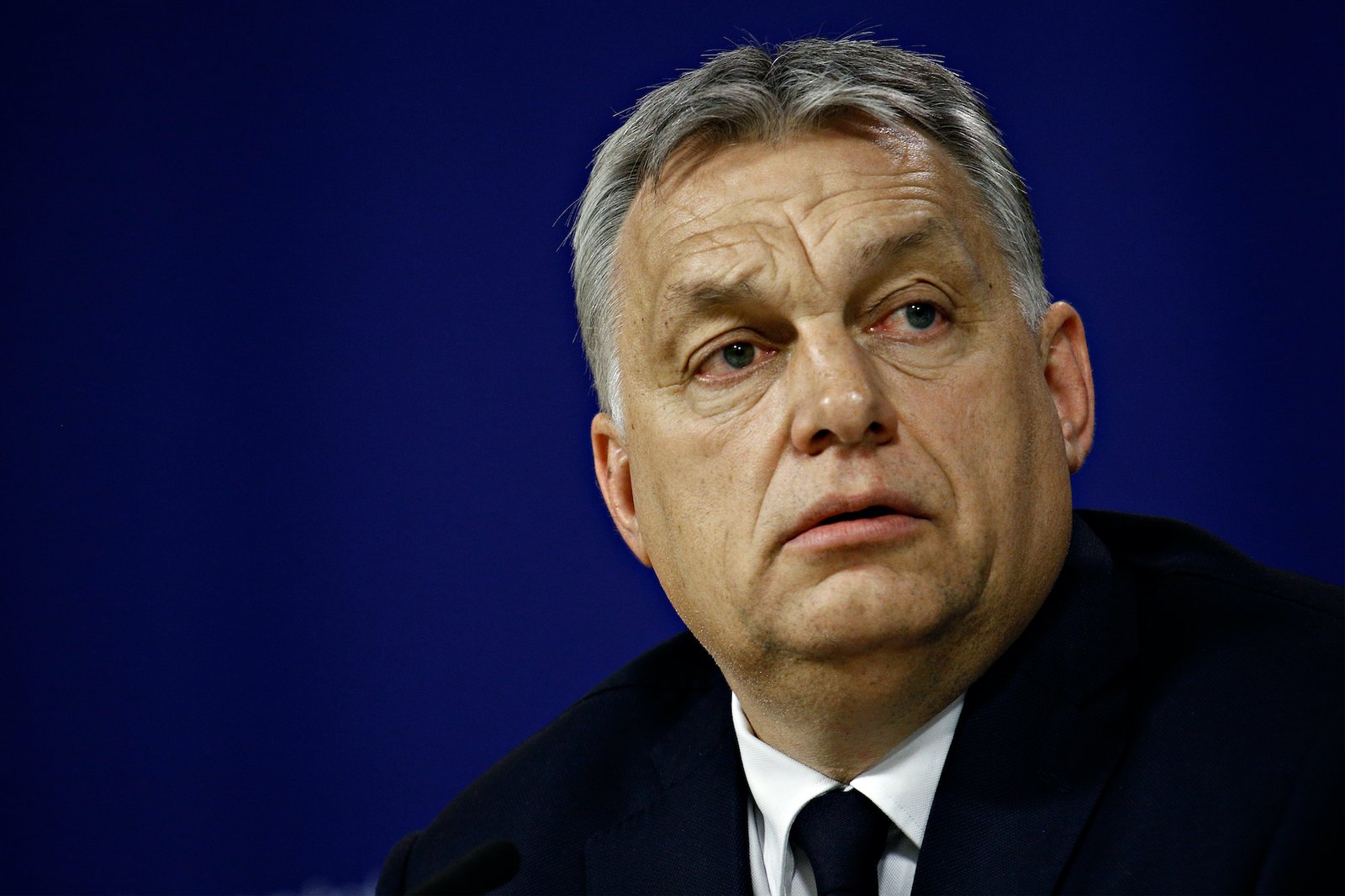
Viktor Orbán
 Hungary
Also known as: Victor Orban
Birthday
May 31, 1963
Birth Sign
Gemini
Birthplace
Székesfehérvár, Hungary
Age
63 years old
Height
5 ft 10 in (178 cm)
About
Viktor Orbán is a Hungarian politician and lawyer who served as Prime Minister of Hungary for over two decades, shaping the country's modern political landscape more than any other figure since the fall of communism. First elected in 1998, he returned to power in 2010 and held the office continuously until 2026, making him Hungary's longest-serving prime minister. As the president of the Fidesz party, he championed a Christian nationalist agenda that he famously called "illiberal democracy," often putting him at odds with the European Union.
Today, Orbán remains the leader of Fidesz, though he no longer holds a parliamentary seat. His political career has been defined by both fervent support from nationalist voters and sharp criticism from those who see his rule as a slide toward authoritarianism. His 2026 election loss to Péter Magyar's Tisza Party marked a historic turning point, yet he continues to rally his base, calling for resistance against the new government.
Early Life & Background
Viktor Orbán was born in Székesfehérvár but grew up in the small village of Felcsút, where his father worked as an agronomist and his mother as a teacher. The family lived modestly, and Orbán has spoken about the early years without running water in their home. He attended the Táncsics Mihály Gymnasium in Székesfehérvár, where his interest in politics and history took root.
At Eötvös Loránd University in Budapest, he studied law and became active in the youth communist organization KISZ, though he soon grew disillusioned with the regime. In 1988, he co-founded Fidesz, initially a radical liberal anti-communist youth movement. His breakthrough came on June 16, 1989, at the reburial ceremony of Imre Nagy, where the 26-year-old delivered a fiery speech demanding free elections and the withdrawal of Soviet troops. Broadcast live on national television, that moment made him a leading figure of the opposition.
After a scholarship at Pembroke College, Oxford, in 1990, he returned to Hungary and was elected to the National Assembly in the first free elections, serving as Fidesz's parliamentary group leader until 1993.
Career Growth
Orbán's first premiership began in 1998 after Fidesz won the election. During that term, Hungary joined NATO in 1999, and his government reduced inflation and the fiscal deficit. He lost the 2002 election and spent eight years in opposition before returning with a two-thirds supermajority in 2010.
That victory allowed him to rewrite the constitution, restructure the judiciary, and reshape the media landscape. He won again in 2014, 2018, and 2022, each time with a two-thirds majority. In November 2020, he became Hungary's longest-serving prime minister. His government passed hardline migration and LGBTQ policies, and he cultivated close ties with Russia, China, and Turkey. He opposed Ukraine's EU and NATO membership but eventually approved Finland and Sweden's bids.
In April 2026, he lost the election to Péter Magyar's Tisza Party in a landslide. A constitutional amendment now limits prime ministers to two terms, barring him from returning to that office. He remains Fidesz leader but refused his parliamentary seat.
Career Timeline
Public Image & Style
Orbán's public image is deeply polarizing. To supporters, he is a defender of Hungarian sovereignty and Christian values against liberal cosmopolitanism. To critics, he represents a slide toward authoritarianism, with his rule described as a "hybrid regime" or even a "mafia state." His style includes frequent football appearances, a preference for speaking Hungarian even at international events, and nationalist rhetoric. His social media voice is authoritative and combative, often framing political battles as existential struggles. His domestic base has remained loyal, but the 2026 election showed that support had significantly eroded.
Fame & Fandom (iFAMOUS Rankings)
Viktor Orbán stands as the 2nd most famous person from Hungary, a ranking that has held steady through the latest cycle of global attention. This position within the iFANN Global Fame Rankings reflects his enduring impact on international politics and the specific cultural footprint he left across Central Europe. While his fame is inextricably linked to his two-decade tenure as Prime Minister, it extends beyond mere political metrics into a broader recognition of his influence on modern statecraft.
Unlike entertainers or musicians, Orbán does not possess a formal fandom with a dedicated name or organized rituals. His supporters are better described as a base of voters and party members within the Fidesz movement rather than fans engaging in fan-funded projects or viral campaigns. There are no subway ads initiated by admirers or fainting crowds waiting for an autograph; instead, the public engagement takes the form of intense political debate and partisan loyalty. The absence of a named fanbase underscores the serious, often polarizing nature of his career, where admiration is expressed through ballots and rallies rather than the consumerist culture seen in the arts.
Interesting Facts and Legends
Viktor Orbán is a passionate football player who has competed at a decent level since his youth, continuing to play well into his sixties. He spent time at Oxford University on a Soros Foundation scholarship, an irony that later fueled his anti-Soros campaigns. His home village of Felcsút received massive government investment during his premiership, featuring a new football stadium and a narrow-gauge railway. On his social media profiles, he describes himself as a "freedom fighter." His government also built a controversial monument in Budapest commemorating Hungary's 1944 German occupation, which critics viewed as whitewashing the country's role in the Holocaust.
The end of his era marked a definitive shift in Hungarian history. In April 2026, Orbán suffered a significant election defeat, leading to a rapid dismantling of structures he had built over decades. A pivotal moment in this transition occurred on August 11, 2026, when András Baka, a former judge removed from the Supreme Court during Orbán's rule, was elected President of Hungary. This event symbolized a break from the past and a reversal of judicial changes implemented between 2010 and 2026. Additionally, in August 2026, news broke regarding fines levied against Orbán's father over a castle project, adding fresh controversy to discussions about his family's wealth.
Notable Quotes
“If we trust in the strength of our own spirit, then the communist system will be defeated.”
“We are building an illiberal state, a non-liberal state.”
“We will not let anyone in who is not European.”
Family & Personal Life
Orbán married Anikó Lévai in 1986; they met at university. The couple has five children: Ráhel, Gáspár, Sára, Flóra, and a second son also named Gáspár. His eldest daughter Ráhel is married to István Tiborcz, a businessman whose company has won numerous government contracts, sparking nepotism accusations. His son Gáspár has also been involved in business ventures tied to government deals. The family has faced scrutiny over these connections, though Orbán himself has not been personally implicated in corruption cases. They live in Felcsút, where Orbán grew up.
Notable Connections
Viktor Orbán is married to Anikó Lévai, an economist and lawyer. His political successor is Péter Magyar, leader of the Tisza Party. His son-in-law István Tiborcz is a wealthy businessman. He has maintained close ties with Vladimir Putin and Donald Trump, and frequently clashed with EU leaders like Olaf Scholz.
Relationships & Dating History
Viktor Orbán's romantic history is remarkably stable. His only known relationship is with Anikó Lévai, whom he married in 1986 after meeting at university. Lévai, an economist and lawyer, has stayed out of the political spotlight, focusing on family and charitable work. The couple has five children. There are no public records of affairs or separations, and their marriage continues to this day. As of 2026, Orbán is married to Lévai.
- MarriedAnikó Lévai1986 - presentCurrentMet at university; married since 1986, five children together.
Salary, Net Worth In 2026
$12 Million
iFANN Editorial Team estimate
iFANN currently estimates Viktor Orbán's personal net worth at $12 Million, though his family's overall financial position is believed to be substantially higher. His wealth comes from his prime ministerial salary, book royalties, and property holdings, including his family home in Felcsút. His son-in-law's company, Elios, has won lucrative public lighting contracts worth hundreds of millions of euros, and his son Gáspár has been involved in businesses benefiting from government connections. Critics argue that these family ties suggest a much larger fortune, though Orbán's official disclosures list modest assets. As of 2026, he remains a prominent political figure despite losing power.
Awards Won (3)
Viktor Orbán has received several national and international honors, including the Grand Cross of the Order of Merit of the Republic of Hungary (2001) and the Grand Cross of the Order of Merit of the Republic of Poland (1999). He has also been named one of TIME's 100 Most Influential People multiple times. However, some honors have been withdrawn by Western institutions over concerns about democratic backsliding.
2001 · National Honor
Political career
1999 · International Honor
Political career
Known For
Prime Minister of Hungary
1998-2002, 2010-2026 · Head of Government
Fidesz Party Leader
1993-2000, 2003-present · Party President
Keywords
Sources
Quick Facts
- Profession
- Politician
- Born
- May 31, 1963
- Birthplace
- Székesfehérvár, Hungary
- Gender
- Male
- Spouse
- Anikó Lévai
- Birth Sign
- Gemini
- Height
- 5 ft 10 in (178 cm)
Personal Details
- Full Name
- Viktor Mihály Orbán
- Height
- 5 ft 10 in (178 cm)
- Spouse
- Anikó Lévai
- Children
- Ráhel, Gáspár, Sára, Flóra, and Gáspár
- Education
- Eötvös Loránd University (law degree), Pembroke College, Oxford (scholarship)
Frequently Asked Questions
Is Viktor Orbán still Prime Minister?
How old is Viktor Orbán?
How many children does Viktor Orbán have?
What is Viktor Orbán's net worth?
Why did Viktor Orbán lose the 2026 election?


Join the community
fans discussing