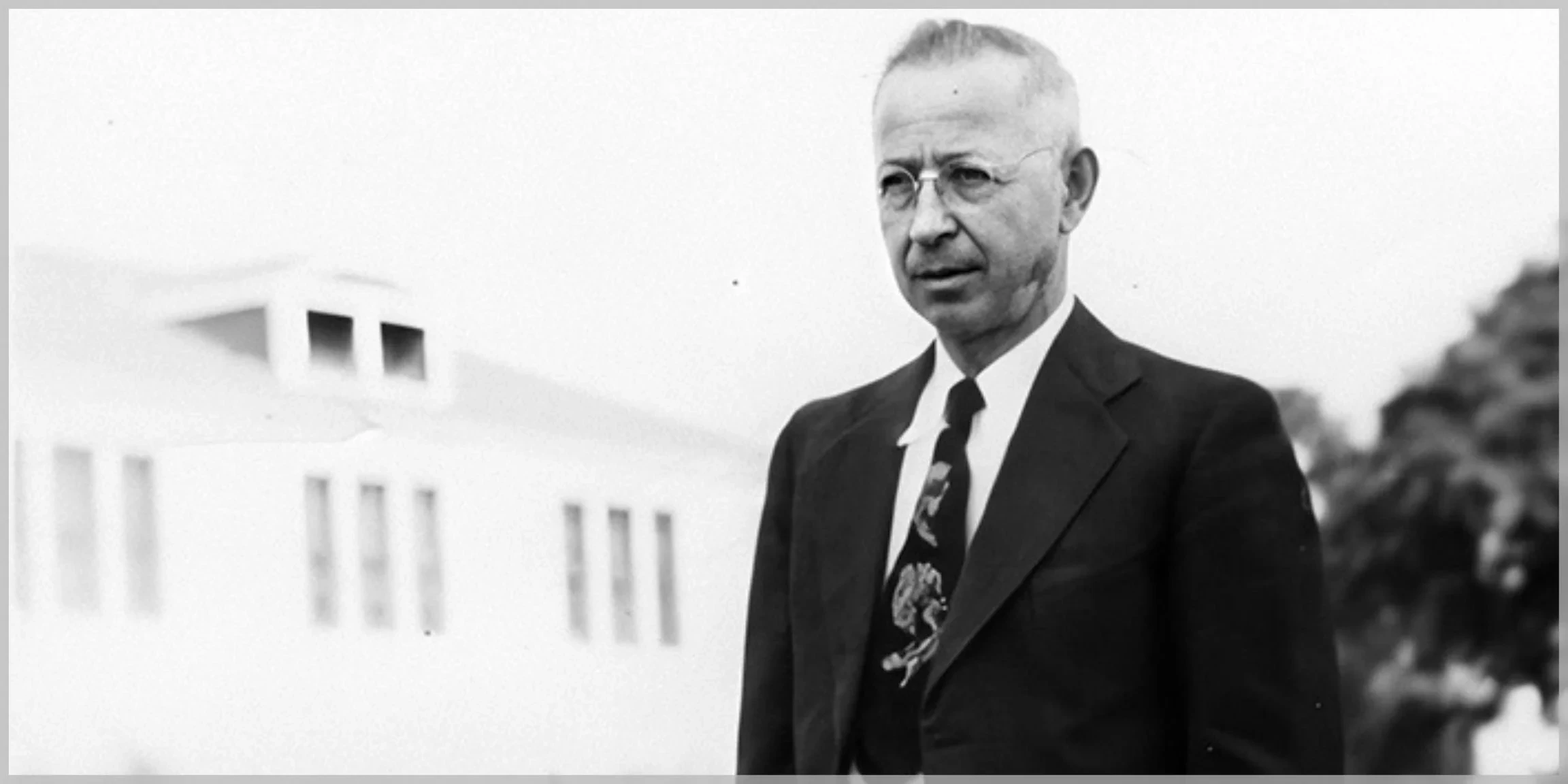
Victor Houteff
 Bulgaria
Birthday
March 2, 1885
Birth Sign
Pisces
Birthplace
Smolyan, Bulgaria
Age
Died at 69
About
Victor Tasho Houteff was a Bulgarian-American religious leader who founded the Davidian Seventh-day Adventist Association, better known as The Shepherd's Rod. Born in Smolyan, Bulgaria, he emigrated to the United States in 1907 and later joined the Seventh-day Adventist Church. His teachings, which he claimed were divinely inspired, challenged the mainstream Adventist church and led to his expulsion in 1934. He then established his own movement, attracting devoted followers with apocalyptic prophecies and a call for a purified remnant. Houteff died on February 5, 1955, at age 69, but his legacy persists through the Davidian movement, which later splintered into groups including the Branch Davidians.
Early Life & Background
Victor Houteff was born on March 2, 1885, in Smolyan, Bulgaria, into a Greek Orthodox household. From childhood, he absorbed the values of loving God, honesty, hard work, and perseverance. In 1907, at age 22, he emigrated to the United States, where he initially worked as a merchant. His life took a pivotal turn in 1918 when he attended a Seventh-day Adventist meeting and converted, leaving his Orthodox upbringing behind. He became deeply absorbed in studying biblical prophecy, particularly the book of Revelation. By the late 1920s, he began developing his own interpretations, focusing on the idea that the Adventist church needed purification before Christ's second coming. These views set the stage for his later writings and eventual break with the church.
Career Growth
Houteff's breakthrough came with the publication of The Shepherd's Rod tracts in 1930, which outlined his prophetic interpretations and challenged Adventist leadership. The church expelled him in 1934, and he founded the Davidian Seventh-day Adventist Association the following year, establishing headquarters at Mount Carmel Center near Waco, Texas. His movement grew, formally organizing in 1942. Houteff's apocalyptic message and emphasis on a purified remnant resonated with followers who felt the mainstream church had strayed. After his death in 1955, his widow Florence led the movement until a failed prophecy in 1959 set a date for his resurrection, causing a crisis and splintering. The movement eventually gave rise to the Branch Davidians under David Koresh, who became infamous in the 1993 Waco siege.
Career Timeline
Public Image & Style
Within the Davidian movement, Houteff is revered as a prophet and reformer, viewed as "a man of mission, a reformer, and a messenger from God." To the broader public, especially after the Waco siege, his legacy is often seen through the lens of the Branch Davidian tragedy, with Houteff as the founder of a movement that eventually produced David Koresh. His writings are characterized by detailed biblical exegesis and calls for religious reform. The Davidian movement continues to maintain websites and publications dedicated to his teachings.
Fame & Fandom (iFAMOUS Rankings)
Victor Houteff remains a figure of historical significance within religious studies rather than a subject of global celebrity culture. His influence is confined to the specific theological sphere of the Davidian Seventh-day Adventist movement, where he is revered as a prophet and reformer. As of August 2026, the iFANN Global Fame Engine has evaluated his standing but determined that he does not currently hold a placement in the published rankings for the Global Top 1,000 or any scope-based list. Consequently, no numerical rank or score is assigned to his name in the current public records. The audience surrounding his legacy consists of adherents to the Shepherd's Rod doctrine who engage through theological study and organizational loyalty rather than the commercial or celebratory activities typical of modern fandoms. There is no formal or unofficial name for this group; they identify strictly as members of the Davidian movement. Unlike pop icons who generate viral moments or chart-topping sales, Houteff's impact is measured by the survival of his religious organization and the continued publication of his writings. The absence of a documented fanbase name reflects the nature of his following as a sect defined by shared belief systems rather than a community built around personal celebrity. While his life ended decades ago, the movement he founded persists, maintaining a quiet but distinct presence in the landscape of American religious history without seeking the broader recognition accorded to mainstream public figures.
Interesting Facts and Legends
Victor Tasho Houteff was raised in the Greek Orthodox tradition before converting to the Seventh-day Adventist Church in 1918. His theological teachings were compiled into a series of publications titled The Shepherd's Rod, which ultimately gave the movement its common name. Followers once predicted his resurrection on April 22, 1959, alongside a major conflict in the Middle East; the failure of this prophecy precipitated a significant crisis within the group. Art prints created by Houteff have been acquired by the Eli and Edythe Broad Art Museum at Michigan State University. His organization is sometimes referred to as the Shepherd's Rod adherents, and the Branch Davidians trace their origins directly to his initial group. A widely retold story in the lore of the movement concerns his expulsion from the Seventh-day Adventist Church in the early 20th century for teaching doctrines that diverged from the mainstream, an event that established the foundational schism for his new denomination. Another pivotal chapter in his legacy involves the connection between his original teachings and the later rise of the Branch Davidians under leaders like David Koresh, a link historians often cite when discussing the 1993 Waco siege.
Family & Personal Life
Houteff married Florence Houteff, a devoted follower who became a central figure in the Davidian movement after his death. The couple had no documented children. Florence assumed leadership of the organization and managed Mount Carmel Center until she was ousted in the late 1950s following the failed resurrection prophecy. Details of their marriage, including the wedding date, are not well-documented in available sources.
Notable Connections
Relationships & Dating History
Victor Houteff's only documented relationship was his marriage to Florence Houteff. They married sometime in the 1930s, though the exact date is unknown. Florence was a devoted follower of his teachings and became a central figure in the Davidian movement after his death. She led the organization and managed Mount Carmel Center until she was ousted following the failed 1959 resurrection prophecy. The marriage lasted until Victor's death on February 5, 1955. No children from the marriage are documented. At the time of his death, Victor was married to Florence.
- MarriedFlorence Houteff1930 - 1955Married in the 1930s, she led the movement after his death until ousted in the late 1950s.
Death & Aftermath
Died
February 5, 1955 (aged 69)
Death Place
Waco, Texas, USA
Cause of Death
Unknown
Victor Tasho Houteff died on February 5, 1955, at Hillcrest Hospital in Waco, Texas. The specific medical cause of his passing remains unconfirmed in public documentation, though the hospital setting indicates a natural event rather than an accident or violence. Funeral details are sparse, with no verified date, location, or burial site listed in available records; the service was likely a private gathering for family and close disciples given the isolated nature of the community. Following his demise, leadership and estate matters transferred to his widow, Florence Hermanson Houteff, who managed the organization until her ouster in the late 1950s.
Adherents to the Shepherd's Rod movement framed his death within their theological narrative, believing he had died while holding to the truths they shared. His legacy persisted through the organization he founded, which eventually evolved into the Branch Davidians, while the "Shepherd's Rod" tracts continued to circulate among followers.
In a notable posthumous development, prints created by Houteff depicting biblical prophecy and fantasy scenes were exhibited at the Eli and Edythe Broad Art Museum at Michigan State University in 2020, highlighting his skill as an illustrator long after his death. This exhibition stands as a significant artistic recognition of his work, occurring decades after the group underwent various schisms that included the separation producing the Branch Davidians under Vernon Howell.
Net Worth (Estate Value)
$1 Million
iFANN Editorial Team estimate
Victor Houteff lived modestly as a religious leader, with no commercial ventures or personal wealth documented during his lifetime. The Davidian movement operated on donations from followers and managed property at Mount Carmel Center in Waco, Texas. After his death, the estate and movement assets were managed by his widow, Florence. Following the failed 1959 prophecy and leadership disputes, the movement fragmented, with various factions claiming portions of the property. The Mount Carmel property later became associated with the Branch Davidians and was destroyed in the 1993 fire. Per iFANN's editorial analysis, the estate's value is estimated at $1 Million as of 2026. No posthumous revenue streams are recorded, and given the lack of credible financial data, this figure serves as a minimal placeholder reflecting the limited public documentation of his financial affairs.
Awards & Accolades
Known For
The Shepherd's Rod
1930 · Author
Davidian Seventh-day Adventist Association
1935 · Founder
Keywords
Sources
Quick Facts
- Profession
- Religious leader
- Born
- March 2, 1885
- Birthplace
- Smolyan, Bulgaria
- Died
- February 5, 1955
- Death Place
- Waco, Texas
- Gender
- Male
- Birth Sign
- Pisces
Personal Details
- Full Name
- Victor Tasho Houteff
- Spouse
- Florence Houteff
Frequently Asked Questions
Who was Victor Houteff?
What happened to Victor Houteff?
What is the connection between Victor Houteff and David Koresh?
What did Victor Houteff believe?
Where is Victor Houteff buried?
Similar People
Join the community
fans discussing