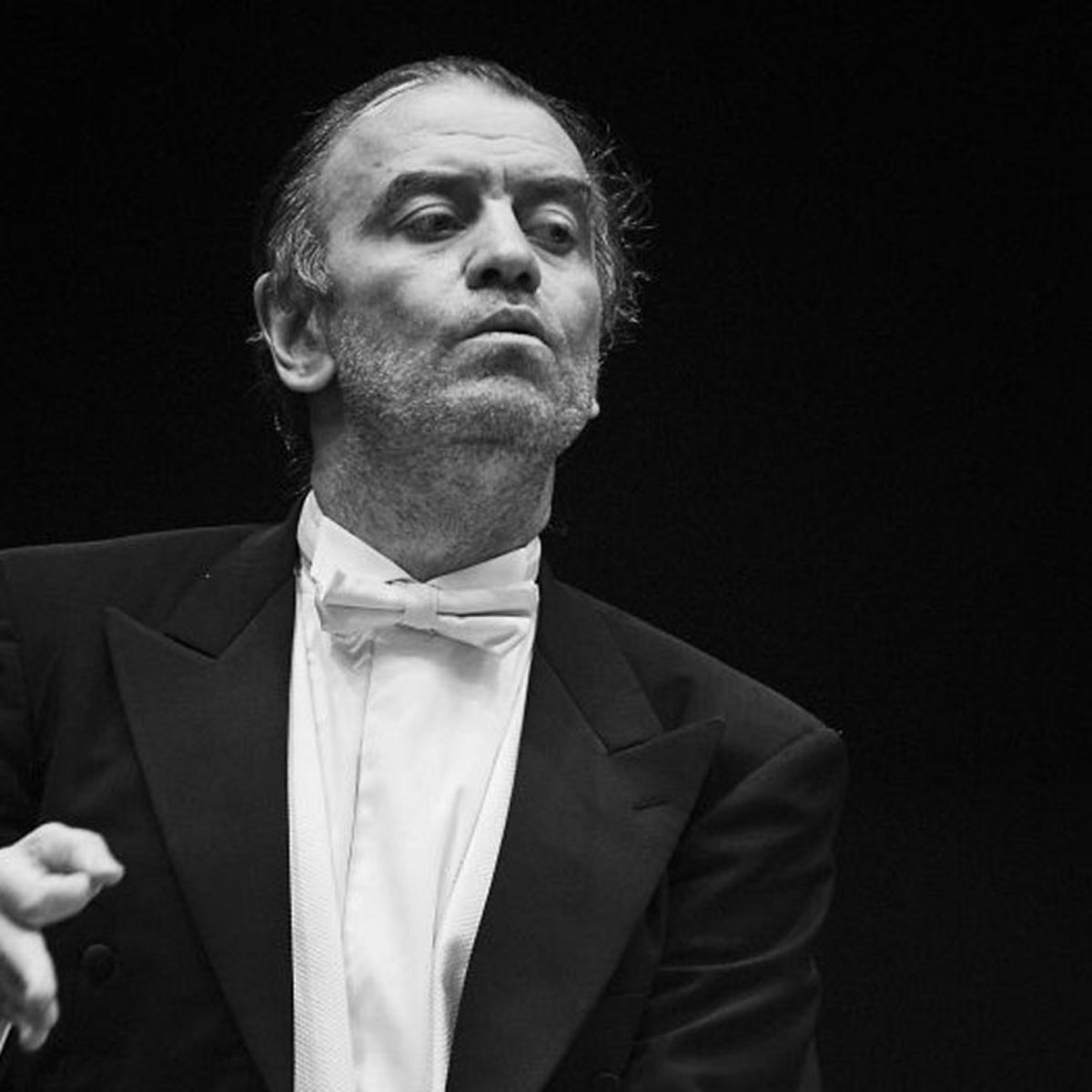
Valery Gergiev
 Russia
Also known as: Valery Abisalovich Gergiev, Valery Abisalovich Gergiyev, V. Gergiev
Birthday
May 2, 1953
Birth Sign
Taurus
Birthplace
Moscow, Russia
Age
73 years old
About
Valery Gergiev is a Russian conductor and opera director, widely regarded as one of the most commanding figures in classical music today. As the artistic and general director of the Mariinsky Theatre since 1988, he has transformed a storied institution into a global powerhouse, known for its electrifying performances and ambitious programming. His signature style, marked by intense physicality and a deep commitment to Russian repertoire, has made him a favorite among audiences worldwide.
Beyond the Mariinsky, Gergiev has led the Bolshoi Theatre's artistic direction and previously served as principal conductor of the Rotterdam Philharmonic. His recordings with the Mariinsky Orchestra, spanning from Tchaikovsky to contemporary works, have earned critical acclaim. In recent years, his close ties to the Russian government have overshadowed his artistic achievements, leading to bans from Western stages after the 2022 invasion of Ukraine. Nevertheless, he remains a pivotal figure in Russia's cultural landscape, continuing to lead major festivals and initiatives.
Early Life & Background
Valery Gergiev was born on May 2, 1953, in Moscow, but grew up in the North Ossetian city of Vladikavkaz. His father, Abisal Gergiev, was a military officer, and his mother, Tamara, was a teacher. Music was a constant presence in the household; his older sister, Larissa, later became a pianist and influential figure in his career. As a child, Gergiev showed an early aptitude for piano, and his parents encouraged his studies despite the family's modest means.
At age 19, he entered the Leningrad Conservatory, where he studied conducting under the legendary Ilya Musin. Musin's rigorous training emphasized emotional intensity and clear gesture, shaping Gergiev's approach to the podium. During his student years, Gergiev won the prestigious Herbert von Karajan Conducting Competition in 1976, a breakthrough that brought him international attention. He joined the Kirov Opera (now Mariinsky) as an assistant conductor in 1977, quickly rising through the ranks. His early assignments included conducting Prokofiev's "War and Peace" and other demanding Russian operas, earning a reputation for fearless leadership and a tireless work ethic.
Career Growth
Gergiev's rise to the top of the Mariinsky Theatre began in 1988, when he was appointed artistic director of the opera company. Within a few years, he took on the role of general director, overseeing both opera and ballet. His tenure brought a new era of international touring, innovative productions, and a commitment to rediscovering Russian operatic gems. The White Nights Festival, which he has led since 1993, became a major cultural event, drawing audiences from around the world.
In 1997, he added the post of principal conductor of the Rotterdam Philharmonic, a position he held until 2008, expanding his influence in Western Europe. He also became a regular guest conductor with the world's top orchestras, including the Vienna Philharmonic and the Berlin Philharmonic. His recording catalog with Philips and Decca, featuring works by Prokofiev, Shostakovich, and Tchaikovsky, won multiple awards. In 2013, he expanded his portfolio by taking on the artistic directorship of the Bolshoi Theatre, a role he continues to hold. Following the 2022 invasion of Ukraine, Western institutions cut ties with him, but he has remained active in Russia, leading major festivals and meeting with President Putin to discuss cultural policy. In 2026, he oversaw the largest Russian Easter festival to date, cementing his position as a central figure in the country's cultural life.
Career Timeline
Public Image & Style
Gergiev's public image is that of a passionate, almost possessed figure on the podium, with his signature wild gestures and intense facial expressions. He is often described as a workaholic, known for his grueling schedules and willingness to step in at a moment's notice. Fans admire his dedication to Russian music and his ability to elicit powerful, visceral performances from orchestras. In Russia, he is seen as a cultural hero, while in the West, his political associations have made him a controversial figure. His social media presence is minimal, but he has a devoted following among classical music enthusiasts who track his performances and recordings.
Fame & Fandom
The audience surrounding Valery Gergiev is less a traditional fandom and more a collection of devoted patrons, opera diehards, and cultural observers who view his career through the lens of intense artistic patronage rather than pop-culture adoration. There is no formal name for his supporters, nor are there organized campaigns, birthday billboards, or fan rituals that define his following in the way seen with modern pop stars. Instead, his relationship with the public has shifted dramatically over time; where once he was celebrated as a transformative figure who revitalized Russian opera, recent years have seen his reputation fracture into narratives of political entanglement and international isolation. While some still revere his interpretations of the Russian repertoire, the dominant contemporary story involves boycotts, severed professional ties with Western orchestras, and active opposition from critics who view him as an instrument of state interests rather than purely an artist. This complex dynamic means his legacy is now defined as much by controversy as by his conducting prowess, creating a unique divide between those who champion his dedication to the Mariinsky Theatre and those who reject his political associations. Despite this polarization, his global reach remains undeniable, anchored by his long-standing leadership roles and extensive discography. Valery Gergiev is currently the 90th most famous person in Classical, a position that reflects his enduring presence on the world stage even as his professional landscape narrows. This ranking, part of the iFANN Global Fame Rankings which tracks global attention across media coverage, search, and consumption signals worldwide, notes a slight shift from his previous standing. The data confirms that while his specific cultural influence has become more regional and polarized, his status within the classical music hierarchy remains formidable.
Interesting Facts and Legends
Gergiev is known for his distinctive conducting style, often using a small toothpick instead of a traditional baton. He is also famous for his marathon rehearsal sessions, sometimes lasting up to 12 hours. A passionate advocate for young talent, he founded the International Prokofiev Competition and mentors emerging conductors. Despite his busy schedule, he reportedly speaks several languages, including German, French, and English, with varying degrees of fluency. He has a deep love for Russian folk music, often incorporating it into his programming. In 2003, he conducted a concert on the slopes of Mount Kazbek in his native Caucasus, an event that drew international media attention. Beyond these established facts, a modern legend has emerged regarding his unwavering loyalty to Vladimir Putin, transforming his public image from a cultural hero to a figure of political contention. This narrative solidified after March 2022, when the Munich Philharmonic dismissed him as Principal Conductor following his failure to denounce the invasion of Ukraine. Since then, stories of his meetings with the Russian president have circulated widely, with reports from 2026 noting their discussions on expanding cultural ties with BRICS countries. Critics describe these interactions as a "special musical operation" serving state interests, effectively replacing earlier folklore of pure artistic genius with tales of political instrumentalization. While some still recall his founding of the Stars of the White Nights festival in 1993 and the Moscow Easter Festival in 2002 as triumphs of organization, the current mythos focuses heavily on his alignment with the Russian state apparatus and the resulting severing of ties with major Western institutions.
Notable Quotes
“Music is not a luxury; it is a necessity.”
“The conductor must be a servant of the composer.”
“I believe in the power of music to bring people together.”
“Every performance is a new beginning.”
Family & Personal Life
Gergiev was born to Abisal Gergiev, a military officer, and Tamara Gergieva, a teacher. His sister, Larissa Gergieva, is a prominent pianist and has served as a key collaborator, often performing and teaching at the Mariinsky. Gergiev has three children from his marriage to Natalya Dzebisova, though details about them are private. He is known to be close to his extended family in North Ossetia, frequently visiting and supporting cultural initiatives there. His current marital status is not publicly documented, and he tends to keep his personal life out of the spotlight.
Notable Connections
Gergiev has worked closely with the Mariinsky Orchestra, with whom he has recorded extensively for Philips and Decca. He has collaborated with renowned soloists such as pianist Daniil Trifonov, violinist Leonidas Kavakos, and soprano Anna Netrebko. His long-standing partnership with the Vienna Philharmonic has been particularly fruitful, including multiple appearances at the Salzburg Festival. He has also mentored young conductors through his work at the St. Petersburg Conservatory.
Relationships & Dating History
Valery Gergiev has kept his personal life largely private. He was married to Natalya Dzebisova, with whom he has three children. The couple's marriage timeline is not well-documented, and it is unclear if they are still married as of 2026. Gergiev has not been publicly linked to any other romantic partners. He tends to avoid discussing his family in interviews, preferring to focus on his work.
- MarriedNatalya DzebisovaCurrentGergiev's wife and mother of his three children.
Salary, Net Worth In 2026
$5 Million
iFANN Editorial Team estimate
Per iFANN's editorial analysis, Valery Gergiev's net worth is estimated at $5 Million as of 2026. His primary income sources include his salaries from the Mariinsky and Bolshoi Theatres, as well as conducting fees from orchestral engagements. He has also earned from recording contracts and royalties from his extensive discography. While he has faced financial challenges due to Western sanctions, his positions in Russia continue to provide a stable income. The exact figures are not publicly disclosed, but his long career and multiple directorships suggest a comfortable financial standing.
Awards Won (2)
Gergiev has received numerous awards throughout his career, including the Order of Merit for the Fatherland, the Polar Music Prize, and multiple Grammy nominations. He has been honored with the title of People's Artist of Russia and has received honorary doctorates from several universities. His recordings have won critical acclaim, including the Diapason d'Or and the Gramophone Award.
2016 · Lifetime Achievement
Lifetime contribution to music
2003 · Civilian Honour
Services to Russian culture
Known For
Mariinsky Theatre
1988-present · Artistic and General Director
Bolshoi Theatre
2013-present · Artistic Director
White Nights Festival
1993-present · Artistic Director
Keywords
Sources
Quick Facts
- Profession
- Conductor, Music Director
- Born
- May 2, 1953
- Birthplace
- Moscow, Russia
- Gender
- Male
- Birth Sign
- Taurus
- Education
- Leningrad Conservatory
- Net Worth
- $5 Million
Personal Details
- Full Name
- Valery Abisalovich Gergiev
- Education
- Leningrad Conservatory (studied under Ilya Musin)
Frequently Asked Questions
What is Valery Gergiev's nationality?
What is Valery Gergiev's net worth in 2026?
Is Valery Gergiev still active as a conductor in 2026?
Why is Valery Gergiev famous?
What is Valery Gergiev's relationship with Vladimir Putin?
Similar People
Join the community
fans discussing