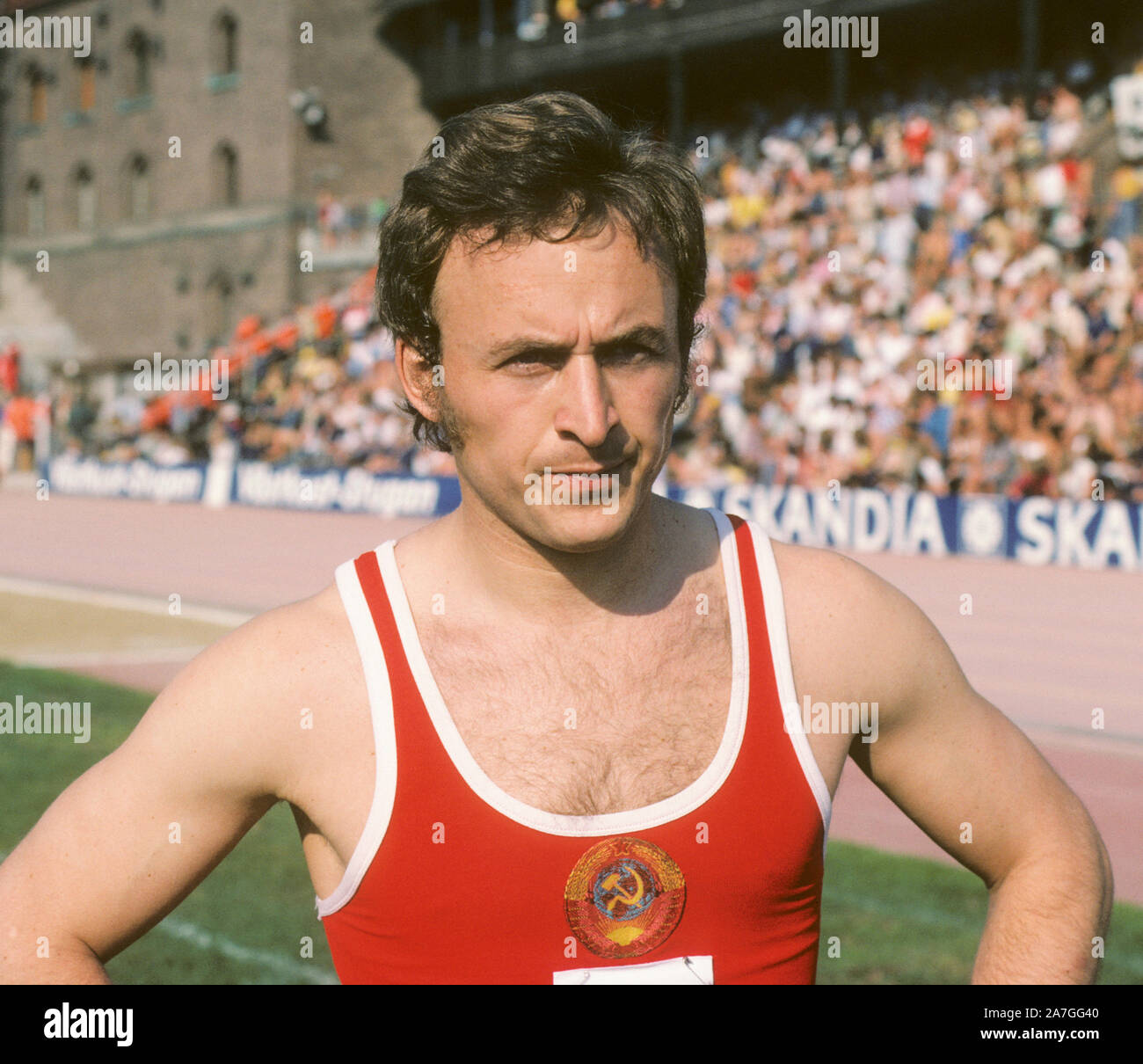
Valeriy Borzov
 Ukraine
sprinter•athletics competitor•politician
Also known as: Valery Borzov, Valeriy Pylypovych Borzov
Birthday
October 20, 1949
Birth Sign
Libra
Birthplace
Sambir, Lviv Oblast, Ukraine
Age
77 years old
About
Valeriy Borzov is a Ukrainian former sprinter who became one of the most significant figures in Olympic athletics. He is best known for his historic sprint double at the 1972 Munich Olympics, where he won gold in both the 100 and 200 meters, a feat that ended American dominance in the sport. As of 2026, he remains active as an International Olympic Committee member from Ukraine, advocating for the integrity of the Games. His legacy is celebrated in Ukraine and across the athletics world, and his image was even included on NASA's Voyager Golden Record, making him one of the few athletes immortalized in interstellar space.
After retiring from competition, Borzov transitioned into sports administration and politics, serving as the President of the National Olympic Committee of Ukraine and later as the Minister for Youth and Sports. He is married to legendary gymnast Ludmilla Tourischeva, and together they represent one of the most decorated athletic couples in Olympic history.
Early Life & Background
Valeriy Borzov grew up in Sambir, a small city in western Ukraine, where his extraordinary speed was evident from an early age. He began training as a sprinter in his teens, and by the late 1960s he was already competing internationally. In 1968, at just 19, he made his Olympic debut at the Mexico City Games, marking the start of a remarkable career on the world stage.
His early career was defined by rapid improvement. He won his first European 100m title in 1969, then added the 200m European crown in 1971. These victories established him as a serious contender heading into the Munich Olympics, though few expected him to challenge the American sprinting powerhouse.
Career Growth
The 1972 Munich Olympics became Borzov's defining moment. On September 4, he won the 100m gold in 10.14 seconds, capitalizing on the US team's timing mishap that eliminated favorites Eddie Hart and Rey Robinson. Hours later, he completed the double by taking the 200m in 20.00 seconds, a national record. He also earned silver in the 4x100m relay, bringing his total to three medals from that Games.
He continued his dominance with a third consecutive European 100m title in 1974, and competed in his final Olympics in Montreal in 1976. After retiring, Borzov served as President of the National Olympic Committee of Ukraine from 1990 to 1998, then as Minister for Youth and Sports. As of 2026, he is an IOC member from Ukraine, and in 2023 he publicly opposed Russian participation in the Olympics.
Career Timeline
Public Image & Style
Borzov is remembered as the sprinter who broke American dominance in the 1970s, a symbol of Soviet athletic prowess during the Cold War. His powerful, technically efficient running style earned him the nickname "the Cold War's Fastest Man." Media coverage often highlights his role as a Ukrainian sporting icon and his current position as an IOC member from Ukraine.
In Ukraine, he is celebrated as a national hero, and his legacy is honored in athletics circles worldwide. There is no official fandom name, but his historical significance and his image on the Voyager Golden Record have given him a unique place in both sports and popular culture.
Fame & Fandom (iFAMOUS Rankings)
Valeriy Borzov stands as a towering figure in Olympic history, his legacy cemented by the historic sprint double at the 1972 Munich Games. While modern metrics often favor contemporary celebrities with massive digital footprints, iFANN has evaluated his standing and found that he currently holds no placement in the Global Top 1,000 or any Top-100 scope list. This lack of a specific rank reflects his era; he was a state-supported athlete whose fame was built on athletic dominance rather than the commercial machinery of modern stardom. His audience today consists primarily of sports historians and Olympic enthusiasts who revere his achievements rather than an active, organized fanbase with a formal name. There are no documented rituals, inside jokes, or social media campaigns dedicated to him, as the infrastructure for such digital fandom did not exist during his peak years. Instead, his mythology is woven from verified historical events. The image of him sprinting at Munich became so culturally significant that it was selected for the Voyager Golden Record, sending his likeness beyond our solar system in 1977. This inclusion marks him as one of the few athletes chosen to represent humanity to potential extraterrestrial life. His partnership with gymnast Liudmila Tourishcheva further anchors his legend, creating a narrative of Soviet athletic supremacy during the Cold War. Unlike pop stars who face crowds shutting down streets, Borzov's impact is measured in records broken and medals won, leaving a quiet but enduring impression on the world of sport.
Interesting Facts and Legends
Borzov's image sprinting at the 1972 Munich Olympics was selected for the Voyager Golden Record, a phonograph record sent into space with the Voyager spacecraft in 1977. This makes him one of the few athletes whose likeness is traveling beyond our solar system. His 200m time of 20.00 seconds at Munich stood as a Soviet and later Ukrainian national record for decades. He and his wife Ludmilla Tourischeva are arguably the most decorated athletic couple in Olympic history, with combined gold medals across sprinting and gymnastics. Borzov's victory in the 100m was aided by an infamous US team scheduling error, yet he had run 10.0 seconds in the semifinal, proving his readiness. He was known for his powerful, efficient stride and was often called the fastest man in the world during his peak. A particularly vivid story from the Munich Games recounts how Tourishcheva described their experience as being sent off to compete as if they were going to war, highlighting the immense pressure and nationalistic fervor surrounding Soviet athletes during the Cold War. This narrative underscores the magnitude of his victory, which came against the backdrop of intense rivalry and defined an era of athletic achievement.
Notable Quotes
“We are not happy with the participation of Russia.”
“The question is in evolution.”
Family & Personal Life
Valeriy Borzov married Ludmilla Tourischeva, the celebrated Soviet gymnast who won multiple Olympic gold medals. The couple has remained together for decades, making public appearances as recently as 2019 in Minsk, Belarus. They are regarded as one of the most successful athletic couples in Olympic history.
Details about their children are not publicly documented, but the family has maintained a private life away from the spotlight. Borzov's upbringing in Sambir instilled a strong work ethic that carried through his athletic and political careers.
Notable Connections
Borzov is closely associated with his wife, Ludmilla Tourischeva, a legendary Soviet gymnast. His 1972 100m victory was impacted by American sprinter Eddie Hart, who missed his heat due to a timing error. Other contemporaries include Ukrainian footballer Oleh Blokhin, who also emerged from the Soviet sports system.
Relationships & Dating History
Valeriy Borzov married Ludmilla Tourischeva, the renowned Soviet gymnast, in the 1970s. The couple has been together for over five decades, and their marriage is one of the most celebrated in Olympic history. They have made joint public appearances, including a visit to Minsk, Belarus, in 2019.
As of 2026, Borzov and Tourischeva remain married. No other significant relationships have been documented in his life.
- MarriedLudmilla Tourischeva1970 - presentCurrentMarried since the 1970s; they are one of the most decorated athletic couples in Olympic history.
Salary, Net Worth In 2026
$1 Million
iFANN Editorial Team estimate
Valeriy Borzov's net worth is estimated at $1 Million as of 2026, a figure derived from iFANN's editorial analysis of his career earnings and public service roles. This amount remains modest compared to modern athletes, reflecting his career in the Soviet era where state support was standard. His income sources include his tenure as President of the National Olympic Committee of Ukraine and later as Minister for Youth and Sports, along with his current role as an IOC member, which provides allowances and compensation. Since retiring from athletics, Borzov has also earned through public appearances and speaking engagements. His pension and state benefits from Ukraine supplement his income. Given the lack of public financial disclosures for Soviet-era athletes, this estimate relies on typical government salaries and IOC stipends associated with his positions.
Awards Won (8)
Valeriy Borzov won two Olympic gold medals and one silver at the 1972 Munich Games, plus additional medals from 1968 and 1976, totaling five Olympic medals. He also claimed three consecutive European 100m titles (1969, 1971, 1974) and one European 200m title in 1971. His achievements earned him the Order of Lenin, the Soviet Union's highest civilian honor.
1972 · Olympic Games
100 metres
1972 · Olympic Games
200 metres
Known For
Olympic 100m gold
1972 · Winner
Olympic 200m gold
1972 · Winner
Keywords
Sources
Quick Facts
- Profession
- sprinter, athletics competitor, politician
- Born
- October 20, 1949
- Birthplace
- Sambir, Lviv Oblast, Ukraine
- Gender
- Male
- Spouse
- Ludmilla Tourischeva
- Birth Sign
- Libra
- Height
- Not documented
- Nationality
- Ukrainian
- Olympic Medals
- 5 (2 gold, 1 silver, 2 bronze)
Personal Details
- Full Name
- Valeriy Pylypovych Borzov
- Spouse
- Ludmilla Tourischeva
Frequently Asked Questions
What is Valeriy Borzov's nationality?
Who is Valeriy Borzov married to?
What is Valeriy Borzov's net worth in 2026?
How old is Valeriy Borzov?
What is Valeriy Borzov best known for?
Similar People
Join the community
fans discussing