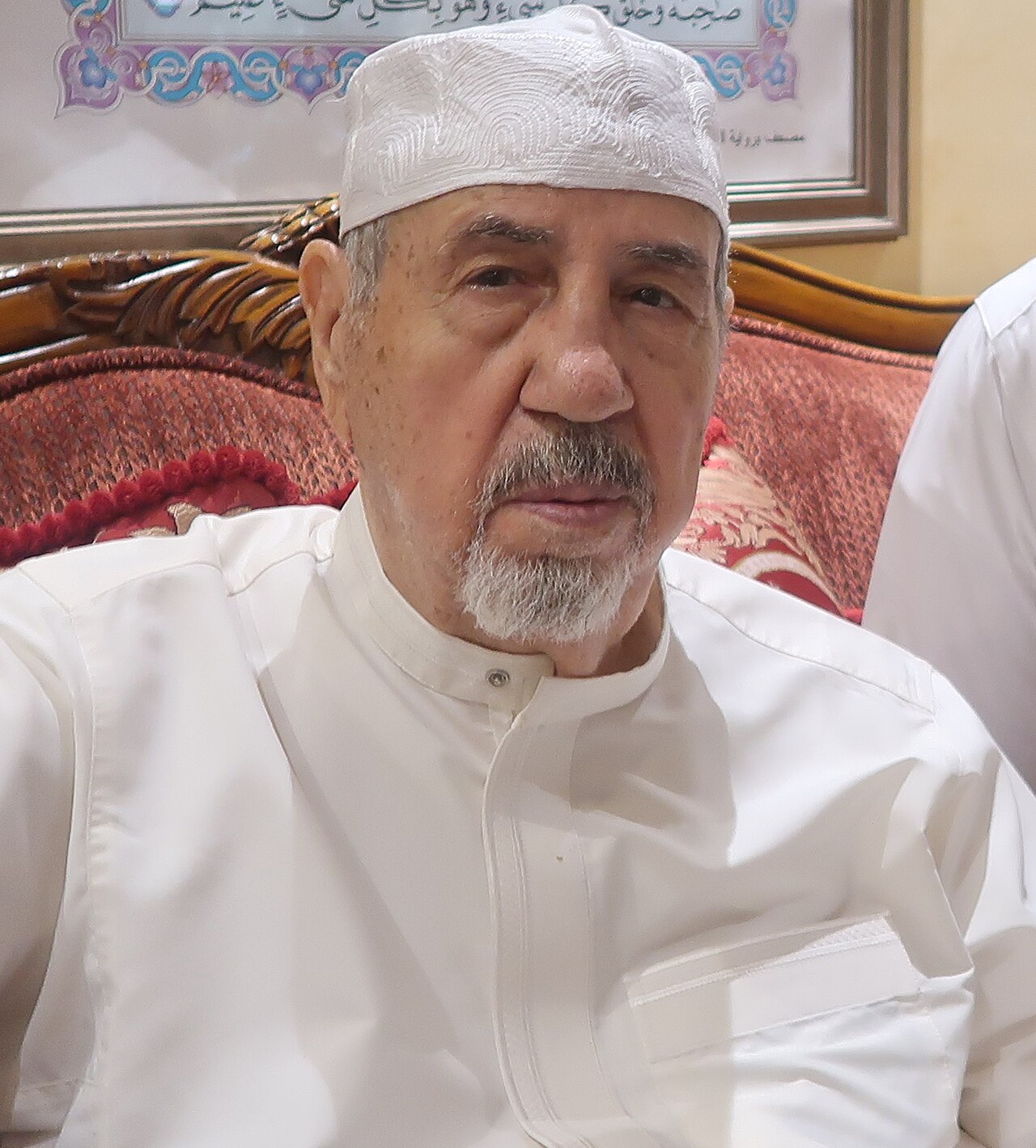
Uthman Taha
 Saudi Arabia
calligrapher•ornamentist•painter
Also known as: Othman Taha, Uthman ibn Abduh ibn Husayn ibn Taha Alkurdi
Birthday
January 1, 1934
Birth Sign
Capricorn
Birthplace
Sandi, Aleppo Governorate, Syria
Age
92 years old
About
Uthman Taha is a Syrian-Saudi calligrapher, ornamentist, and painter widely revered as the master scribe of the Mushaf al-Madinah, the most distributed handwritten Quran in history. Born in 1934 in the village of Sandi within the Aleppo Governorate, he holds Kazakh-Syrian-Saudi heritage and was granted Saudi citizenship in December 2021 for his decades-long contribution to Islamic art. As of 2026, at approximately 92 years old, he remains an active figure in the global Islamic arts community, celebrated for a unique style that blends traditional clarity with aesthetic beauty. His work defines the visual identity of the Quran for billions of Muslims worldwide.
Taha's hand-written scripts are not merely artistic interpretations but serve as the standard for religious texts printed across the globe. The King Fahd Complex for the Printing of the Holy Qur'an in Medina relies on his calligraphy for its official editions, ensuring uniformity and reverence in every copy produced. His influence extends beyond the manuscripts themselves, shaping how sacred scripture is perceived visually in the modern era. He is recognized for his ability to transcend sectarian divides, being respected by both Sunni and Shia communities alike. His presence in the public sphere is minimal, yet his impact is ubiquitous through the millions of Qurans bearing his script.
Early Life & Background
Uthman Taha was born in 1934 in the rural village of Sandi near Çobanbey in the Aleppo Governorate of Syria. Raised in an agricultural environment, his early life was far removed from the urban centers of art and commerce, yet it provided a foundation of humility and spiritual depth that would later define his career. His journey toward mastery began with rigorous academic training rather than simple vocational apprenticeship. He pursued higher education at the University of Damascus, where he earned a Bachelor of Arts in Shari'ah. This religious scholarship was paired with intensive studies in Arabic language, Islamic ornamentation, and painting, creating a dual foundation in jurisprudence and visual arts.
His formal education in calligraphy was conducted under the tutelage of some of the most distinguished masters of the era. He studied alongside and learned from figures such as Hamid al-Amidi, often hailed as the master of calligraphers, as well as Muhammad Ali al-Mawlawi, Ibrahim al-Rifa'i, Muhammad Badawi al-Derani, and Hashim al-Baghdadi. These mentors instilled in him the technical precision required for sacred script while nurturing his creative flair. Before achieving international acclaim, Taha spent years honing his craft in Syria. In 1970, he completed his first handwritten Mushaf, a painstaking endeavor that took over three years to write and an additional year for proofreading. During this period, he developed the distinctive style that would eventually become the standard for the Madina Mushaf, blending traditional Kufic scripts with modern readability. His full name is Uthman ibn Abduh ibn Husayn ibn Taha al-Halyabi.
Career Growth
Taha's career reached its zenith in 1988 when he moved to Medina, Saudi Arabia, to join the King Fahd Complex for the Printing of the Holy Qur'an. Appointed as a handwriter and calligrapher, he immediately began work on the monumental task of producing handwritten copies of the Quran. That same year marked a pivotal moment as he was appointed to the international jury of the Arabic Calligraphy Award in Istanbul, a position he held for many years. Over the course of his first 18 years at the Complex, he personally hand-wrote four complete Mushafs. The distribution of these copies has been massive, with estimates suggesting over 200 million copies of the Mushaf he wrote have been distributed globally.
By 2020, Taha had completed 12 Mushafs in total. His work is found not only in the official Mushaf al-Madinah but also in the commercial Mushaf al-Tajweed, which utilizes his readable script. In December 2021, he was officially granted Saudi citizenship, a rare honor bestowed upon non-nationals for exceptional contributions to the kingdom's cultural and religious heritage. His influence continues to grow; in February 2025, the Astan of the holy shrine of Imam Hussein in Karbala named him the Quranic Personality of the Year. By 2026, news reports indicated that a new complete Holy Quran printed in Nastaliq script was produced following his stylistic guidelines, further cementing his legacy as a guardian of the art form. Additionally, in August 2026, he publicly praised the 'Throne of the Letter' forum for preserving Arabic calligraphy.
Career Timeline
Public Image & Style
Uthman Taha is portrayed by the media as a humble servant of God and a guardian of tradition. His content is characterized by silence, humility, and devotion. He avoids self-promotion, letting his work speak for itself. His image is one of wisdom, patience, and spiritual depth, contrasting sharply with the flashy personas of modern celebrities. He is seen as a bridge between generations, respecting ancient traditions while adapting them for modern readership. His presence in the public sphere is minimal, yet his impact is ubiquitous through the millions of Qurans bearing his script. He is frequently cited in studies of modern Islamic art as the most influential calligrapher of the 20th and 21st centuries.
Fame & Fandom (iFAMOUS Rankings)
Uthman Taha occupies a unique position in global influence where spiritual reverence supersedes conventional celebrity metrics. His reach extends to hundreds of millions of readers worldwide through the ubiquitous distribution of his handwritten Qur'ans, yet this stature does not translate into a competitive ranking within secular fame hierarchies. The iFANN Global Fame Engine has evaluated Uthman Taha and determined that he currently holds no placement in the published rankings, including the Global Top 1,000 or any Top-100 scope list. This absence of a numeric rank reflects his status as a revered religious figure rather than an entertainment personality subject to pop-culture charting. While he is consistently listed in authoritative compilations like The Muslim 500 for his lifelong contribution to Islamic art, these honors operate outside the commercial fame engine's numerical framework. He is not featured on the September 2026 iFAMOUS Rankings flagship list. The audience surrounding his work lacks a formal collective label; there is no documented fandom name, organized fan clubs, or viral social media campaigns driven by a specific community identity. Instead, the global Muslim community engages with his legacy through institutional channels and personal devotion. Interaction is characterized by prayers for his protection and the use of his script in daily worship rather than secular fan rituals. The most significant manifestation of this influence is the standardization of the Quranic text through the Mushaf al-Madinah, which serves as the visual default for billions of copies distributed globally since 1988. Recent recognition, such as being named the Quranic Personality of the Year in 2025, further cements his standing without generating the noise typical of ranked celebrities. His continued activity as of recent reports confirms a life dedicated to artistic perfection rather than public visibility, ensuring his legacy remains defined by the sanctity of his craft rather than the volatility of fame charts. He has not appeared on covers of secular magazines like TIME or Vogue, appearing instead in religious publications and news features.
Interesting Facts and Legends
A central element of his legacy is the creation of the Mushaf al-Madinah, also known as the King Fahd edition, which he wrote entirely in Kufic script. Commissioned by King Fahd of Saudi Arabia, this project resulted in a uniform script that became the dominant version of the Quran printed and distributed globally. Another widely retold sentiment involves the belief that his physical hands carry a unique spiritual weight, leading to digital lore where images of him writing are treated as blessings and subjects of prayer. News from 2026 indicates he praised the 'Throne of the Letter' forum for preserving Arabic calligraphy, affirming his role as a guardian of the art form. Each of his Mushafs takes over three years to write and another year to proofread, highlighting his meticulous nature. A quote attributed to him in Arab News in August 2020 states, "I wish the verses about heaven would never end," reflecting his desire to continue writing the sacred text indefinitely. He has not received Western awards such as the Grammy, Oscar, or BAFTA, nor has he been inducted into a secular Hall of Fame. His birth sign is Capricorn.
Notable Quotes
“I wish the verses about heaven would never end.”
“The Throne of the Letter is a creative environment for preserving Arabic calligraphy.”
Family & Personal Life
Uthman Taha maintains a private personal life, keeping details about his family out of the public eye to preserve their privacy. He is married, though the identity of his spouse is not publicly disclosed. There are no public records of divorces, engagements, or high-profile flings. As of 2026, he is reported to be married. He has children, but their names and specific details are not widely publicized, consistent with his preference for a low-profile existence outside of his artistic duties. His family life is described as supportive of his dedication to his craft, allowing him to focus on his work without distraction. Unlike entertainment celebrities, he does not share intimate family stories on social media or in interviews, preferring to let his art speak for himself. He resides in a household that prioritizes seclusion and spiritual focus.
Notable Connections
Hamid al-Amidi, Muhammad Ali al-Mawlawi, King Fahd of Saudi Arabia, Asif Khan
Relationships & Dating History
Uthman Taha is known for maintaining a private personal life. Unlike entertainment celebrities, he does not have a public dating history or documented romantic relationships. He is married, though details regarding his spouse's identity are kept out of the public eye to preserve their privacy. There are no public records of divorces, engagements, or high-profile flings. As of 2026, he is reported to be married. He has children, though their names and specific details are not widely publicized, consistent with his preference for a low-profile existence outside of his artistic duties. His family life is described as supportive of his dedication to his craft, allowing him to focus on his work without distraction. He does not maintain a personal social media presence, avoiding direct interaction with followers on platforms like Instagram or Twitter.
Salary, Net Worth In 2026
$5 Million
iFANN Editorial Team estimate
Specific financial data regarding Uthman Taha's net worth is not publicly disclosed in the manner of entertainment celebrities. As a state-sponsored artist working for the King Fahd Complex and a recipient of Saudi citizenship, his financial arrangements are likely tied to government salaries, stipends, and royalties from the distribution of his works. The iFANN Editorial Team's analysis of his earnings, ventures and assets points to roughly $5 Million. His income is derived from his salary at the King Fahd Complex, potential royalties from the global distribution of the Mushaf al-Madinah (which are managed by the complex), and commissions for special projects. Real estate holdings and investment portfolios are not publicly detailed. Any figures suggesting a multi-million dollar net worth based on sales of his individual manuscripts should be treated with skepticism, as the King Fahd Complex distributes millions of copies at subsidized rates, and the artist's compensation is structured differently from commercial artists. Estimates range from undisclosed to wealthy due to state patronage, but no concrete numbers from celebrity finance outlets exist.
Awards Won (3)
While Taha does not compete in secular award ceremonies like the Oscars or Grammys, he has received numerous prestigious recognitions within the Islamic and artistic world. He was named Quranic Personality of the Year in 2025 by the Astan of the holy shrine of Imam Hussein in Karbala. He has served as a member of the international jury for the Arabic Calligraphy Award in Istanbul since 1988. In December 2021, he was granted Saudi citizenship, a significant national honour recognizing his lifetime of service. He is consistently listed in The Muslim 500 for his contribution to Islamic art. His induction into the pantheon of great calligraphers is universally acknowledged, often cited alongside historical legends like Yaqut al-Musta'simi.
2025 · Islamic Art
Lifetime Achievement
1988 · Calligraphy
International Jury Appointment
Known For
Mushaf al-Madinah
1988 · Calligrapher
Mushaf al-Tajweed
1990s · Calligrapher
Keywords
Sources
Quick Facts
- Profession
- calligrapher, ornamentist, painter
- Born
- January 1, 1934
- Birthplace
- Sandi, Aleppo Governorate, Syria
- Gender
- Male
- Birth Sign
- Capricorn
Personal Details
- Full Name
- Uthman ibn Abduh ibn Husayn ibn Taha al-Halyabi
- Education
- Bachelor of Arts in Shari'ah, University of Damascus; studies in Arabic language and Islamic ornamentation
Frequently Asked Questions
Who is Uthman Taha?
How old is Uthman Taha?
Is Uthman Taha still alive?
Where was Uthman Taha born?
What is Uthman Taha's nationality?
Similar People
Join the community
fans discussing