 Norway
About
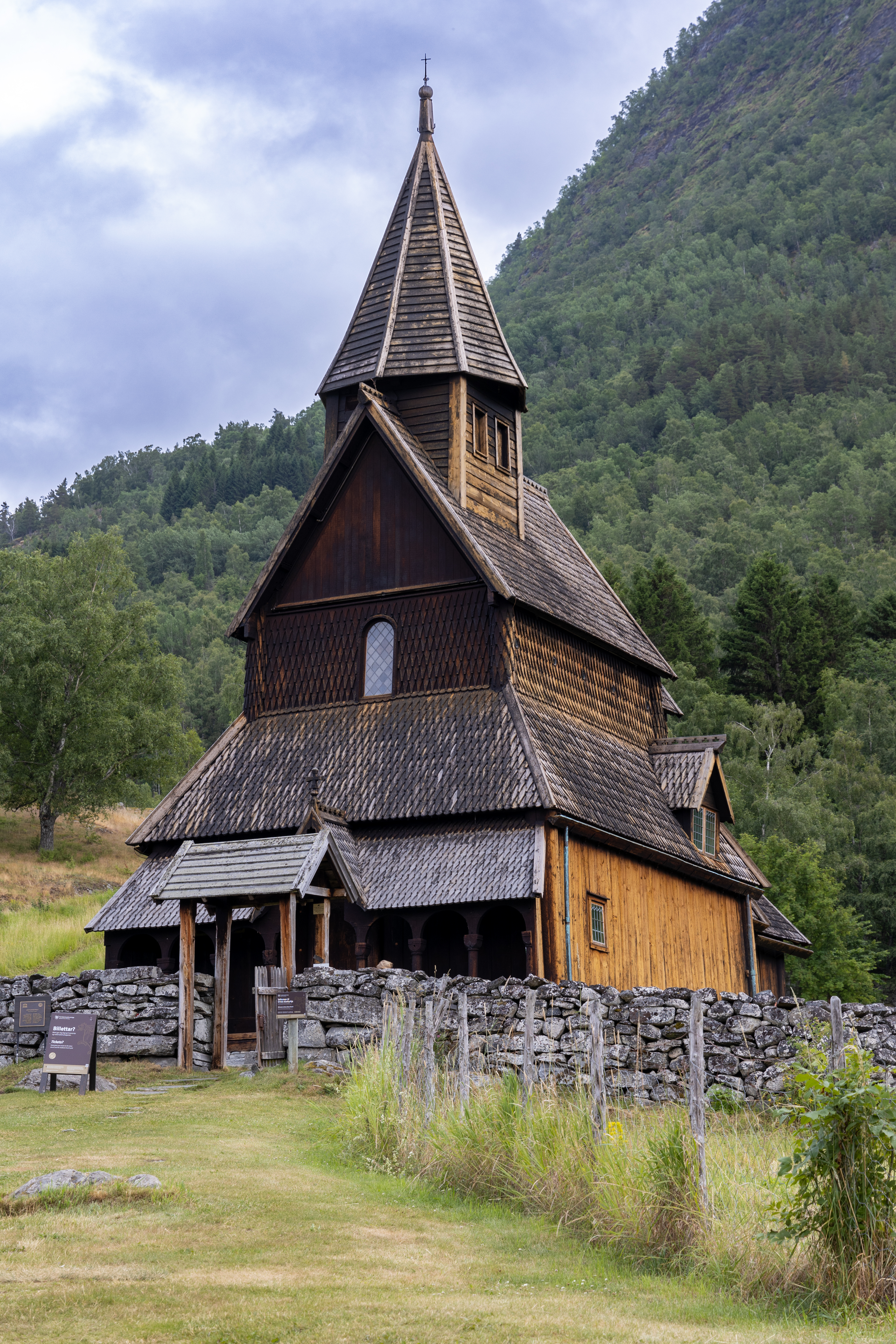
Urnes Stave Church (Norwegian: Urnes stavkyrkje) stands on a green hillside above the Lustrafjorden in Luster Municipality, Vestland County, western Norway. It is the oldest of Norway's 28 surviving stave churches and one of four UNESCO World Heritage Sites in Western Norway. While classified as a religious organization in existing data, it functions today primarily as a historic monument, active parish church, and major tourist destination.
The church's construction history is complex and layered. Dendrochronological analysis indicates that the current standing structure was built around 1130 CE, though it incorporates substantial timber elements from an earlier church on the same site dating to the late 11th century, around 1060–1080 CE. Recent research using new dating technology has suggested that many Norwegian stave churches, including Urnes, are older than previously believed, prompting experts to reconsider the timeline of Christianity's rise in Norway. The church was likely commissioned by a wealthy local aristocratic family during a period of cultural transition between Norse paganism and Christianity, which is reflected in its hybrid artistic program.
Urnes Stave Church is celebrated for its unique architectural style, known as the "Urnes style," which blends Celtic art, Viking traditions, and Christian iconography. The most famous feature is the carved Urnes portal, depicting an intricately intertwined serpent or dragon-like creature with a four-legged animal, a motif that has been the subject of extensive scholarly interpretation. While often interpreted as a relic of paganism, researcher Nick Walkley and others have argued that the carvings are better understood within a Christian context, possibly symbolizing the struggle between good and evil. The church's timbers are darkened with tar, a traditional preservation method that contributes to its dramatic appearance. Art historians have described the church as "one of art history's most mesmerising Sleeping Beauties."
The church is owned and operated by the Society for the Preservation of Ancient Norwegian Monuments (Fortidsminneforeningen), a non-profit heritage organization founded in 1844. It remains an active parish church within the Church of Norway (Evangelical Lutheran), and it hosts services and events, particularly during the summer months. The official website is hosted under the Fortidsminneforeningen domain. The day-to-day management is handled by the heritage society in cooperation with the local parish, though no specific individual leader is named in available sources. The church has a visitor center and offers guided tours during its opening season from May 2 to September 30.
Mission
Urnes Stave Church serves as an active parish church within the Church of Norway, hosting worship services and Christian ceremonies, particularly during the summer months. As a heritage property, its mission also encompasses the preservation and interpretation of medieval Norwegian wooden architecture, offering guided tours and educational programs to visitors from around the world. The site aims to maintain the church's structural integrity and artistic heritage for future generations, while fostering an understanding of the cultural transition from Norse paganism to Christianity.
History
The story of Urnes Stave Church begins in the late 11th century, when the first church was erected on this site. That structure, of which only a few timbers survive, was likely built around 1060–1080 CE. Around 1130 CE, the current church was constructed, reusing many of the earlier timbers. This practice was common in medieval Norway, where wood was precious and builders often incorporated elements from older churches into new ones.
The church was built during a pivotal era in Norwegian history, as the country was transitioning from Norse paganism to Christianity. The wealthy aristocratic family that commissioned the church wanted to display both their power and their new faith. The intricate carvings on the portal reflect this cultural blend, mixing motifs that could be interpreted as pagan or Christian, or both.
Over the centuries, the church underwent several modifications. In the 17th century, a new chancel was added, and in the 18th century, the windows were enlarged. These changes were typical of the time, as congregations sought to make their churches brighter and more spacious. However, in the 19th century, a growing appreciation for medieval architecture led to restoration efforts. The Society for the Preservation of Ancient Norwegian Monuments took ownership in the late 19th century, and careful restoration work returned the church to its medieval appearance.
In 1979, Urnes Stave Church was inscribed as a UNESCO World Heritage Site, becoming one of the first sites in Norway to receive this designation. This recognition helped secure its preservation and brought international attention. In 2022, a design competition was held for a new World Heritage Center adjacent to the church, and the winning proposal, "Urneskilen," was selected. The center is designed to enhance the visitor experience while minimally impacting the landscape.
Milestones
1060-1080
Earliest church built on the site
1130
Current standing structure constructed
1979
Inscribed as UNESCO World Heritage Site
2022
Design competition for new World Heritage Center won by 'Urneskilen'
2026
Forgotten images by researcher Nick Walkley reveal new perspectives on the church's history
Sources
Organization Info
- Founded
- January 17, 1101
- Headquarters
- Ornes, Luster, Vestland, Norway
- Country
- Norway
- Parent
- Society for the Preservation of Ancient Norwegian Monuments
- Type
- Religious
- Owner
- Society for the Preservation of Ancient Norwegian Monuments
- UNESCO Inscription
- 1979
- Oldest surviving stave church
- Yes
Official Website
www.fortidsminneforeningen.no/properties/56/98
Join the community
fans discussing