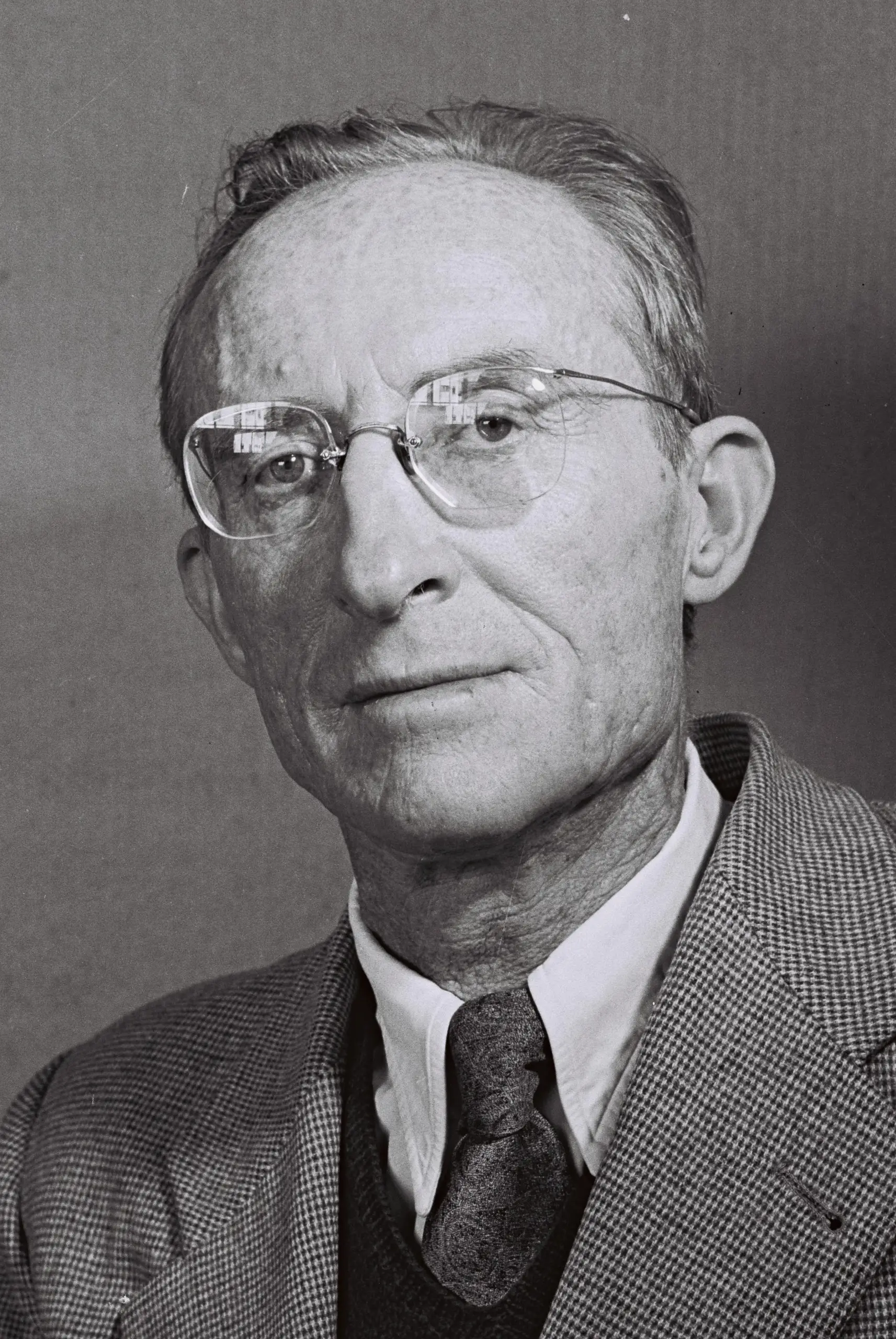
Uri Zvi Greenberg
 Israel
Also known as: Uri Zvi Grinberg, אורי צבי גרינברג
Birthday
September 22, 1896
Birth Sign
Virgo
Birthplace
Bilyi Kamin, Galicia, Austro-Hungarian Empire
Age
Died at 84
About
Uri Zvi Greenberg was an Israeli poet, journalist, and politician, widely regarded as one of the most significant figures in modern Hebrew and Yiddish literature. Born on September 22, 1896, in Bilyi Kamin, Galicia, he became a leading voice of modernist Expressionism, blending radical formal innovation with deep Jewish tradition and a fervent nationalist vision. His poetry, often intense and politically charged, drew on his experiences in World War I and his conviction that the Jewish people must reclaim their historical homeland. Greenberg's literary achievements earned him the Israel Prize in 1957 and the Bialik Prize three times, in 1947, 1954, and 1977. He also served as a member of the first Knesset, representing the Revisionist Zionist movement. He died on May 8, 1981, in Ramat Gan, leaving a body of work that continues to be studied and admired.
Greenberg's influence extends beyond poetry into political thought, where his prophetic writings on the fate of European Jewry and his advocacy for Jewish statehood have been widely discussed. His legacy persists through institutions like Uri Zvi House, which promotes Israeli art and culture rooted in Jewish heritage.
Early Life & Background
Uri Zvi Greenberg was born into a Hasidic family in the town of Bilyi Kamin, then part of the Austro-Hungarian Empire. His father, a devout Hasid, instilled in him a deep connection to Jewish tradition, while his mother's family had rabbinic roots. Growing up in a traditional environment, he received a religious education, but his worldview was profoundly shaped by the upheavals of the early twentieth century.
During World War I, Greenberg served in the Austro-Hungarian army and witnessed the horrors of the Eastern Front. The war's devastation and the collapse of the empire left a lasting mark on his psyche, fueling his later poetry's apocalyptic and nationalist themes. After the war, he moved to Warsaw, where he began writing in both Yiddish and Hebrew. His early works, such as the Yiddish collection 'Mefisto' (1921), displayed a radical modernist style influenced by Expressionism, setting him apart from his contemporaries.
Greenberg's pre-fame years were also marked by his involvement in the world of Yiddish letters, where he edited several literary journals. His experiences of displacement and his growing disillusionment with the prospects of Jewish life in Europe led him to embrace Revisionist Zionism, a movement advocating for a Jewish state on both sides of the Jordan River. This ideological commitment would define his subsequent career.
Career Growth
Greenberg's breakthrough came in the 1920s when he emerged as a leading figure in the Expressionist movement in Hebrew and Yiddish literature. His 1922 Yiddish collection 'Kreutzwald' and his 1928 Hebrew volume 'Anacreon at the Pole of Sorrow' established him as a radical innovator. In 1924, he immigrated to Mandatory Palestine, where he became a prominent voice in the Revisionist Zionist movement, editing its newspaper 'Hazit Ha'am' and later serving as a delegate to Zionist congresses.
His poetry from this period, collected in works like 'The Fortress of the Mountain' (1934), combined prophetic fury with lyrical intensity, earning him a wide readership. He foresaw the 1929 Arab riots and, in his Yiddish poem 'A Song of the Great Murder' (1929), warned of an impending catastrophe for European Jewry, a theme he returned to in his 1939 collection 'The Book of Denunciation and Faith'.
After the establishment of the State of Israel in 1948, Greenberg was elected to the first Knesset as a member of Herut, the party founded by Menachem Begin. He served from 1949 to 1951, though he devoted most of his energy to writing. His later works, such as 'Streets of the River' (1951), are considered masterpieces of Hebrew poetry. He received the Israel Prize in 1957 and the Bialik Prize in 1947, 1954, and 1977, cementing his reputation as a national poet.
Public Image & Style
Greenberg cultivated the image of a prophet-poet, a fiery orator whose words carried the weight of biblical prophecy. He was known for his dramatic readings, which drew large crowds. His public persona was that of a uncompromising nationalist, which made him a controversial figure in some circles, but he was also respected for his artistic integrity and his willingness to stand by his convictions. Fans of his work often refer to him as 'Uri Zvi', a sign of intimacy and respect. His style, both in writing and in public appearances, was marked by a stark intensity that set him apart from more lyrical poets of his generation.
Fame & Fandom (iFAMOUS Rankings)
Uri Zvi Greenberg's audience is not a fandom in the modern sense; there are no fan clubs, no streaming pushes, no birthday billboards. The fanbase has no formal name. Instead, his legacy lives through the institutions and scholars who preserve his work. The Uri Zvi House in Ramat Gan operates as a museum and cultural center, while his poetry remains a staple in Israeli school curricula. His readers are often students, academics, and those who revere him as a prophet-poet of Zionism, a figure whose words carried the weight of history.
His 'iconic moments' are the publication of his works and his political acts, not viral spectacles. The most retold story is his 1923 Yiddish poem In malkhus fun Haman ('In the Kingdom of Haman'), which eerily predicted the Holocaust two decades before it happened. This prophecy is a cornerstone of his legend, often cited to illustrate his tragic foresight. Another legend is his transformation from poet to militant activist, associated with the Revisionist movement and the Irgun, embodying the archetype of the warrior-poet.
Despite this gravitas, the iFANN Global Fame Engine has evaluated Uri Zvi Greenberg but found him currently unranked; he holds no placement in the Global Top 1,000 or any Top-100 scope list. His fame is not measured by contemporary metrics but by his enduring cultural and historical significance.
Interesting Facts and Legends
Uri Zvi Greenberg was known for his distinctive appearance, often wearing a wide-brimmed hat and a flowing cape, which added to his dramatic public persona. He was an avid chess player and would often challenge visitors to games. Despite his fierce political views, he had a soft spot for cats and kept several in his home. One of his poems, 'With My God, the Blacksmith', was set to music by the Israeli composer Paul Ben-Haim and became a popular art song. Greenberg was also a close friend of the poet Avraham Shlonsky, with whom he had a long-running literary rivalry that was as much about friendship as it was about ideology.
One of the most enduring legends surrounding Greenberg is his prophetic poem In malkhus fun Haman, written in 1923, which vividly described the annihilation of European Jewry years before the Holocaust. This work is often cited as a 'dark Yiddish masterpiece' and a reflection of his unique foresight. Another story, retold by admirers, is his transformation from a Hasidic youth to a secular, militant Zionist, a journey that saw him reject tradition for a fervent nationalism. His dual debut in 1912, publishing in both Lwów and Jaffa at age 16, is a standard biographical fact that highlights his prodigious talent and lifelong mission to forge a new Hebrew identity.
Family & Personal Life
Greenberg was married to Aliza Tur-Malka, who was his partner until his death. The couple had a daughter, who later became a translator. Greenberg's family life was relatively private, but he often spoke of his father's influence on his religious and nationalist worldview. His brother, Eliezer, also emigrated to Palestine and became a farmer, a fact that Greenberg often cited as an example of the pioneering spirit he admired.
Relationships & Dating History
Greenberg married Aliza Tur-Malka in the early 1930s, and the couple remained together until his death in 1981. Aliza, who was a teacher, supported his work and often accompanied him to literary events. Their marriage was stable, and they had a daughter. There is no public record of other significant romantic relationships in his life.
- MarriedAliza Tur-Malka Greenberg1932 - 1981Married in the early 1930s; remained together until his death.
Death & Aftermath
Died
May 8, 1981 (aged 84)
Death Place
Tel Aviv, Israel
Cause of Death
Natural causes
The final chapter for Uri Zvi Greenberg unfolded in the quiet of Tel Aviv, where the poet and former Knesset member had resided for decades. On May 8, 1981, he passed away naturally at the age of 84 or 85, though records vary slightly on his exact birth year. The cultural landscape responded with solemn recognition, honoring a visionary who had warned of the Holocaust long before its eruption and cemented his status as a national icon. His funeral became a public event of significant stature, drawing notable figures from Israeli society to pay respects to a man who embodied both the literary and political spirit of the nation. Greenberg found his final resting place at the Trumpeldor Cemetery in Jerusalem, a hallowed ground reserved for Israel's founding fathers and cultural heroes.
This burial site underscored the high regard in which he was held by the state and his peers. Posthumously, his legacy continued to be preserved through the establishment of the Beit Uri Zvi Greenberg, a center dedicated to Israeli art and culture rooted in Jewish heritage. His works remain part of the curriculum in Israeli schools, ensuring his voice persists within the national consciousness. While no immediate films or books were released following his passing, his influence remains a subject of ongoing study and tribute in Jewish cultural discourse.
Net Worth (Estate Value)
$5 Million
iFANN Editorial Team estimate
Uri Zvi Greenberg's estate, managed by his heirs, continues to earn royalties from his published works, which are still in print in Hebrew and have been translated into several languages. His poetry collections and prose pieces are part of the curriculum in Israeli schools, ensuring steady sales. The Uri Zvi House, established in his former home in Ramat Gan, functions as a museum and cultural center, and its operations are partly funded by the estate. As of 2026, iFANN's editorial analysis estimates the estate's net worth at $5 million, reflecting the enduring commercial and cultural value of his literary output.
Awards Won (4)
Uri Zvi Greenberg received the Israel Prize in 1957 and the Bialik Prize three times, in 1947, 1954, and 1977, recognizing his outstanding contributions to Hebrew literature.
1957 · Literature
Lifetime achievement
1977 · Literature
Lifetime achievement
1954 · Literature
Lifetime achievement
1947 · Literature
Lifetime achievement
Known For
Streets of the River
1951 · Poetry collection
The Book of Denunciation and Faith
1939 · Poetry collection
The Fortress of the Mountain
1934 · Poetry collection
Keywords
Sources
Quick Facts
- Profession
- poet, politician, journalist
- Born
- September 22, 1896
- Birthplace
- Bilyi Kamin, Galicia
- Died
- May 8, 1981
- Death Place
- Ramat Gan, Israel
- Gender
- Male
- Spouse
- Aliza Tur-Malka Greenberg
- Birth Sign
- Virgo
Personal Details
- Full Name
- Uri Zvi Greenberg
- Spouse
- Aliza Tur-Malka Greenberg
Frequently Asked Questions
Who was Uri Zvi Greenberg?
What is Uri Zvi Greenberg's net worth?
What are Uri Zvi Greenberg's most famous works?
What awards did Uri Zvi Greenberg win?
When and where was Uri Zvi Greenberg born and when did he die?
Similar People
Join the community
fans discussing