University of Pittsburgh
 United States
"Tackling the unachievable for over 230 years"
About
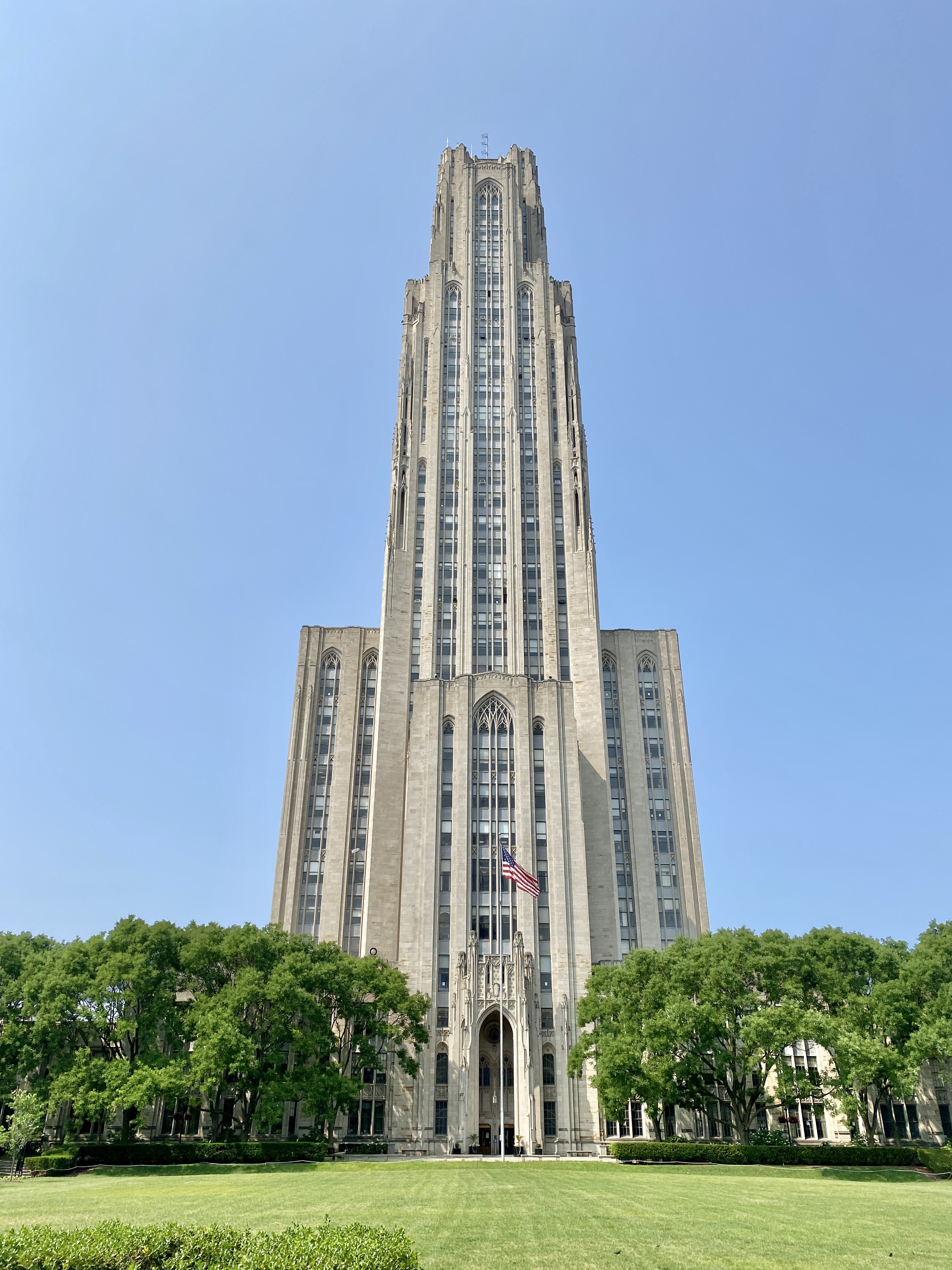
The University of Pittsburgh, commonly known as Pitt, anchors the eastern edge of downtown Pittsburgh, Pennsylvania, as a state-related research institution. Its 132-acre urban campus blends historic charm with modern ambition, with many buildings listed in the Schenley Farms Historic District. The most recognizable structure is the 42-story Cathedral of Learning, a Gothic Revival tower that houses classrooms and serves as the university's symbolic heart. Pitt's academic reach spans seventeen schools and colleges, from the Swanson School of Engineering to the Kenneth P. Dietrich School of Arts and Sciences, and it enrolls more than 31,000 students across undergraduate and graduate programs.
The university's research enterprise is substantial, with annual research expenditures exceeding $1 billion, placing it among the top recipients of federal research funding in the United States. This strength is particularly evident in the health sciences, where the University of Pittsburgh Medical Center (UPMC) partners closely with the university's medical school, creating a powerhouse for clinical and translational research. Pitt's faculty and alumni have earned notable accolades, including Nobel Prizes and Pulitzer Prizes, and the university is consistently ranked among the top public universities in the country. In the 2027 U.S. News Best Global College Rankings, Pitt placed 57th overall and 7th in surgery, putting it in the top 2% of universities worldwide.
Pitt's identity is deeply tied to its home city. From its founding in 1787 as the Pittsburgh Academy, it has grown alongside the city, evolving from a small frontier school to a major research university. The campus's mix of architectural styles, from Victorian-era buildings to contemporary glass structures, mirrors the city's own transformation from an industrial powerhouse to a modern hub of education, medicine, and technology. Pitt's sports teams, the Panthers, compete in the Atlantic Coast Conference, and the blue and gold colors are a common sight across the city. The university's impact extends beyond its campus, driving regional economic growth and cultural vitality.
Mission
The University of Pittsburgh's mission is to advance knowledge through research, provide high-quality education across undergraduate and graduate programs, and drive regional economic growth and cultural vitality. The university positions itself as an institution that tackles ambitious, seemingly unachievable goals and works to create an innovative future. Its research enterprise, particularly in the health sciences, aims to translate discoveries into real-world applications that improve lives.
History
The University of Pittsburgh traces its origins to February 28, 1787, when Hugh Henry Brackenridge, a frontier lawyer and writer, established the Pittsburgh Academy in a log cabin near the confluence of the Allegheny and Monongahela rivers. At the time, the settlement was a rough frontier outpost, and Brackenridge's school was a modest undertaking. The academy's curriculum was classical, focusing on Latin, Greek, and mathematics.
In 1819, the school was rechartered as the Western University of Pennsylvania, reflecting its ambition to serve the entire western frontier. For much of the 19th century, the university struggled with funding and facilities, moving several times as the city grew. In 1908, the institution was renamed the University of Pittsburgh, a change that signaled its emergence as a modern urban university. That same year, the university moved to its current location in the Oakland neighborhood, a decision that would shape its future.
The 20th century brought rapid expansion. Under the leadership of Chancellor John G. Bowman in the 1920s and 1930s, the university began construction of the Cathedral of Learning, a 42-story Gothic Revival skyscraper that remains a symbol of the university. The building was funded by a public campaign that drew contributions from over 97,000 people, many of them schoolchildren. The university also developed a strong partnership with the University of Pittsburgh Medical Center, which grew into a global healthcare giant. Today, Pitt is a member of the Association of American Universities and consistently ranks among the top public research universities in the nation.
Subdivisions
Kenneth P. Dietrich School of Arts and Sciences
The largest of Pitt's schools, offering a wide range of programs in the humanities, social sciences, and natural sciences.
Swanson School of Engineering
Offers undergraduate and graduate programs in engineering disciplines, known for research in energy, materials, and bioengineering.
School of Medicine
A top-tier medical school closely affiliated with UPMC, leading in clinical and translational research.
University of Pittsburgh at Johnstown (UPJ)
A regional campus offering undergraduate degrees, currently expanding its downtown Johnstown presence.
Notable People
Larry Fitzgerald Jr.
Alumnus and former football player · 2002-2003
Pro Football Hall of Fame enshrinement in 2026
Hugh Henry Brackenridge
Founder · 1787
Founded the Pittsburgh Academy, which became the University of Pittsburgh
Milestones
1787
Founded as the Pittsburgh Academy by Hugh Henry Brackenridge
1819
Rechartered as the Western University of Pennsylvania
1908
Renamed the University of Pittsburgh and moved to its current Oakland campus
1925
Construction began on the Cathedral of Learning
1966
Became a state-related university, joining the Commonwealth System of Higher Education
2026
Opened the Victory Heights Arena and Sports Performance Center, a $240 million athletic facility
Teams
Sources
Organization Info
- Founded
- February 28, 1787
- Headquarters
- Pittsburgh, Pennsylvania
- Country
- United States
- Chancellor
- Joan Gabel
- Type
- University
- Employees
- 13,264
- Founder
- Hugh Henry Brackenridge
Financials
- Employees
- 13264
Official Website
www.pitt.edu
Join the community
fans discussing