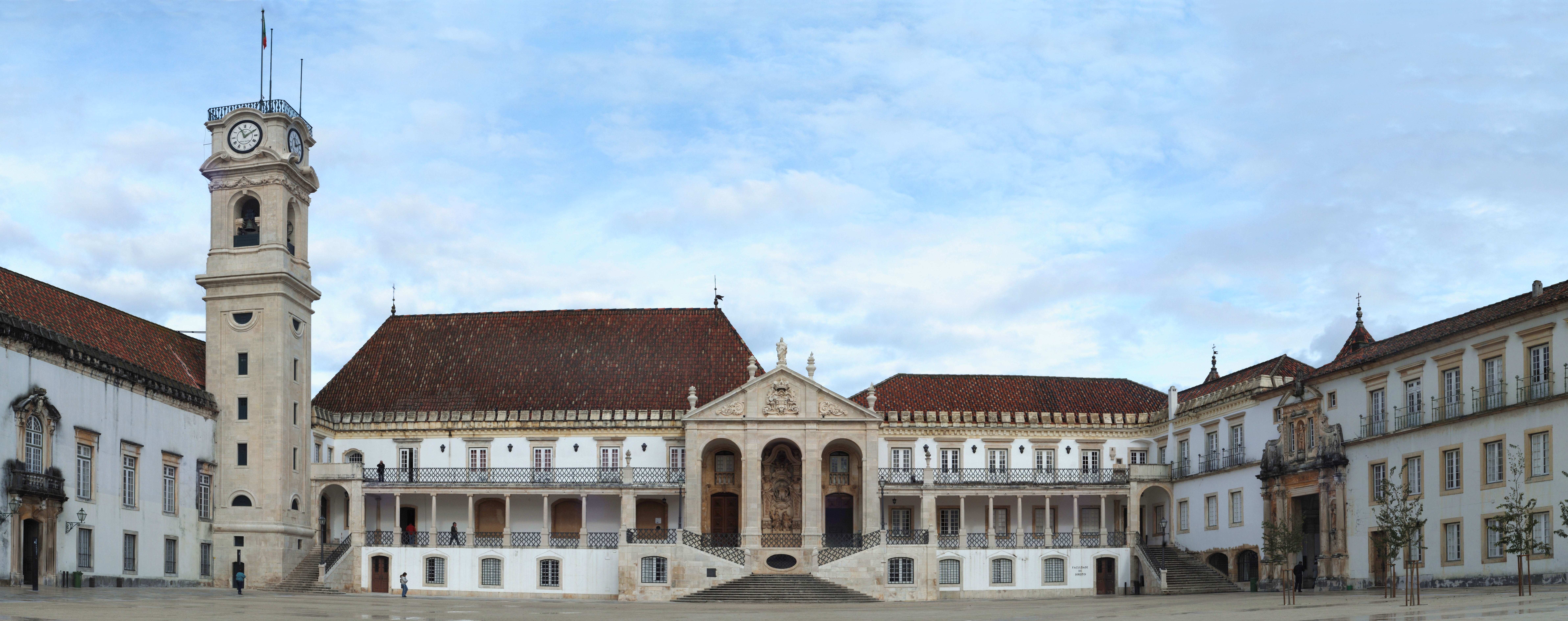
University of Coimbra
 Portugal
"The oldest university in Portugal, where medieval tradition meets modern research."
About
The University of Coimbra (UC) is a public research university in the historic city of Coimbra, Portugal. It is the oldest university in Portugal and one of the oldest continuously operating universities in the world. King Denis I chartered it on 1 March 1290, and Pope Nicholas IV recognized it on 9 August of the same year. The university began in Lisbon before moving permanently to Coimbra in 1537, a relocation that shaped the city's intellectual and cultural identity for centuries.
Coimbra's influence reaches far beyond Portugal. It played a key role in developing higher education across Portuguese-speaking countries, nurturing generations of scholars, writers, and political leaders. Its alumni include the poet Luís de Camões and several presidents of the Portuguese Republic. The university's historic buildings, including the Joanina Library and the Royal Palace, are part of a UNESCO World Heritage site, one of only five universities worldwide to hold this designation.
Today, the university enrolls over 20,000 students across eight faculties, offering 46 undergraduate programs, 132 master's courses, 10 integrated master's courses, 76 PhD programs, and 170 non-degree courses. Its research output is internationally recognized, and it maintains strong ties with universities in Africa, Asia, and South America, particularly within the Portuguese-speaking world. The institution balances its centuries-old traditions with modern academic demands, making it a dynamic center of learning.
Mission
The University of Coimbra is dedicated to advancing higher education, research, and cultural preservation. It aims to foster critical thinking and innovation while maintaining deep connections with the Portuguese-speaking world. The university emphasizes academic excellence, social responsibility, and the protection of its historic heritage, ensuring that its centuries-old legacy continues to inspire future generations.
History
The University of Coimbra traces its roots to 1290 when King Denis I signed a charter creating the Studium Generale in Lisbon. The institution moved between Lisbon and Coimbra several times before settling permanently in Coimbra in 1537 under King João III. The king donated the Royal Palace to the university, which still houses its iconic Joanina Library and other historic halls.
During the 16th century, the university became a major center of learning, attracting scholars from across Europe. It played a key role in the Age of Discoveries, training navigators and cartographers. In the 18th century, the Marquis of Pombal reformed the university, introducing modern scientific methods and establishing faculties of mathematics and natural philosophy.
The 20th century brought significant expansion. The university grew from a few faculties to eight, and its student body expanded dramatically. In 2013, UNESCO recognized the university's historic buildings as a World Heritage site, highlighting their architectural and historical importance. The university continues to evolve, with recent developments including a new campus in Figueira da Foz and ongoing research initiatives.
Subdivisions
Faculty of Sciences and Technology
Covers engineering, exact sciences, and technology programs.
Faculty of Medicine
Offers medical education and research in health sciences.
Faculty of Law
Provides legal education and research, one of the oldest faculties.
Faculty of Humanities
Focuses on literature, history, philosophy, and languages.
Faculty of Economics
Specializes in economics, management, and social sciences.
Faculty of Pharmacy
Dedicated to pharmaceutical sciences and research.
Faculty of Psychology and Educational Sciences
Focuses on psychology, education, and human development.
Faculty of Sports Sciences and Physical Education
Offers programs in sports science and physical education.
Notable People
Luís de Camões
Alumnus · 16th century
Portugal's greatest poet, author of Os Lusíadas
António de Oliveira Salazar
Alumnus · Early 20th century
Long-serving Prime Minister of Portugal
Aníbal Cavaco Silva
Alumnus · 20th century
President of Portugal (2006-2016)
Mário Soares
Alumnus · 20th century
Prime Minister and President of Portugal
Egas Moniz
Professor · Early 20th century
Nobel Prize in Physiology or Medicine (1949)
Milestones
1290
King Denis I founds the university in Lisbon; Pope Nicholas IV issues a papal bull recognizing it.
1537
The university permanently relocates to Coimbra, moving into the Royal Palace.
1772
Marquis of Pombal implements major educational reforms, modernizing the curriculum.
1911
The university becomes a public institution under the Portuguese Republic.
2013
UNESCO designates the University of Coimbra's historic buildings as a World Heritage site.
2026
Inaugurates a new campus in Figueira da Foz; hosts the RM Framework UC Forum on research management.
Sources
Organization Info
- Founded
- March 1, 1290
- Headquarters
- Coimbra, Portugal
- Country
- Portugal
- Type
- University
- Founder
- Denis I of Portugal
- Students
- 20,000+
- Faculties
- 8
- UNESCO World Heritage
- 2013
Official Website
www.uc.pt/
Join the community
fans discussing