University of Calcutta
 India
India"The oldest multidisciplinary university in the Indian subcontinent"
About
Founded on January 24, 1857, the University of Calcutta is the oldest multidisciplinary university in the Indian subcontinent and Southeast Asia. It was established during British colonial rule, modeled on the University of London, with Scottish missionary Alexander Duff playing a key founding role. The university quickly became the intellectual heart of the Indian Renaissance, nurturing some of the most prominent figures in modern Indian science, literature, politics, and philosophy.
Today, it operates as a public state research university under the Government of West Bengal. Its main campus sits in the historic College Street area of Kolkata, surrounded by the famous book market known as Boi Para. The university's reach extends across 14 districts of West Bengal through a vast network of 151 affiliated undergraduate colleges and 16 institutes. Its flagship science campus, the University College of Science, Technology & Agriculture (UCSTA) at 92 A.P.C. Road, offers 25 M.Sc. courses, 13 B.Tech. programs, and 20 M.Tech. courses, along with specialized research facilities.
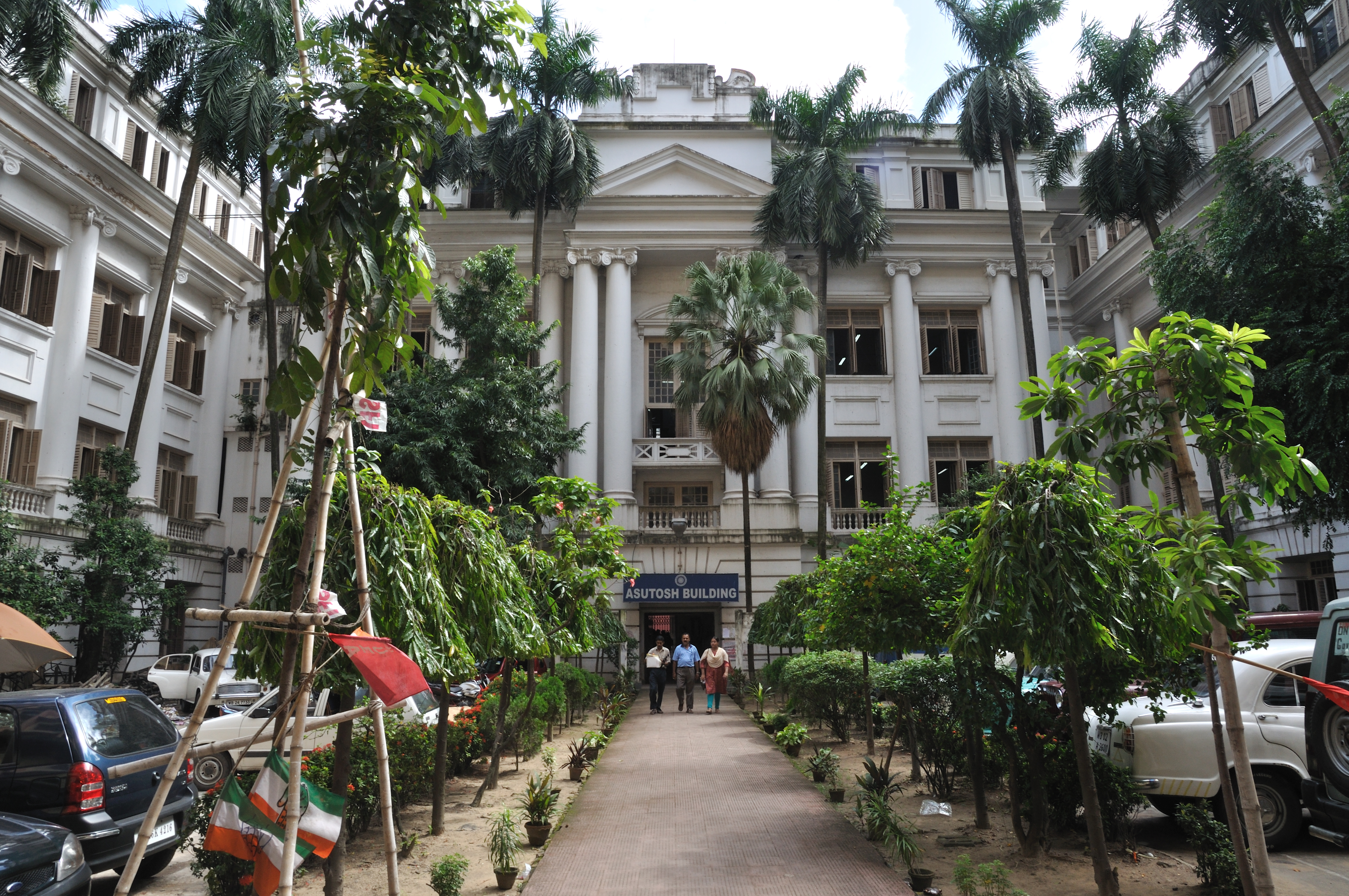
Calcutta University has an extraordinary legacy: its alumni and faculty include several Nobel laureates across physics, chemistry, and literature. The institution's architecture, a mix of colonial-era buildings and modern additions, is a defining feature of the Kolkata cityscape. Despite its age, the university remains a major force in Eastern Indian higher education, though recent years have brought challenges that its leadership and stakeholders are actively addressing.
Mission
The University of Calcutta's mission is to provide high-quality higher education and research opportunities across a wide range of disciplines, while preserving its historical role as a cradle of intellectual and cultural development in India. It aims to foster critical thinking, scientific inquiry, and social responsibility among its students, and to contribute to the nation's progress through knowledge creation and dissemination. The university is committed to adapting its academic programs to meet contemporary challenges while maintaining the rigor and values that have defined it for over 160 years.
History
The university's founding was part of a broader British effort to establish modern higher education in India. The Calcutta University Act, passed by the British East India Company's government, enabled its creation. Alexander Duff, a Scottish missionary, was instrumental in shaping its early vision, emphasizing Western-style education alongside traditional Indian knowledge.
From the start, Calcutta University became a crucible for the Indian Renaissance. Its graduates and faculty were at the forefront of social reform, scientific discovery, and the independence movement. The university's early decades saw the emergence of towering figures in literature, like Rabindranath Tagore (though he was not a graduate, he was associated with the university's intellectual circles), and in science, such as Jagadish Chandra Bose and Satyendra Nath Bose, both of whom had deep connections to the institution.
Throughout the 20th century, the university expanded its faculties and affiliated colleges, becoming a model for multidisciplinary education in South Asia. Its College Street campus became a symbol of intellectual life in Kolkata, surrounded by bookstores and coffee houses where students and thinkers gathered. The university weathered the partition of Bengal and India's independence, adapting to the changing political landscape while maintaining its academic prominence.
In recent decades, however, the university has faced mounting challenges. Declining enrollment, administrative bottlenecks, and political tensions on campus have led to calls for revival. In 2026, West Bengal Finance Minister Swapan Dasgupta publicly pledged support to restore the university's 'long-lost glory,' acknowledging that its frontier has shrunk. The Director of IIT Kharagpur also urged Calcutta University to become a key stakeholder in a globally networked knowledge ecosystem, signaling the need for modernization while preserving its storied past.
Subdivisions
University College of Science, Technology & Agriculture (UCSTA)
The main science and technology campus at 92 A.P.C. Road, Kolkata, offering 25 M.Sc. courses, 13 B.Tech. programs, 20 M.Tech. programs, and other technical courses.
Examinations Department
Manages the university's examination processes through a dedicated website (cuexam.net) to facilitate student-friendly administration.
Notable People
Alexander Duff
Founder · 1857
Scottish missionary and educator who played a pivotal role in establishing the university
Milestones
1857
University of Calcutta founded on January 24, becoming the first multidisciplinary university in the Indian subcontinent.
2026
Calcutta University scrapped its central entrance test for postgraduate programs due to a drop in applications.
2026
Violent clash between ABVP and DSO students near College Street campus resulted in injuries.
2026
Syndicate meetings halted pending inclusion of new state higher education council nominee.
Sources
Organization Info
- Founded
- January 24, 1857
- Headquarters
- Kolkata
- Country
- India
- Type
- University
- Employees
- 5500
- Founder
- Alexander Duff
Financials
- Employees
- 5500
Official Website
www.caluniv.ac.in
Join the community
fans discussing