University of Buenos Aires
 Argentina
"Argentina's largest public university, producing 40% of the nation's research"
About
The University of Buenos Aires, universally known as UBA, is Argentina's largest and most prestigious public research university. Founded on August 12, 1821, it has grown into a sprawling institution that shapes the country's intellectual and political life. Its alumni include 17 Argentine presidents and four of the nation's five Nobel laureates, a record that underscores its outsized role in national affairs.
UBA is the engine of Argentine science. The university produces roughly 40 percent of the country's research output, with breakthroughs in fields from medicine to physics. Its free tuition policy, in place since the 1950s, makes higher education accessible to all, and its student body of over 300,000 reflects the diversity of Buenos Aires itself. The institution operates 13 faculties, six hospitals, and two affiliated secondary schools, including the Colegio Nacional de Buenos Aires and Carlos Pellegrini.
The university's reach extends beyond the classroom. Its faculty includes some of the region's leading thinkers, and its alumni have gone on to lead multinational corporations and revolutionary social movements. UBA is often called "the conscience of the nation." In recent years, it has been at the center of a political conflict with the national government over budget cuts, with professors, students, and authorities marching in protest. Despite these challenges, UBA remains a vital force in Latin American higher education.
Mission
UBA's mission centers on public, free, and accessible higher education. Since the 1950s, the university has offered tuition-free education to all students, a policy that has opened doors for generations of Argentines regardless of economic background. The institution aims to produce knowledge that serves society, and its research output, roughly 40 percent of the national total, is directed toward scientific, social, and cultural advancement. UBA also seeks to preserve and transmit the nation's intellectual heritage, training professionals who contribute to public life and industry.
History
UBA was founded on August 12, 1821, by the then-governor of Buenos Aires province, Martín Rodríguez, and his minister Bernardino Rivadavia. It was the second university in Argentina, after the National University of Córdoba. From the outset, the institution aimed to provide modern, secular education, breaking from the religious monopoly of the colonial era.
Throughout the nineteenth century, UBA grew steadily, adding faculties of law, medicine, and exact sciences. The university became a breeding ground for the country's intellectual elite, and its graduates played key roles in shaping the Argentine state. By the early twentieth century, UBA had established itself as the nation's premier institution of higher learning.
The university's commitment to free tuition took hold in the 1950s, under President Juan Perón, who abolished fees to broaden access. This policy has remained a cornerstone of UBA's identity ever since. In the 1960s and 1970s, the university became a hotbed of political activism, and it suffered heavily during the military dictatorship of 1976-1983, when many students and faculty were "disappeared."
In recent years, UBA has faced a new challenge: a funding dispute with the government of President Javier Milei, who has proposed steep budget cuts. In May 2026, professors, students, and university authorities marched against the cuts, and students occupied buildings in protest. Despite these difficulties, UBA continues to operate, producing research and training new generations of professionals.
Subdivisions
Faculty of Agronomy
Focuses on agricultural sciences and agronomy.
School of Architecture, Design and Urbanism
Known as FADU, offers programs in architecture and design.
Faculty of Economics
Provides education in economics, business, and accounting.
Faculty of Exact and Natural Sciences
Offers degrees in mathematics, physics, chemistry, and biology.
Faculty of Social Sciences
Covers sociology, political science, and communication.
Faculty of Medical Sciences
One of the largest medical schools in Latin America.
Faculty of Veterinary Sciences
Specializes in veterinary medicine and animal science.
Faculty of Law
Trains lawyers and legal scholars, one of the most respected in the country.
Faculty of Pharmacy and Biochemistry
Focuses on pharmaceutical sciences and biochemistry.
Faculty of Philosophy and Letters
Covers humanities, philosophy, and literature.
Faculty of Engineering
Offers engineering programs in various disciplines.
Faculty of Odontology
Provides dental education and clinical training.
Faculty of Psychology
One of the most popular faculties, with a strong clinical focus.
Notable People
Faculty of Agronomy, University of Buenos Aires
Faculty
One of the 13 faculties of UBA, focusing on agricultural sciences.
School of Architecture, Design and Urbanism
Faculty
Known as FADU, it is one of the leading architecture schools in Latin America.
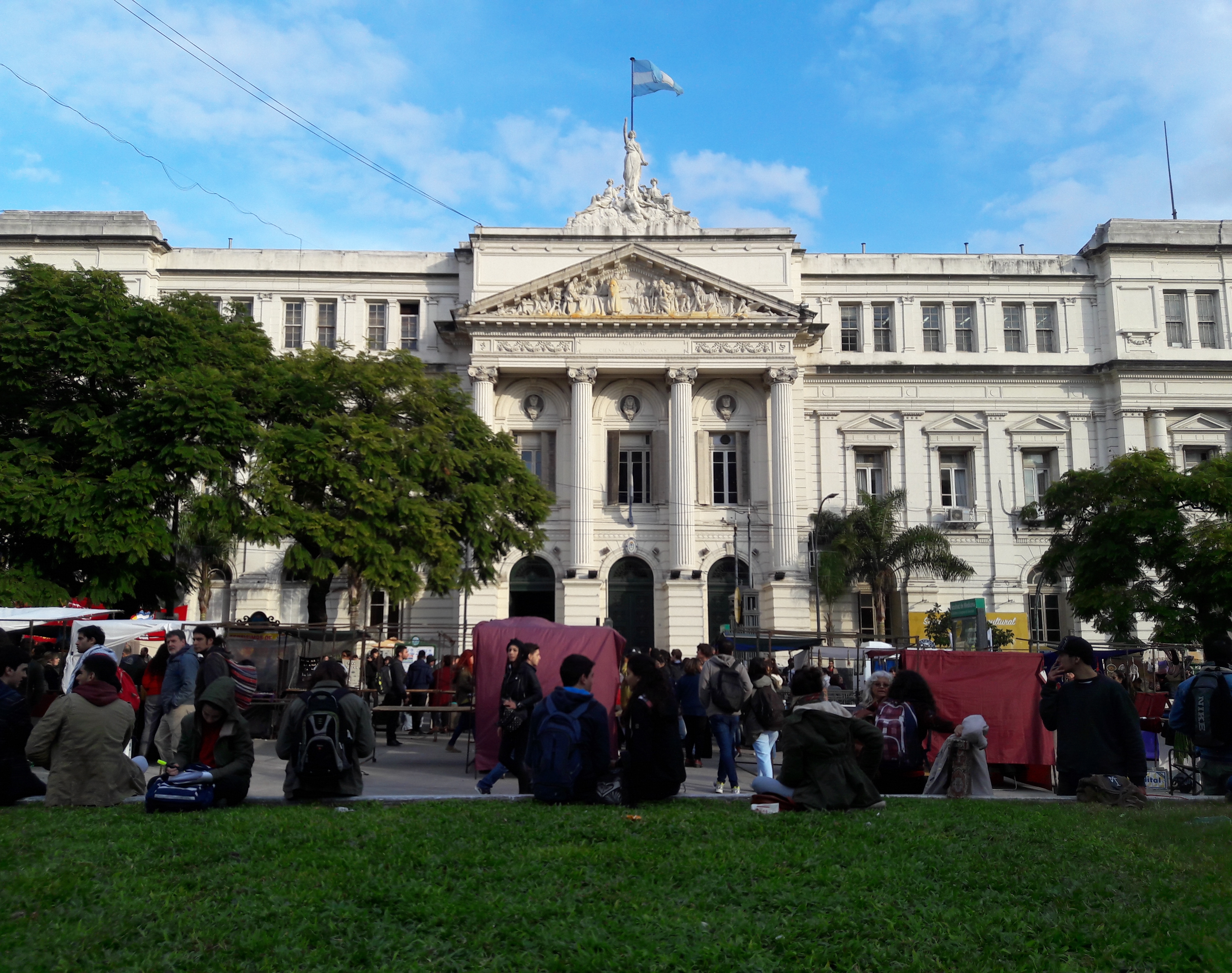
Economics Faculty, University of Buenos Aires
Faculty
A major center for economic education and research in Argentina.
Faculty of Exact and Natural Sciences (UBA)
Faculty
Key contributor to Argentina's scientific research output.
Facultad de Ciencias Sociales
Faculty
Offers programs in sociology, political science, and communication.
Faculty of Medical Sciences, University of Buenos Aires
Faculty
One of the largest medical schools in Latin America, training thousands of doctors.
Universidad de Buenos Aires. Facultad de Ciencias Veterinarias
Faculty
Specializes in veterinary medicine and animal health.
Faculty of Law, Universidad de Buenos Aires
Faculty
A prestigious law school that has produced many of Argentina's legal minds.
Faculty of Pharmacy and Biochemistry, University of Buenos Aires
Faculty
Known for its research in pharmaceutical sciences and biochemistry.
Facultad de Filosofía y Letras de la Universidad de Buenos Aires
Faculty
A center for humanities and social thought in Argentina.
Faculty of Engineering, University of Buenos Aires
Faculty
Offers engineering degrees across multiple disciplines.
Universidad de Buenos Aires. Facultad de Odontología
Faculty
Provides dental education and clinical services.
Faculty of Psychology, University of Buenos Aires
Faculty
One of the most popular faculties, with a strong emphasis on clinical psychology.
Milestones
1821
Founded by Martín Rodríguez and Bernardino Rivadavia.
1950s
Tuition fees abolished, making education free for all.
1976
Military dictatorship begins; university suffers repression.
2018
Ranked best university in Ibero-America by QS.
2026
Protests against government funding cuts; students occupy buildings.
Sources
Organization Info
- Founded
- August 12, 1821
- Headquarters
- Buenos Aires, Argentina
- Country
- Argentina
- Rector
- Ricardo Gelpi
- Type
- University
- Founder
- Martín Rodríguez, Bernardino Rivadavia
- Students
- Over 300,000
- Faculties
- 13
- Research output
- ~40% of Argentina's total
Official Website
uba.ar
Join the community
fans discussing