 Japan
Japan“Mizoguchi's Ugetsu is a film of such beauty and sorrow that it transcends its historical setting to become a universal parable about the cost of ambition.”
Roger Ebert
Chicago Sun-Times
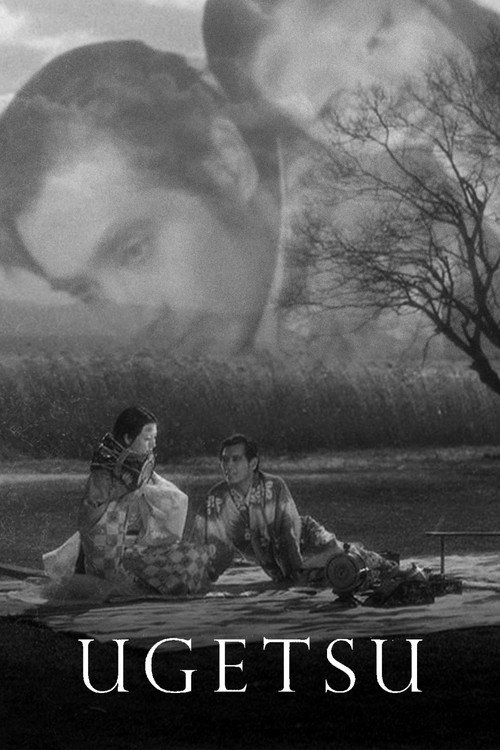
Kenji Mizoguchi's 1953 masterpiece Ugetsu unfolds against the backdrop of Japan's Sengoku period, a time defined by relentless civil war and famine. The narrative centers on two impoverished farmers, Genjūrō and Tōbei, who abandon their families to seek fortune in the city. Their divergent paths expose the fragility of human desire when pitted against the chaos of history. Genjūrō becomes entangled with a spectral noblewoman, while Tōbei pursues martial glory, only to find that both ambitions lead to ruin.
The film is renowned for its stark black-and-white cinematography by Kazuo Miyagawa, which transforms the Japanese landscape into a living entity of beauty and dread. Mizoguchi blends supernatural elements with social realism to create a meditation on karma and the cost of neglecting one's duties. Adapted from stories by Akinari Ueda, the movie stands as a definitive example of post-war Japanese cinema, earning critical acclaim worldwide for its emotional depth and visual poetry.
Availability and pricing can change. Confirm on the provider's site before purchasing.
In the year 1586, the province of Omi suffers under the weight of constant conflict between rival warlords. Two peasants named Genjūrō and Tōbei live in a village where starvation has become a daily reality. They decide to leave their homes to sell pottery in the nearby city, hoping to secure enough money to feed their families. Genjūrō leaves behind his pregnant wife Miyagi and their infant son, while Tōbei departs from his mother-in-law Ohama and his own young family. Their departure marks the start of separate journeys that will test their resolve and reveal the true nature of their desires.
Genjūrō travels through a desolate landscape filled with abandoned temples and burning villages. He encounters a ghostly woman named Lady Wakasa in the ruins of an old mansion. She claims to be the widow of a daimyo killed in battle and invites him to her home. Enchanted by her beauty and the promise of luxury, Genjūrō agrees to stay. He begins to live a life of comfort far removed from the suffering of the peasantry. Lady Wakasa treats him like a nobleman, offering him fine clothes, food, and companionship. However, strange occurrences begin to plague the mansion. Servants appear and disappear without sound, and the atmosphere grows increasingly cold and eerie. Genjūrō ignores these warnings, blinded by his greed and the illusion of power.
Meanwhile, Tōbei joins a group of soldiers led by a ruthless captain. He dreams of becoming a samurai and gaining social status. His ambition drives him to commit acts of violence and deception to climb the ranks. He fights in several battles, killing enemies and looting supplies. The line between heroism and brutality blurs as he becomes more comfortable with the violence around him. Tōbei believes that his actions will eventually lead to recognition and wealth. He forgets his humble origins and the people he left behind.
Back in the real world, Miyagi struggles to survive alone. She learns that Genjūrō has not returned and sets out to find him. Her journey takes her through dangerous territory where she faces bandits and starving refugees. She endures hardship and danger to reach her husband, showing a resilience that contrasts sharply with the men's futile quests for power. The film shifts between the terrestrial world of suffering peasants and the ethereal realm of spirits. Genjūrō's time in Lady Wakasa's mansion is filled with opulent imagery, yet an underlying sense of dread permeates every scene.
As the war intensifies, the boundaries between the living and the dead begin to dissolve. Genjūrō's relationship with Lady Wakasa deepens, but so does the sense of impending doom. The film explores themes of guilt, redemption, and the inescapable nature of karma. Genjūrō must eventually face the truth about his actions and the identity of the woman he loves. The plot thickens as Tōbei's military exploits reach a turning point, forcing him to confront the reality of his choices. His path intersects with Genjūrō's in unexpected ways, bringing the two friends' fates together in a moment of reckoning. The film builds tension through its masterful pacing, allowing the audience to absorb the emotional weight of each character's journey.
The central conflict of Ugetsu is not just about survival or the horrors of war, but about the consequences of human ambition and the cost of neglecting one's true obligations. Both men are drawn away from their families by desires that ultimately lead to destruction. The viewer witnesses the gradual unraveling of their illusions as the film approaches its conclusion. Through its blend of historical drama and supernatural horror, the story creates a timeless meditation on the human condition, asking whether it is possible to escape the consequences of one's desires. By the time the climax approaches, the characters have been stripped of their illusions, forced to confront the harsh truths of their lives.
Ugetsu (1953) ORIGINAL TRAILER [HD]
AFS PRESENTS: UGETSU
Critical Consensus
Visually stunning and emotionally resonant, Ugetsu blends historical drama with supernatural elements to explore the destructive nature of ambition. Kenji Mizoguchi's direction and Kazuo Miyagawa's cinematography create a haunting atmosphere that lingers long after the credits roll.
“Mizoguchi's Ugetsu is a film of such beauty and sorrow that it transcends its historical setting to become a universal parable about the cost of ambition.”
Roger Ebert
Chicago Sun-Times
“A haunting meditation on the human condition, Ugetsu is a film that lingers in the mind long after the screen goes dark.”
A.O. Scott
The New York Times
“Mizoguchi's Ugetsu is a masterpiece of visual storytelling, where the boundary between the living and the dead dissolves in a sea of rain and moonlight.”
David Edelstein
New York Magazine
“A tragic tale of love and loss, Ugetsu captures the essence of Japanese cinema at its most poetic and powerful.”
Peter Bradshaw
The Guardian
Masayuki Mori
Genjūrō
Machiko Kyō
Lady Wakasa
Kinuyo Tanaka
Miyagi
Eitarō Ozawa
Tōbei
Mitsuko Mito
Ohama
Sugisaku Aoyama
Old Priest
Mitsusaburō Ramon
Captain of Tamba Soldiers
Ryōsuke Kagawa
Village Master
Director
Kenji Mizoguchi
Writers
Yoshikata Yoda, Matsutarō Kawaguchi
Composer
Fumio Hayasaka
Cinematographer
Kazuo Miyagawa
Producer
Masaichi Nagata
Venice Film Festival (1953)
Golden Lion: Won
Academy Awards (1954)
Best Foreign Language Film: Nominated
New York Film Critics Circle Awards (1953)
Best Foreign Language Film: Won
Join the community
fans discussing