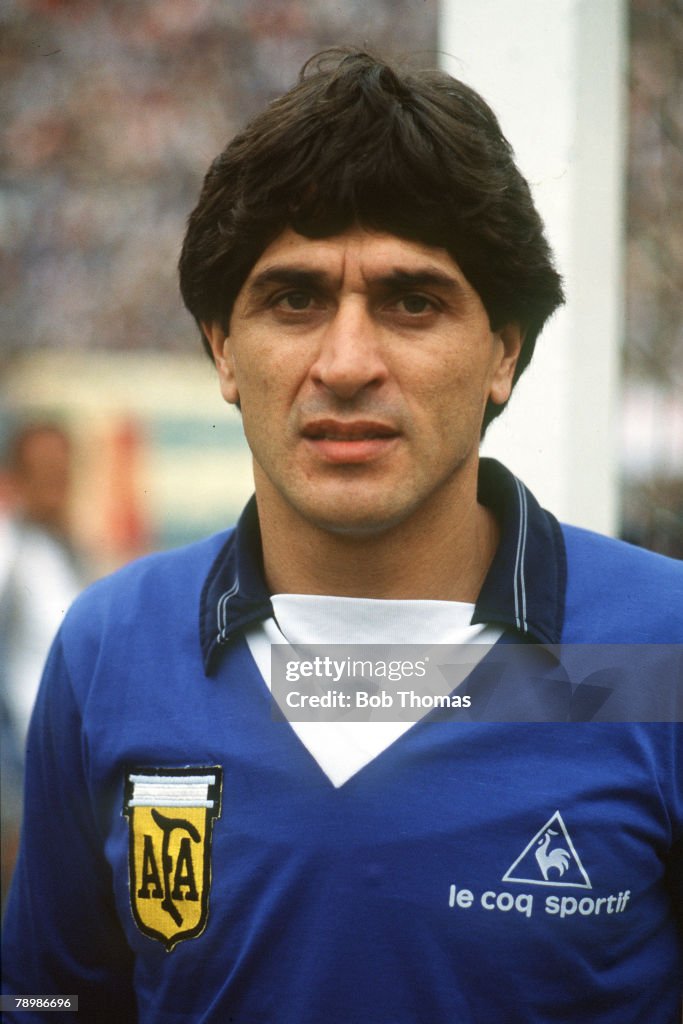
Ubaldo Fillol
 Argentina
association football player•association football coach•beach soccer player
Also known as: El Pato, Don Ubaldo
Birthday
July 21, 1950
Birth Sign
Cancer
Birthplace
San Miguel del Monte, Buenos Aires Province, Argentina
Age
76 years old
Height
5 ft 11 in (1.81 m)
About
Ubaldo Fillol is an Argentine former professional footballer who played as a goalkeeper, widely regarded as one of the greatest in his country's history. Nicknamed El Pato (The Duck) for his distinctive gait, he is best known for his role in Argentina's 1978 World Cup victory on home soil, where he was awarded the Lev Yashin Award as the tournament's best goalkeeper. Over a career spanning 25 years, he combined exceptional reflexes with remarkable longevity, playing at the highest level into his mid-40s. His clean sheet record in the 1978 World Cup and his five consecutive league titles with River Plate stand as hallmarks of his career. As of 2026, he serves as an ambassador for the Argentine Football Association and runs a youth football academy in his hometown.
Early Life & Background
Fillol grew up in San Miguel del Monte, a small town about 100 kilometers south of Buenos Aires, where his father worked for the Ferrocarril Provincial de Buenos Aires railway company. The family had modest means, and Fillol's early football was played on dirt pitches with a rag ball. He took to the goalkeeper position after watching local matches, drawn to the solitary challenge of the role. At age 15, he joined River Plate's youth academy, where his natural reflexes and agility caught the attention of coaches. He made his senior debut in 1971 after the retirement of legendary goalkeeper Amadeo Carrizo, stepping into a role that carried immense expectations at one of Argentina's biggest clubs.
Career Growth
Fillol established himself as River Plate's starting goalkeeper in the early 1970s and won the first of five consecutive Argentine Primera División titles in 1975. His international debut came in 1974, but the defining moment arrived at the 1978 World Cup. Playing every match, he conceded only four goals in seven games, keeping clean sheets against Poland and Brazil in the second round. In the final against the Netherlands, his save on Rob Rensenbrink's shot in regular time kept Argentina alive; they won 3–1 after extra time. Fillol received the Lev Yashin Award, the first ever given. He also played in the 1974 and 1982 World Cups, earning 58 caps in total. After leaving River Plate in 1983, he played for Flamengo in Brazil, Atlético Madrid in Spain, and several Argentine clubs before retiring at age 45 in 1995. He later served as goalkeeper coach for Argentina under Marcelo Bielsa and Alejandro Sabella.
Career Timeline
Public Image & Style
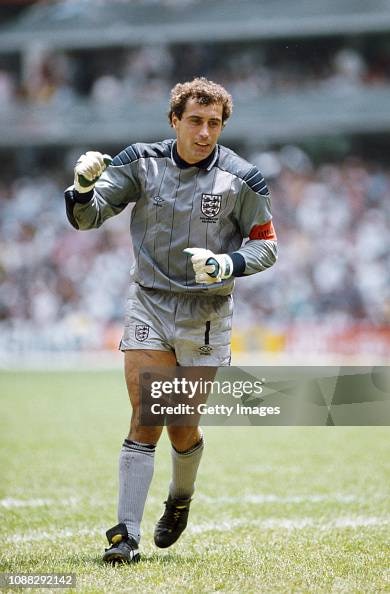
In Argentina, Fillol is remembered as a humble national hero, often called el guardián del arco (the guardian of the goal). His signature green goalkeeper jersey from the 1978 World Cup became iconic. Media portrayals emphasize his calm command of the penalty area and acrobatic saves. Fans affectionately refer to him as Don Ubaldo, and his name is chanted during matches at River Plate's stadium. He maintains a low-key social media presence, posting mostly nostalgic football content and support for the national team. His legacy is celebrated in Argentine football museums and documentaries, and he is frequently cited as an inspiration by younger goalkeepers like Emiliano Martínez.
Fame & Fandom
Ubaldo Fillol remains a towering figure in Argentine sports history, his legacy anchored by the 1978 World Cup triumph where he earned the Golden Glove award. Despite this enduring status, the iFANN Global Fame Engine has evaluated his current standing and determined that he does not currently hold a placement in the published rankings, meaning he is not ranked within the Global Top 1,000 or any specific top-tier scope list as of August 2026. While he lacks a formal numerical position in the global hierarchy, his cultural resonance persists through the affectionate moniker El Pato and his iconic green jersey. The fanbase surrounding Fillol does not operate under a distinct, documented name; instead, he is celebrated organically within the broader communities of River Plate supporters and the wider Argentine national team following. His digital presence on platforms like Instagram allows for direct engagement with these followers, who appreciate his nostalgic content rather than organized campaigns. There are no records of large-scale, fan-funded initiatives such as subway advertisements or charity drives specifically initiated by a separate group dedicated solely to him. Recent interactions, including a meet-and-greet event at Shay's Liquors in Wayne, New Jersey, demonstrate that his connection with supporters remains personal and accessible. Even without a formal fandom structure, his reputation as a living icon ensures that his appearances continue to draw significant attention from football historians and the diaspora alike.
Interesting Facts and Legends
Fillol's distinctive nickname El Pato originated from a childhood waddling walk that friends compared to a duck. In 1976, he achieved a remarkable feat by saving three penalties in a single match against Boca Juniors, an event still discussed in Argentine football circles. His pre-match ritual was precise: entering the pitch with his right foot first and touching the goalpost three times. He was among the first Argentine goalkeepers to wear gloves consistently, adopting the practice before it became standard in the 1980s. Fillol declined a lucrative offer from Real Madrid in 1980 to remain loyal to River Plate. A widely retold story involves his stocky build and unique stance between the posts, which further cemented the duck imagery in his legend. He was notably not selected for the 1986 World Cup squad, a decision he later cited as the biggest disappointment of his career. In March 2024, verified reports confirmed that his 1978 World Cup winners' medal had been stolen, highlighting the value placed on his memorabilia. Another notable moment occurred in August 2021 when he was hospitalized due to COVID-19, drawing global concern for the aging legend.
Notable Quotes
“Being a goalkeeper is like being a goalkeeper in life. You have to be ready for anything, because the ball can come at any moment.”
“The 1978 World Cup was not just a victory for Argentina, it was a victory for the Argentine people. We played for everyone who had suffered, and we gave them joy.”
“I never thought about being famous. I just wanted to stop the ball. That was my only job.”
Family & Personal Life
Fillol's father was a railway worker, and his mother stayed home to raise the family. He has spoken about how his father's work ethic shaped his own discipline. Fillol married María Cristina in the early 1970s, and they had three children: Ubaldo Matildo Jr. (born 1972), María Soledad (born 1975), and María Florencia (born 1978). The marriage ended in divorce in the early 1990s. In 1995, he married Silvia Beatriz Martínez, a former schoolteacher from Buenos Aires; they have no children together. Fillol has six grandchildren from his first marriage. He owns a home in Buenos Aires and a vacation property in San Miguel del Monte, and he lives there with Silvia.
Notable Connections
Fillol is closely associated with Argentina's 1978 World Cup-winning team, alongside teammates Daniel Passarella, Mario Kempes, and Osvaldo Ardiles. At club level, he is synonymous with River Plate's dominant era of the 1970s, where he played with Norberto Alonso and Leopoldo Luque.
Relationships & Dating History
Fillol married his first wife, María Cristina, in the early 1970s. They had three children together and divorced in the early 1990s after about 20 years of marriage. The separation was amicable, and Fillol remained close to his children. In 1995, he married Silvia Beatriz Martínez, a former schoolteacher from Buenos Aires. They have no children together but Fillol has six grandchildren from his first marriage. As of 2026, Fillol is married to Silvia Beatriz Martínez and resides in Buenos Aires, Argentina. He has no other known public relationships or rumored flings.
- MarriedMaría Cristina1971 - 1991Mother of his three children; divorced in the early 1990s.
- MarriedSilvia Beatriz Martínez1995 - presentCurrentFormer schoolteacher from Buenos Aires; no children together.
Salary, Net Worth In 2026
$6 Million
iFANN Editorial Team estimate
Heading into 2026, research by the iFANN Editorial Team puts Ubaldo Fillol's estimated net worth at $6 Million. His playing career earnings, while modest by modern standards, accumulated over 25 years: top Argentine players in the 1970s earned modest salaries, but his World Cup bonus in 1978 (about $50,000, equivalent to $200,000 today) was significant. Coaching roles with the Argentina national team (2000–2001, 2011–2012) and various club management positions added an estimated $500,000 to $1 million. Endorsement deals with Adidas, Coca-Cola, and Argentine brands contributed another $500,000 to $1 million. He also earns from appearance fees at World Cup anniversary events and football clinics. His real estate holdings include a Buenos Aires home valued at $500,000–$800,000 and a vacation property in San Miguel del Monte worth $150,000–$250,000. FIFA provides an annual pension of $30,000–$50,000 to World Cup winners, and autograph signings generate $20,000–$50,000 per year.
Awards Won (8)
Fillol won the Lev Yashin Award as the best goalkeeper of the 1978 FIFA World Cup, the first recipient of that honor. He was named Argentine Footballer of the Year in 1977 and received the Olimpia de Plata in 1977 and 1978. He was also voted South American Goalkeeper of the Year in 1978. Later, he was ranked 2nd in South America's Goalkeeper of the 20th Century by IFFHS.
1978 · Best Goalkeeper of the FIFA World Cup
1978 FIFA World Cup
1978 · Goalkeeper of the Year
Known For
1978 FIFA World Cup
1978 · Starting goalkeeper for Argentina
River Plate
1971–1983 · Goalkeeper
Keywords
Quick Facts
Personal Details
- Full Name
- Ubaldo Matildo Fillol
- Height
- 5 ft 11 in (1.81 m)
- Spouse
- Silvia Beatriz Martínez
- Children
- Ubaldo Matildo Fillol Jr., María Soledad Fillol, María Florencia Fillol
- Education
- Completed secondary education in San Miguel del Monte
Frequently Asked Questions
How old is Ubaldo Fillol?
What is Ubaldo Fillol's net worth in 2026?
Is Ubaldo Fillol still active in football?
What is Ubaldo Fillol best known for?
Who is Ubaldo Fillol married to?
Join the community
fans discussing