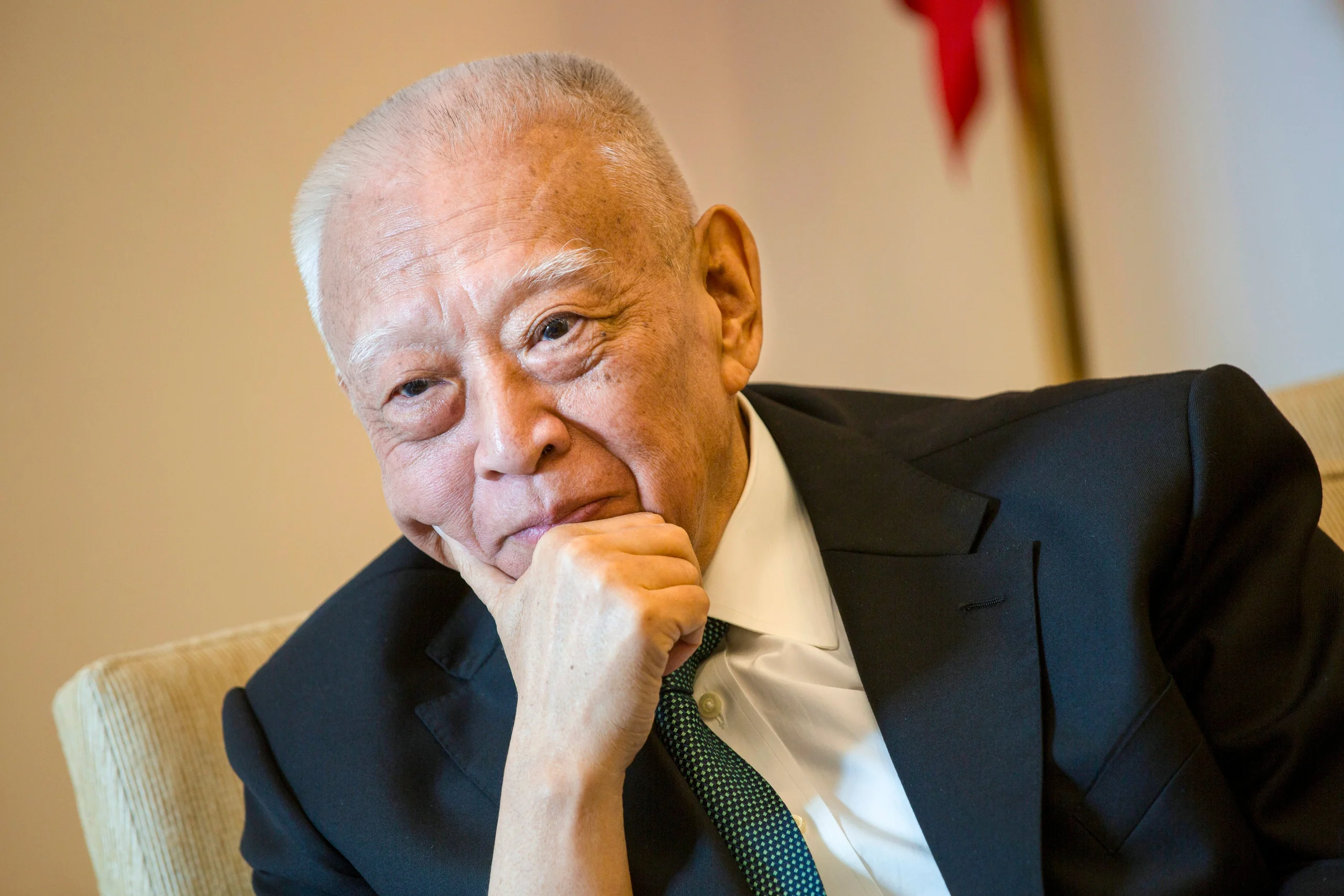
Tung Chee-hwa
 China
ChinaAlso known as: CH Tung, C.H. Tung, Dong Jianhua
Birthday
July 7, 1937
Birth Sign
Cancer
Birthplace
Shanghai, China
Age
Died at 89
About
Tung Chee-hwa was a Hong Kong businessman and politician who made history as the first Chief Executive of the Hong Kong Special Administrative Region. Born in Shanghai in 1937, he inherited a vast shipping empire before entering politics. He served as the leader of Hong Kong from its handover from British to Chinese rule in 1997 until his resignation in 2005. His tenure covered a turbulent period including the Asian financial crisis and the SARS outbreak.
Before his political career, Tung managed the Orient Overseas Container Line (OOCL), saving it from collapse in the mid-1980s through a government-backed bailout. After leaving office, he remained influential as vice chairman of the Chinese People's Political Consultative Conference and founded several think tanks aimed at fostering dialogue between China and the West. He died in September 2026 at the age of 89.
Early Life & Background
Tung Chee-hwa entered the world on July 7, 1937, in Shanghai as the eldest son of Tung Chao Yung, a prominent shipping magnate who founded the Orient Overseas Container Line (OOCL). Growing up in a family defined by maritime trade, Tung was groomed from a young age to inherit the family business. He moved with his family to Hong Kong as tensions rose in mainland China, settling into the life of a wealthy expatriate community.
His early years were spent navigating the complexities of the shipping industry alongside his father. When Tung Chao Yung died in 1981, Tung assumed control of OOCL. By 1985, the company faced near-insolvency due to market shifts and operational challenges. Tung orchestrated a rescue plan involving a bailout from the Chinese government and assistance from fellow tycoon Henry Fok. This intervention not only saved the company but also forged a critical political alliance that would later shape his career. The successful turnaround of OOCL demonstrated his managerial acumen and secured his status as a key figure in Hong Kong's business landscape just before his entry into high-level politics.
Career Growth
In December 1996, a 400-member Selection Committee elected Tung Chee-hwa as Chief Executive-designate with 80% of the vote, defeating rivals Yang Ti-liang and Peter Woo Kwong-ching. On July 1, 1997, he took office on the very day the territory was handed over from British to Chinese rule. His administration immediately faced the Asian financial crisis and a bird flu outbreak, testing his leadership capabilities.
Tung won a second term unopposed in 2002, but his popularity waned following the 2003 protests. Over 500,000 people marched against proposed national security legislation under Article 23 and criticized the government's handling of the SARS epidemic. Amidst this unrest, he resigned mid-term on March 10, 2005, becoming the first Chief Executive to do so. From 2005 to 2023, he served as vice chairman of the Chinese People's Political Consultative Conference. In 2008, he founded the China-United States Exchange Foundation (CUSEF) to promote understanding between the two nations, and in 2014, he launched the Our Hong Kong Foundation. In 2018, he and his brother sold their entire 68.7% stake in OOCL to COSCO for $4.3 billion, marking the final major chapter of his business career.
Career Timeline
Public Image & Style
Publicly, Tung was viewed as a pragmatic leader who navigated complex geopolitical waters with a focus on stability. Media descriptions often labeled him a "visionary" and a "staunch patriot" who built bridges over walls during a time of transition. His image as a businessman turned statesman was reinforced by his ability to manage the family shipping empire and then steer Hong Kong through the handover. Unlike celebrity figures, his public persona was defined by formal duties and policy decisions rather than fashion or entertainment.
Fame & Fandom (iFAMOUS Rankings)
Tung Chee-hwa holds the 63rd most famous person from China according to the October 2026 iFANN Global Fame Rankings. This placement reflects his historical significance rather than current celebrity metrics. He is featured at No. 63 in the September 2026 iFAMOUS Rankings.
Unlike entertainers, Tung does not have a fanbase name or organized cult following. His supporters are primarily citizens, political allies, and constituents who view him through the lens of governance. There are no fan campaigns, birthday billboards, or streaming pushes associated with his name. Public engagement with his legacy occurs through formal memorials and historical discourse rather than the ritualistic adoration seen in pop culture.
Interesting Facts and Legends
Tung Chee-hwa is often remembered for the phrase "there was no handbook" when taking office, a sentiment captured by SCMP opinion writer Tammy Tam regarding the unprecedented nature of his role. In December 1996, his election victory with 80% of the vote remains a defining statistic of his political rise. At age 83 in March 2021, he suffered a fall while attending the opening of the National People's Congress in Beijing but emerged unhurt. Alibaba mourned his passing and highlighted his global vision as a former independent director. Critics and supporters alike have dubbed him a "kingmaker" in Hong Kong politics due to his enduring influence behind the scenes even after leaving office.
Notable Quotes
“In hard times, your honour shines." - Jack Ma”
“Staunch patriot, close friend." - Beijing official”
“The world has lost a great statesman." - Stephen Roach”
“There was no handbook." - SCMP Opinion”
Family & Personal Life
Tung was married to Betty Tung, and their marriage lasted until his death in 2026. Sources do not document any other romantic relationships or divorces. While details about their children are sparse in public records, the couple maintained a private family life away from the intense scrutiny of the political spotlight. Betty Tung survived him as his widow. The family's background in shipping and their deep roots in the Hong Kong business community provided a stable foundation throughout his political career.
Notable Connections
Relationships & Dating History
Tung Chee-hwa was married to Betty Tung, and they remained together until his death in 2026. There is no record of divorce, separation, or other romantic partnerships. Their relationship was long-standing and private, avoiding the public scrutiny that often accompanies high-profile political figures. Betty Tung survived him as his widow. The couple did not publicly discuss their personal lives extensively, focusing instead on their respective roles in business and society.
- MarriedBetty Tung1950 - 2026Married until his death; she survives him.
Death & Aftermath
Died
September 8, 2026 (aged 89)
Death Place
Hong Kong
Cause of Death
Natural causes
Tung Chee-hwa passed away peacefully on Tuesday, September 8, 2026, at the age of 89. His office announced the news shortly after his death in Hong Kong, confirming he had died from natural causes without public complications. The announcement triggered an immediate outpouring of tributes from Beijing, Hong Kong's political elite, and international business leaders who recognized his pivotal role in the territory's history.
A state funeral was organized to honor his legacy as Hong Kong's first Chief Executive under Chinese rule. An 87-member committee led by a top Chinese official managed the proceedings, which took place at the Hong Kong Funeral Home in North Point. The event included a public vigil where citizens gathered to pay their respects, and traffic controls were implemented to accommodate the solemn procession. Tributes poured in from figures like Jack Ma, who described Tung as a man whose honor shone in hard times, while Beijing officials hailed him as a staunch patriot and close friend.
Following the funeral services held over September 19 and 20, Tung was laid to rest. His passing marked the end of an era for the city, with media outlets worldwide running extensive obituaries that detailed his journey from shipping magnate to statesman. The China-United States Exchange Foundation (CUSEF), which he founded, established an online memorial to preserve his contributions to cross-border dialogue. His widow, Betty Tung, survives him, and the family received condolences from dignitaries across the globe.
Net Worth (Estate Value)
$5 Billion
iFANN Editorial Team estimate
iFANN Editorial Team analysis of Tung Chee-hwa's earnings, ventures and assets points to roughly $5 Billion. This estimate reflects the value of the shipping empire he managed and the substantial wealth generated from the sale of his family's stake in OOCL. In 2018, he and his brother sold their 68.7% holding in Orient Overseas Container Line to COSCO for $4.3 billion, a transaction that solidified the family's fortune. As a deceased individual, the estate continues to generate revenue through posthumous royalties, licensing of intellectual property related to his work, and management of remaining assets. The estate's trajectory shows sustained value derived from the shipping industry and his various foundations. The total net worth figure.
Awards & Accolades
View 5 records, honours and achievementsKnown For
Chief Executive of Hong Kong
1997 · Politician
Orient Overseas Container Line
1981 · Chairman
Keywords
Sources
Quick Facts
- Profession
- politician, ship-owner
- Born
- July 7, 1937
- Birthplace
- Shanghai, China
- Gender
- Male
- Spouse
- Betty Tung
- Birth Sign
- Cancer
Personal Details
- Full Name
- Dong Jianhua
- Spouse
- Betty Tung
- Children
Frequently Asked Questions
How did Tung Chee-hwa die?
When was Tung Chee-hwa's state funeral?
Who was Tung Chee-hwa's wife?
Why did Tung Chee-hwa resign?
How did Tung Chee-hwa make his money?
Join the community
fans discussing