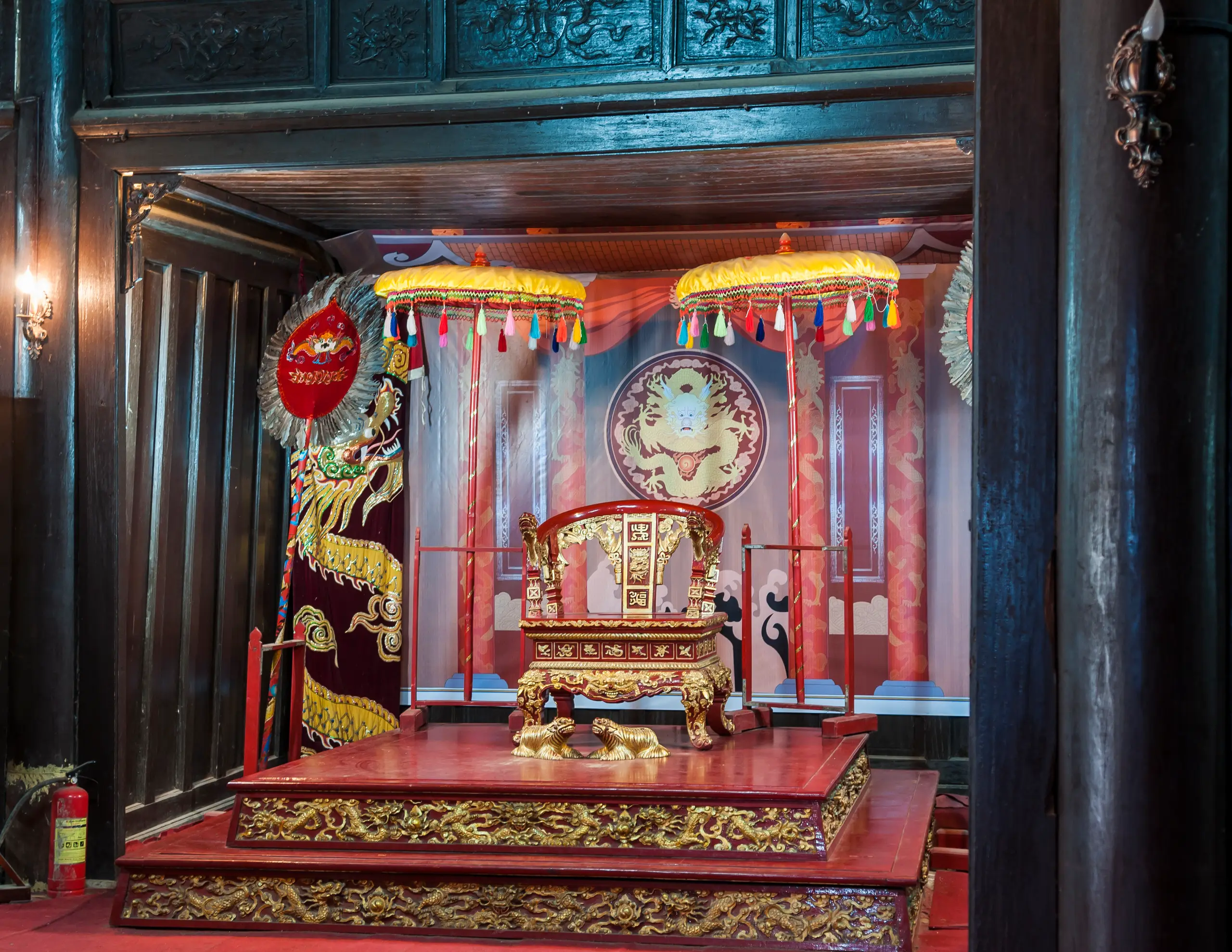
Tự Đức
 Vietnam
Also known as: Tu Duc, Nguyễn Phúc Hồng Nhậm
Birthday
September 22, 1829
Birth Sign
Virgo
Birthplace
Huế, Vietnam
Age
Died at 53
About
Born Nguyễn Phúc Hồng Nhậm on September 22, 1829, in Huế, Tự Đức became the fourth emperor of Vietnam's Nguyễn dynasty. He is remembered as the last monarch to rule before the French colonial period fully took hold, reigning for an impressive 36 years from 1847 until his death on July 17, 1883. This lengthy tenure made him the longest-reigning emperor of the Nguyễn line.
A scholar-king renowned for his poetry and Confucian scholarship, he is historically significant as a figure who prioritized culture over military might. Unlike many warrior-kings of his era, Tự Đức was deeply introverted and contemplative, preferring the company of scholars and poets to military campaigns. His reign coincided with increasing external pressures from France, yet he left behind a massive literary legacy that still influences Vietnamese scholars today.
Early Life & Background
Nguyễn Phúc Hồng Nhậm was born into the heart of the imperial court in Huế, the second son of Emperor Thiệu Trị. His early life was steeped in the rigorous education typical of the royal family, focusing heavily on Confucian classics, literature, and calligraphy. He was not groomed for war but for governance through moral example and administrative wisdom. Initially, his father favored his older brother as the heir apparent, but that sibling died prematurely, leaving Hồng Nhậm as the designated successor.
As a prince, he was known for his literary talents rather than martial prowess. He spent much of his youth studying the works of Chinese and Vietnamese philosophers. His formative years were marked by a deep appreciation for nature, often spending time shooting birds on the Perfume River and composing verses about the changing seasons. This quiet, scholarly upbringing prepared him for a reign defined by intellectual depth rather than battlefield conquest.
Career Growth
Tự Đức ascended the throne in 1847, taking the reign title meaning 'inheritance of virtues.' His reign lasted 36 years, a period defined by internal cultural flourishing and external geopolitical crisis. He began by enforcing strict adherence to Confucian orthodoxy and promoting the examination system to train civil servants. Throughout the 1850s and 1860s, he produced an immense volume of poetry and prose, authoring over 500 works.
In 1858, the French began their invasion of Vietnam with the attack on Da Nang. Tự Đức attempted diplomatic negotiations while fortifying defenses, but his lack of military experience became a liability. Despite facing increasing pressure from colonial forces and internal rebellions in the 1870s, he remained resistant to Westernization. In 1865, he established the Minh Khiêm Đường theater within his mausoleum complex for private performances. His death in 1883 marked the beginning of a rapid decline in the Nguyễn dynasty's power, leading to full French colonization shortly after.
Career Timeline
Public Image & Style
Tự Đức is portrayed in media and academia as a tragic figure, a scholar forced to rule during a time of great upheaval. His image is one of refinement, melancholy, and intellectual depth. He is remembered as a man who prioritized culture and tradition over military might, a choice that ultimately contributed to the loss of Vietnamese sovereignty. Contemporary descriptions portray him as a man of scholarly demeanor, likely of average height for the era, though precise physical data is unavailable.
Fame & Fandom (iFAMOUS Rankings)
Tự Đức remains a towering figure in Vietnamese history, his legacy measured not by fleeting trends but by three decades of imperial rule and a prolific literary output. Today, he holds a steady position within the global consciousness as recorded by the iFANN Global Fame Rankings. He is the 58th most famous person in Vietnam, down slightly from the previous cycle. These placements reflect a consistent historical footprint that has held firm through multiple assessment cycles. The rankings capture attention across media coverage, search behaviors, and cultural consumption signals worldwide, anchoring him firmly among the nation's most significant figures. Featured at No. 57 in the September 2026 iFAMOUS Rankings, his presence endures through the preservation of his mausoleum and the study of his poetry. There is no formal name for his fanbase; instead, those who engage with his memory are historians, tourists visiting the Lăng Tự Đức, and cultural enthusiasts drawn to his architectural achievements. Unlike modern celebrities, he does not have organized groups pushing chart positions or social media campaigns. His "fans" are custodians of heritage sites, debating the authenticity of sealed windows in his theater or investigating the mystery of missing graves in his royal complex. This engagement is driven by academic inquiry and state-sponsored restoration rather than the fervor of a pop culture following.
Interesting Facts and Legends
Tự Đức composed over 500 works of poetry, many of which are still studied today. He was known to spend leisure time shooting birds on the Perfume River, a hobby that contrasted sharply with his duties as a ruler. One of his most unique legacies is the Minh Khiêm Đường theater, built inside his mausoleum in 1865 for private entertainment. Local folklore speaks of a missing grave belonging to a woman named Mỹ Phi, though official archives do not list her as a royal consort. Recent construction projects even accidentally damaged part of one of these graves, leading to a decade-long pause and archaeological review. In early 2026, this structure became the center of a major debate when workers discovered windows had been sealed shut during previous renovations, sparking discussions about historical authenticity versus visitor experience.
Notable Quotes
“The world is a dream, and I am the dreamer.”
“His writings often express a deep longing for peace and a lament for the impermanence of power.”
Family & Personal Life
Tự Đức married several times and maintained a large harem, a common practice for Vietnamese emperors. Historical records list four primary wives or consorts: Vũ Thị Duyên, Nguyễn Thị Cẩm, Hoc Phi, and Nguyễn Nhược Thị Bích. He had no biological sons who survived to adulthood, which led to a succession crisis upon his death. Consequently, he adopted three different heirs during his reign: Dục Đức, Hiệp Hòa, and Kiến Phúc, all of whom reigned briefly after his passing. The sheer scale of his burial complex, housing the tombs of his 15 wives, remains a source of fascination and local lore.
Notable Connections
Relationships & Dating History
Tự Đức did not have a dating history in the modern sense. His marital arrangements were political and dynastic. He married several times, maintaining a large harem typical for Vietnamese emperors. Historical records list four primary wives or consorts: Vũ Thị Duyên, Nguyễn Thị Cẩm, Hoc Phi, and Nguyễn Nhược Thị Bích. Details of how they met are lost to history, as was typical for imperial unions arranged by the court. He had no biological sons who survived to adulthood, leading to a succession crisis upon his death. He adopted three different heirs during his reign: Dục Đức, Hiệp Hòa, and Kiến Phúc. As of the date of his death in 1883, he was the head of a polygamous household. There is no current partner status as he has been deceased for over a century.
- MarriedVũ Thị Duyên1847 - 1883Principal consort married early in his reign
- MarriedNguyễn Thị Cẩm1847 - 1883Principal wife; details of meeting lost to history
- MarriedHoc Phi1847 - 1883High-ranking concubine/consort
- MarriedNguyễn Nhược Thị Bích1847 - 1883Listed among his wives
Death & Aftermath
Died
July 17, 1883 (aged 53)
Death Place
Huế, Vietnam
Cause of Death
Wasting disease complicated by diabetes and tuberculosis
Emperor Tự Đức died on July 17, 1883, within the Imperial City palace in Huế where he had spent his entire reign. His final days were marked by a severe wasting disease, which historical records attribute to complications from diabetes and tuberculosis. Some accounts suggest the immense stress of French colonial encroachment accelerated his decline, though official annals focus on the physical symptoms rather than political causes.
The court managed the transition with traditional Confucian rituals, leading to the brief and troubled reigns of his three adopted sons: Dục Đức, Hiệp Hòa, and Kiến Phúc. These successors ruled for mere months before French forces solidified their control over Vietnam. The emperor's body was interred at Khiêm Lăng, a sprawling garden complex reflecting his love for nature and poetry. His death sparked mourning among scholars and officials who revered his literary contributions. Posthumously, his legacy inspired stage productions and remains central to Vietnamese academic study. In 2026, the site continues to be a focal point for cultural preservation, with ongoing debates regarding the authenticity of its structures and recent archaeological reviews following accidental damage to nearby graves.
Net Worth (Estate Value)
$0
iFANN Editorial Team estimate
As a monarch of the 19th century, Tự Đức did not have a personal net worth in the modern sense of liquid assets. However, the value of his estate and the economic impact of his reign can be inferred. The Khiêm Lăng tomb and surrounding lands represent a massive cultural asset. While exact monetary valuation is impossible for historical figures, the site is now a major tourist attraction generating significant revenue for the Vietnamese government and local economy. Posthumous revenue comes from tourism, educational licensing, and cultural heritage management. The site is managed by the Ministry of Culture and Tourism. In 2026, the Khiêm Lăng continues to be a center of cultural activity, with renovation projects and archaeological reviews adding to its operational costs and potential revenue streams. The iFANN Editorial Team estimates the cultural and economic value of his legacy to be substantial, driven by the enduring appeal of his mausoleum and literary works.
Awards & Accolades
View 5 records, honours and achievementsKnown For
Khiêm Lăng Mausoleum
1883 · Builder and Burial Site
Poetry Collection
1847-1883 · Author
Reign of Tự Đức
1847-1883 · Monarch
Keywords
Sources
Quick Facts
- Profession
- monarch, philosopher, poet
- Born
- September 22, 1829
- Birthplace
- Huế, Vietnam
- Died
- July 17, 1883
- Death Place
- Huế, Vietnam
- Gender
- Male
- Spouse
- Vũ Thị Duyên, Nguyễn Thị Cẩm, Hoc Phi, Nguyễn Nhược Thị Bích
- Birth Sign
- Virgo
Personal Details
- Full Name
- Nguyễn Phúc Hồng Nhậm
- Spouse
- Vũ Thị Duyên, Nguyễn Thị Cẩm, Hoc Phi, Nguyễn Nhược Thị Bích
- Children
- No biological sons survived to adulthood; adopted Dục Đức, Hiệp Hòa, and Kiến Phúc
- Education
- Rigorous royal education in Confucian classics, literature, and calligraphy
Frequently Asked Questions
Who was Tự Đức?
How did Tự Đức die?
What is Tự Đức famous for?
Did Tự Đức have children?
Is there a specific fanbase for Tự Đức?
Similar People

Join the community
fans discussing